

More airflow doesn’t automatically mean a faster station turnover. A barber air blower is useful when it moves loose clippings in a controlled direction and fits into a repeatable cleanup routine.
If you’re finishing a fade while hair gathers around the chair, tools, and station, manual cleanup can interrupt the rhythm between clients. An air blower can help dislodge loose hair, but it doesn’t collect debris or replace cleaning and disinfecting. Used carelessly, it can send clippings toward a client or neighboring station.
This guide explains what a barber air blower can and can’t do, how to use one responsibly around sensitive areas, and which practical features matter for your workflow. You’ll also learn how to build it into a controlled sequence: clear loose hair, collect and dispose of it, then clean and disinfect the station and tools. For barbers seeking a cordless option, BarberNation offers the BarberNation Cordless Air Duster. Choose for control and workflow fit, not airflow claims alone.
Key Takeaways
- Use a barber air blower to move loose clippings from targeted areas, while keeping brushes, towels, and routine station cleaning in your workflow.
- Build a controlled cleanup sequence: prepare the area, direct airflow away from people, collect debris, then complete normal cleaning.
- Choose features around your station layout and appointment routine, including cordless handling, charging arrangements, and accessible storage.
- Follow the specific product’s instructions for airflow and use. A dedicated duster should complement, not replace, your existing cleanup routine.
- Prioritize control and practical workflow fit over raw airflow when choosing a station cleanup tool.
What Does a Barber Air Blower Actually Do at the Station?
A barber air blower is a powered tool that directs air to dislodge loose hair from selected station surfaces. Its role is targeted, visible-hair cleanup, not replacing every brush, towel, or sanitation step. In the rhythm of the barbering profession, it can be another practical station tool: use it to move clippings from suitable areas, then collect and dispose of them.
Think of airflow as one step in the cleanup sequence. A brush gives you close control on specific surfaces, while a towel is useful for wiping appropriate areas. A blower can move loose clippings from accessible spots that are awkward to reach by hand. But airflow alone doesn’t remove debris from the station, so plan where the hair will land before you switch the tool on.
This video shows an air-compressor setup for a barber station. Compressor systems and cordless dusters can differ, so follow the instructions for the particular tool you use.
Which barber-station tasks can an air blower support?
Between appointments, use controlled airflow to dislodge loose clippings from suitable surfaces, such as chair bases and counter edges. Air may also help move hair from accessible gaps where a brush is cumbersome, as long as the surface and surrounding setup are appropriate. Direct the stream toward a clear collection area, not toward a client, another station, or clean tools. Then sweep or wipe up the hair and dispose of it. The blower’s value is in fitting a repeatable routine, not promising a specific time saving.
What an air blower does not replace
Clearing visible hair is different from cleaning and disinfecting equipment. Airflow doesn’t sanitize a station, disinfect tools, or capture the clippings it dislodges. Collect the debris, then complete the normal cleaning and disinfection steps for the surfaces and tools you’ve used.
A blower also isn’t a substitute for brushing clipper blades. Use the appropriate brush and follow the clipper manufacturer’s care instructions to remove hair from the blade area. Keep each task distinct: clear clippings, care for the equipment, and disinfect as directed. For a cordless option designed for barber-station use, explore the BarberNation cordless air duster.
How a Barber Air Blower Fits Into a Controlled Cleanup Routine
A reliable station reset is a sequence, not a blast of air. Use the blower only where it suits the surface and the tool’s instructions. Then collect what you’ve moved and finish with your usual cleaning steps. The essential principle is to direct airflow away from people and toward a manageable collection area.
Before switching it on, check who and what is nearby. A client, neighboring station, open drawer, or clean tool could end up in the path of loose clippings. Pause if you can’t direct the air toward a collection area without disturbing people or other work.
Where and when to direct airflow
After clippings build up, aim airflow across an appropriate station surface toward a nearby collection point, such as an area you can sweep or wipe immediately. Work in short, deliberate passes rather than sending debris across the shop. Keep the stream away from eyes, faces, exposed skin, and clients, including when clearing around the chair. If a surface, attachment, or location isn’t suitable for airflow, use another cleanup method.
Prepare the area before turning on the blower. Move clean tools and loose items out of the intended path, and make sure you can gather the debris where it lands. This reduces the chance that displaced hair will settle on another surface or drift toward someone nearby.
How to finish cleanup properly
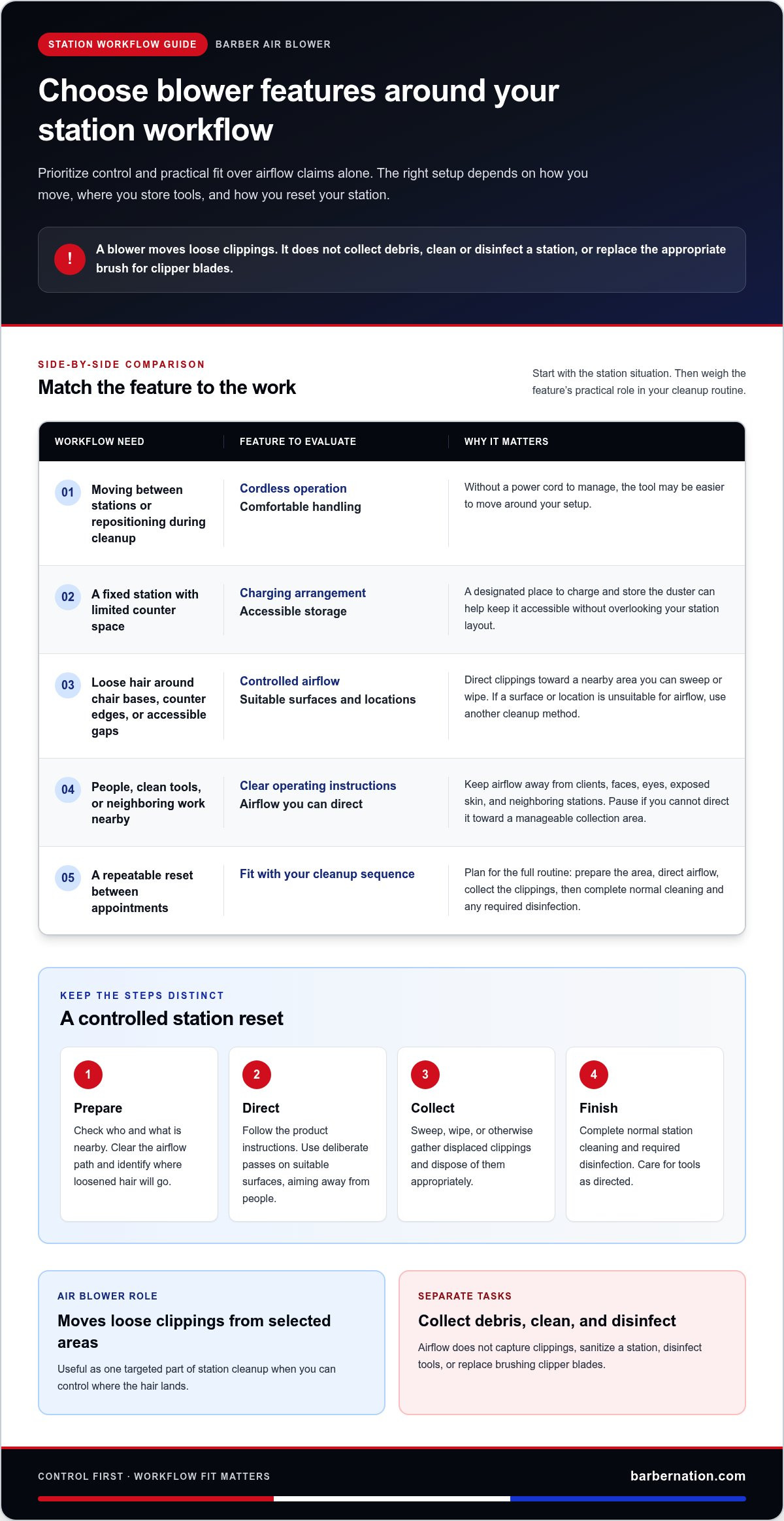
- Prepare: Check the surroundings, clear the airflow path, and identify where the loosened hair will go.
- Direct: Use the barber air blower as instructed, aiming at suitable surfaces and away from people.
- Collect: Sweep, wipe, or otherwise gather the displaced clippings and dispose of them appropriately. Don’t leave them scattered nearby.
- Finish: Complete the station’s normal cleaning and any required disinfection steps. Follow the manufacturer’s instructions for operating and caring for the blower.
Hair removal and infection-control procedures are separate parts of professional station practice. OSHA's Bloodborne Pathogens Standard addresses occupational exposure to blood and other potentially infectious materials; it isn’t a guide to air-blower use. Treat a blower as a debris-moving tool, not as a cleaning or disinfecting method.
The BarberNation cordless air duster is an option to consider for a deliberate station reset. Keep the routine consistent: protect the people around your station, control where clippings travel, and finish with appropriate cleanup.
Which Barber Air Blower Features Matter for Your Workflow?
The right barber air blower is the one that fits your station habits, not the one with the biggest-sounding claims. Consider how you move during a service, where tools are stored, and how charging fits into your routine. For professional context on the trade, explore the American Barber Association.
| Workflow need | Feature to evaluate | Why it matters |
|---|---|---|
| Moving between stations or repositioning during cleanup | Cordless operation and comfortable handling | Without a power cord to manage, the tool may be easier to move around your setup. |
| A fixed station with limited counter space | Charging arrangement and accessible storage | A designated place to charge and store the duster can help keep the work surface organized. |
| Frequent appointments and repeated station resets | Practical charging routine and easy access | Consider how the tool fits into your regular workday without assuming a particular runtime or charging speed. |
| A compact or crowded workstation | Manageable size and a secure storage spot | Choose a setup that keeps the duster within reach without adding clutter. |
Cordless operation, charging, and storage
Cordless operation can suit a station where you move around the chair or put the tool away between uses. It still takes a little planning: decide where the duster will be stored, how its charging arrangement fits your counter or station, and whether it’s easy to return to its place after cleanup. The BarberNation TurboJet FadeBlaster air duster with charging stand is one option to consider as you plan that setup.
Match the tool to your station and service pace
A compact, fixed station may call for a simple storage spot near the surfaces you clean. If you move tools between chairs or stations, handling and portability may matter more. A fuller appointment schedule makes an accessible charging and storage routine especially relevant, but it doesn’t establish how long any specific model will run. Compare your priorities with the cordless TurboJet air-duster collection, and focus on product details that match your setup. Base decisions about airflow, battery, noise, and charging performance on verified specifications rather than assumptions.
How to Use a Barber Air Blower Responsibly and Maintain It
Good results depend on control, not on using the strongest airflow available. Before operating a barber air blower, assess the space, clear a safe path, and read the product’s instructions. Air pressure and appropriate use vary by product, so don’t assume one model’s settings or handling guidance apply to another.
Keep airflow controlled around clients and equipment
Direct airflow away from people, faces, and exposed skin. Avoid sending clippings toward clean tools, food, neighboring stations, or shared work areas. Use the duster only for tasks and on surfaces permitted by its instructions. Pause if people or equipment enter the intended path.
A quick surroundings check makes each use more deliberate. Identify where debris will land before turning the tool on, and keep the stream directed toward that manageable area rather than across the shop.
Keep the air blower ready for regular use
Care for the duster according to its manual. Follow the manufacturer’s guidance for charging, storage, routine inspection, and any cleaning required for the device or its accessories. Store the tool and charging accessories neatly in a dry area, and inspect them as directed. Don’t apply a universal service schedule or assume a maintenance step is suitable for every model.
Keep duster care separate from clipper maintenance. Airflow doesn’t remove the need to brush clipper blades or follow the clipper manufacturer’s instructions for cleaning and disinfection. Treat these as distinct responsibilities: care for the blower as directed, maintain cutting tools using their own guidance, and complete the station’s normal hygiene procedures.
- Check the surroundings: Keep people and clean equipment outside the airflow path.
- Direct deliberately: Aim only at suitable surfaces and follow the product’s operating instructions.
- Manage the debris: Collect displaced hair rather than letting it settle elsewhere.
- Inspect and store: Follow the manual for charging, care, and storage.
For a cordless option, explore the BarberNation TurboJet FadeBlaster air duster with charging stand. Build responsible operation and product-specific care into your station routine, and maintain each tool according to its own instructions.
Choose a Barber Air Blower That Supports Your Craft
A dedicated blower can complement your station routine if you regularly need to move loose clippings from suitable surfaces and can direct airflow in a controlled way. It’s an additional cleanup tool, not a replacement for collecting debris, cleaning equipment, or disinfecting as required. The right fit supports your workflow without adding unnecessary friction.
A quick decision checklist for professional barbers
Before choosing a barber air blower, focus on how you’ll use and store it rather than novelty or maximum-power language. Check whether the product instructions cover your intended tasks. Then consider whether cordless handling and the charging arrangement suit your station. Finally, choose a storage place that keeps the tool accessible without crowding your work surface.
- Recurring task: Will you use it regularly for suitable station cleanup?
- Instructions: Are your intended surfaces and method appropriate for that specific product?
- Station fit: Does cordless handling suit your movement and layout?
- Daily routine: Can you accommodate charging and keep the tool stored accessibly?
- Cleanup sequence: Can you collect displaced hair and complete normal cleaning afterward?
These questions help distinguish a useful station addition from a tool that may sit unused. A fixed station with an open counter may have different storage needs from a compact setup where equipment moves often. If you have a full appointment schedule, decide where the duster returns between uses without assuming a particular model’s runtime or charging performance.
Explore a barber-focused cordless air duster
BarberNation specializes in professional grooming equipment and offers the BarberNation Cordless Air Duster for barbers considering cordless cleanup. Match the tool to your routine: controlled operation, appropriate tasks, a workable charging arrangement, and accessible storage. Review the product information alongside your station needs, and follow its instructions for use and care.
If a cordless duster fits your cleanup approach, explore BarberNation’s cordless air duster. Choose with purpose, keep your station routine consistent, and let the right equipment support the craft you bring to every appointment.
Make Every Station Reset More Intentional
A barber air blower can support a more organized station when it suits your cleanup tasks and you use it with control. Aim airflow away from people, guide loose clippings toward an area where you can collect them, and follow with your usual cleaning and disinfection routine. It moves debris; it doesn’t replace sanitation or tool maintenance.
Choose for the workflow you actually have. Cordless handling, a practical charging arrangement, accessible storage, and clear product instructions matter more than unsupported performance claims. A useful tool should fit naturally into your station routine, not create another complication between appointments.
BarberNation specializes in professional grooming equipment, including the BarberNation Cordless Air Duster. Explore BarberNation’s professional barber tools and find equipment to support your station and your craft. Choose a tool that fits your routine and bring the same intention to every detail of your work.
Frequently Asked Questions
What is a barber air blower used for?
A barber air blower directs powered airflow to dislodge loose hair from suitable station surfaces. Barbers may use one to move clippings from areas such as counter edges or around a chair toward a collection area. It’s one part of cleanup, alongside tools such as brushes and towels. The blower doesn’t collect debris or replace routine cleaning, disinfection, or clipper maintenance.
Can you use an air blower on a client's hair or skin?
Avoid directing airflow at a client’s face, eyes, or exposed skin. The stream can move loose hair unpredictably and may cause discomfort. For station cleanup, make sure the client and nearby people are outside the airflow path, then aim only at suitable surfaces as permitted by the product instructions. Don’t assume every duster is designed for use on hair or skin.
Is a cordless air duster useful for barbers?
Yes, a cordless air duster can be useful if it fits your station routine and helps you move loose clippings from suitable surfaces. Without a power cord to manage, it may be convenient when you reposition tools or work around a chair. Consider your station layout, handling, charging arrangement, and storage needs. Its usefulness depends on workflow fit, not an assumed performance advantage.
How do barbers clean a station with an air blower?
Prepare the area, move people and clean tools out of the airflow path, then aim the blower toward a manageable collection spot on a suitable surface. Gather and dispose of the displaced hair rather than leaving it nearby. Finish with your normal station cleaning and disinfection steps. Follow the product’s instructions throughout, since an air blower moves debris but doesn’t capture or sanitize it.
Does a barber air blower replace clipper cleaning?
No. A barber air blower may move loose hair from appropriate station surfaces, but it doesn’t replace brushing clipper blades or following the clipper manufacturer’s care instructions. It also doesn’t disinfect tools. Treat station debris removal, clipper maintenance, and disinfection as separate steps, using the appropriate method for each task. Airflow shouldn’t be relied on to do work it can’t do.
What should I look for when choosing a barber air blower?
Choose a barber air blower around your recurring cleanup tasks and station setup. Consider cordless handling, the charging arrangement, accessible storage, and whether the product instructions permit your intended use. A compact fixed station may need a different storage plan than a setup where you move tools between chairs. Base decisions about airflow, battery, noise, and charging performance on verified product details, not assumptions.
How should a cordless barber air duster be stored and charged?
Follow the specific product manual for charging, storage, and routine inspection. Keep the duster and its charging accessories organized in a dry storage area, and return them to that spot after use. Don’t assume charging times, storage conditions, or maintenance intervals are the same across models. Keep care of the air duster separate from clipper cleaning and the station’s normal cleaning and disinfection procedures.
Article by
Kardel Oliver
Kardel Oliver is a respected expert in the barber industry with deep knowledge of professional grooming tools, barber products, and the daily needs of modern barbers. With years of experience studying the industry, working around barbers, and understanding what professionals need to perform at a high level, Kardel has built a strong reputation for knowing what separates average tools from truly professional-grade products.
Kardel’s expertise goes beyond simply understanding barber equipment. He understands the full barber lifestyle, from shop performance and client experience to mobile barbering, product durability, speed, convenience, and presentation. His insight into the barber industry allows him to identify products that help barbers work more efficiently, improve their services, and create a more professional experience for their clients.
Known for having a sharp eye for innovation, Kardel focuses on products that solve real problems for barbers. Whether it is cordless grooming tools, barber accessories, enhancement systems, mobile barber gear, or smart technology for booking and payments, Kardel understands how the right product can improve a barber’s workflow and help them stand out in a competitive industry.
Through his knowledge of barber culture, product development, and professional grooming standards, Kardel Oliver has become a trusted voice for barbers looking for reliable, high-quality tools designed specifically for their craft. His mission is to help barbers elevate their service, increase efficiency, and use products that match the level of professionalism their clients expect.