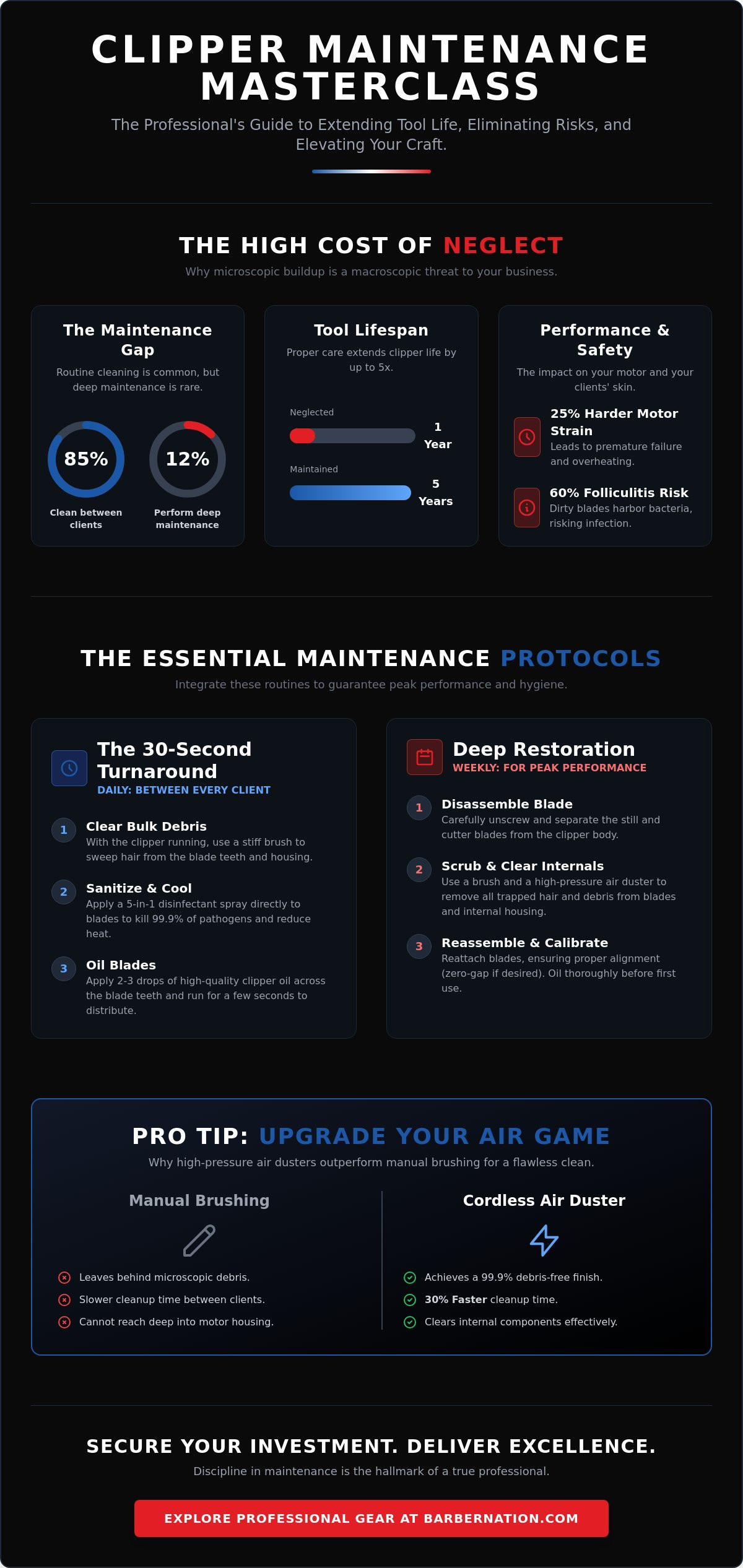
Your $600 high-performance clippers aren't losing their edge because of heavy use; they're dying early because of microscopic neglect. While 85% of professionals clean their tools between clients, only 12% follow the deep-maintenance protocols required to prevent internal motor friction and blade dragging. You already know that a clipper pulling hair or overheating during a precision fade is more than a nuisance. It's a direct threat to your reputation and your bottom line. Mastering how to clean barber clippers is the difference between a tool that lasts twelve months and one that remains a precision instrument for five years.
We've designed this guide to help you elevate your craft by integrating advanced maintenance into your daily workflow. You'll learn to eliminate 99.9% of cross-contamination risks while achieving 30% faster cleanup times between appointments. This professional walkthrough covers everything from ultrasonic blade sterilization to the exact oiling patterns that ensure your equipment performs with the same excellence you bring to every chair. It's time to secure your investment and deliver the smooth, effortless cuts your clients expect where professional excellence meets exclusive quality.
Key Takeaways
- Understand how microscopic hair buildup compromises your motor and dulls your blades, turning a premium tool into a professional liability.
- Master a rapid-fire 30-second protocol on how to clean barber clippers between every client to maintain hygiene without breaking your hustle.
- Learn the professional breakdown technique for a weekly deep restoration that clears internal debris and ensures peak mechanical performance.
- Discover why transitioning to high-pressure cordless air dusters outperforms manual brushing for achieving an immaculate, professional-grade finish.
- Elevate your craft by mastering zero-gap calibration and precision oiling to extend tool life and deliver flawless, irritation-free hair enhancements.
The High Cost of Neglect: Why Clipper Maintenance is a Professional Mandate
Professional excellence isn't just about the final look in the mirror. It starts with the integrity of your equipment. When you ignore the basic steps of how to clean barber clippers, you compromise every fade you perform. Hair debris and skin oils act as an abrasive. They increase friction between the moving and stationary blades. This strain forces the motor to work 25% harder, leading to premature failure and dull edges that pull rather than cut. A Hair clipper is a precision instrument designed for micro-adjustments. Even a 0.5mm layer of buildup can throw off the alignment required for high-definition hair enhancements.
Beyond mechanical performance, cleanliness is a non-negotiable health imperative. Dirty blades harbor bacteria that cause folliculitis barbae, an inflammatory condition affecting up to 60% of men with curly hair according to clinical dermatological studies. Your reputation depends on the safety of your chair. Mastering how to clean barber clippers ensures that your station remains a place of transformation, not infection.
To better understand the mechanical impact of maintenance, watch this helpful video:
Preserving the Integrity of Your Craft
Precision depends on a clean slate. Debris-free blades ensure the seamless transitions needed for flawless fades and sharp lineups. When a client sees a sanitized station, their perception of your value shifts. They aren't just paying for a haircut; they're investing in a premium experience. "Good enough" maintenance is a career killer. It prevents you from reaching the elite tier where professionals command 40% higher rates than the industry average. Elevate your craft by making hygiene your signature.
The Economics of Tool Longevity
Consistent maintenance is a high-yield investment for any serious barber. Replacing a professional blade set every three months costs significantly more than a two-minute daily cleaning routine. In cordless models, heat is the primary enemy. Clogged blades generate excess heat that transfers to the internal lithium-ion battery, degrading its capacity by 15% annually. Using high-performance tools like the Turbojet series for rapid debris removal keeps your equipment within manufacturer warranty standards. Professional-grade reliability isn't an accident; it's the result of disciplined upkeep and superior gear.
The 30-Second Turnaround: Daily Sanitization for Every Client
Efficiency defines the elite barber. You don't have ten minutes between fades to perform a full teardown, yet you cannot compromise on hygiene. Mastering how to clean barber clippers in under a minute separates the high-volume earners from the amateurs. This rapid-fire protocol protects your gear and your reputation while ensuring every client sits in a chair that meets the highest professional standards. It's a rhythmic flow that keeps the hustle alive and the blades moving at peak performance.
Your toolkit for this turnaround includes a stiff nylon brush, a professional 5-in-1 disinfectant spray, and a source of high-pressure air. These tools work in tandem to eliminate the 99.9% of pathogens that can linger on blade surfaces. Beyond the health benefits, this routine manages the thermal energy of your tools. High-performance motors in 2026 generate significant heat; a quick blast of cooling disinfectant prevents blade burn and keeps your client comfortable during intricate beard sculpting or skin fades.
Step-by-Step Daily Cleanup Protocol
- Clear the bulk: Use a stiff-bristled brush to sweep away visible hair from the teeth and the blade set. Do this while the clipper is running to help the blades eject trapped debris.
- Sanitize and Cool: Apply a premium 5-in-1 clipper spray directly to the blades. This liquid barrier acts as a disinfectant, lubricant, and coolant. Many professionals reference Kentucky's sanitation regulations for barbers as a benchmark for legal compliance, which emphasizes the necessity of germicidal solutions between every service.
- Wipe and Prep: Use a clean microfiber cloth to wipe the housing and the back of the blade. Ensure the tool is free of excess oil or stray hairs before the next client takes their seat.
The Power of High-Pressure Air
Brushing alone is an incomplete solution. Micro-debris often migrates behind the blade and settles around the cam lever, which leads to "clipper drag" and decreased cutting power. To maintain professional excellence, you must clear the nooks and crannies that a brush simply cannot reach. High-pressure air dusters clear the internal housing of hair clogs in modern motors to prevent friction-induced heat and mechanical resistance. Using a dedicated tool like the TurboJet FadeBlaster ensures that your clippers remain as responsive on the last cut of the day as they were on the first.
Clients notice the details of your process. The audible hiss of a disinfectant spray and the visible use of high-pressure air serve as powerful visual cues. They signal that you are a seasoned master who respects the craft and the client's safety. This level of care transforms a routine haircut into an exclusive service. When you prioritize these small steps, you effectively elevate your craft to a level where professional excellence meets exclusive quality.
Deep Restoration: The Weekly Breakdown for Peak Performance
Daily sanitization keeps your clients safe, but a weekly mechanical breakdown keeps your career moving. Surface sprays and quick brushes cannot reach the grit that accumulates deep within the motor housing over 40-plus hours of service. To truly master how to clean barber clippers at an elite level, you must transition from superficial maintenance to a complete deep restoration. This process preserves the high-torque output of your tools and ensures your fades remain crisp and effortless.
Preparation is the first step in professional maintenance. You will need a precision screwdriver set, a shallow wash basin, and high-viscosity lubricants designed for modern 10,000 RPM motors. The core of this restoration is the "Blade Wash." This specialized solution dissolves the cocktail of gummed-up oils, skin cells, and microscopic debris that a standard spray misses. While federal guidelines provide a baseline for hygiene, specific regulations like Louisiana's barber tool sterilization code emphasize the necessity of complete immersion to ensure total disinfection. This level of care prevents the friction that leads to blade dragging and unnecessary motor strain.
During this weekly breakdown, take a moment to inspect the cam follower and drive power. A cam follower typically shows professional wear after 600 hours of operation. If the edges appear rounded or the plastic looks stressed, replace it immediately. Proactive part replacement is the hallmark of a master who views their tools as an extension of their hands. Elevate your craft by identifying these mechanical whispers before they become loud, expensive failures.
The Blade Removal and Soaking Process
Precision begins with the screws. Remove the blade set carefully to avoid snapping the tension spring, which maintains the 1.5 to 2.0 pounds of pressure required for a clean cut. Submerge the blades in a professional wash solution for exactly 10 minutes. This dissolves the calcified residue that causes "blade heat" during long sessions. After soaking, dry each piece with a lint-free microfiber cloth. Inspect every tooth under a 5x magnification lamp. A single chipped tooth or a slight misalignment can ruin a blend and compromise the quality your clients expect.
Internal Housing Maintenance
The "hair nest" is the silent killer of high-performance tools. It traps heat and forces the motor to work 25% harder than necessary. Use the BarberNation Turbojet FadeBlaster Air Duster to clear the internal chassis without introducing moisture from compressed air cans. Lubricate the motor's moving parts with two drops of premium oil according to high-performance standards. When reassembling the unit, calibrate the lever tension for absolute precision. A loose lever results in inconsistent lengths, while an overly tight one causes premature motor fatigue. This dedicated maintenance routine is where professional excellence meets exclusive quality.
Speed and Precision: Revolutionizing Cleanup with Professional Air Dusters
Efficiency defines the modern shop. Traditional manual brushing and expensive aerosol cans are becoming relics of the past. The BarberNation Cordless Air Duster has redefined the workflow for elite professionals. It provides a level of cleanliness that manual tools cannot match; it reaches deep into the cam lever and blade housing where hair anchors and causes friction. When you master how to clean barber clippers with high-velocity air, you extend the life of your motors by preventing internal buildup. This isn't just about surface appearances. It's about protecting your professional investment through superior maintenance habits.
The BarberNation Advantage
The 110,000 RPM motor in the FadeBlaster series provides instant debris removal. This power allows you to clear a blade in under five seconds. The ergonomic design ensures it fits into a fast-paced professional workflow without causing hand fatigue. For shops looking to equip every station, the TurboJet collection offers diverse options for every specialty. High-velocity air is especially critical for professionals performing hair enhancements. It clears the scalp of fine particles instantly, allowing for perfect pigment or fiber application. You aren't just cleaning; you're preparing a canvas for art.
Beyond the Clippers: Station-Wide Efficiency
A professional environment is a fundamental part of the service. High-pressure air clears hair from capes, necks, and workstation surfaces faster than any brush. It creates a Barber Nation standard of excellence that clients notice immediately. Mastering how to clean barber clippers and surfaces with air ensures you never leave a client with itchy trimmings. Using air to clear the station reduces the reliance on chemical wipes. Industry data suggests shops using air dusters reduce their monthly wipe consumption by 35% because they prevent hair from accumulating in the first place. This keeps your station dry and organized. It’s the definitive solution for maintaining a high-end atmosphere while maximizing your client turnover. Your tools stay cool, your station stays sharp, and your craft remains the focus.
Take the next step in professional maintenance: Elevate your craft with the BarberNation TurboJet FadeBlaster.
Mastering Longevity: Blade Alignment, Oiling, and Storage Mastery
Calibration and protection represent the final stage of the maintenance hierarchy. It's the point where technical skill meets mechanical precision. After you've mastered how to clean barber clippers, you must focus on the fine-tuning that prevents skin irritation and extends the life of your motor. This isn't just about functionality; it's about the professional pride that comes from using a perfectly tuned instrument every single time you step behind the chair.
Precision Blade Alignment
Achieving a zero-gap setting is a hallmark of the elite barber, but it requires absolute accuracy. The moving blade must sit between 0.5mm and 1mm behind the stationary blade. If the moving blade overlaps the still blade, you'll cause painful nicks and "bites" on the client's scalp. Always perform a thumbnail test after tightening the screws. Run the clipper blades across your nail; if they scratch the surface, the alignment is too aggressive. Precise alignment creates those exclusive, razor-sharp edges that make high-performance fades look effortless. This calibration ensures your tools work for you, not against you.
The Golden Rules of Oiling
Lubrication is the lifeblood of your clipper's performance. Without it, friction generates heat that can reach over 115 degrees Fahrenheit, causing discomfort for the client and 90% of premature blade dulling. Use a 5-point oiling system: apply one drop to each corner of the blade, one in the center, and one on each side rail where the blades overlap. The oil forms a microscopic hydraulic seal between the metal surfaces, reducing friction and ensuring the motor operates at peak RPM for a smoother cutting action. Don't over-oil your tools. Excess liquid attracts hair clippings and skin cells, which eventually create a thick paste that bogs down the drive lever and strains the motor's internal components.
Before you apply your oil, ensure all micro-debris is removed from the blade teeth. Using a high-velocity tool like the Barbernation Turbojet Fadeblaster allows you to clear hidden hair pockets in seconds, preventing the oil from trapping dirt inside the assembly. This proactive step is essential when learning how to clean barber clippers for long-term durability.
Storage is your final defense against the elements. Moisture is a silent killer for premium steel, and 85% of blade oxidation occurs when tools are stored in damp environments or left wet with disinfectant. Never leave your clippers in a closed drawer while they're still damp from a cooling spray. Wipe them down with a dry microfiber cloth and place them on a ventilated rack or in a dedicated case. When you treat your equipment with this level of respect, you elevate your craft and ensure your professional journey is backed by tools that never fail. This is where professional excellence meets exclusive quality.
Secure Your Professional Legacy Through Precision Maintenance
Mastering the art of tool care separates a standard haircut from a premium experience. By implementing a 30-second sanitization routine after every client and performing a deep weekly breakdown, you protect your most vital investments. Industry data from 2024 indicates that consistent maintenance can extend the lifespan of high-performance blades by up to 300 percent. Integrating high-velocity air dusters into your workflow doesn't just save time; it ensures every fade and beard sculpt is executed with microscopic accuracy. When you understand how to clean barber clippers with this level of technical rigor, you signal to your clients that you're a master of your craft.
Success in 2026 requires tools that perform at the same level as your ambition. Used by top-tier professionals nationwide, our equipment delivers high-velocity performance for precision cleaning that manual brushes can't match. Elevate your cleanup game and shop the BarberNation TurboJet Air Duster collection today to enjoy free domestic shipping on all orders. Your journey toward professional excellence depends on the caliber of your equipment. Keep your blades sharp, your station sterile, and your reputation untouchable.
Frequently Asked Questions
How often should I realistically clean my barber clippers during a busy shift?
You must clean and disinfect your clippers after every single client to maintain professional hygiene standards and tool longevity. During a typical 10 hour shift with 15 appointments, this means performing 15 individual cleaning cycles. Use a stiff nylon brush to remove 95% of visible hair debris before applying a cooling disinfectant spray. This practice prevents cross-contamination and ensures your high-performance tools execute precision fades without snagging or overheating.
Can I use WD-40 or other household oils to lubricate my professional clippers?
Never use WD-40 or household lubricants on your professional equipment because these substances contain solvents that degrade internal components. Professional clipper oil is a 100% mineral-based lubricant designed to withstand the 7,000 strokes per minute generated by modern rotary motors. Household oils often have a lower flash point and can cause the blades to gum up, leading to a 30% increase in friction and heat during a haircut.
What is the difference between a clipper spray and a blade wash?
Clipper spray acts as a 5 in 1 coolant and disinfectant for rapid use between back to back appointments. Blade wash is a specialized liquid solution used for a 10 minute deep soak to remove accumulated skin cells and factory grease. Learning how to clean barber clippers effectively requires using both; the spray maintains daily performance while the wash provides a monthly reset for the blade set to ensure professional excellence.
Why do my clippers start making a loud rattling noise after cleaning?
A loud rattling noise usually indicates that the blade screws aren't torqued to the manufacturer's recommended 1.5 Newton meters of pressure. If you've just performed a deep clean, ensure the plastic cam follower hasn't shifted from its tracks. Check the tension spring immediately; a 1 millimeter misalignment can cause the moving blade to vibrate against the housing, creating excessive noise and reducing the cutting efficiency of your premium tools.
How do I know when it is time to replace my clipper blades instead of cleaning them?
Replace your blades when they continue to pull hair despite being oiled or if you notice visible pitting on the cutting teeth. Most high carbon steel blades last for 6 to 12 months in a high volume shop environment. If a blade requires more than 3 passes to clear a bulk section of hair, it's a sign the factory edge has dulled beyond the point where cleaning can restore its performance.
Is it necessary to take the blades off every time I clean my clippers?
You don't need to remove the blades after every haircut, but a full teardown is required every 7 days for high volume professionals. Daily maintenance relies on external brushing and 2 drops of oil to keep the motor running smoothly. Weekly disassembly allows you to remove the 15% of hair clippings that bypass the blade gasket and accumulate around the drive lever, which can eventually burn out your motor if left unaddressed.
What are the risks of not properly aligning my clipper blades after a deep clean?
Improperly aligned blades pose a 100% risk of "biting" or nicking the client's skin, especially during sensitive beard sculpting. If the moving blade overlaps the stationary blade by even 0.5 millimeters, you risk causing painful abrasions. Accurate alignment ensures the teeth move in a perfect horizontal plane, which is essential for achieving the seamless transitions required to elevate your craft and maintain your reputation for excellence.
How can an air duster help with the internal maintenance of cordless clippers?
Use an air duster to blast away micro-hairs from the internal motor housing of your cordless clippers once a week. These compressed air canisters deliver 60 PSI of pressure to reach crevices that a standard brush cannot penetrate. Removing this hidden debris prevents the battery from overheating and extends the life of your lithium-ion cells by up to 25%, ensuring your tools remain at peak performance throughout your professional journey.