

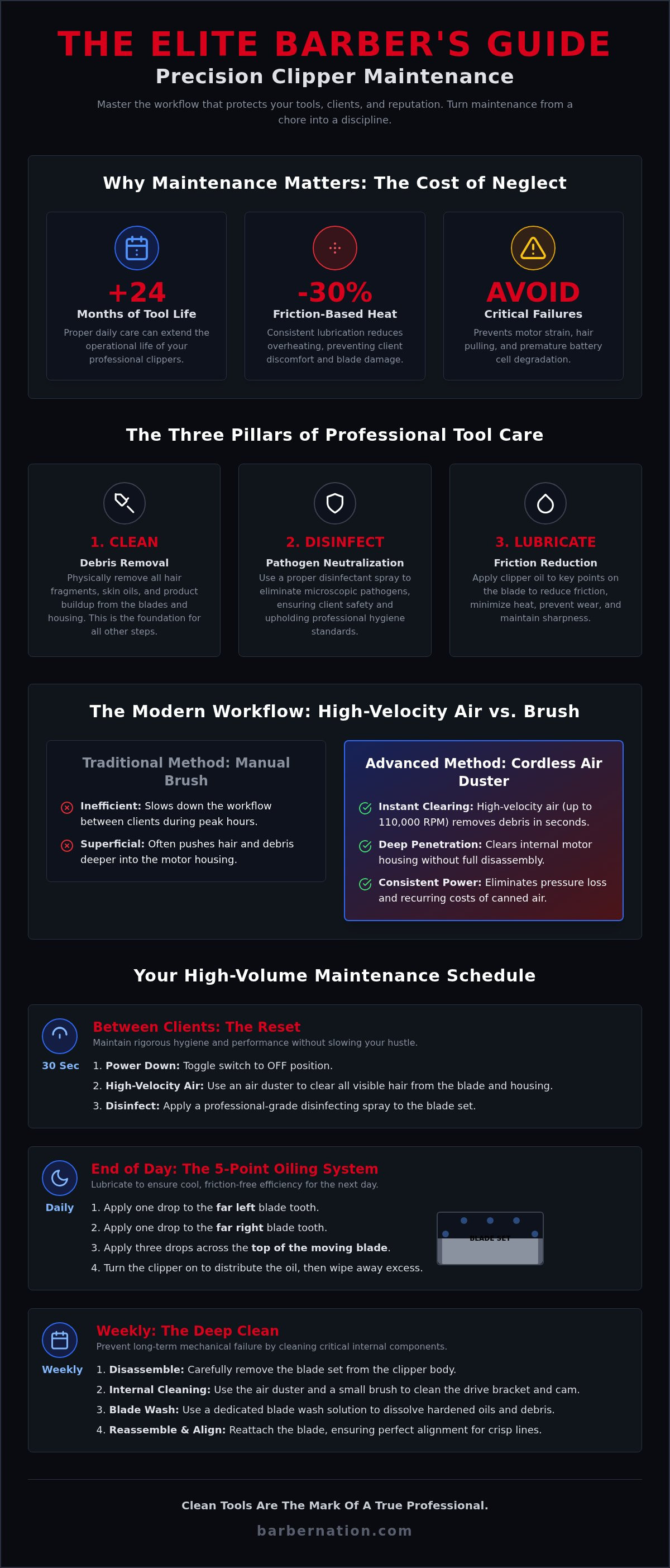
What if the very tools you use to craft an elevated fade are secretly sabotaging your reputation with every stroke? When blades pull or motors overheat, you aren't just fighting your equipment; you are compromising the integrity of your art form. Learning how to clean barber clippers is not a chore, it is a fundamental discipline that separates the elite professional from the average operator. Proper daily maintenance can extend the operational life of your professional tools by as much as 24 months, ensuring your investment remains as sharp as your technique.
You take pride in the precision of your work, and you deserve equipment that matches your ambition. We understand that in a busy shop, time is your most valuable asset. This guide provides the professional blueprint to master your workflow, protect your clients, and preserve your reputation. We will explore the shift toward high-velocity air for debris removal, the essential three-pillar system of cleaning, disinfecting, and lubricating, and the advanced techniques required to keep 10,000-stroke-per-minute motors running with cool, friction-free efficiency.
Key Takeaways
- Master the professional workflow on how to clean barber clippers to ensure every fade transition remains flawless and crisp.
- Discover how high-velocity air tools replace traditional manual brushes to clear debris from the clipper housing without pushing hair deeper into the motor.
- Identify the critical internal components, including the drive bracket and cam, that require a dedicated deep cleaning schedule to prevent mechanical failure.
- Implement the 5-point oiling system to reduce friction-based heat and maintain the sharpest edge on your professional blade sets.
- Adopt a specialized 30-second between-client routine that maintains rigorous hygiene standards without slowing down your shop's daily hustle.
Why Precision Clipper Maintenance is the Foundation of Your Craft
Precision is the currency of the modern barber. Every flawless fade transition and sharp lineup depends entirely on the mechanical integrity of your blade edge. When you master how to clean barber clippers, you aren't just performing a routine maintenance task; you are protecting your professional license, your equipment investment, and your reputation. Debris buildup within the clipper housing creates significant motor strain. In high-performance cordless units, this internal resistance forces the battery to work harder, leading to premature cell failure and significantly reduced runtime between charges. A master barber understands that tool pride serves as a definitive marker of career prestige. Your station is a reflection of your standards, and clean tools are the primary evidence of a practitioner who respects the craft as an elevated art form.
The Cost of Neglect: Overheating and Hair Pulling
Neglect carries a heavy physical price for both the practitioner and the client. Modern high-speed clippers often operate between 6,000 and 10,000 strokes per minute, generating intense friction with every pass. Without a rigorous maintenance cycle, this friction creates heat that can quickly reach uncomfortable levels. Some industry professionals report that consistent lubrication can reduce friction-based heat by as much as 30%. When blades become clogged with microscopic hair fragments and skin oils, they lose their ability to glide. This results in the dreaded pulling sensation, which is an immediate signal that your tools are failing your client. Excessive heat eventually alters the temper of high-carbon steel, making blades brittle and incapable of holding a professional-grade edge.
Sanitation vs. Performance: A Dual Approach
A sophisticated workflow requires a dual approach to tool care. You must clearly differentiate between removing physical debris and neutralizing microscopic pathogens. While many rely on a quick cooling spray, this is never a substitute for a comprehensive deep clean. Effective hair clipper maintenance involves a visible ritual that builds immense client trust. When a client sees you meticulously clear, disinfect, and oil your tools, they recognize a commitment to their safety and the quality of their haircut. This transparency justifies premium service rates and secures long-term retention. Utilizing advanced solutions like the BarberNation Cordless Air Duster allows you to clear the blade set and housing in seconds, ensuring that your pursuit of excellence never compromises your shop's efficiency.
The BarberNation Workflow: Advanced Debris Removal Techniques
Efficiency serves as the heartbeat of a thriving shop. You cannot afford to waste ten minutes between every client on outdated maintenance rituals. Mastering how to clean barber clippers begins with a streamlined, high-performance workflow that prioritizes speed without sacrificing precision. This process ensures your tools remain cool, responsive, and ready for the next high-stakes fade in your chair.
Step 1: Power down and secure your station. Safety is non-negotiable. Always toggle the power switch to the off position and disconnect any charging cables. This prevents accidental motor engagement and protects the internal circuitry while you work on the blade assembly.
Step 2: Utilize high-velocity air. Traditional manual brushing is slow and often pushes hair fragments deeper into the clipper crevices. The modern professional relies on high-pressure air to clear the blade set and housing instantly. This method removes the bulk of debris in seconds, allowing you to maintain a rapid pace during peak shop hours.
The Air Duster Advantage: Beyond the Brush
The BarberNation Turbojet Fadeblaster is a definitive game-changer for high-volume environments. Unlike traditional canned air, which relies on chemical propellants and loses pressure as the can cools, a cordless air duster provides consistent, high-velocity output. Professional-grade units can reach motor speeds of 110,000 RPM, creating enough force to clear internal motor housings without requiring full disassembly. This sustainable solution eliminates the recurring cost of disposables while providing superior clearing power. It is the professional secret for maintaining peak performance between every cut.
Step 3: Brush remaining fine particles. Once the high-velocity air has cleared the primary debris, use a dedicated brush for precision detailing. Focus on the cam follower, the tension spring, and the area directly behind the moving blade. These small components often trap fine hair dust that can gum up the drive bracket over time.
Manual Brushing for Precision Detailing
Selecting the right tool for detailing is essential. Use a stiff nylon brush for the blade teeth and internal metal components. Avoid wire brushes on plastic housings to prevent scratching. Implement a "Sweep Out" technique by moving the brush from the center of the blade toward the edges. Don't forget to clear the charging ports and switches. Hair buildup in these areas can lead to electrical failure or poor charging connections, eventually bricking an expensive cordless unit. Keeping these contact points clear is a simple way to upgrade your station's reliability and tool life.
Step 4: Inspect for alignment and damage. Use this moment of clarity to examine your blade teeth. Check for chipped tips or misaligned edges that could nick a client. A clean tool allows for a perfect inspection, ensuring your equipment meets the highest professional standards before you apply the next round of lubrication.
Deep Cleaning and Blade Alignment: The Professional Standard
Deep cleaning is the definitive boundary between a casual user and a seasoned expert. While high-velocity air handles the daily hustle, a full disassembly ensures the internal mechanics of your tools remain pristine. For high-volume shops, you should perform this deep dive weekly. If you operate at a more moderate pace, a monthly schedule is sufficient to prevent the accumulation of "clipper gunk," the stubborn sludge formed by old oil, skin cells, and hair dust. Mastering how to clean barber clippers at this level requires an intimate understanding of the drive bracket, cam, and tensioner. These components are the mechanical heart of your machine. Hair that bypasses the blade set often accumulates here, creating friction that slows down the motor and drains your battery.
The Disassembly Masterclass
Precision starts with the right tools. Use a properly sized driver to remove the blade screws. Never force a screw that feels stuck; stripping the heads is a common mistake that can ruin an expensive chassis. Once the blades are removed, soak them in a specialized cleaning solution to dissolve organic buildup. While the blades soak, use a lint-free cloth to wipe down the internal chassis. Pay close attention to the area around the cam follower. Removing oil-soaked hair from these crevices prevents the motor from overworking and ensures a smooth, consistent stroke during your next fade.
Precision Re-alignment and Zero-Gapping
Zero-gapping is the pursuit of the sharpest possible line, but it requires absolute precision to remain safe. When reassembling, place the moving blade onto the cam and position the stationary blade over it. The golden rule of alignment is simple: the moving blade must never overlap the stationary blade. If the teeth of the moving blade extend past the fixed edge, you will nick or "bite" the client. Aim for a gap of 1/32 to 1/16 of an inch for a crisp finish. Use a staggered tightening sequence, turning each screw a little at a time. This prevents the blades from shifting as you reach maximum tension, ensuring your alignment stays true even under high-vibration use.
The Paper Test provides immediate confirmation of your craftsmanship. Hold a thin piece of paper or a neck strip and run the running clippers through the edge. A perfectly aligned and sharp set will slice through the material with zero resistance. If the paper snags or tears, your alignment is off or your blades require professional sharpening. This final verification ensures your tools meet the master barber's standard before they ever touch a client's skin. Consistency in this ritual is what builds a career of prestige and excellence.
Lubrication and Cooling: Maximizing Blade Longevity
Once you have mastered how to clean barber clippers, you must master the science of protection. Lubrication is the final, critical step in the professional workflow. It reduces friction, prevents oxidation, and ensures your blades glide through hair with zero resistance. Without a consistent oiling routine, even the most expensive clippers will suffer from blade drag and motor fatigue. A master barber treats lubrication as a ritual of respect for the tools that build their career.
Implement the 5-Point Oiling System for maximum efficiency. Start by applying one drop of oil to each corner of the stationary blade and one drop directly in the center. Next, apply one drop to each side of the blade set where the moving blade contacts the rail. This specific pattern ensures total coverage across the entire cutting surface. After application, toggle the power and let the motor run for 30 seconds. This "runs in" the oil, distributing it evenly into the microscopic pores of the steel. Always use a clean cloth to wipe away the excess. Excess oil is unprofessional; it collects hair dust and stains your client's cape.
Selecting Professional Lubricants
Never use WD-40 or household oils on your equipment. These products are too heavy and will eventually gum up high-speed motors, leading to mechanical failure. Professional clippers require lightweight mineral oils that maintain a stable viscosity at high temperatures. These specialized lubricants are designed to stay on the blade without evaporating under the heat of a 10,000-stroke-per-minute motor. Utilizing specialized maintenance tools alongside high-quality oil ensures your station remains the gold standard for reliability and performance.
Managing Heat with Cooling Sprays
Monitor your equipment constantly using the "Touch Test." Briefly touch the blades to the back of your hand or forearm between sections of a cut. If the steel feels uncomfortably warm, it is time to intervene. Understand that clipper oil and cooling spray serve distinct roles. Oil provides long-term lubrication, while cooling sprays offer immediate temperature relief and disinfection. When applying a spray, aim for the teeth while the motor is running. Be precise; don't soak the drive bracket. Excessive spray can wash away the essential mineral oil, leaving your blades vulnerable to friction once the coolant evaporates. Balance is the key to longevity.
Elevate your station with the BarberNation Turbojet Fadeblaster to ensure every debris-clearing session is followed by precision lubrication and cooling.
Establishing a Maintenance Schedule for High-Volume Shops
Consistency is the definitive hallmark of a high-performance shop. While individual technique matters, a collective commitment to tool care ensures that every chair provides the same elite experience. If you are handling fifteen or more cuts a day, you cannot leave your equipment to chance. Mastering how to clean barber clippers within a structured schedule transforms maintenance from a burden into a competitive advantage. Standardize your workflow to protect your revenue, your reputation, and your peace of mind.
The "Between-Client Blitz" is your frontline defense. This 30-second routine keeps your station moving without compromising hygiene. Once the cape is removed, immediately clear the blade set, apply a disinfectant spray, and perform a quick visual alignment check. This rapid transition ensures that your next client sits down to a station that is pristine and professional. At the end of every shift, execute the "End-of-Day Shutdown." This involves a deeper clearing of the housing and a fresh application of oil to prevent oxidation overnight. Preparing your tools for the morning hustle is a sign of respect for the next day's opportunities.
The 30-Second Efficiency Hack
Speed is the primary requirement in a busy environment. Utilize the BarberNation Cordless Air Duster for a seamless "blast and spray" transition. High-velocity air removes debris faster than any brush, allowing you to disinfect and oil in one fluid motion. Organize your station so your cleaning supplies are always within arm's reach. This visible ritual serves as a powerful visual cue for your clients. It signals your uncompromising commitment to their safety and justifies the premium rates of a master practitioner.
The Master Barber’s Monthly Audit
Preserving the value of your equipment requires a high-level monthly inspection. Examine your cord integrity for fraying and monitor the battery health of your cordless models. If a battery is struggling to hold a charge through a full fade, it is time for a professional service. Evaluate your blades for wear; while sharpening can extend their life, replacing a rounded blade set is often the better investment for maintaining crisp lines. Training your team to follow these standards ensures the entire shop operates at peak capacity. Remember, your career is a continuous progression toward excellence. The caliber of your cut is limited only by the caliber of your tools.
Elevate Your Craft Through Professional Tool Discipline
Your tools are the physical extension of your creative vision. Mastering how to clean barber clippers ensures that vision is never clouded by snagging blades or overheating motors. By implementing a high-velocity air workflow and a rigorous 5-point oiling system, you protect your investment and your professional reputation. These aren't just cleaning tasks; they are the high standards of a master practitioner dedicated to the art form. Consistency in your "Between-Client Blitz" and weekly deep-clean rituals will distinguish you as a leader in a competitive trade.
Precision requires the right equipment to match your ambition. Upgrade your station with the BarberNation Cordless Air Duster to achieve maximum shop efficiency. Used by elite barbers for precision maintenance, this tool delivers high-velocity performance that clears debris in seconds. We are proud to support your professional progression with free domestic shipping on all US orders. Take pride in your station and your process. Every cleaned blade and perfectly aligned tooth is a definitive step toward a more prestigious career. Your skill is the heartbeat of the shop, and we provide the pulse for your equipment.
Frequently Asked Questions
How often should I oil my barber clippers?
You should oil your clippers after every single client to ensure the blades move with absolute fluidity. Mastering how to clean barber clippers includes this consistent discipline, which prevents the metal from grinding and preserves the temper of your high-carbon steel. Apply drops to the corners and center of the teeth while the motor is engaged. This habit ensures your tools glide effortlessly through every fade, protecting the motor's internal components.
Can I use alcohol to clean my clipper blades?
You can use 70% isopropyl alcohol for rapid surface disinfection, but it's not a complete solution. Alcohol evaporates quickly and strips away the essential mineral oils that protect the metal. If you use it, you must immediately follow up with professional clipper oil to prevent oxidation and friction. For a more comprehensive result, utilize EPA-registered disinfectant sprays that specifically include lubricating agents to keep your blades cool and responsive.
Why do my clippers get hot so fast during a haircut?
Excessive heat is typically caused by friction between the moving and stationary blades. When hair debris and skin oils accumulate, the motor works harder, generating thermal energy that can reach uncomfortable levels. If your blades get hot within minutes, it's a clear signal to stop and perform a rapid clearing of the housing. Immediate lubrication is the primary defense against this buildup, ensuring your tools remain cool enough for precision work.
What is the difference between a clipper cleaner and a disinfectant?
Clipper cleaners are designed to dissolve organic gunk like hair dust, skin oils, and old grease. Disinfectants are EPA-registered agents specifically formulated to kill microscopic pathogens, including bacteria, viruses, and fungi. While some 5-in-1 sprays perform both roles, a master barber understands that physical debris must be removed before a disinfectant can effectively reach the blade surface. Always clear the blades with high-velocity air before applying your sanitation spray.
Do I need to take my clippers apart to clean them every day?
You don't need to perform a full disassembly every day. For high-volume environments, a weekly deep clean is the professional standard for maintaining tool longevity. During your daily shift, focus on the 30-second transition routine using air and disinfectant spray. This between-client blitz keeps your station sanitary and efficient. Save the detailed internal audit of the drive bracket, cam, and tensioner for your scheduled weekly maintenance session when you have more time.
Can I use compressed air cans to clean my clippers?
Avoid using traditional canned air for professional tool maintenance. These cans rely on chemical propellants that can leave a residue on your blades and drop in pressure as they cool. Instead, utilize a high-velocity cordless air duster to clear internal motor housings instantly. This provides a consistent, powerful blast that removes hair fragments from the drive bracket without the recurring cost or environmental impact of using disposable chemical cans at your station.
What should I do if my clippers start pulling hair?
If your clippers start pulling, stop the service immediately to prevent client discomfort. This sensation usually indicates dull blades, poor lubrication, or misaligned teeth. First, execute a thorough clear-out of the blade set to remove trapped debris. Next, apply professional oil to reduce drag. Learning how to clean barber clippers properly often resolves these performance issues, restoring the smooth, crisp cutting action required for elite fade transitions and sharp lineups.
Is it safe to wash clipper blades with water?
Never wash your professional clipper blades with water. Moisture is the primary cause of oxidation and rust on high-carbon steel, which can ruin a blade set in hours. Instead, use a specialized blade wash or petroleum-based solution for deep cleaning. These liquids dissolve grease and hair without compromising the metal's integrity. If your blades accidentally contact water, dry them immediately and apply a heavy coat of oil to displace any remaining moisture.
Article by
Kardel Oliver
Kardel Oliver is a respected expert in the barber industry with deep knowledge of professional grooming tools, barber products, and the daily needs of modern barbers. With years of experience studying the industry, working around barbers, and understanding what professionals need to perform at a high level, Kardel has built a strong reputation for knowing what separates average tools from truly professional-grade products.
Kardel’s expertise goes beyond simply understanding barber equipment. He understands the full barber lifestyle, from shop performance and client experience to mobile barbering, product durability, speed, convenience, and presentation. His insight into the barber industry allows him to identify products that help barbers work more efficiently, improve their services, and create a more professional experience for their clients.
Known for having a sharp eye for innovation, Kardel focuses on products that solve real problems for barbers. Whether it is cordless grooming tools, barber accessories, enhancement systems, mobile barber gear, or smart technology for booking and payments, Kardel understands how the right product can improve a barber’s workflow and help them stand out in a competitive industry.
Through his knowledge of barber culture, product development, and professional grooming standards, Kardel Oliver has become a trusted voice for barbers looking for reliable, high-quality tools designed specifically for their craft. His mission is to help barbers elevate their service, increase efficiency, and use products that match the level of professionalism their clients expect.