

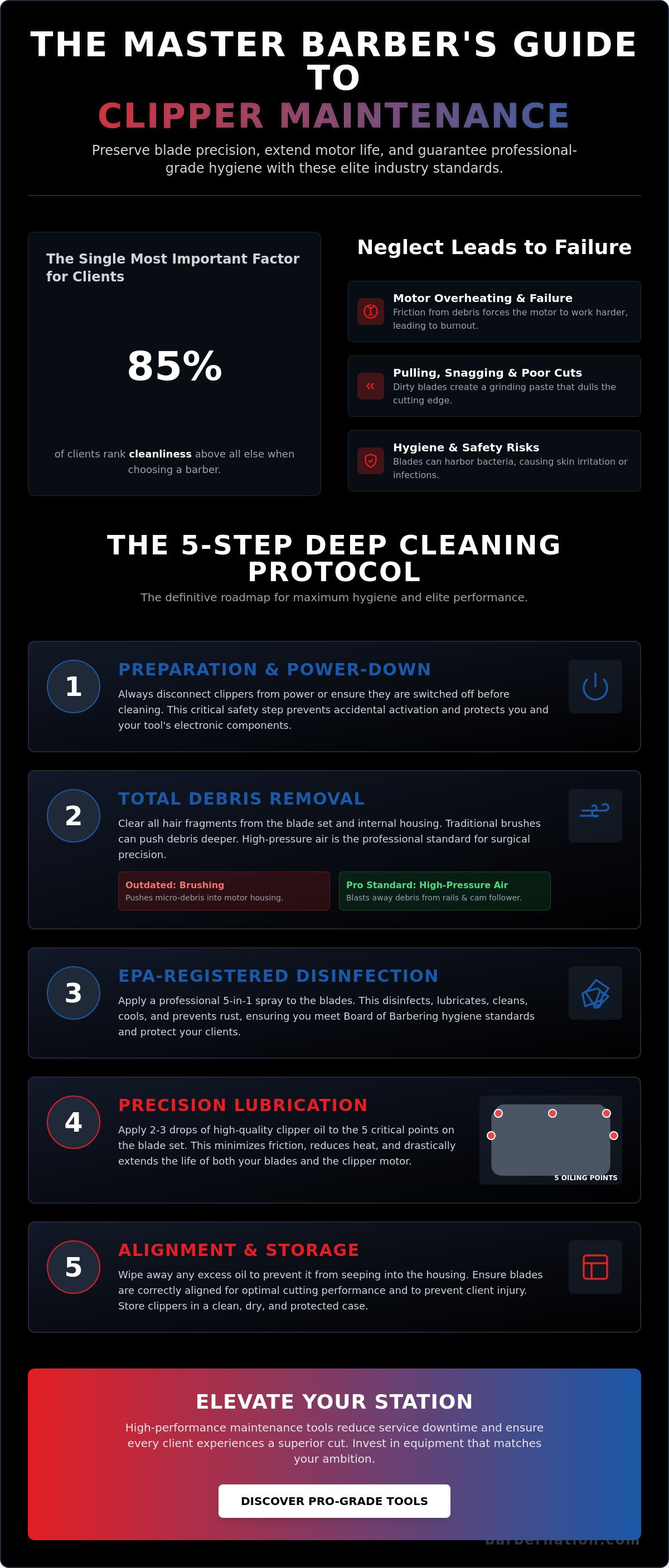
According to the Professional Beauty Association, 85% of clients rank cleanliness as the single most important factor when choosing a barber. It's a sobering statistic that highlights why your maintenance routine is just as vital as your fade technique. You know the frustration of a motor overheating during a busy shift or the anxiety of a surprise hygiene audit. When you're striving for excellence, you can't afford tools that pull, snag, or fail. Learning how to clean barber clippers isn't just about following rules; it's about respecting the art form and protecting your professional investment.
You deserve equipment that matches your ambition. We'll show you how to master the elite protocols that preserve blade precision, extend motor life, and guarantee professional-grade hygiene. By following these 2026 industry standards, you'll achieve faster cleaning turnarounds and superior tool reliability. This guide provides a definitive roadmap through the three pillars of professional mastery: thorough debris removal, EPA-registered disinfection, and precision lubrication. Elevate your standards, sharpen your performance, and secure your reputation as a master of the trade.
Key Takeaways
- Recognize maintenance as a foundational ritual that preserves blade precision and protects your motor from the destructive effects of heat and friction.
- Master a professional 5-step deep cleaning protocol to learn exactly how to clean barber clippers for maximum hygiene and elite performance.
- Transition from outdated manual brushing to high-pressure air solutions to clear debris from rails and housing with surgical efficiency.
- Optimize your tool’s mechanical health by mastering the physics of friction reduction and identifying the five critical oiling points on every blade set.
- Elevate your professional station with high-performance maintenance tools that reduce service downtime and ensure every client experiences a superior cut.
The Professional Standard of Clipper Hygiene and Maintenance
In the barbering profession, your tools are a direct extension of your skill and your reputation. Treating maintenance as a vital ritual ensures your equipment performs at its peak, client after client. When you neglect your gear, microscopic hair fragments and skin oils create a grinding paste between the blades. This friction generates excessive heat, which forces the motor to work harder and eventually leads to premature failure. True masters understand that how to clean barber clippers is a fundamental discipline that separates the amateur from the elite professional.
To better understand the impact of deep maintenance on your performance and your bottom line, watch this helpful video:
Dirty blades are a significant liability. They harbor bacteria and pathogens that cause skin irritation or infections, jeopardizing client safety and your professional standing. A master knows that a clean clipper isn't just about aesthetics; it's about precision, hygiene, and absolute trust. Adhering to the latest 2026 Board of Barbering standards protects your license and ensures every fade is executed with surgical accuracy.
Why Surface Cleaning Isn’t Enough
A quick brush-off between clients is a start, but it's far from a complete solution. Micro-debris and skin oils bypass the blade set and penetrate the internal clipper housing. Over time, this buildup clogs the rails and dampens the motor's vibration. You'll notice the signs: a change in the motor's pitch, blades that feel hot to the touch, or a noticeable drag during bulk removal. Utilizing advanced tools like the BarberNation TurboJet ensures that no micro-debris remains trapped in the housing. Mastering how to clean barber clippers at a deep level prevents these silent killers from degrading your high-performance tools.
The Economic Value of Tool Preservation
Think of maintenance as a strategy for financial growth. Replacing premium blade sets every few months is an avoidable expense that eats into your monthly margins. Proper care extends the life of your motor, keeps your cutting edge sharp for hundreds of additional services, and maintains the resale value of your equipment. When your tools run cool and efficient, you move through your schedule with greater speed and less physical fatigue. It preserves your edge, protects your motor, and promotes client safety. Tool preservation is a career-long investment that pays dividends in reliability and professional prestige.
The 5-Step Deep Cleaning Protocol for Master Barbers
Executing a flawless fade requires more than steady hands; it demands tools that operate at peak mechanical efficiency. A superficial wipe-down is insufficient for the high-volume environment of a modern shop. To truly master how to clean barber clippers, you must implement a structured, five-step deep cleaning protocol that addresses hygiene and mechanical integrity simultaneously. This process ensures your blades remain sharp and your motor stays cool during back-to-back appointments.
- Step 1: Preparation and Power-Down. Always disconnect your clippers from the power source or ensure cordless models are switched off. This prevents accidental activation and protects both the electronic components and your fingers during the cleaning process.
- Step 2: Total Debris Removal. Clear every fragment of hair from the blade set and the housing. While traditional brushes are common, they often push hair deeper into the crevices. Utilizing a high-pressure tool like the BarberNation TurboJet allows you to blast away micro-debris from the rails and cam follower with surgical precision.
- Step 3: Chemical Disinfection. Apply an EPA-registered 5-in-1 spray to the blades. These professional-grade solutions act as a disinfectant, lubricant, cleaner, rust preventative, and coolant. Ensure the blades remain wet for the manufacturer-recommended contact time to effectively kill pathogens.
- Step 4: Precision Lubrication. After disinfecting, apply high-grade clipper oil to the five critical points of the blade set. This reduces friction, prevents overheating, and extends the life of the cutting edges.
- Step 5: Final Alignment and Testing. Reassemble your tools and check the blade alignment. The moving blade must never overlap the stationary blade to prevent skin nicks. Run the clipper for 30 seconds to distribute the oil and listen for a smooth, consistent motor hum.
Disassembling for Depth
Daily maintenance is vital, but a weekly disassembly is what defines a master’s commitment to his craft. Remove the blade screws and lift the blade set to expose the cam follower and the drive bracket. These internal areas act as danger zones where hair dust and old grease accumulate, eventually slowing the motor. When disassembling, use a magnetic parts tray to organize your screws. Losing a single specialized screw can lead to unnecessary downtime and equipment repair costs.
Disinfection vs. Sanitization
Understanding the distinction between these two processes is critical for professional hygiene. Sanitization simply reduces the number of germs on a surface, but disinfection kills them entirely. In the barbering trade, we aim for full disinfection using EPA-registered sprays. Many professionals make the mistake of wiping the spray off immediately. For true disinfection, the solution must remain in contact with the metal for several minutes. Never submerge your entire clipper in liquid; moisture can destroy the internal circuitry and void your warranty. Mastering how to clean barber clippers means respecting the chemistry of your cleaning agents as much as the mechanics of the tool itself.
Advanced Debris Removal: Beyond the Traditional Brush
Elevate your maintenance standards by moving beyond the humble cleaning brush. While the traditional nylon brush has been a staple in the trade for decades, it possesses significant limitations in a high-volume environment. Brushes are often slow, physically repetitive, and counterproductive; they frequently push microscopic hair fragments deeper into the blade rails and motor housing rather than removing them. Mastering how to clean barber clippers effectively requires a shift from surface-level wiping to deep-level extraction.
High-pressure air serves as the superior method for maintaining tool integrity. By "blowing out" your clippers between every service, you ensure that no debris accumulates to create friction. This rapid intervention prevents motor drag, which occurs when hair buildup forces the internal components to work against unnecessary resistance. Clearing these pathways immediately reduces heat, preserves battery life, and maintains the consistent torque required for bulk removal and precision fading. It's a faster, cleaner, and more professional approach to station management.
The Advantage of Cordless Air Dusting
Distinguish your craft by choosing professional-grade equipment over consumer-level shortcuts. Many barbers reach for canned air, yet these products pose a hidden risk. Canned air often contains chemical propellants and moisture that can lead to internal corrosion over time. In contrast, a professional cordless duster provides a dry, focused stream of air that reaches the deepest teeth of the blade set. The BarberNation TurboJet FadeBlaster streamlines your station cleanup by delivering consistent power without the risk of moisture damage. It transforms a tedious chore into a five-second ritual of excellence, ensuring your tools are always ready for the next client.
Maintaining the Internal Housing
Preserve the heart of your machine by addressing the hidden hair pocket. Even without a full weekly disassembly, a high-velocity air stream can clear the housing through the gaps in the blade assembly. This simple action provides three distinct professional benefits: it removes abrasive dust, facilitates airflow to cool the motor, and prevents the "bogging down" sensation during intensive fading sessions. Beyond the mechanical advantages, a clean, hair-free station projects an image of elite hygiene and professional pride. Clients notice the difference between a cluttered workspace and a station where every tool is maintained to a surgical standard. This commitment to cleanliness is the hallmark of a master who views their trade as an elevated art form and treats their equipment with the respect it deserves.
The Mastery of Blade Lubrication and Alignment
Mastering how to clean barber clippers involves more than just removing hair; it requires understanding the mechanical synergy of the blade set. Your blades oscillate at thousands of strokes per minute. This high-speed movement creates intense friction and heat that can dull the metal and stress the motor. Lubrication is the essential final step that creates a microscopic cushion between the still and moving blades. Without it, you aren't just cutting hair; you're grinding your investment into the ground.
To achieve elite results, you must identify and treat the five critical oiling points on a professional clipper. Apply one drop of high-grade oil to each corner of the blade teeth, one drop in the center of the teeth, and one drop on each of the back rails where the blades meet. After application, turn the clipper on for 20 seconds. This "run-in" period uses the motor's own motion to distribute the lubricant evenly across the entire contact surface. Many barbers skip this step, but it's the difference between a tool that snags and one that glides.
A common objection among apprentices is that oil makes hair stick to the blades. This only happens when you use too much oil or a low-quality substitute. If you apply the correct amount and wipe away the excess, the blades remain clean and efficient. Before you apply your oil, ensure the blades are completely free of micro-debris. Equip your station with the right tools to ensure your gear is spotless before the lubrication stage begins.
How to Apply Clipper Oil Correctly
Precision is key. Use only dedicated clipper oil, as household lubricants or WD-40 are too thin and can evaporate or turn gummy under high heat. Once you've completed the 20-second run-in, take a clean cloth and wipe any visible oil from the exterior of the blades. You want the lubrication between the metal surfaces, not on the outside where it can transfer to the client. High-quality oil serves as a vital barrier that prevents blade oxidation and rust during storage.
Precision Blade Alignment and Zero-Gapping
Alignment is the final signature of a master. When reassembling your tools, ensure the moving blade is set slightly behind the stationary blade. A gap of 1/32 to 1/16 of an inch is standard for most services. If the moving blade overlaps the still blade, you will "bite" or nick the client's skin. Perform the "paper test" by running the clipper against the edge of a piece of paper. If it cuts cleanly without snagging or tearing, your alignment is secure. This attention to detail prevents nicks and ensures your zero-gap is sharp but safe. Mastering how to clean barber clippers and align them properly ensures your tools remain a reliable partner in your professional progression.
Elevating Your Station with Pro-Grade Maintenance Tools
Establishing a high-performance station is the final step in the mastery of your trade. While understanding the technical steps of how to clean barber clippers is vital, the tools you choose to execute those steps define your efficiency and your professional image. A master's station isn't just a place of work; it's a laboratory where precision meets hygiene. By curating an essential kit that includes EPA-registered disinfectants, high-grade lubricants, and advanced debris removal tools, you reduce service downtime and increase your daily earning potential.
Integrating the BarberNation Cordless Air Duster into your daily workflow represents a shift toward modern innovation. Instead of fumbling with traditional brushes or moisture-laden canned air, you utilize a high-velocity stream to reset your tools in seconds. This technology doesn't just clean; it preserves the motor's lifespan and maintains the tactical feel of your clippers throughout the shift. You position yourself as an innovator who invests in superior technology to protect both your craft and your clients.
Efficiency in the High-Volume Shop
In a high-volume shop, every second counts. Master the "30-second reset" between clients to maintain an elite standard of hygiene without falling behind schedule. Use high-pressure air to blast away hair fragments, apply a cooling spray to disinfect, and finish with a quick wipe to ensure a pristine presentation. This ritual has a profound psychological impact on your clients. They see your commitment to cleanliness, which builds the trust necessary for long-term retention. When your tools are spotless, you can seamlessly transition into advanced services, such as applying WATER RESISTANT HAIR ENHANCEMENT, knowing that no stray hairs or oils will compromise the final look.
The Path to Professional Growth
Your ability to execute advanced technical cuts is directly tethered to the condition of your equipment. A clipper that bogs down or a blade that pulls hair prevents you from reaching the next level of your career. View tool care as a continuous progression rather than a chore. By maintaining your gear to a professional-grade standard, you ensure that your equipment never limits your creativity or your speed. Take pride in your station and your skills. Explore the full BarberNation collection today to equip your craft with the best available technology. True mastery is the dual focus on the skill of the practitioner and the superior caliber of the equipment they use.
Mastering the Ritual of Professional Excellence
You've now secured the elite protocols required for total tool preservation and client safety. By moving beyond traditional brushing and embracing high-velocity extraction, you ensure your equipment operates with surgical precision during every fade. Remember that consistent lubrication and meticulous blade alignment are the final signatures of a master who respects the trade as an art form. Mastering how to clean barber clippers is no longer a simple routine; it's a strategic investment in your professional progression and your long-term reputation.
Efficiency in a high-volume shop requires maintenance tools that match your ambition. Upgrade your station with the BarberNation TurboJet FadeBlaster to experience the power of a professional-grade 100,000 RPM motor designed for total debris removal. This cordless solution is trusted by elite barbers for precision maintenance in fast-paced environments where every second counts. Secure your edge, protect your motor, and elevate your craft to the highest standard. True mastery is the dual focus on the skill of the practitioner and the superior caliber of the equipment they use.
Professional Maintenance Frequently Asked Questions
How often should I clean my clippers during a busy shift?
Clean and disinfect your tools between every single client to meet professional hygiene standards. This isn't just a best practice; it's a legal requirement in many jurisdictions, such as California under the 2026 Board of Barbering regulations. A quick 30-second reset using high-pressure air and an EPA-registered disinfectant spray keeps your station compliant and your reputation spotless.
Can I use WD-40 or vegetable oil to lubricate my clipper blades?
Never use WD-40 or household oils on your professional equipment. WD-40 is a solvent that evaporates quickly, leaving the metal unprotected, while vegetable oil becomes gummy and attracts abrasive debris. Use only dedicated, high-grade clipper oil designed to withstand the high heat and rapid oscillation of professional blade sets.
What is the difference between clipper spray and clipper oil?
Clipper spray is a multi-functional 5-in-1 solution designed for rapid disinfection, cooling, and light cleaning between services. Clipper oil provides the deep mechanical lubrication necessary to prevent metal-on-metal friction. Use spray for immediate hygiene and apply oil daily to ensure your tools maintain their surgical precision and motor longevity.
How do I know if my clipper blades need to be replaced or just cleaned?
Replace your blades if they continue to snag or pull hair after you've performed a deep clean and thorough lubrication. Inspect the teeth for visible chips, rounding, or persistent rust. If the cutting edge has lost its elite performance despite you knowing how to clean barber clippers properly, it's time to invest in a fresh blade set.
Is it safe to use a cordless air duster on all clipper brands?
Yes, a professional cordless air duster is safe and effective for all major clipper brands. It delivers a dry, moisture-free stream of air that clears micro-debris from the housing and rails without the risk of internal corrosion. This modern approach is far superior to canned air, which often contains chemical propellants that can damage sensitive internal components.
Why are my clippers getting hot so quickly after I clean them?
Rapid overheating usually signals excessive friction caused by inadequate lubrication or trapped hair fragments. Even if you've mastered how to clean barber clippers, skipping the oiling step forces the metal surfaces to grind together. This creates a temperature spike that stresses the motor and causes discomfort for your client.
How do I prevent rust from forming on my clipper blades?
Prevent rust by ensuring your blades stay dry and protected by a consistent film of clipper oil. Don't leave disinfectant spray on the metal longer than the manufacturer's recommended contact time. Moisture is the primary catalyst for oxidation; always wipe away excess liquid and store your tools in a low-humidity environment.
To further safeguard your professional equipment against environmental moisture during storage, find out more about Direct E-commerce Product Sales through Zerust’s specialized anti-corrosion technology.
What should I do if my clippers start making a loud rattling noise?
A loud rattling noise often indicates a loose blade screw or a worn cam follower. Power down the unit immediately and check the tension of your assembly. If the noise persists after tightening the screws, inspect the internal drive bracket for signs of mechanical wear that might require a part replacement to restore smooth operation.
Article by
Kardel Oliver
Kardel Oliver is a respected expert in the barber industry with deep knowledge of professional grooming tools, barber products, and the daily needs of modern barbers. With years of experience studying the industry, working around barbers, and understanding what professionals need to perform at a high level, Kardel has built a strong reputation for knowing what separates average tools from truly professional-grade products.
Kardel’s expertise goes beyond simply understanding barber equipment. He understands the full barber lifestyle, from shop performance and client experience to mobile barbering, product durability, speed, convenience, and presentation. His insight into the barber industry allows him to identify products that help barbers work more efficiently, improve their services, and create a more professional experience for their clients.
Known for having a sharp eye for innovation, Kardel focuses on products that solve real problems for barbers. Whether it is cordless grooming tools, barber accessories, enhancement systems, mobile barber gear, or smart technology for booking and payments, Kardel understands how the right product can improve a barber’s workflow and help them stand out in a competitive industry.
Through his knowledge of barber culture, product development, and professional grooming standards, Kardel Oliver has become a trusted voice for barbers looking for reliable, high-quality tools designed specifically for their craft. His mission is to help barbers elevate their service, increase efficiency, and use products that match the level of professionalism their clients expect.