

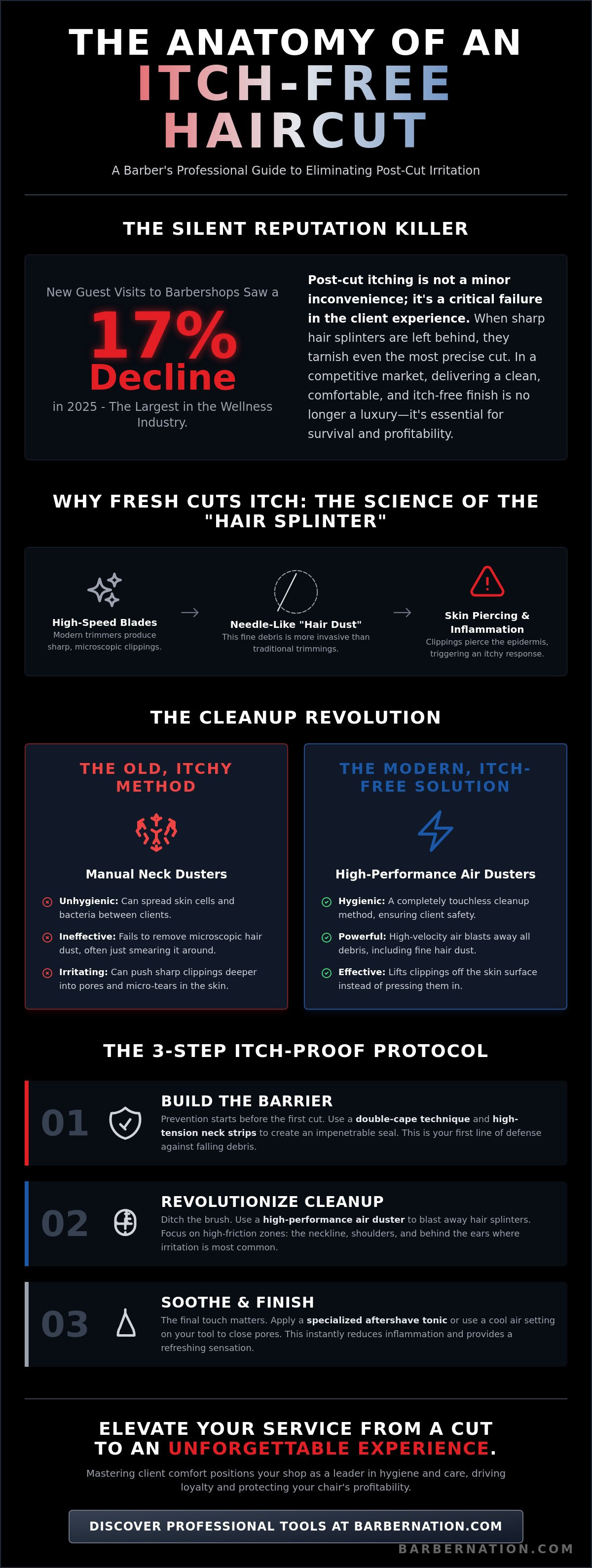
Post-cut itching isn't an inevitable side effect of a fresh fade; it's a fundamental failure of the cleanup process. When a client leaves your chair with hair splinters down their collar, you haven't just finished a service; you've delivered a lasting discomfort that can tarnish even the most precise technical work. With new guest visits to barbershops seeing a 17% decline in 2025, the largest drop in the entire wellness industry, the margin for error in client experience has never been thinner. You already know that your reputation is built on more than just the cut. It's built on the feeling of walking out of the shop clean, confident, and comfortable. Learning how to keep clients from itching after haircut is no longer a courtesy; it's a professional necessity to maintain high standards and protect your chair's profitability.
In this guide, you will master the professional techniques and high-performance tools required to eliminate post-cut irritation and deliver a premium, itch-free experience every time. We will explore the shift toward air-driven removal, the importance of proper neck protection, and the specialized equipment designed to accelerate your workflow. We'll show you how to streamline your workstation, increase your daily turnover, and ensure every client remains loyal to your craft. Elevate your trade from a routine service to an elevated art form that prioritizes the client's total comfort from the first clip to the final dust-off.
Key Takeaways
- Understand the "hair splinter" phenomenon to prevent microscopic clippings from piercing the skin and causing persistent post-cut irritation.
- Implement the double-cape technique and high-tension neck strips to build a professional-grade barrier against falling debris.
- Master how to keep clients from itching after haircut by replacing unhygienic manual brushes with high-performance, air-driven cleanup tools.
- Soothe the skin with specialized aftershave tonics and cool air to close pores and reduce inflammation instantly after close technical work.
- Elevate your service into a premium art form that drives higher retention and positions your shop as a leader in client comfort and hygiene.
The Science of the Itch: Why Hair Clippings Irritate the Skin
Precision in the cut is only half the battle. To truly master the trade, you must understand the physical mechanics of the hair splinter. When hair is severed by high-speed blades, the resulting clippings possess sharp, needle-like edges. These microscopic shards don't just sit on the skin; they pierce the epidermis. This mechanical intrusion triggers an immediate inflammatory response, leading to the prickly, restless sensation that plagues clients long after they leave your shop. Understanding this biological reaction is the first step in learning how to keep clients from itching after haircut and ensuring your work remains a source of pride rather than a nuisance.
Friction serves as the primary catalyst for this discomfort. As a client moves, their collar and clothing act as a press, grinding these sharp clippings deeper into the skin's surface. This irritation is most aggressive in high-mobility zones like the neckline, the nape, and the delicate skin behind the ears. While most post-cut discomfort is purely mechanical, it's vital to distinguish this from medical conditions. Mechanical irritation is caused by external debris, whereas "Barber’s Itch" or Pseudofolliculitis barbae involves internal inflammation or infection of the hair follicles. Differentiating between these two allows you to provide better advice and adjust your technical approach for sensitive clients.
To better understand this concept, watch this helpful video:
Micro-Clippings vs. Traditional Trimmings
Modern fade techniques and zero-gapped trimmers have changed the nature of the cleanup. These tools produce a fine hair dust that is significantly more invasive than traditional long trimmings. These micro-particles easily bypass standard capes and loose neck strips, finding their way into the pores and sticking to the skin's natural oils. Traditional methods often fail to dislodge this microscopic debris. For professionals who specialize in high-volume, high-detail work, utilizing tools from the Turbojets collection provides the air-driven force necessary to clear this dust before it becomes trapped by the client's skin moisture.
The Impact of Skin Sensitivity
Every client possesses a unique threshold for irritation. Some individuals suffer from reactive skin or dermatographia, where even light pressure causes visible welts and intense itching. Your equipment plays a decisive role here. Dull clipper blades don't just cut; they tug and create micro-tears in the skin. These tiny wounds provide an open door for hair splinters to enter, magnifying the discomfort. When a client associates your chair with a day of scratching and redness, it erodes your brand's prestige. Mastering how to keep clients from itching after haircut is about protecting your reputation as much as it is about comfort. High standards in tool maintenance and cleanup protocols ensure that your art form is remembered for its excellence, not its aftermath.
Professional Preparation: Building a Barrier Against Irritation
Excellence in the barbershop is defined by the details that occur before the first clipper pass. Preventing irritation is a proactive discipline; it's the foundation of a premium experience. When you focus on how to keep clients from itching after haircut, you're investing in the longevity of your professional relationships. The most effective defense is a multi-layered barrier system. By mastering the double-cape technique, you create a fail-safe environment that catches micro-clippings before they ever reach the client's skin. This method involves layering a primary cutting cape over a secondary lightweight protective layer, ensuring that no stray hairs find their way into the collar or down the back.
High-quality, high-tension neck strips are non-negotiable for this process. In 2026, regulations like those from the California Board of Barbering and Cosmetology strictly require a sanitary neck strip or towel to prevent direct contact between the cape and the client's skin. This isn't just about compliance; it's about hygiene and comfort. A tight, secure seal at the neckline prevents the "hair splinter" phenomenon from the start. Integrating high-performance tools like those found in the Turbojets collection into your setup ensures that your preparation is matched by a superior cleanup. Protect the skin, preserve the garment, and promote total comfort.
Advanced Caping Techniques
Select your materials with care. Modern capes made from specialized polyester or nylon allow hair to slide off instantly rather than clinging to the fabric. When caping, ensure a zero-gap seal at the neckline. It must be snug enough to block microscopic dust but comfortable enough for the client to breathe easily. For clients with extra-sensitive skin, placing a secondary soft towel around the nape provides an additional layer of cushioning and absorption, catching any moisture that might otherwise trap hair dust against the skin.
Skin Preparation Protocols
Modern professionals are moving away from traditional talc, which can be messy and unhygienic. Instead, apply modern barrier sprays or lightweight pre-cut tonics. These create an invisible shield on the skin, preventing hair from adhering to natural oils. Pay attention to your shop's temperature. Heat dilates pores, making the skin a magnet for micro-clippings. Keep your environment cool to ensure pores stay tight. Always perform a quick visual check for skin abnormalities or existing irritation before the first pass of the clipper. This technical diligence elevates your service from a routine task to an elevated art form, ensuring every client leaves your chair feeling refreshed and irritation-free.
The Cleanup Revolution: Manual Brushes vs. Professional Air Dusters
The final three minutes of a service often dictate whether a client returns or looks elsewhere. While your technical fade may be flawless, leaving a client covered in microscopic debris is a failure of professional standards. Many shops still rely on outdated manual methods, yet understanding how to keep clients from itching after haircut requires a modern, technological solution. The shift from manual brushing to air-driven removal represents more than just a tool upgrade; it is a commitment to hygiene, speed, and superior client comfort. By replacing friction with force, you ensure that every micro-clipping is cleared before it can embed itself into the skin.
The Limitations of the Traditional Neck Brush
Traditional neck brushes are increasingly viewed as a liability in the modern shop. These tools are notoriously difficult to sanitize, as hair and skin oils become trapped deep within porous bristles. With OSHA fines for health and safety violations reaching up to $16,131 per occurrence as of June 2026, maintaining absolute hygiene is a financial imperative. Beyond the risk of cross-contamination, brushes are mechanically ineffective. Rather than lifting hair away, the sweeping motion often pushes microscopic dust deeper into the client's pores. On freshly shaved skin, stiff bristles can cause additional micro-abrasions, exacerbating the very irritation you are trying to prevent.
Why the BarberNation TurboJet is the Industry Standard
The modern standard for high-volume environments is concentrated, cool air. The BarberNation TurboJet FadeBlaster delivers the precision power needed to lift hair from the skin, clothing, and even the deepest crevices of the ear. Unlike bulky blow dryers that use heat and lack focus, this specialized air duster provides a targeted stream that clears debris without causing thermal irritation. Its cordless design aligns with the 2026 industry standard for primary tools, offering the ergonomic flexibility required for all-day professional use. For shops with diverse needs, the broader TurboJet collection provides various performance levels to match any workstation setup.
This air-driven approach eliminates the common client complaint of needing to shower immediately after a cut. By providing a "walk-out ready" experience, you respect your client's time and elevate your shop's reputation. A professional cleanup should be thorough enough that a client can head straight to a meeting or a dinner date without a single itch. This level of detail transforms a routine service into a premium art form, ensuring your chair remains the definitive choice for the discerning modern professional.
Post-Cut Skin Care: Soothing the Nape and Scalp
The technical execution of a fade is only as good as the skin's recovery. Once you have cleared the bulk of the hair debris, the skin remains in a sensitized state, with pores often dilated from the friction of the clippers and the warmth of the shop environment. Mastering how to keep clients from itching after haircut requires a final, deliberate focus on skin recovery. You must soothe the epidermis, close the pores, and neutralize any remaining microscopic irritants. This final phase of the service is what separates a routine trim from a premium art form, ensuring the client feels as good as they look.
Calming the Epidermis
Selecting the right post-cut product is a matter of technical chemistry. For clients with oily or resilient skin, a traditional alcohol-based tonic provides a necessary antiseptic effect and tightens the skin. However, for those with sensitive skin or existing redness, an alcohol-free balm containing witch hazel or aloe is essential to prevent stinging. Apply these products with a light, patting motion rather than rubbing, which can push any missed micro-clippings deeper into the skin. Utilizing WATER RESISTANT HAIR ENHANCEMENT during the finishing stages can also serve a dual purpose; it provides a crisp, defined hairline while creating a temporary protective seal that guards the skin against stray fibers during the final styling.
The "Cool Down" Phase
Temperature control is a powerful tool for reducing post-cut inflammation. A final pass with a professional air duster provides more than just cleanup; it delivers a cooling sensory experience that triggers vasoconstriction, effectively calming the skin. This step is particularly critical for the ears and face, where skin is thinnest and most prone to reacting to hair dust. "A master barber knows that the service isn’t finished until the last micro-clipping is cleared from the client’s skin." By focusing on these often-overlooked areas, you eliminate the hidden sources of irritation that lead to the "need to shower" complaint.
Educate your clients on their role in this process. Advise them to rinse with cool water if they feel any residual prickliness at home and to avoid tight, abrasive collars for the next few hours. This professional guidance reinforces your authority and ensures the "zero-itch" experience lasts long after they leave your chair. Equip your station for excellence and provide the ultimate finish by choosing the BarberNation Cordless Air Duster for your final cleanup protocol.
Elevating the Client Experience: From Service to Art Form
In a competitive landscape where new guest visits to barbershops saw a 17% decline in 2025, the ability to retain a loyal clientele is the ultimate marker of success. Technical precision is expected, but true professional growth comes from mastering the nuances of the client's sensory experience. Leading grooming destinations like The Barber House prove that when you resolve the challenge of how to keep clients from itching after haircut, you move beyond providing a basic utility. You're crafting a premium environment where comfort is as meticulously designed as the fade itself. This commitment to a "zero-itch" reputation transforms your chair into a destination for those who value both style and personal comfort.
The Business Value of Comfort
Investing in superior equipment isn't just about aesthetics; it's a calculated move to protect your profit margins. With well-managed salons in 2026 seeing margins between 10% and 25%, operational efficiency is critical. Professional air-driven cleanup tools reduce the time spent on manual brushing, allowing for faster chair turnover during back-to-back appointments. This efficiency pays dividends in both increased daily volume and higher client retention. By marketing your specific "Clean & Comfortable" protocol, you attract clients who are tired of the post-cut "hair splinter" struggle. Distinguish your work by framing it as an elevated grooming experience, ensuring your shop remains at the forefront of the industry's technological evolution.
Final Exit Protocol
The final moments of the service should reinforce the high standards you've maintained throughout the cut. A master barber understands that the reveal is only successful if the client feels clean. Implement a disciplined 30-second total body duster sweep as your signature finish. Focus on these key areas:
- Shoulders and Back: Clear all visible debris from the client’s clothing to prevent hair from migrating under the collar.
- Facial Contours: Use a targeted air stream to remove micro-dust from the ears, forehead, and beard line.
- Collar Audit: Carefully check for trapped clippings inside the neckline before the cape is fully removed.
This systematic approach ensures a perfect, irritation-free exit every time. It's the definitive signature of a professional who treats their trade as an art form. To maintain this level of excellence and ensure your workstation reflects your ambition, upgrade your station with BarberNation gear. Elevate your craft, protect your clients, and secure your place as a leader in the specialized global community of master barbers. Precision in the cut, perfection in the finish.
Mastering the Standard of Modern Excellence
Elevating your trade requires a commitment to every detail of the client’s journey. By mastering the mechanical science of hair splinters and implementing high-performance barrier techniques, you safeguard your reputation and your chair’s profitability. Transitioning from manual brushes to air-driven removal isn't just an upgrade; it’s a standard of excellence that distinguishes a master from a routine practitioner. You now possess the professional blueprint for how to keep clients from itching after haircut, ensuring every guest leaves with the confidence of a precision finish and the comfort of total skin recovery.
To reach the next level of efficiency and prestige, you must equip your workstation with tools that match your ambition. Upgrade your shop with the BarberNation TurboJet FadeBlaster to experience high-velocity cordless precision. Engineered for the modern master barber and used by top-tier professionals nationwide, this tool ensures your art form is never compromised by stray clippings. Continue to refine your craft, embrace innovation, and lead the trade through the unmatched skill of the practitioner and the superior caliber of the equipment they use.
Frequently Asked Questions
Why do I always feel itchy after a haircut even if I wear a cape?
Microscopic hair clippings, often referred to as hair splinters, easily bypass the neckline of a standard cape and lodge themselves into your skin or clothing. These sharp shards are small enough to fall through the gaps between the cape and your neck, especially if a high-tension seal isn't established. Once trapped, the natural movement of your body creates friction that grinds these needle-like particles into the epidermis, causing persistent discomfort.
Is it normal for my neck to be red and itchy after a fade?
Mild redness is a common mechanical reaction to the high-speed blades used in close technical work, but persistent itching usually indicates trapped debris. Sharp micro-clippings cause immediate irritation when they aren't properly cleared from the skin's surface. Master barbers prioritize how to keep clients from itching after haircut by utilizing high-velocity air and soothing tonics to close the pores and remove every irritant before the client leaves the chair.
How do professional barbers remove hair from clothes so effectively?
Concentrated, cool air is the most effective professional method for dislodging hair from fabric fibers. Unlike traditional brushes or lint rollers that can push hair deeper into the weave of a shirt, a targeted air stream lifts the clippings out entirely. This air-driven approach ensures a "walk-out ready" finish, allowing clients to proceed to their next engagement without the need for an immediate shower or change of clothes.
Can a cordless air duster replace a traditional neck brush?
The BarberNation Cordless Air Duster is the superior, modern replacement for traditional neck brushes in high-volume professional environments. It delivers a touch-free, hygienic cleanup that eliminates the cross-contamination risks associated with porous brush bristles. This technological shift allows you to clear debris from the ears, neckline, and face with greater precision while accelerating your workstation turnover. Transitioning to air-driven tools is a decisive step in learning how to keep clients from itching after haircut.
What is the best product to put on a client’s neck to stop itching?
An alcohol-free aftershave balm or a witch hazel-based tonic is the industry standard for neutralizing post-cut inflammation. These products work to hydrate the epidermis, calm the skin, and close the pores that were opened during the service. For an even more professional finish, applying WATER RESISTANT HAIR ENHANCEMENT can create a temporary protective barrier that prevents stray fibers from adhering to the skin during the final styling phase.
How can I tell the difference between hair irritation and an allergic reaction?
Mechanical irritation from clippings typically presents as localized redness and a prickly sensation that subsides once the hair is removed and the skin is cooled. An allergic reaction often involves more severe symptoms such as hives, intense swelling, or a spreading rash. If discomfort persists after a thorough cleanup and a cool water rinse, the client may be reacting to a specific styling product, metal, or disinfectant used on the tools.
How often should I clean my barber duster or brushes?
Traditional neck brushes must be sanitized with hospital-grade disinfectant after every single client to meet modern health and safety standards. Failure to do so can lead to significant OSHA fines and the spread of skin infections. Professional air dusters require far less maintenance, typically only needing a weekly filter inspection and a quick exterior wipe-down. This efficiency allows you to focus more on your craft and less on time-consuming sanitation protocols.
Does the type of hair (coarse vs. fine) affect how much it itches?
Coarse hair produces stiffer, sharper clippings that act like microscopic needles, piercing the skin more aggressively than finer textures. Fine hair creates a dense, lightweight dust that is often harder to see and more difficult to remove with a standard brush. Both hair types require a high-performance air cleanup to ensure that no debris is left behind to irritate the client’s skin or ruin their experience.
Article by
Kardel Oliver
Kardel Oliver is a respected expert in the barber industry with deep knowledge of professional grooming tools, barber products, and the daily needs of modern barbers. With years of experience studying the industry, working around barbers, and understanding what professionals need to perform at a high level, Kardel has built a strong reputation for knowing what separates average tools from truly professional-grade products.
Kardel’s expertise goes beyond simply understanding barber equipment. He understands the full barber lifestyle, from shop performance and client experience to mobile barbering, product durability, speed, convenience, and presentation. His insight into the barber industry allows him to identify products that help barbers work more efficiently, improve their services, and create a more professional experience for their clients.
Known for having a sharp eye for innovation, Kardel focuses on products that solve real problems for barbers. Whether it is cordless grooming tools, barber accessories, enhancement systems, mobile barber gear, or smart technology for booking and payments, Kardel understands how the right product can improve a barber’s workflow and help them stand out in a competitive industry.
Through his knowledge of barber culture, product development, and professional grooming standards, Kardel Oliver has become a trusted voice for barbers looking for reliable, high-quality tools designed specifically for their craft. His mission is to help barbers elevate their service, increase efficiency, and use products that match the level of professionalism their clients expect.