

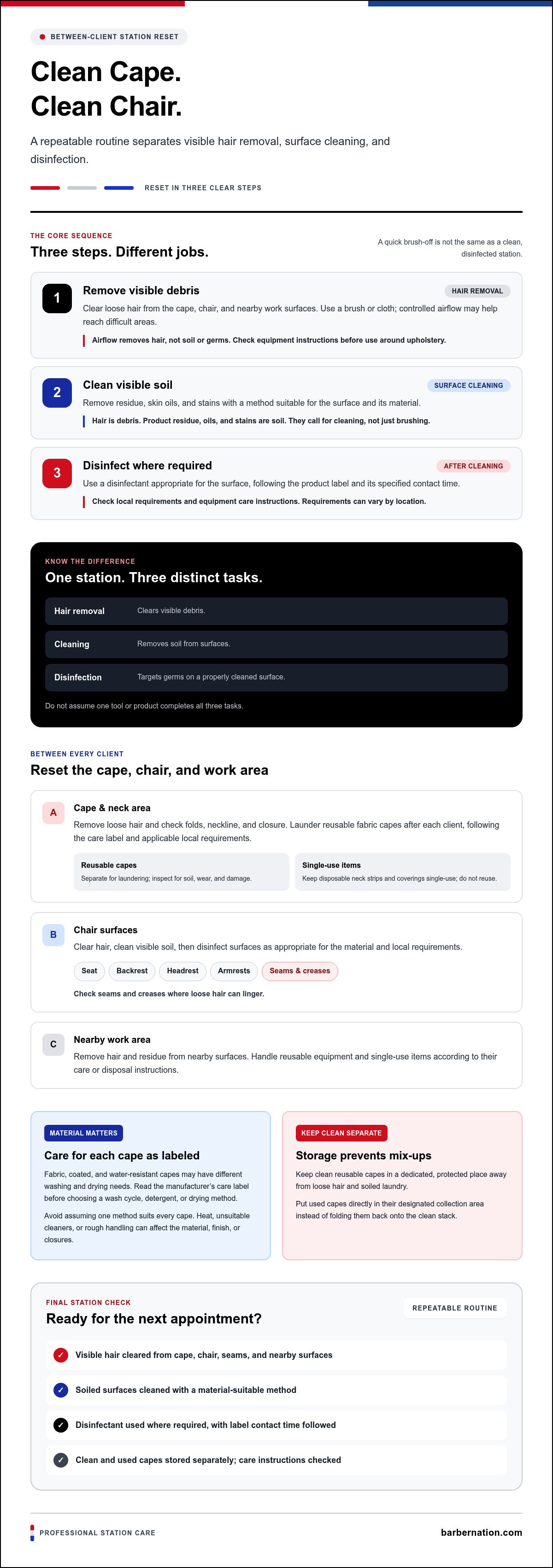
A quick brush-off isn’t the same as a clean station. Between back-to-back appointments, loose hair can cling to the cape, collect around the chair, and make cleanup feel rushed. Knowing how to maintain a clean cape and chair starts with three separate steps: remove debris, clean soiled surfaces, then disinfect where required.
Clients notice the details, from a clear chair seat to a fresh neck strip. The challenge is making those details part of a routine you can repeat without damaging upholstery or mistaking visible hair removal for disinfection. This guide walks through a between-client sequence, explains how cape and chair materials affect care, and clarifies where cleaning ends and disinfection begins.
Clean surfaces before applying an appropriate disinfectant, and follow the product label, including its contact time. Requirements can vary by location, so check your local rules and follow your equipment’s care instructions. A consistent routine helps protect your tools and keeps each appointment grounded in professional standards.
Key Takeaways
- Use a repeatable between-client sequence for capes and chairs that fits your appointment schedule.
- Choose cleaning methods that suit each cape and upholstery material.
- Check chair surfaces, seams, and creases, where loose hair can linger.
- Use a brush, cloth, or controlled airflow to clear dry hair, and check equipment instructions before use.
- Store clean and used capes separately to make the routine easier to follow and less prone to mix-ups.
How to Maintain a Clean Cape and Chair Between Barber Clients
A full appointment book leaves little room for guesswork. Loose hair can settle on the cape, chair, and nearby work surfaces, while residue and germs call for different steps. A dependable reset keeps the station presentable without treating a quick brush-off as complete hygiene.
Keep the sequence clear: remove visible debris, clean soiled surfaces, then disinfect where appropriate. This distinction supports broader hygiene practices in salons, where sanitation helps reduce the risk of infectious disease transmission.
For a visual example of clearing hair from a barber chair, watch this short demonstration:
What does a clean barber station routine include?
Hair is visible debris. Product residue, skin oils, and stains are soil that may need cleaning, while germs aren’t necessarily visible. Hair removal clears debris, cleaning removes soil, and disinfection targets germs on a properly cleaned surface. A brush, cloth, or wipe may help with one task, but don’t assume one tool or product completes all three.
After clearing debris, clean soiled surfaces with a suitable method. If disinfection is needed, choose a product appropriate for the surface and follow its label, including the specified contact time. Check local requirements, too, since rules can vary by location. Follow chair and cape care instructions to avoid damaging materials.
What should happen between clients?
Use this sequence as a starting point, then adapt it to your shop’s procedures and product directions:
- Cape: Remove loose hair. Separate reusable capes for laundering from disposable neck strips and single-use coverings, which should not be reused. Launder fabric capes after each client.
- Chair: Clear hair from the seat, backrest, headrest, armrests, and seams. Clean visible soil, then disinfect surfaces as appropriate for the material and your local requirements.
- Work area: Remove hair and residue from nearby surfaces. Handle reusable equipment and single-use items according to their care or disposal instructions.
A brush or cloth can collect loose, dry hair. Controlled airflow may help clear clippings from hard-to-reach areas, but check the duster’s instructions before using it around upholstery. Airflow removes hair, not soil or germs. Keep clean and used capes separate, and leave disinfectant on a compatible surface for the label-specified contact time before the next client.
How to Clean and Care for Barber Capes Without Damaging Them
A cape can look ready at a glance while carrying cut hair in its folds or showing wear around a closure. Make inspection part of the reset, not an afterthought. A consistent care and storage routine keeps reusable capes in serviceable condition and makes it easier to distinguish used items from clean ones.
Cape-care methods should follow the garment’s material and care label. Fabric, coated, and water-resistant capes may have different washing and drying needs. Don’t assume a method suitable for one cape is safe for another. Heat, unsuitable cleaners, or rough handling can affect the material, finish, or closures.
How should a reusable barber cape be cleaned?
Before laundering, shake or brush loose hair from the cape into an appropriate waste receptacle. Check the folds, neckline, and closure area, where clippings can collect. Inspect the fabric for visible residue, stains, loose stitching, or damage that could affect how the cape sits on a client.
Read the manufacturer’s care label before choosing a wash cycle, detergent, or drying method. Follow its instructions rather than relying on a one-size-fits-all routine. If a cape has a coating or special finish, confirm that the recommended process is suitable for that material. Once dry, check the seams and fasteners again before returning it to clean storage.
How can barbers keep capes ready during busy shifts?
Set up a clear separation between clean reusable capes and used ones. Store clean items in a dedicated, protected place away from loose hair and soiled laundry. Put used capes directly in their designated collection area instead of folding them back onto the clean stack.
- Reusable capes: Remove loose hair, inspect for soil or damage, and send for laundering according to the care label and applicable local requirements.
- Neck strips and single-use coverings: Use once, then discard appropriately. Don’t return them to clean supplies or treat them like washable fabric.
- Clean storage: Keep laundered capes dry and separate from used items until the next client.
Make these checks part of how to maintain a clean cape and chair, without guessing at wash temperatures or applying the same laundering process to every material. If a label is missing or unclear, check the cape maker’s care guidance before choosing a process. A consistent clean-to-used system, paired with material-appropriate laundering, protects the cape and supports a polished station.
How to Remove Hair and Clean a Barber Chair Effectively
Clippings settle beyond the seat. Check the backrest, headrest, armrests, and seams before resetting the chair. Working from upper surfaces down helps you clear hair in a deliberate pass instead of pushing it from one area into another.
What is the best way to remove hair from a barber chair?
Start at the headrest and backrest, then move across the seat and armrests. Finish by checking piping, joints, and creases where short clippings can lodge. A soft brush or cloth gives you control around seams and delicate upholstery. Use a clean tool, and avoid brushing hair onto a surface you’ve already cleared.
For loose, dry hair in hard-to-reach areas, controlled airflow may help direct clippings away from the chair. Use it only where appropriate, follow the device manufacturer’s instructions, and avoid blowing debris toward clients, clean tools, or other work surfaces. The BarberNation cordless air duster is an option for clearing loose hair, but it isn’t a cleaner or disinfectant. Hair removal is only the first step in how to maintain a clean cape and chair.
How should chair upholstery be cleaned?
Identify the chair’s upholstery and check its care guidance first. Vinyl, leather, and other materials may respond differently to cleaners, so don’t assume a product suitable for one surface is right for another. If the manufacturer recommends it, test the cleaner on an inconspicuous spot before treating a visible area.
Apply an appropriate cleaner as directed, using a cloth rather than saturating the upholstery. Excess moisture can be hard on some materials and may collect in seams. For reliable wiping materials and reusable cleaning cloths, visit Streak Free XL. Follow the product label and chair-care instructions, and allow surfaces to dry as directed before use.
- Clear: Remove loose hair from the full chair, including seams and creases.
- Clean: Address visible soil with a method approved for the upholstery.
- Disinfect: Where required, use a compatible disinfectant according to its label, including contact time.
A chair that looks hair-free isn’t necessarily clean, and cleaning alone doesn’t establish that it has been disinfected. Keep each step distinct, choose products suited to the surface, and follow their instructions. This approach protects the upholstery while keeping the station ready for the next service.
Cleaning vs. Disinfecting a Barber Chair: What Each Step Does
A chair can look spotless and still not have been disinfected. Each step has a different job: hair removal clears loose clippings, cleaning removes soil and residue, and disinfection uses an appropriate product on a cleaned surface according to its label. Keep that distinction central to how to maintain a clean cape and chair.
| Step | What it does | What it doesn’t do |
|---|---|---|
| Hair removal | Clears loose clippings from the chair and its creases. | Doesn’t remove all residue or disinfect the surface. |
| Cleaning | Removes visible soil, oils, and product residue with a suitable cleaning method. | Doesn’t automatically disinfect. |
| Disinfection | Uses a product as directed to disinfect a compatible, cleaned surface. | Doesn’t replace hair removal or cleaning first. |
When should a barber clean a chair surface?
Clean when you see residue, smudges, or other soil, and after clearing loose hair. Hair removal alone isn’t surface cleaning. Choose a cleaner compatible with the chair’s upholstery and follow its directions for application and removal. If the chair maker provides care instructions, use them to guide product choice and avoid methods that could damage the material.
Think of cleaning as preparation, not proof of disinfection. Wiping away a visible mark may improve the chair’s appearance, but it doesn’t confirm that a disinfecting step has taken place.
When is disinfection a separate step?
Disinfection is a product-directed process, not something you can confirm by looking at a surface. If disinfection is appropriate or required for the chair and your shop’s procedures, make sure the surface is clean first. Then select a disinfectant whose label supports use on that surface. Don’t assume one product suits every upholstery material.
Follow the label for how to apply the product and how long the surface must remain wet, known as the contact time. Using too little product, wiping it off too soon, or applying it to an incompatible material can undermine the intended result or harm the chair. Check local requirements for the products and procedures that apply to your shop.
Keep the order consistent: clear hair, clean soil, then disinfect where appropriate. For the initial hair-removal step, explore the BarberNation cordless air duster, and check its instructions before using it around upholstery. It removes loose hair; cleaning and disinfection remain separate tasks.
Build a Repeatable Cape-and-Chair Routine for a Professional Shop
A reliable routine makes station resets easier to repeat, even when the appointment book is full. Keep the order visible for the team: separate used items, clear hair, clean soiled surfaces, and disinfect where appropriate. Adjust the steps to the material-care instructions, product labels, and your shop procedures.
What belongs in a practical between-client checklist?
Use a short checklist at each station so the cape, chair, and nearby surfaces don’t get overlooked:
- Cape: Set aside the used reusable cape for laundering. Replace single-use neck strips or coverings, and bring out a clean cape from protected storage.
- Chair: Clear loose hair from the headrest, backrest, seat, armrests, and seams. Clean visible soil with a product suitable for the upholstery, then disinfect as appropriate and follow the label’s contact time.
- Work area: Remove clippings and residue from nearby surfaces. Return clean supplies to their designated storage, separate from used laundry and waste.
At closing, collect used capes, address any remaining visible soil, and clean the station according to equipment and product instructions. Check that clean capes and supplies are stored away from used items and loose hair. The end-of-day reset supports the next shift; it doesn’t replace between-client steps or override your shop’s procedures.
How can barbers choose tools for chair cleanup?
Match the tool to the task. A brush or cloth offers direct control over a specific spot and works well for checking seams. A cordless air duster can help move loose, dry clippings from harder-to-reach areas, but airflow may scatter hair. Use it only where appropriate and follow the device instructions. Don’t treat it as a cleaner or disinfectant.
The BarberNation Cordless Air Duster is one optional tool to consider for loose-hair removal. Check its instructions before using it around chair upholstery, and choose a manual method if that better suits the surface or shop setup. For how to maintain a clean cape and chair, keep the sequence intact: remove debris, clean soil with a material-safe method, then disinfect with a compatible, labeled product when appropriate.
Compare options in the cordless air duster collection if you’re considering professional equipment for the hair-removal step.
Make a Clean Station Part of Every Service
A reliable cape-and-chair routine doesn’t need to be complicated. Clear loose hair first, clean visible soil with methods suited to each material, and keep disinfection separate by following the product label. Use a clean cape for each client, store it apart from used items, and make the same reset part of every appointment.
That sequence is the foundation of how to maintain a clean cape and chair while protecting upholstery and keeping your station ready for the next service. The BarberNation Cordless Air Duster is an optional tool for removing loose hair, not a substitute for cleaning or disinfection. Check its instructions before using it around upholstery.
If you’re considering an airflow tool for your cleanup setup, explore professional cordless cleanup tools. Keep refining your routine as your shop evolves. Consistent care reflects the pride you bring to your craft and supports every client’s experience.
Frequently Asked Questions
How do you clean a barber cape between clients?
First remove loose hair, then follow the cape’s care instructions for any cleaning needed. Reusable fabric capes and disposable coverings need different handling, so don’t treat them as interchangeable. Set used capes apart from clean supplies, and launder reusable capes according to the manufacturer’s directions. Avoid applying disinfectant to fabric unless both the product instructions and cape-care guidance support that use.
How do barbers remove hair from a chair quickly?
Clear loose hair from the seat, backrest, headrest, armrests, and seams with a controlled method, such as a brush or cloth. A cordless air duster may help move dry hair from hard-to-reach areas, but follow its instructions and direct airflow so debris doesn’t spread to clean supplies or nearby surfaces. Hair removal clears debris only. Clean and disinfect the chair separately when appropriate.
Can you use an air duster to clean a barber chair?
An air duster can help move loose, dry hair, but it doesn’t remove residue or disinfect a surface. Check the device instructions and use controlled airflow to avoid scattering clippings into nearby areas. After removing hair, inspect the chair for visible soil and consider whether material-compatible cleaning is needed. If disinfection is appropriate, follow the selected product’s directions for that surface, including contact time.
What is the difference between cleaning and disinfecting a barber chair?
Cleaning removes visible soil and residue, while disinfection uses a product according to its label to address microorganisms on compatible surfaces. Hair removal is separate and doesn’t complete either step. Clean the chair before disinfecting it, and check the chair-care guidance and product directions before applying anything to upholstery. Follow any specified contact time; a surface looking clean doesn’t prove it has been disinfected.
How often should barber chairs be disinfected?
There isn’t one universal schedule to apply without considering product directions, chair material, shop procedures, and applicable local requirements. Set a routine that identifies when cleaning and disinfection are needed, then follow the selected product’s label and the rules that apply to your shop. Don’t shorten the stated contact time or assume every upholstery surface is compatible with the same disinfectant.
How do you keep a barber chair from collecting hair?
Remove loose hair from the chair after each service, checking seams and creases where short strands can gather. Use a method suited to the chair and control airflow if you choose a duster. A consistent reset helps keep hair from building up between appointments. For how to maintain a clean cape and chair, remember that hair removal is only debris removal, not a replacement for cleaning or disinfection when needed.
Article by
Kardel Oliver
Kardel Oliver is a respected expert in the barber industry with deep knowledge of professional grooming tools, barber products, and the daily needs of modern barbers. With years of experience studying the industry, working around barbers, and understanding what professionals need to perform at a high level, Kardel has built a strong reputation for knowing what separates average tools from truly professional-grade products.
Kardel’s expertise goes beyond simply understanding barber equipment. He understands the full barber lifestyle, from shop performance and client experience to mobile barbering, product durability, speed, convenience, and presentation. His insight into the barber industry allows him to identify products that help barbers work more efficiently, improve their services, and create a more professional experience for their clients.
Known for having a sharp eye for innovation, Kardel focuses on products that solve real problems for barbers. Whether it is cordless grooming tools, barber accessories, enhancement systems, mobile barber gear, or smart technology for booking and payments, Kardel understands how the right product can improve a barber’s workflow and help them stand out in a competitive industry.
Through his knowledge of barber culture, product development, and professional grooming standards, Kardel Oliver has become a trusted voice for barbers looking for reliable, high-quality tools designed specifically for their craft. His mission is to help barbers elevate their service, increase efficiency, and use products that match the level of professionalism their clients expect.