

Your clippers aren't just tools; they're the bridge between a routine service and an elevated art form. You likely already understand that a packed schedule leaves little room for error, yet the pressure to master barber tool maintenance often feels like a race against the clock. It's frustrating to watch high-performance shears lose their edge or clippers fail prematurely because of improper chemical use or trapped debris.
This guide transforms your daily routine into a streamlined, high-performance workflow that protects your equipment and your reputation. You'll learn how to master the three pillars of decontamination, utilize high-velocity air cleaning for maximum efficiency, and implement a compliant roadmap that meets the 2026 standards for professional excellence. We'll show you how to protect your tools, preserve your craft, and project the high-end standards your clients expect. By the end of this article, you'll have the expertise to extend the life of your kit while building the unwavering trust of every guest who sits in your chair.
Key Takeaways
- Master the three pillars of decontamination to ensure every tool meets surgical-grade standards for safety and performance.
- Implement a high-performance barber tool maintenance workflow that uses air technology to remove debris before chemical disinfection.
- Integrate the BarberNation Cordless Air Duster into your routine to streamline cleanup between clients while protecting internal tool components.
- Extend the life of your clippers and shears by preventing the premature wear that often results from improper chemical application.
- Build undeniable client trust by making visible hygiene a cornerstone of your professional brand and social media presence.
The Science of Barber Tool Maintenance: Why Professional Hygiene is Non-Negotiable
In a high-traffic shop, every service represents an opportunity to showcase your commitment to the craft. It is also a significant responsibility. Cross-contamination is not merely a buzzword; it is a direct threat to your professional reputation and your clients' health. Pathogens like Staphylococcus bacteria, various viruses, and resilient fungi thrive in environments where hygiene is overlooked. When you master barber tool maintenance, you are doing more than following rules. You are protecting your community from infections that can spread through shared clippers and combs.
Beyond the ethical and legal liabilities, poor hygiene standards lead to the mechanical failure of your most expensive equipment. Hair clippings, skin cells, and styling products accumulate within tool housings, acting as abrasives that grind against moving parts. This friction overheats motors and dulls blade edges, forcing you to replace gear far sooner than necessary. For a deeper look at the technical requirements of your equipment, understanding Hair Clipper Maintenance is essential for any professional who views their kit as a long-term investment.
To better understand the critical nature of these hygiene protocols, watch this helpful video:
Protecting the Craft and the Client
Establishing a safety-first culture is a strategic move that justifies premium service pricing. Clients notice the difference between a technician and a master. When you visibly sanitize your station, you create a psychological sense of security that drives long-term retention. Focus your attention on high-touch tools like trimmers, foil shavers, and guard attachments. These items require the most frequent attention because they make direct contact with the skin and are the primary vectors for irritation or infection. Elevate your trade by treating every cleaning session as a performance of professional excellence.
Regulatory Compliance Standards
State board requirements are the baseline, not the ceiling. You must utilize EPA-registered hospital-grade disinfectants that are bactericidal, virucidal, and fungicidal. However, these chemicals cannot work effectively if debris is blocking the surface. Professionals use the BarberNation Cordless Air Duster to clear away hair before applying liquid disinfectants. This ensures the chemical makes full contact with the metal. Maintain a shop-wide maintenance log to ensure accountability and prepare for inspections. This level of organization proves you are a leader who respects the standards of the grooming industry. Consistent barber tool maintenance ensures your equipment remains as sharp as your skills.
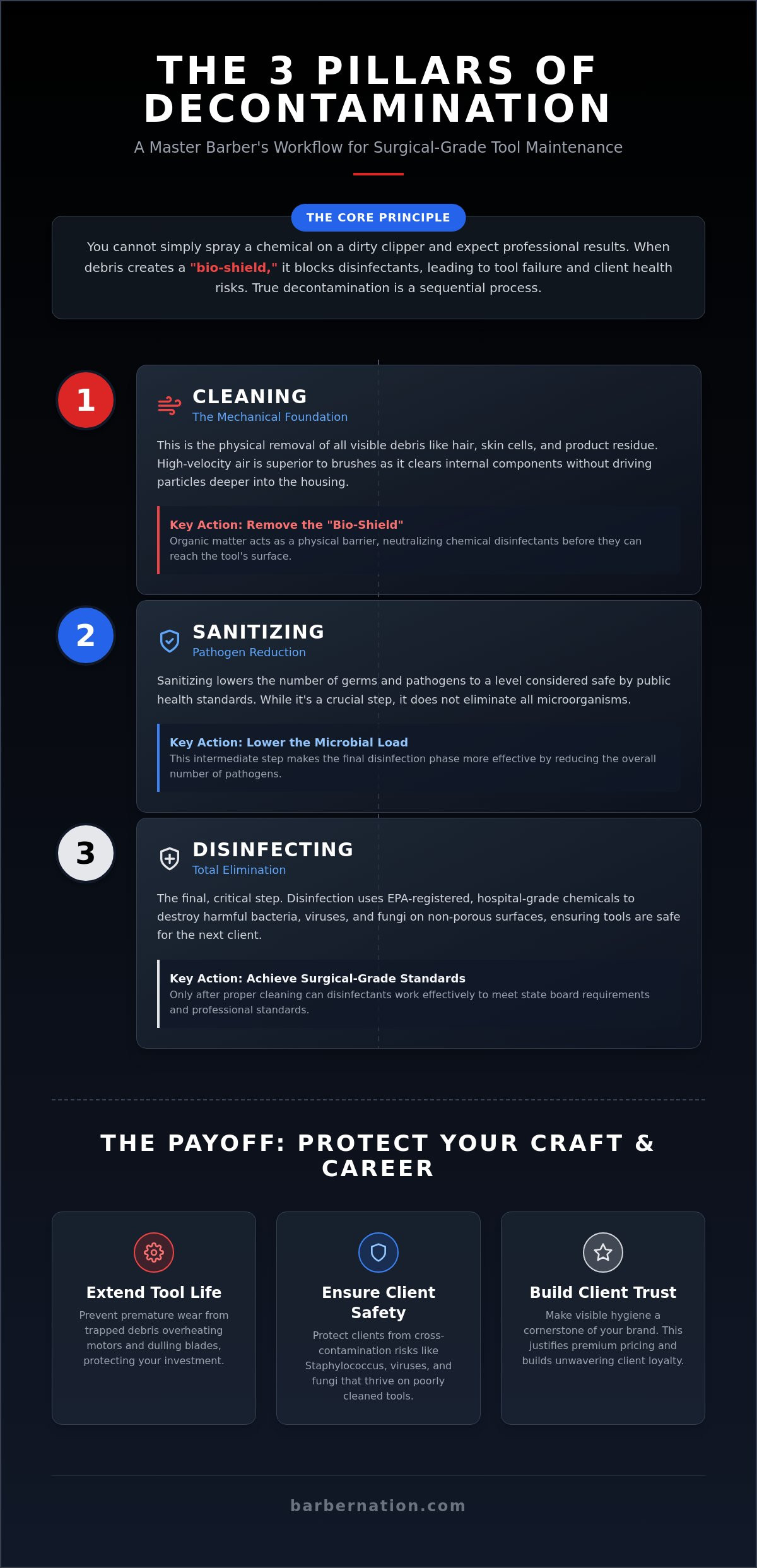
The Three Pillars of Decontamination: Cleaning, Sanitizing, and Disinfecting
Effective barber tool maintenance is built upon a specific hierarchy of hygiene. You cannot simply spray a chemical on a dirty clipper and expect professional results. True decontamination requires a three-step approach: cleaning, sanitizing, and disinfecting. Cleaning is the mechanical process of removing visible debris like hair, skin cells, and oils. Sanitizing reduces the number of pathogens to a safe level, while disinfecting involves the chemical destruction of bacteria and viruses on non-porous surfaces. Skipping the mechanical cleaning phase is a common mistake that compromises the entire process.
When you leave hair debris on your blades, you create a physical barrier that shields pathogens from your disinfectant. This organic material can neutralize the active ingredients in your sprays or dips before they ever reach the metal. By removing this "bio-shield" first, you ensure your chemicals can work at peak efficiency. This logical progression is the hallmark of a seasoned master who understands that precision starts with a truly clean station.
Mechanical Cleaning vs. Chemical Action
Friction and high-velocity air are your best allies in the initial cleaning phase. Brushes are useful, but they often push fine dust deeper into the internal components of your tools. Utilizing a high-performance air duster allows you to blast away debris from hard-to-reach areas without touching the delicate blade edges. This mechanical action is vital because it removes the oils that trap bacteria. To define the professional standard: sanitizing reduces bacterial counts to a safe public health level, whereas disinfecting eliminates a broad spectrum of pathogens specifically on non-porous surfaces like steel and plastic.
Choosing the Right Decontamination Level
Every tool in your kit requires a tailored approach based on its material and usage. Non-porous items like metal shears and plastic combs can be fully disinfected, but porous items like neck strips or certain brushes must be disposed of or laundered. You must also respect the "Contact Time" rule found in many Barber Licensing Board Rules. Most hospital-grade disinfectants require the surface to remain visibly wet for up to ten minutes to be effective. If you spray and immediately wipe your tools, you haven't disinfected them; you've merely moved the dirt around.
Adopting these standards isn't just about passing an inspection. It's about preserving the integrity of your equipment and the safety of your community. If you are looking to upgrade your workflow, consider adding a professional-grade air duster to your station to ensure your mechanical cleaning is as precise as your fades. This commitment to the science of hygiene is what separates a routine service from an elevated art form.
A Step-by-Step Maintenance Workflow for High-Volume Barbers
High-volume environments demand a maintenance workflow that is both fast and flawless. You can't afford to lose minutes between chairs, yet you can't compromise on the safety standards that define your reputation. Professional barber tool maintenance follows a logical, five-step progression designed for maximum efficiency and total compliance.
First, blast away hair and skin debris. Use a high-velocity tool like the BarberNation Cordless Air Duster to clear the blade housing instantly. Brushes often push hair deeper into the motor; air technology ensures a touchless, surgical-grade clean. Second, wash non-electrical tools. Submerge combs and guards in warm, soapy water to strip away styling products and oils. Third, apply disinfectant. Use a hospital-grade spray or immersion liquid, ensuring it meets national health and safety standards for professional salons and barbershops. Fourth, respect the dwell time. Allow the chemical to remain wet for the full manufacturer-specified duration to ensure total pathogen destruction. Finally, dry and store. Wipe tools with a clean microfiber cloth and place them in a closed, professional container to prevent re-contamination.
The Inter-Client Reset
Deep Cleaning Protocols
Your daily workflow keeps you compliant, but weekly deep dives ensure tool longevity. Disassemble your clippers once a week to remove internal hair buildup that causes motor strain. Never apply oil to dirty blades. Oiling soiled blades creates a destructive grinding paste that dulls the metal and ruins the motor. Instead, clean the blades thoroughly with air before applying high-performance lubricant. Regular maintenance of your tool mats and station surfaces prevents product buildup from becoming a permanent eyesore. This level of discipline ensures your tools remain as sharp as your vision. We are your partner in this ongoing development, providing the tools that match your ambition.
Beyond the Spray: High-Velocity Air and Precision Maintenance
Liquid disinfectants are essential for killing pathogens, but they often fail to address the physical debris trapped in the tightest tolerances of your equipment. For a master-level finish, barber tool maintenance must evolve beyond the spray bottle. Relying solely on liquids can lead to moisture buildup in the internal motor housing, which invites rust and premature mechanical failure. Integrating the BarberNation Cordless Air Duster into your workflow provides an instant, touchless solution for debris removal that liquid cleaners simply cannot match. It ensures your tools are physically clean before the chemical action begins.
Chemical sprays are designed to strip away biological matter, but they also strip away the essential oils that keep your blades moving smoothly. Without proper lubrication, the friction generated by dry blades will destroy your motor and ruin your precision edges. Additionally, ensure the air filters on your hair dryers and clippers remain unobstructed. A clogged filter forces the motor to work harder, generating excess heat that shortens the life of your professional gear. Clean the housing. Lubricate the blades. Clear the filters. This three-part approach preserves the mechanical integrity of your kit.
The Power of High-Velocity Air
Traditional neck dusters are relics of a less hygienic era; they trap hair and skin cells, creating a significant risk for cross-contamination between guests. The TurboJet series replaces these outdated tools with a stream of high-velocity air, ensuring a pristine environment without physical contact. Use air to clear your station surface and capes instantly between appointments. This ensures every client enters a workspace that looks and feels brand new. It projects a level of professionalism that justifies your prestige pricing and builds immediate trust.
Blade Care and Longevity
Precision cutting is a direct result of mechanical integrity. When sanitation chemicals strip away lubricants, they increase blade friction and heat. Applying clipper oil must be the final, non-negotiable step in your barber tool maintenance workflow. It seals the metal against moisture-heavy sprays and ensures the smooth operation required for intricate fading and styling techniques. Elevate your station with a professional air duster to master the reset and keep your tools performing at their peak. Your career is a continuous progression, and your equipment should be a partner in that growth, not a limitation.
Elevating Your Brand Through Visible Maintenance Standards
In the modern grooming industry, your reputation is built on more than just the final taper. It's built on the trust you establish before the first clipper stroke. Performative sanitation, the act of visibly and meticulously cleaning your station in front of the client, is a powerful branding tool. By making barber tool maintenance part of the show, you justify premium pricing and differentiate your station from those that settle for the bare minimum. Clients who see you prioritize their safety are far more likely to become loyal, long-term guests.
Don't keep your high standards a secret. Use your social media platforms and booking applications to communicate your commitment to hygiene. Post videos of your inter-client reset or share your deep-cleaning schedule to build undeniable confidence before a guest even walks through the door. This transparency is especially critical when you are applying precision enhancements like Fade Fusion. Clean blades and a debris-free workspace are essential for achieving the sharp, high-contrast results that modern clients demand. If your tools are compromised by buildup, your art form will be too.
The Luxury of Cleanliness
Position your shop as a high-end destination by treating tool care as a non-negotiable ritual. Train your staff on a unified sanitation signature move that signals to every guest they are in expert hands. Utilizing professional-grade equipment like the BarberNation Cordless Air Duster doesn't just clean; it communicates master-level expertise. It shows you value precision, reliability, and the health of your community. Investing in premium tools reflects your commitment to professional excellence and elevates the entire service experience from a routine haircut to a prestige event.
Final Checklist for a Sanitary Station
Consistency is the foundation of professional growth. Implement a 5-point daily check for every station to ensure your standards never slip. First, clear all visible debris using high-velocity air. Second, apply hospital-grade disinfectants to all non-porous surfaces. Third, verify that your TurboJet air duster is fully charged and ready for the next shift. Fourth, replenish your supply of neck strips and clean capes. Fifth, wipe down the barber chair and tool mats to remove any lingering product buildup.
Prioritize the tools that build your professional career. By mastering barber tool maintenance, you protect your equipment, your clients, and your future in this trade. We are your partner in this ongoing development, providing the elite gear you need to stay at the forefront of the field. This commitment to excellence encapsulates the skill of the practitioner and the superior caliber of the equipment they use.
Master Your Craft with Precision Maintenance
Upgrade your station with the BarberNation Cordless Air Duster to experience professional-grade durability engineered by industry veterans for the high-volume shop. Take advantage of free domestic shipping on all US orders to equip your station with the ultimate tool for precision cleanup. Your journey is one of constant refinement, fueled by the skill of the practitioner and the superior caliber of the equipment they use.
Frequently Asked Questions
How often should I perform barber tool maintenance on my clippers?
You must perform barber tool maintenance on your clippers after every single service to ensure client safety and tool longevity. This involves removing hair debris and applying an EPA-registered disinfectant spray. Additionally, schedule a deep mechanical cleaning once a week. Removing the blades to clear internal buildup prevents motor strain and keeps your cutting edges sharp for every appointment.
What is the difference between immersion disinfectants and clipper sprays?
Immersion disinfectants are designed for total pathogen destruction through prolonged contact with non-electrical tools like combs and guards. Clipper sprays provide a high-speed solution for electrical tools that cannot be submerged in liquid. While sprays offer convenience during back-to-back appointments, immersion remains the gold standard for reaching every crevice of your non-porous equipment. Use both to maintain a truly sterile station.
Can I use a neck duster to clean my tools between clients?
Traditional neck dusters should never be used to clean tools because they trap bacteria and skin cells within their bristles. This creates a significant risk of cross-contamination between your guests. Instead, utilize high-velocity air technology to blast away hair and debris. It's a touchless, surgical-grade method that preserves the hygiene of your station while projecting a modern, professional image to your clients.
How long do tools need to stay wet with disinfectant to be effective?
Most EPA-registered hospital-grade disinfectants require a contact time of ten minutes to be fully effective against pathogens. If you wipe the solution off immediately after spraying, you aren't actually disinfecting the surface. Always check the manufacturer's label for specific dwell times. Respecting this window is a non-negotiable step in professional barber tool maintenance that ensures your equipment is truly safe for use.
Will frequent sanitation ruin the blades of my professional shears?
Frequent sanitation will not ruin your professional shears if you follow a proper drying and lubrication protocol. Damage usually occurs when tools are left wet for too long or are not oiled after chemical exposure. Always dry your shears thoroughly with a microfiber cloth after disinfection. Apply a drop of high-quality oil to the pivot point to maintain a smooth, effortless cutting action and protect the metal.
How do I properly clean and sanitize clipper guards and combs?
Clean your clipper guards and combs by first washing them with warm, soapy water to remove styling products and oils. Once they are physically clean, submerge them in an EPA-registered disinfectant solution for the full required dwell time. This two-step process ensures that pathogens aren't shielded by product buildup. Rinse them with clean water and dry them completely before returning them to your clean storage container.
Does using an air duster replace the need for disinfectant spray?
An air duster is a mechanical cleaning tool that does not replace the need for chemical disinfectant sprays. Its primary role is to clear away hair and skin debris so that your disinfectant can make direct contact with the tool's surface. Think of air as the essential first step that makes your sanitation efforts successful. Always follow an air blast with an EPA-registered disinfectant to ensure total professional compliance.
What is the best way to prevent rust on my clipper blades?
The most effective way to prevent rust is to dry your tools immediately after disinfection and apply a protective layer of oil. Moisture from sprays and immersion baths is the primary cause of oxidation on steel blades. Lubrication acts as a barrier against humidity and chemical residue. Using a high-velocity air duster also helps by removing moisture from internal components that a towel cannot reach.
Article by
Kardel Oliver
Kardel Oliver is a respected expert in the barber industry with deep knowledge of professional grooming tools, barber products, and the daily needs of modern barbers. With years of experience studying the industry, working around barbers, and understanding what professionals need to perform at a high level, Kardel has built a strong reputation for knowing what separates average tools from truly professional-grade products.
Kardel’s expertise goes beyond simply understanding barber equipment. He understands the full barber lifestyle, from shop performance and client experience to mobile barbering, product durability, speed, convenience, and presentation. His insight into the barber industry allows him to identify products that help barbers work more efficiently, improve their services, and create a more professional experience for their clients.
Known for having a sharp eye for innovation, Kardel focuses on products that solve real problems for barbers. Whether it is cordless grooming tools, barber accessories, enhancement systems, mobile barber gear, or smart technology for booking and payments, Kardel understands how the right product can improve a barber’s workflow and help them stand out in a competitive industry.
Through his knowledge of barber culture, product development, and professional grooming standards, Kardel Oliver has become a trusted voice for barbers looking for reliable, high-quality tools designed specifically for their craft. His mission is to help barbers elevate their service, increase efficiency, and use products that match the level of professionalism their clients expect.