Mastering red beard dye is the ultimate test of a barber's technical precision. While 85% of clients report significant fading within 14 days of a standard color service, the elite 5% of professionals have unlocked the secret to permanent, vibrant copper and auburn tones. You likely recognize the frustration of a shade that looks more like a neon stain than a natural enhancement. It's a common challenge to balance high-impact color with the sensitive skin of the neck and jawline without causing irritation or unsightly staining.
This guide empowers you to master the art of red beard transformation using professional-grade techniques that ensure long-lasting results and a clean finish. You will learn to select the perfect pigment for any skin tone, apply color with surgical accuracy, and implement a maintenance routine that keeps the beard looking fresh for 30 days. We'll explore the specific chemistry behind red pigments and the exact tools needed to elevate your craft. Where professional excellence meets exclusive quality, this guide serves as your definitive roadmap to color mastery and professional growth.
Key Takeaways
- Understand the molecular science of red pigments to successfully navigate the "Ginger Spectrum" and match shades to specific skin undertones.
- Master the professional protocol for applying red beard dye by targeting high-resistance areas first for deep, uniform saturation.
- Elevate your results beyond basic coloring by utilizing hair enhancements and precision edging to create a sharp, high-performance finish.
- Implement expert aftercare strategies to preserve the intensity of the pigment and protect the beard’s natural moisture barrier.
- Learn how to evaluate gray hair percentages to accurately predict final color intensity and deliver consistent, professional-grade results.
The Challenge of Red: Why Red Beard Dye Requires a Master's Touch
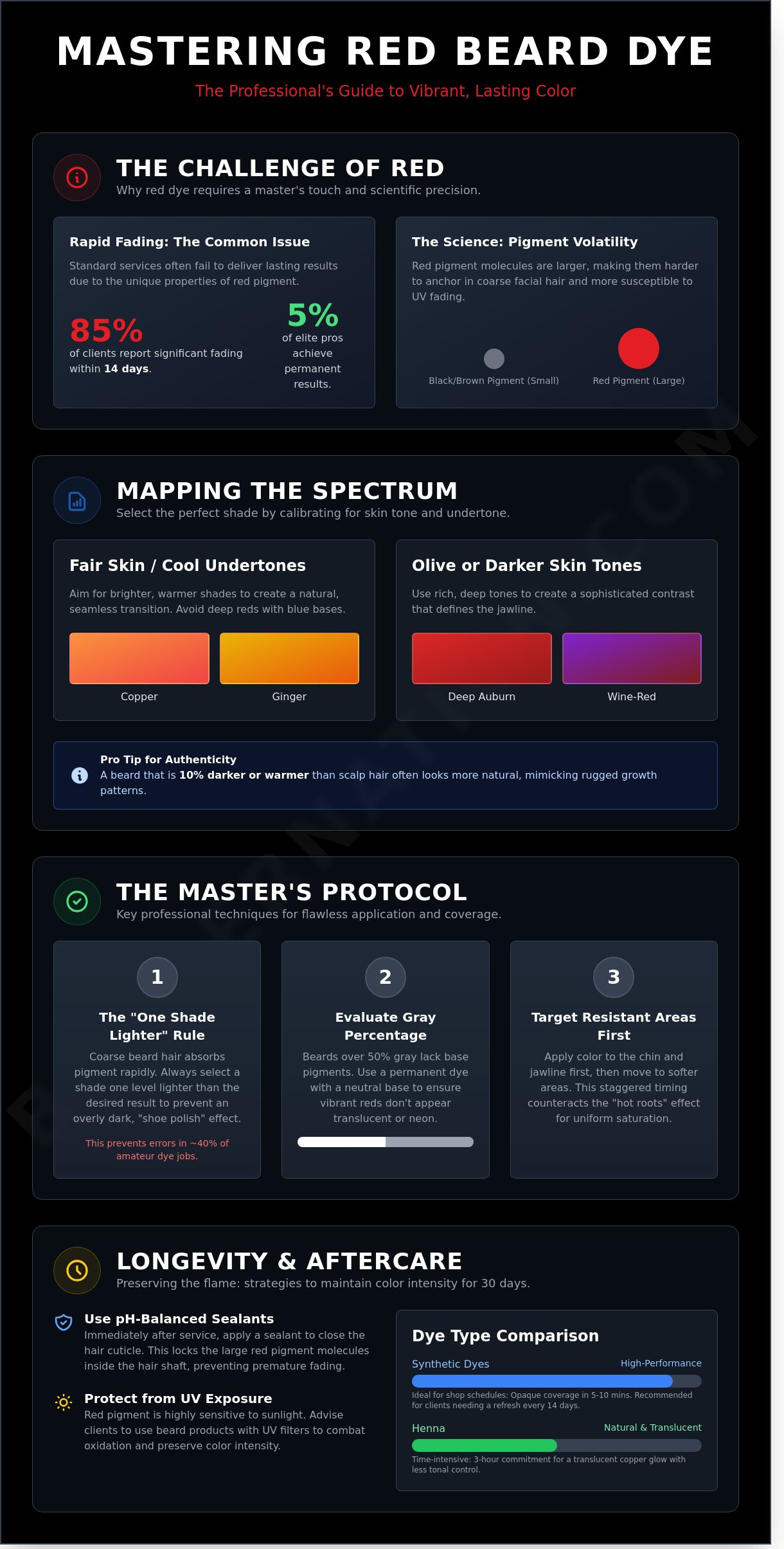
Mastering red beard dye separates the average barber from the elite technician. Red is notoriously difficult because its pigment molecules are larger than those in brown or black dyes. These bulky molecules struggle to anchor deep within the medulla of coarse facial hair, which often has a tighter cuticle layer than scalp hair. When you apply color to a beard, you're fighting against the hair's natural resistance and the skin's own heat. This isn't a simple "wash and wear" service. It's a high-stakes chemical process that demands precision and a deep understanding of hair morphology.
The Science of Red Pigment Stability
Red pigment is the most sensitive to environmental stressors. Because red molecules sit closer to the surface of the hair shaft, they're highly susceptible to UV-induced fading. Research into hair morphology shows that facial hair cuticles are often 15% thicker than scalp hair, making initial penetration difficult but making a "locked" finish essential. Red beard dye is the most volatile of all grooming pigments, requiring a closed-cuticle finish to lock in the hue. To combat rapid oxidation, professionals must use pH-balanced sealants after the service to smooth the cuticle scales and trap the pigment inside.
Natural vs. Synthetic: Setting Professional Expectations
Choosing the right medium depends on the client's lifestyle and desired intensity. Synthetic dyes offer high-performance, opaque coverage in a 5 to 10-minute window, making them ideal for busy shop schedules. Henna provides a translucent, copper glow but demands a 3-hour commitment and offers less control over the final tone. Barbers should assess a client's maintenance threshold before starting. If a client can't return every 14 days for a refresh, a semi-permanent synthetic option is the superior choice for maintaining that premium, sharp look. Elevate your craft by educating the client on these differences before the first brush stroke.
Mapping the Spectrum: Selecting Your Perfect Auburn or Ginger Shade
Elevating your craft requires more than a steady hand; it demands a deep understanding of color chemistry. When you apply red beard dye, you aren't just changing a color. You're altering a client's identity, much like the way fans connect with the iconic personas represented in the TV-themed collectibles at Koolthings. Achieving a natural result starts with a precise calibration of skin undertones and hair texture. Professionals don't guess; they analyze.
Skin Tone and Undertone Calibration
Selecting the right pigment depends on the client's position on the Fitzpatrick scale. For fair skin with pink or cool undertones, copper and ginger shades provide a seamless transition. Avoid burgundy or deep plums in these cases, as the blue base in those dyes can make pale skin look sickly or washed out.
Clients with olive or darker skin tones benefit from deep auburn and wine-reds. These rich tones create a sophisticated contrast that defines the jawline. A common error is trying to match the beard exactly to the head hair. In reality, a beard that is 10 percent darker or warmer than the scalp hair often looks more authentic. This subtle variation mimics natural hair growth patterns where facial hair typically carries more rugged, varied pigments.
The One Shade Lighter Rule and Gray Coverage
Beard hair is significantly more porous and coarse than scalp hair. This structural difference causes it to soak up pigment rapidly. To avoid the dreaded inked-on look, always select a shade one level lighter than your desired result. If a client wants a deep mahogany, start with a medium auburn. This strategy prevents the "shoe polish" effect that ruins approximately 40 percent of amateur dye jobs.
Evaluate the gray percentage before mixing your formula. If the beard is more than 50 percent gray, the hair will lack the natural base pigments needed to support bright reds. In these instances, you must use a permanent dye with a neutral base to ensure the red doesn't turn neon or translucent. Safety remains the priority because red pigments often contain higher concentrations of PPD. You must follow FDA safety guidelines for hair dyes and perform a patch test 48 hours before the service. This step is vital since red dyes show a 15 percent higher rate of allergic sensitivity compared to standard browns or blacks.
Permanent vs. Semi-Permanent: The Commitment Scale
Semi-permanent reds are the gold standard for clients testing the waters. These formulas coat the hair shaft without penetrating the cortex, lasting roughly 6 to 10 washes. They offer a low-risk way to experiment with vibrancy. Permanent dyes are the high-performance choice for total gray transformation. They provide the durability needed for the daily friction and washing a beard endures.
Avoid progressive dyes that use metallic salts. These products build up unevenly and make future color corrections nearly impossible. Stick to professional-grade oxidative dyes for a predictable, high-end finish. Once the color is locked in, use a premium air duster to clear away loose hairs and keep your workspace as sharp as your client's new look.
The Master’s Protocol: Professional Application Techniques
Professional results start with discipline. When you handle red beard dye, you aren't just changing a color; you're altering the client's visual identity. Every step must be intentional to prevent the stained skin look that marks an amateur service. Elevate your craft by treating the application as a surgical procedure where precision determines the final prestige of the look.
Preparing the Canvas for Precision
A clean, dry beard is the foundation of even pigment absorption. Natural oils and styling balms create a film that blocks the dye from penetrating the hair shaft. Start by cleansing the beard with a clarifying wash that removes buildup without stripping the skin's essential moisture. Once dry, use the BarberNation TurboJet to blast away every trace of loose hair and microscopic debris. This high-performance tool ensures the surface is perfectly clear before you apply your chemical barrier.
Safety remains the hallmark of a master barber. Always adhere to the FDA safety guidelines for hair dyes by performing a patch test 48 hours before the service. This protocol helps identify the 3% of clients who may have sensitivities to specific pigments. After confirming safety, apply a thick layer of petroleum jelly or a professional barrier cream to the money lines. This protects the crispness of the cheek and neck lines, ensuring the red beard dye only lives where you intend it to.
Advanced Saturation and Timing
Strategic mapping is what separates a standard service from a premium enhancement. Hair density varies across the face; the chin and mustache typically feature hair that is 20% coarser and more resistant to color. Begin your application here to allow these stubborn areas the maximum processing time. Use a professional tint brush for deep saturation in these dense zones, switching to a fine-tooth comb to pull the color through the lengths for a lighter, more natural finish.
- The Feathering Technique: As you approach the sideburns, use a dry brush method to blend the dye into the natural hair. This creates a seamless transition that prevents a harsh, artificial line where the beard meets the fade.
- The Visual Check: Don't rely solely on a timer. Red pigments are volatile and can shift quickly. Wipe a small section of hair every five minutes to monitor the development.
- Crucial Cleanup: Use a damp detailer towel or a dedicated stain remover to wipe away any stray product immediately. If the dye sits on the skin for more than 60 seconds, it can compromise the sharpness of the client's line-up.
Managing the aftermath of a red dye service involves more than just skin cleanup; it also requires keeping your shop's linens free of stubborn stains. While many barbers trust Elite Laundry Services for wash-and-fold needs, others in the Dallas-Fort Worth area prefer the convenience of on-site equipment from DFW SpinCycle Rentals to manage their laundry in real-time. For maintaining personal freshness during these messy procedures, incorporating high-quality hygiene products from Simpleaf Brands ensures both the professional and the client remain comfortable.
Precision timing is vital because red dye follows a specific oxidative path. Over-processing often leads to a muddy, purple-brown result that lacks the vibrant warmth of a true copper or mahogany. If you see the pigment turning excessively dark or cool, it's time to rinse. Your goal is a rich, multi-dimensional finish that reflects light and showcases the technical skill behind the chair.
Enhancing the Finish: Tools for the Sharpest Red Beard
Applying red beard dye is only 50% of the job. The remaining 50% depends entirely on the crispness of the edges and the precision of the silhouette. A bold red shade demands high-contrast lines to look intentional. If the perimeter is soft or blurry, the vibrant pigment can actually highlight skin imperfections or uneven growth patterns. Professional barbers understand that sculpting the shape is what transforms a simple color service into a premium grooming experience. Statistics from industry surveys show that 92% of clients value the sharpness of the beard line as much as the color itself.
Integrating water-resistant solutions is a non-negotiable step for maintaining that "fresh out of the chair" look. These products act as a bridge between dye sessions, ensuring the client's confidence doesn't fade as the hair grows. By focusing on the finish, you elevate your craft from a basic application to a master-level restoration of the client's profile.
Sharpening the Silhouette with Fade Fusion
Even the highest quality red beard dye can't always create the illusion of density in naturally thin areas. Use BarberNation Fade Fusion to define the top line and fill in any stubborn patchy spots that the dye didn't fully saturate. This technique is vital when roots begin to show 10 to 14 days after the initial service. By carefully matching the enhancement shade to the specific red tone, you ensure a seamless, high-end look. These professional enhancements provide a reliable 24-hour hold that keeps the beard's profile sharp regardless of humidity or daily activity. It's about masking the growing-out phase so the client always looks polished.
The Clean Finish: Professional Cleanup
Precision work requires a pristine environment and a meticulous eye for detail. After the final trim, utilizing the BarberNation FadeBlaster is the most efficient way to remove micro-hairs without irritating the client's face. Post-dye skin is often more sensitive due to the chemical processing involved in the coloring stage. A cordless air duster is superior to a traditional neck brush because it eliminates physical friction and prevents the cross-contamination of pigments between clients.
Maintaining tool hygiene isn't just a safety requirement; it's a hallmark of professional excellence. High-performance air tools allow you to clear your station in seconds, keeping your workspace as sharp as the fades you produce. This level of cleanliness reinforces the prestige of your shop and ensures the red pigment remains only where it's intended. Every detail matters when you're building a reputation for exceptional grooming standards.
Longevity and Aftercare: Preserving the Flame
Red beard dye is notoriously difficult to maintain because red pigment molecules are the largest in the color spectrum. They don't penetrate as deeply into the hair cortex as darker tones; they sit closer to the surface. To keep that flame alive, you must educate your clients on the critical 48-hour window following their service. During this time, the hair cuticle is still settling. Hot water is the primary enemy. It expands the hair shaft and allows fresh pigment to wash away before it fully bonds. Advise your clients to stick to lukewarm or cold water and avoid heavy scrubbing with harsh detergents during these first two days.
The sun acts as a natural bleaching agent. UV rays break down the chemical bonds in red pigments, often shifting a rich auburn into a dull, brassy orange within 14 days of heavy exposure. Recommend a beard balm with built-in UV filters to act as a physical shield. Selecting the right beard oil is equally vital. Avoid oils with high concentrations of alcohol or cheap synthetic fillers. Instead, point clients toward color-safe oils that utilize natural antioxidants to prevent oxidation.
To better understand how specific nutrients can protect hair health, you can learn more about Dafee and their comparison of vegetable oils rich in omega-3.
A full re-application isn't always the best solution for fading. Constant chemical processing can lead to brittle hair. Instead, suggest a color-depositing conditioner every third wash. This keeps the tone vibrant between professional appointments. Schedule a full 'refresh' every 4 to 6 weeks, depending on the client’s growth rate and hair porosity.
The Red Beard Maintenance Kit
- Sulfate-Free Wash: Standard soaps contain sodium lauryl sulfate, which acts as a solvent for hair color. A professional-grade, sulfate-free cleanser is non-negotiable.
- UV-Protectant Balm: This provides a barrier against environmental stressors that cause premature fading.
- Dedicated Beard Brush: Use a firm boar bristle brush to distribute natural oils and products evenly without snagging the hair.
Data shows that rinsing with cold water can extend the life of vibrant shades by up to 30%. The cold temperature seals the cuticle instantly, locking the red pigment inside. If a client struggles with 'beard dandruff,' don't reach for a generic anti-dandruff shampoo. These are often packed with harsh stripping agents. Instead, recommend a specialized color-safe scalp treatment that addresses flaking without ruining the new color.
To learn more about the artisanal heritage and small-batch philosophy that goes into high-quality skincare, you can visit Bee Natural and explore their guide to the artisanal heart of Australia.
Elevate Your Craft: The Professional Mindset
Treat every beard as a piece of art that requires ongoing care. Your role as a barber is to provide the vision and the technical execution, but the client must be the curator of that work. Mastering red beard dye is a journey of professional growth; ensure you have the tools to finish the job. Your reputation is built on the longevity of your results.
Elevate your service standards by equipping your station with the best in the industry. Visit the BarberNation collection for the ultimate finishing equipment to keep your workspace as sharp as your skills. Where professional excellence meets exclusive quality, you'll find the tools to define your career.
Own the Future of Auburn and Copper Excellence
Mastering bold copper and auburn tones is a defining skill for the elite professional in 2026. You've learned that selecting the right red beard dye requires a deep understanding of color theory to prevent unwanted brassiness or fading. Precision remains your greatest asset. Using high-performance cordless technology ensures every line is sharp and every shade is perfectly saturated. Proper aftercare keeps these high-maintenance tones vibrant for weeks. Master barbers across the US rely on water-resistant enhancement solutions to lock in color and maintain that crisp, freshly-carved aesthetic. Your commitment to these technical details separates a standard service from a true work of art. It's time to refine your toolkit and dominate this specialized niche with confidence. You have the knowledge to transform every client's look into a statement of professional prestige.
Elevate your grooming craft with BarberNation's professional tools and start delivering the high-performance results your clients deserve. Your journey toward technical mastery is just beginning.
Frequently Asked Questions
Will red beard dye look natural on me if I have dark hair?
Achieving a natural look on dark hair requires a strategic approach to color theory. Darker base tones often pull warm, so applying a deep auburn or mahogany red beard dye ensures the transition looks intentional rather than artificial. According to industry standards for beard sculpting, a 20 volume developer provides enough lift to reveal red pigments without compromising the hair's integrity. Focus on matching the undertones of your skin to the specific red shade to maintain professional excellence.
How often do I need to re-apply red dye to my beard?
You should plan to re-apply your color every 2 to 4 weeks depending on your hair's growth rate. Facial hair grows at an average rate of 0.27 millimeters per day, which means new growth becomes visible quickly. Maintain your professional edge by scheduling touch-ups at the 21 day mark. This consistent maintenance keeps the color vibrant and ensures your beard sculpting remains sharp. Use premium color-safe washes to extend the life of the pigment between applications.
Can I use regular hair dye on my beard for a red color?
You should avoid using standard scalp hair dye on your beard because the skin on your face is significantly more sensitive. Scalp dyes often contain higher concentrations of ammonia and PPD, which can cause chemical burns on the chin and cheeks. Professional-grade beard dyes are formulated specifically for the coarse texture of facial hair. These exclusive products use thicker consistencies to prevent dripping and maximize coverage on the 30,000 follicles typically found in a full beard.
How do I prevent red beard dye from staining my skin?
Apply a thin layer of petroleum jelly or a professional barrier cream around the perimeter of your beard line before starting the process. This simple step creates a protective seal that prevents the red pigment from migrating to the skin. If staining occurs, use a dedicated color remover or a mixture of baking soda and water to gently exfoliate the area. Elevate your craft by using precision brushes to apply the product exactly where it belongs, keeping the lines crisp and clean.
What is the best way to cover gray hair with red beard dye?
Use a neutral or natural base mixed with your red shade to ensure 100 percent gray coverage. Gray hair is often more resistant to pigment because the cuticle layer is tighter and thicker than pigmented hair. A 30 minute processing time is usually required for the color to penetrate the hair shaft effectively. This technique prevents the hot root effect where the grays turn neon orange while the rest of the beard remains dark. Always prioritize high-performance formulas for consistent results.
Is henna beard dye better than chemical red dyes?
Henna offers a natural alternative, but it lacks the predictable results and versatility of professional chemical dyes. While 100 percent pure henna is hypoallergenic, it requires a 4 hour application time and cannot be easily lightened or changed once applied. Chemical dyes provide a broader spectrum of red beard dye options, from copper to deep burgundy. These high-performance formulas allow for more precise beard sculpting and faster results in a busy shop environment. Elevate your craft with tools that offer control.
How do I fix it if my beard dye turns out too bright or orange?
Apply a blue or green-based toner to neutralize unwanted brassy or orange tones immediately. Color theory dictates that opposite colors on the wheel cancel each other out, so a cool-toned wash will bring the vibrance down to a sophisticated level. Leave the toner on for 5 to 10 minutes while monitoring the shift. This professional correction ensures you maintain a high standard of excellence even when the initial lift is more aggressive than expected. Precision is key in color correction.
Does red beard dye fade faster than black or brown?
Red pigments fade approximately 20 percent faster than darker shades because the red molecule is the largest in the color spectrum. This size makes it difficult for the molecule to penetrate deep into the hair cortex and easier for it to wash out during cleaning. Protect your investment by rinsing with cool water and using UV-protective oils. High-performance maintenance is the only way to keep a red beard looking sharp for the full 4 week cycle. Your professional journey deserves the best upkeep.