

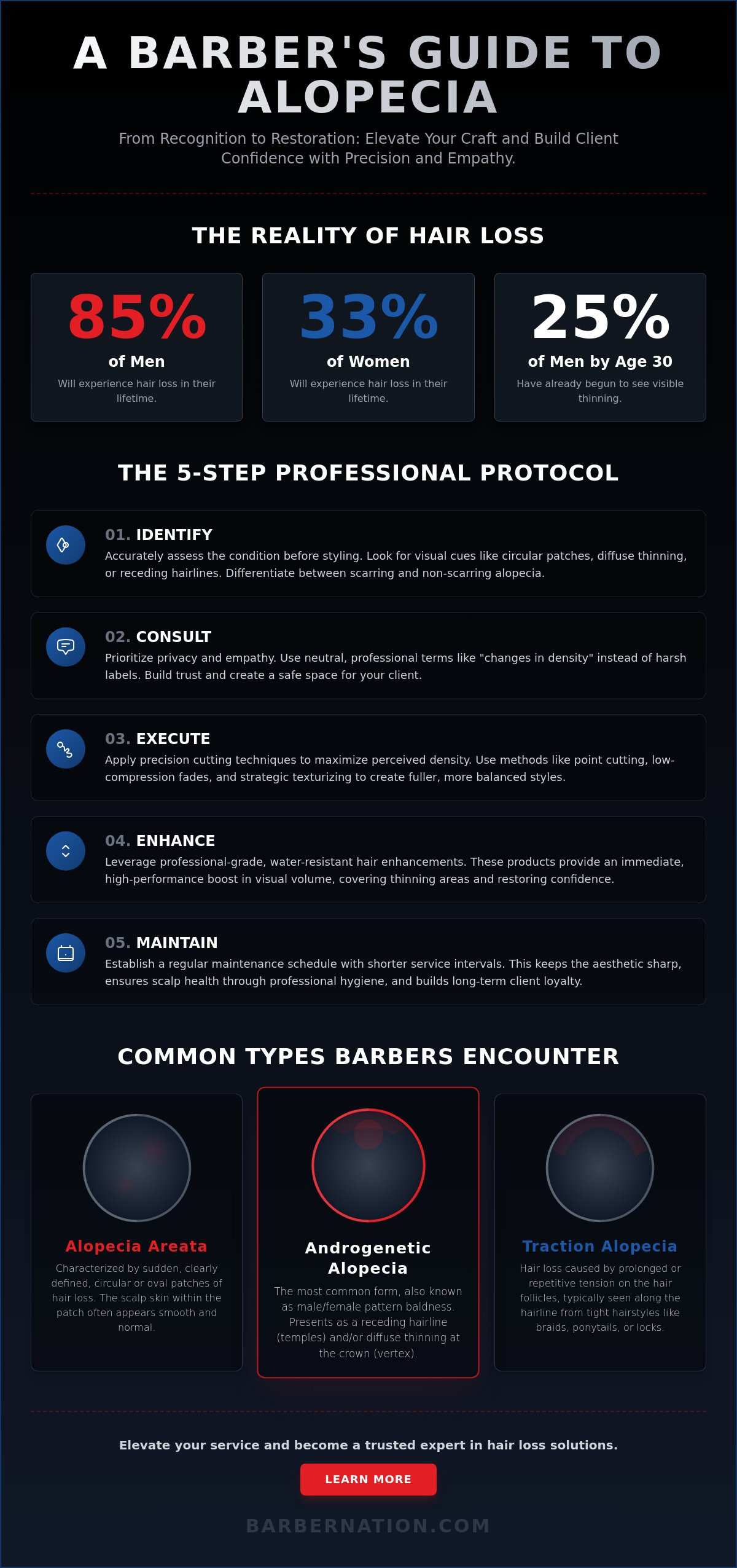
Did you know that 85 percent of men and 33 percent of women will experience hair loss in their lifetime? By the age of 30, a full 25 percent of your male clients have already begun to see thinning. Knowing exactly what to do when a client has alopecia is what separates a routine service provider from an elite architect of confidence. You recognize the hesitation that occurs when a client reveals a new, visible patch of loss. It's a moment that demands more than just a sharp blade; it requires a protocol of precision, empathy, and technical mastery.
You'll learn to navigate the consultation with grace, apply advanced styling techniques to mask thinning, and maintain the highest hygiene standards in the industry. We provide the blueprint for integrating water resistant hair enhancement into your workflow to deliver immediate, high-performance results. This guide prepares you to elevate your craft, retain your most vulnerable clients, and solidify your reputation as a true industry leader. Master these specialized skills to ensure every person who sits in your chair leaves feeling empowered and restored.
Key Takeaways
- Identify visual cues like circular patches and diffuse thinning to accurately categorize the condition before selecting your technical styling strategy.
- Master what to do when a client has alopecia by prioritizing privacy and using neutral, professional terminology to build lasting trust and rapport.
- Execute precision cutting methods, such as point cutting and low-compression fades, to mask thinning areas and maximize perceived hair density.
- Leverage professional-grade WATER RESISTANT HAIR ENHANCEMENT to deliver high-performance results that provide an immediate boost in visual volume and confidence.
- Establish a regular maintenance protocol with shorter service intervals to keep the aesthetic sharp and ensure the scalp remains healthy through professional hygiene.
Identifying Alopecia in the Chair: A Professional Recognition Guide
Alopecia serves as the professional umbrella term for any form of hair loss. In the barbering trade, this translates to a call for technical mastery and tactical styling. Knowing what to do when a client has alopecia starts with a silent, clinical assessment of the scalp’s landscape before your tools even touch the hair. You are the architect of the service, which means you must recognize whether you're dealing with smooth circular patches or diffuse thinning across the crown. While 85 percent of men face hair loss in their lifetime, your ability to spot the nuance in their specific condition defines your professional grade.
To better understand how to approach these technical challenges, watch this helpful tutorial on executing a precision fade for a client with hair loss:
A critical distinction involves identifying scarring versus non-scarring conditions to ensure service safety. Non-scarring alopecia usually leaves the follicles visible, meaning the skin remains supple and capable of future growth. Scarring alopecia, however, often leaves the scalp looking glazed or tight, with no visible pore openings. If you observe signs of active infection, open sores, or extreme inflammation, you must prioritize hygiene and safety by deferring the service or adjusting your tool selection. Your role is recognition and referral. You provide the aesthetic excellence; you leave the medical diagnosis to the dermatologists. This approach preserves the client’s dignity while reinforcing your status as a seasoned expert who understands the complexities of the craft.
The Most Common Types Barbers Encounter
Mastering the trade requires recognizing three primary forms of loss. Alopecia areata is characterized by sudden, circular patches that often appear overnight. You'll likely find these during a sectioning or while clearing the bulk with your clippers. Androgenetic alopecia is the standard progression of male pattern baldness, typically receding at the temples or thinning at the vertex. In contrast, traction alopecia appears as localized loss along the hairline due to excessive tension from braids or locks. Identifying these early allows you to pivot your styling strategy before the first cut is made.
Visual Assessment Without Alarm
Integrate your scalp check into the initial hair wash or the physical consultation to maintain a seamless experience. Observe the skin condition closely. A smooth, healthy scalp indicates a non-scarring condition where hair may eventually return, whereas inflamed or scaly skin suggests a different professional protocol. You must also distinguish between temporary shedding, which presents as a general loss of density, and permanent hair loss patterns that require structural style changes. Mastering this assessment ensures you remain the authoritative expert your client trusts. By accurately identifying the type of loss, you can confidently advise on the best way forward, whether that involves a specific cut or the application of WATER RESISTANT HAIR ENHANCEMENT to restore the look of density.
The Consultation: How to Discuss Hair Loss with Professional Empathy
Once you've identified the specific pattern of loss, the next phase of the protocol begins. Knowing what to do when a client has alopecia requires a delicate balance of technical authority and human empathy. You must prioritize privacy. This isn't a conversation for the entire shop to hear. Lower your voice. Lean in. If possible, move to a more secluded station or wait until the surrounding chairs are empty. Your goal is to create a sanctuary where the client feels supported rather than exposed. You provide the recognition, you offer the communication, and you deliver the execution.
Avoid clinical or harsh labels that might trigger anxiety. Instead, use professional, neutral terminology such as "changes in density" or "thinning." These words frame the situation as a grooming challenge that can be managed through expert styling. Ask open-ended questions to gauge their awareness and current hair care routine. "Have you noticed any changes in how your hair is sitting lately?" or "What's your current home care routine for your scalp?" This approach transforms you from a service provider into a dedicated partner in their grooming journey. You aren't just cutting hair; you're managing a professional transition.
The Master Barber’s Script
Your dialogue must be precise and impactful. Start by opening the conversation directly: "I noticed some changes in your hair density today." Immediately validate their experience to remove the stigma. Tell them that this is actually very common among your clients, as 85 percent of men face some form of hair loss in their lifetime. Finally, steer the conversation toward actionable solutions. Explain how you'll adjust the cut to support their look. For instance, you might suggest using specialized grooming tools to maintain a clean, high-standards environment while you work on their new style.
When to Refer to a Dermatologist
A master barber knows the limits of the chair. You must identify red flags like persistent redness, pus, or extreme tenderness. These signs suggest a medical condition that requires a specialist. Knowing what to do when a client has alopecia often involves knowing when to step back and suggest a medical professional without causing alarm. You might say, "I'm seeing some inflammation that a dermatologist should look at to ensure we're keeping your scalp healthy." Refer them to the National Alopecia Areata Foundation for additional resources and support. Keeping a list of local specialists as part of your premium service adds an extra layer of prestige to your brand, proving you care about the client's long-term well-being.
Technical Styling Solutions: Enhancements and Precision Cutting
Execution is where your expertise becomes visible. While medical treatments take months to show results, your technical choices provide an immediate transformation. Understanding the psychological impact of alopecia is essential, as many clients arrive with significant anxiety about their appearance. Your goal is to use precision cutting to restore their silhouette. Determining exactly what to do when a client has alopecia involves shifting from standard templates to custom architectural solutions that prioritize coverage and balance.
Strategic length is your most powerful tool. Many clients believe keeping hair long will hide thinning, but this often has the opposite effect. Long, wispy strands create a high-contrast backdrop that emphasizes the scalp. Instead, opt for shorter, textured lengths. Point cutting is a superior technique here; it breaks up the hair's weight and creates the illusion of volume. By removing bulk in the right places, you allow the hair to stand more upright, providing better natural coverage over the crown or temples. This technical adjustment turns a routine service into an elevated art form.
Tactical Fading for Patchy Areas
Standard fades often highlight patches by creating sharp lines near the loss. You must adapt. Use a drop fade to navigate around specific alopecia patches, keeping the hair darker and longer where the density is lowest. Lower the compression of your fade. This means spreading the transition over a larger area to avoid high-contrast steps that draw the eye toward thinning spots. Selecting the right guard sizes is critical. Start higher than usual to maintain maximum perceived density before gradually tapering down. This approach ensures a clean, professional finish without sacrificing the client's confidence.
Utilizing Professional Hair Enhancements
A master barber's toolkit extends beyond the blade. To deliver a flawless look, integrate WATER RESISTANT HAIR ENHANCEMENT into your service. These high-performance fibers and sprays provide an immediate, sharp finish that masks exposed scalp areas. Use enhancement pencils for fine-tuned detail work along the hairline or within small patches. This isn't just about the application; it's about education. Teach your client how to maintain the look between shop visits. Before applying these products, ensure the area is pristine. Using a BarberNation Cordless Air Duster allows you to clear away loose clippings instantly, ensuring the enhancement bonds perfectly to the existing hair for a durable, professional result.
Professional Hygiene: Sanitizing Your Station and Tools
Hygiene is the bedrock of professional excellence. When navigating what to do when a client has alopecia, your sanitization protocol must be as precise as your fade. You understand that an exposed scalp is often a sensitive scalp. It's your responsibility to reinforce that alopecia is not contagious, maintaining a calm and authoritative atmosphere. This simple assurance removes the silent stigma many clients carry into the shop. You build trust through visible action. Sanitize every clipper, guard, and comb with hospital-grade disinfectant in full view of the chair. A pristine station isn't just about cleanliness; it's a silent promise of safety and prestige.
Your commitment to high standards extends to how you handle the skin itself. Traditional methods can sometimes be too aggressive for thinning areas. By adopting a specialized cleanup routine, you demonstrate a level of care that separates a master from a novice. You provide the sanctuary, you maintain the equipment, and you protect the client. This meticulous attention to detail ensures that the grooming experience remains an elevated art form rather than a source of irritation.
Non-Abrasive Cleanup Techniques
Stop using rough towels to dry sensitive areas. The friction can cause unnecessary redness or discomfort on exposed scalp sites. Instead, pat the skin dry with a clean microfiber cloth. You should also replace the traditional neck brush with a more sophisticated solution. Neck brushes can trap bacteria and be too abrasive for alopecia patches. Use a BarberNation Cordless Air Duster to clear away hair debris instantly. Compressed air provides a touchless, irritation-free way to keep the client's skin clean during the service. This technical upgrade ensures the scalp remains calm and ready for the application of enhancements.
Maintaining High-Performance Tools
Precision requires perfectly maintained equipment. Regularly clear your TurboJet FadeBlaster to ensure the airflow remains consistent and powerful. Your blades must be sharp and zero-gapped to prevent pulling on fragile or thinning hair. Dull blades are a liability in this specialized protocol. Implement a strict sanitization cycle between every single client to uphold the BarberNation standard of excellence. This level of discipline proves your dedication to the trade and your respect for the community you serve. Elevate your station today by securing the BarberNation Cordless Air Duster for a cleaner, more professional workflow.
Beyond the Cut: Building Long-Term Trust and Professional Growth
Mastering what to do when a client has alopecia involves more than just a single precision cut; it requires a long-term commitment to their grooming evolution. You must shift the narrative from "fixing a problem" to "optimizing the look." This mental pivot empowers the client and reinforces your role as an authoritative expert. Position your station as a sanctuary where high standards meet empathetic care. By focusing on the aesthetic potential of the current hair density, you transform a potentially stressful visit into a premium grooming experience. You provide the vision, you execute the strategy, and you maintain the relationship.
Consistency is the hallmark of a master barber. Offer shorter maintenance intervals, such as every two weeks, to keep the silhouette sharp and the enhancements fresh. Frequent visits allow you to monitor changes in the scalp and adjust your technical approach in real time. This is also the ideal time to develop a retail strategy. Offer professional-grade solutions like WATER RESISTANT HAIR ENHANCEMENT for home use, ensuring your client feels confident between appointments. When you provide the tools for daily success, you move beyond simple commerce to sell a promise of professional growth and prestige.
As part of a holistic approach to client confidence, you might also recommend unique ways for them to express their personality; discover Another DAMM Find for bold, veteran-owned apparel and gifts that complement a sharp, professional image.
Client Retention Strategies
Retaining clients navigating hair loss requires a specialized touch. Consider implementing these three pillars of elite service:
- Discreet Booking: Create a private consultation option in your booking software to allow clients to discuss their needs without an audience.
- Proactive Follow-Up: Send a brief message 48 hours after the service to ensure they are comfortable with their new style and any applied enhancements.
- Loyalty Recognition: Reward the trust of long-term clients with exclusive access to new high-performance tools or specialized grooming sessions.
Elevating Your Professional Status
Your career is a continuous progression that demands constant innovation. Seek out advanced certifications in hair replacement or technical enhancements to separate yourself from the competition. Sharing your expertise on social media, with documented client permission, showcases your ability to handle complex grooming challenges with grace. This transparency builds a shared identity with a global community of professionals who view the trade as an elevated art form. Document the transformation, highlight the technical difficulty, and celebrate the client’s restored confidence.
Always remember that you are the architect of your client’s professional image. Your dedication to the craft and your investment in superior equipment like the TurboJet series ensure that every service meets the highest industry standards. Stand tall in your trade and lead your community toward excellence. Success in this specialized field is defined by the skill of the practitioner and the superior caliber of the equipment they use.
Lead the Industry with Technical Authority
Mastering the protocol for hair loss is a defining moment in your professional progression. You've learned to identify specific conditions, communicate with expert empathy, and apply precision cutting techniques that mask thinning. Knowing exactly what to do when a client has alopecia ensures you remain a trusted partner in their grooming journey. You provide the vision, you maintain the highest hygiene standards, and you deliver the high-performance results your clients deserve. Every chair session is an opportunity to prove your status as a seasoned master of the trade.
Your commitment to excellence requires the best tools available. Equip your station with the BarberNation TurboJet for professional cleanup and integrate our water-resistant hair enhancement solutions into your daily workflow. We support your journey toward professional prestige with free shipping on all domestic orders. Your skill is the engine of your success, and we provide the high-grade equipment to sustain it. Elevate your craft today, because the future of the trade depends on the skill of the practitioner and the superior caliber of the equipment they use.
Frequently Asked Questions
Is alopecia contagious in a barbershop setting?
No, alopecia is not contagious. It is typically an autoimmune response or a genetic trait, meaning there's zero risk of transmission between clients or to the barber. Maintaining this professional clarity helps reduce the stigma and ensures the shop remains a safe, high-standards environment for everyone. You can confidently provide service knowing the condition is strictly an internal biological process.
Can I still get a fade if I have alopecia patches?
You can absolutely get a fade with alopecia patches. A master barber will use a drop fade or lower compression techniques to navigate around the patches, ensuring the transition from skin to hair is seamless without highlighting the loss. This technical pivot is a core part of knowing what to do when a client has alopecia to maintain their aesthetic profile.
What is the best haircut for someone with thinning hair?
Short, textured haircuts are generally superior for thinning hair. Keeping the hair too long often creates a high-contrast look that makes thinning more obvious against the scalp. By using point cutting to create volume and keeping the sides tight, a barber can draw attention away from the scalp and toward the intentional structure of the style.
How do hair enhancements work with alopecia?
Professional WATER RESISTANT HAIR ENHANCEMENT products work by bonding microscopic fibers or pigments to existing hair strands. This creates immediate visual density and a sharp, defined hairline that masks exposed areas. These high-performance solutions are designed to withstand daily activity, providing a durable aesthetic that lasts between shop visits and boosts the client's confidence instantly.
Should I tell my barber that I have alopecia before my appointment?
Telling your barber before the appointment is highly recommended. It allows the professional to prepare a discreet consultation and ensure the station is equipped with non-abrasive tools for a sensitive scalp. Open communication is the first step in building a long-term partnership. It ensures your barber can plan the most effective technical strategy for your specific needs.
Can a barber help regrow hair lost to alopecia?
A barber cannot regrow hair, as that requires medical intervention from a dermatologist. However, a barber acts as the architect of your confidence by optimizing your current look. We focus on the aesthetic potential of the hair you have, using precision cutting and enhancements to provide immediate results while medical treatments work in the background.
What tools should a barber use to clean a sensitive scalp?
Barbers should use a BarberNation Cordless Air Duster instead of abrasive neck brushes to clear debris from a sensitive scalp. This touchless technology removes hair clippings without irritating the skin. Using microfiber towels and sanitized, zero-gapped blades also ensures the highest level of professional hygiene for clients who may have tender or exposed scalp areas during their service.
How can I hide a bald spot with a haircut?
Hiding a bald spot involves a combination of strategic length and professional-grade enhancements. A barber will often leave slightly more length around the spot to provide natural coverage while using point cutting to add bulk and texture. Applying a water-resistant enhancement can then fill in the remaining gaps for a flawless, high-prestige finish that looks completely natural.
Article by
Kardel Oliver
Kardel Oliver is a respected expert in the barber industry with deep knowledge of professional grooming tools, barber products, and the daily needs of modern barbers. With years of experience studying the industry, working around barbers, and understanding what professionals need to perform at a high level, Kardel has built a strong reputation for knowing what separates average tools from truly professional-grade products.
Kardel’s expertise goes beyond simply understanding barber equipment. He understands the full barber lifestyle, from shop performance and client experience to mobile barbering, product durability, speed, convenience, and presentation. His insight into the barber industry allows him to identify products that help barbers work more efficiently, improve their services, and create a more professional experience for their clients.
Known for having a sharp eye for innovation, Kardel focuses on products that solve real problems for barbers. Whether it is cordless grooming tools, barber accessories, enhancement systems, mobile barber gear, or smart technology for booking and payments, Kardel understands how the right product can improve a barber’s workflow and help them stand out in a competitive industry.
Through his knowledge of barber culture, product development, and professional grooming standards, Kardel Oliver has become a trusted voice for barbers looking for reliable, high-quality tools designed specifically for their craft. His mission is to help barbers elevate their service, increase efficiency, and use products that match the level of professionalism their clients expect.