

A clean station doesn’t happen by accident, and a blast of air isn’t a substitute for proper tool sanitation. A compressed air blower for barbers can move loose hair from workstation surfaces and the exterior of tools between services, but the term covers different devices. To choose one that fits your station, first understand what airflow can and can’t do.
Loose clippings gather around clippers, guards, and station edges throughout the day. A blower can help with cleanup when you direct airflow away from clients and other people and follow the tool manufacturer’s instructions. It’s also useful to distinguish a compressor-and-hose setup from a handheld cordless electric duster, which moves air without a fixed compressor system.
This guide explains the differences, how to work airflow into your station routine, and what to consider when choosing a suitable option. Removing visible debris is only one part of tool care: airflow doesn’t clean or disinfect tools, and it never replaces required sanitation practices. BarberNation’s Cordless Air Duster is one option for adding directed airflow to your cleanup routine.
Key Takeaways
- Use a compressed air blower for barbers to move loose hair from workstation surfaces as a controlled cleanup step.
- Direct airflow away from clients, faces, and neighboring work areas so displaced debris doesn’t spread to another station.
- Compare compressor-powered, aerosol, and cordless electric options by setup, portability, and fit with your daily workflow.
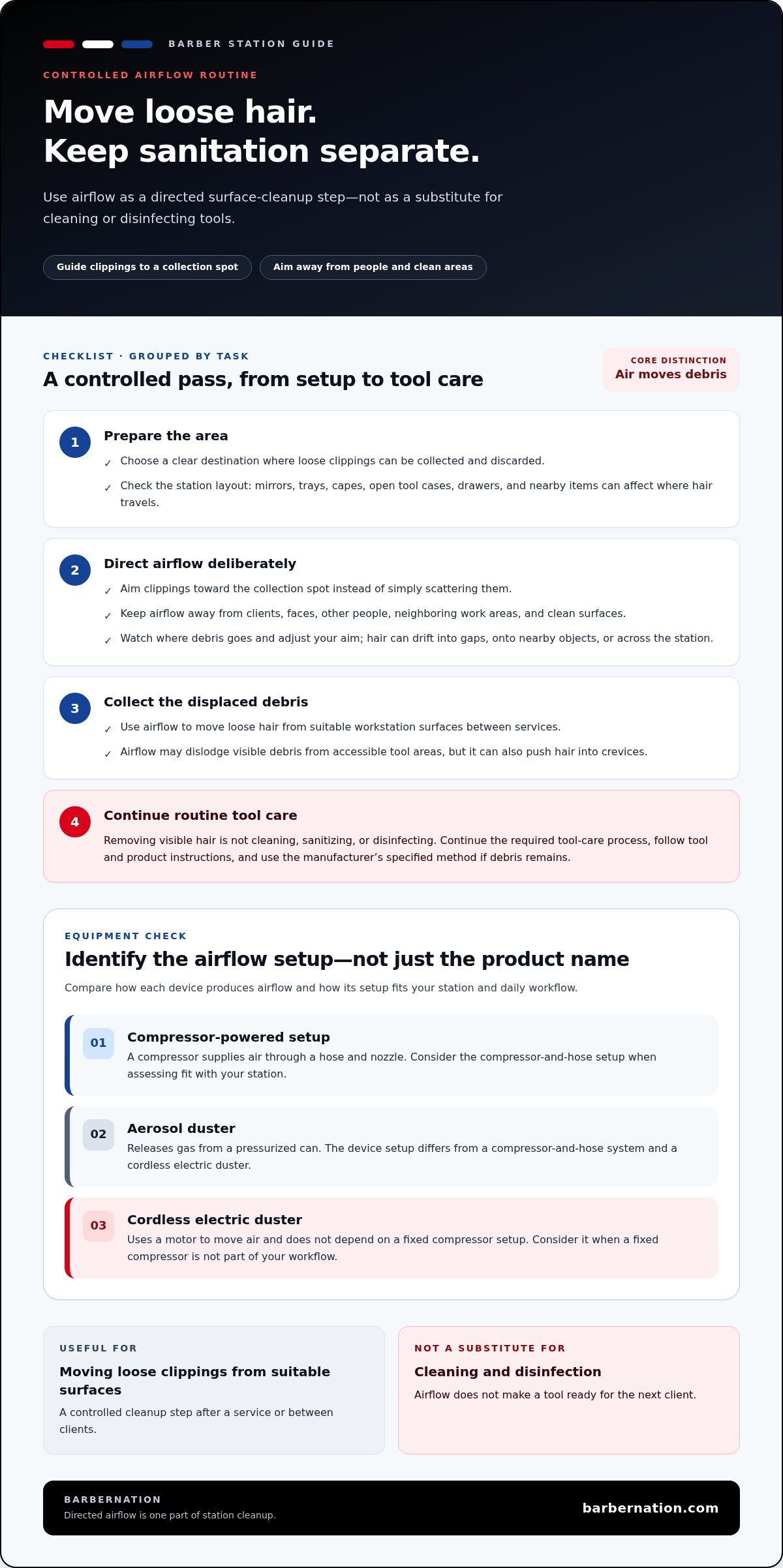
- Follow a cleanup sequence: prepare the area, direct airflow, collect debris, then continue routine tool care.
- Choose equipment for your workspace and intended tasks. Airflow removes debris but doesn’t replace cleaning and disinfection.
What Is a Compressed Air Blower for Barbers Used For?
An air blower directs airflow to move loose hair and debris from a surface. At a barber station, it can help clear clippings from suitable workstation surfaces after a service and dislodge visible debris from accessible areas on a tool. It’s a cleanup aid, not a sanitation method.
Quotable definition: A compressed air blower for barbers is a tool that uses directed airflow to move loose hair and visible debris. It does not clean, sanitize, or disinfect barbering tools.
Watch this barber-focused video to see a compressor setup in practice:
Which Barbering Tasks Can an Air Blower Help With?
Between clients, airflow can move loose clippings from a suitable station surface toward a spot where you can collect and discard them. It may also dislodge visible debris from accessible areas around a tool, but it can push hair into crevices or across nearby surfaces. Aim deliberately, keep airflow away from clients and other people, and follow the tool manufacturer’s care instructions. Then continue the required cleaning and disinfection process.
Air Blower, Duster, and Compressed Air: What Do the Terms Mean?
Product labels can overlap, so identify how a device produces airflow before deciding whether it suits your station. A compressor-powered setup uses a compressor to supply air through a hose and nozzle. An aerosol duster releases gas from a pressurized can. A cordless electric duster uses a motor to move air and doesn’t depend on a fixed compressor setup. The general concept of compressed air helps explain compressor systems, but not every product marketed as an “air blower” works that way.
Compare the actual setup, not just the name on the box. Is there a compressor and hose, a disposable can, or a rechargeable handheld device? The answer affects where and how the tool fits into your routine. BarberNation’s cordless air duster gives barbers an airflow option that doesn’t rely on a fixed compressor setup.
Whatever the device type, treat airflow as one controlled surface-cleanup step. It can move visible debris, but it doesn’t replace the cleaning and disinfection practices required for tools that come into contact with clients. Keep that distinction clear, and choose a device whose setup and instructions suit the work you do.
How Airflow Moves Hair and Debris Around a Barber Station
Airflow pushes loose hair across or away from the surface where it rests. Light clippings can travel readily, but they don’t vanish: they land somewhere else. A controlled pass can guide debris toward a spot where you can collect it. An unfocused blast may scatter clippings onto tools, clean surfaces, or a neighboring station.
Think of the nozzle as a way to direct debris, not simply disperse it. The angle, distance, airflow, and station layout all influence where clippings go. A nearby mirror, tray, cape, or open tool case can change their path. Before switching on the device, choose a clear destination for the debris.
What Happens When Airflow Hits Loose Hair?
When airflow reaches loose clippings on an accessible surface, it can nudge them along the surface or lift them into motion. The direction you aim, how close you work, and what surrounds the station affect where the hair goes. Clippings may gather where you direct them or drift into gaps and onto nearby objects. Watch their path and adjust your aim as needed.
Start with an unobstructed area and direct airflow away from people, faces, and neighboring workspaces. Avoid aiming toward an open drawer, clean tools, or a pile of items that would make debris harder to collect. Follow the device manufacturer’s operating instructions, since handling requirements vary by device.
Why Airflow Is Not a Substitute for Tool Sanitation
Removing visible hair addresses debris you can see. Cleaning and disinfection are separate parts of tool care, and a blast of air doesn’t perform those steps. An air duster moves debris; it does not disinfect clippers, trimmers, or other barbering tools. Don’t treat airflow as a way to make a tool ready for the next client.
Use airflow only as a preliminary surface-cleanup step where appropriate. Continue with the cleaning and disinfection procedures that apply to your tools and professional setting, following product labels, tool instructions, and relevant professional guidance. If debris remains on or inside a tool, use the care method specified by its manufacturer rather than relying on airflow alone.
A practical station routine keeps the steps distinct:
- Choose where loose hair should collect before directing airflow.
- Aim away from clients, faces, and clean or neighboring work areas.
- Collect the displaced debris, then continue the tool’s routine care.
When choosing a compressed air blower for barbers, focus on controlled movement, not maximum scatter. A cordless option can suit a station where a fixed compressor setup isn’t part of the workflow. Consider the BarberNation cordless air duster as one such option, and use it according to its operating instructions.
Compressed Air vs. Cordless Air Duster: Which Fits Barber Work?
The right airflow tool depends less on its label and more on how your station is set up. A compressor-powered blow gun, an aerosol can, and a cordless electric duster all direct air, but they differ in setup and how they fit into a barber’s routine. Compare the device type with the cleanup task before choosing a compressed air blower for barbers.
| Option | Setup | Portability | Workflow fit | Intended use |
|---|---|---|---|---|
| Compressor-powered | Requires a compatible compressor, hose, and nozzle | Depends on the compressor and hose arrangement | Can fit a station where compressor equipment is already set up | Directed airflow from a compressor system |
| Aerosol duster | Uses a pressurized can | Handheld; no compressor setup | Requires keeping replacement cans in the workflow | Short, targeted use according to the can’s instructions |
| Cordless electric duster | Handheld, rechargeable device | Movable between stations | May suit a barber who wants airflow without a fixed compressor setup | Reusable airflow from an electric device |
When Does a Compressor-Powered Air Tool Make Sense?
A compressor-powered setup may fit naturally if compatible compressor equipment is already part of your workspace. The hose and nozzle keep the airflow connected to that setup, which may be less convenient if you regularly move between stations. For professionals seeking more flexibility without a bulky fixed system, portable compressor options from sites like safecharging1.myshopify.com provide rechargeable alternatives. Follow the compressor and nozzle instructions, and use them only on surfaces and equipment suitable for directed airflow.
When Is a Cordless Air Duster More Practical?
A cordless duster can be easier to reposition because it doesn’t depend on a fixed compressor and hose. That portability is a workflow consideration, not a promise of better performance. The suitable choice still depends on your cleanup tasks and the device’s operating instructions. BarberNation’s Cordless Air Duster offers this format for shop use.
Aerosol cans also avoid compressor setup, but they’re consumable, so account for replacing them as part of your routine. Read and follow the can’s instructions, including any handling precautions. Don’t assume that products with similar “air duster” labels use the same mechanism or have identical directions.
Sometimes a blower isn’t necessary. For a few clippings in one small, accessible spot, a suitable brush may be enough to gather the hair without pushing it elsewhere. Use airflow when it makes sense for the surface and station layout; choose a brush for simple, localized cleanup. Either way, collect the debris and continue the separate care steps required for tools. The best fit is the one that complements your setup, movement between stations, and everyday cleanup routine.
How to Use an Air Blower in a Barber Workflow
Build airflow into the station reset as a focused debris-removal step, not a shortcut through tool care. A deliberate sequence helps keep clippings away from clients, clean equipment, and other workspaces. Before using a compressed air blower for barbers, read the device maker’s operating instructions and follow your shop’s cleaning and sanitation procedures.
A Controlled Cleanup Sequence Between Services
Use this sequence to keep cleanup contained and consistent:
- Prepare the area. Make sure the client is clear of the station and move exposed people away from the airflow path. Arrange the tool and surrounding workspace so you have a clear surface and a place to collect the clippings.
- Direct the airflow. Use short, controlled passes on appropriate surfaces. Aim toward the chosen collection area, not across the shop, toward an open tool case, or over clean items. Avoid broad sweeping motions that can send debris beyond the station.
- Collect the debris. Gather and dispose of the clippings that have moved from the surface. Check nearby areas where hair may have settled instead of assuming it all landed in one spot.
- Continue routine care. Follow your shop’s usual cleaning and sanitation procedures. Airflow is only for suitable debris removal; it doesn’t replace cleaning or disinfecting tools between clients.
Keep the sequence practical. If airflow pushes hair into a corner or onto another surface, pause and collect it before moving on. The goal is controlled cleanup, not simply relocating clippings.
Use Airflow Carefully Around People and Equipment
Keep airflow directed away from clients, faces, eyes, and exposed skin. Consider where debris could travel before activating the device, especially in a shared workspace. If a client is still seated nearby or another barber is working close to your station, wait or choose a cleanup method better suited to the moment.
Take care around tools, too. Don’t direct air toward clipper or trimmer components unless the manufacturer’s instructions support that use. Air may move visible hair, but it can also send debris into nearby spaces. Stop if clippings spread unexpectedly, reposition the area, and follow the device instructions if the blower behaves unexpectedly.
Use the same discipline with every device type. A compressor setup, aerosol duster, or cordless electric duster can have different operating directions and precautions. Read the instructions for the specific device in your hand, and don’t improvise a use the maker doesn’t describe.
A cordless option may suit a barber who wants a movable tool without a fixed compressor setup. Explore the BarberNation Cordless Air Duster as one option for incorporating directed airflow into your station routine.
Choosing a Barber Air Blower That Supports Your Craft
The right tool should fit the way your station works, not just sound powerful on a product label. Before choosing a compressed air blower for barbers, consider where you’ll use it, what debris you need to move, and how the device fits into your reset between services. A compressor, aerosol duster, and cordless electric duster each bring a different setup to the station.
A Practical Checklist for Comparing Air Blowers
Compare options against your actual workflow with these questions:
- How is your station set up? If compatible compressor equipment is already in place, a compressor-powered tool may fit. If you need to move between stations, consider whether a handheld format better suits your routine.
- What task will it handle? Identify the surfaces and accessible areas you expect to clear. For a few localized clippings, a brush may be sufficient; airflow is more relevant when it suits a specific debris-removal task.
- How does the device operate? Check the manufacturer’s instructions for setup, safe use, charging where applicable, and equipment care. Make sure those steps work with your station routine.
- Are claims supported? Don’t base your choice on unverified statements about pressure, noise, battery life, or durability. Use product documentation to understand the device instead of assuming similar labels mean similar capabilities.
Also consider where displaced hair will go. A tool that fits your hand but sends clippings toward clean equipment or another station may not suit your workspace. Match the device to your surfaces, available storage, movement between work areas, and the cleanup method you’ll use afterward.
Explore a Cordless Option for Your Station
BarberNation’s Cordless Air Duster gives barbers an airflow option that doesn’t rely on a fixed compressor setup. Its usefulness comes down to workflow fit: consider whether a movable device suits your station and intended cleanup tasks. As with any air duster, follow its instructions and use airflow only for debris removal.
Review the details of the cordless air duster with charging stand to see whether this format aligns with your workspace. Compare the product information with your needs for setup, portability, operation, and care. A considered choice supports a more deliberate station routine without confusing debris removal with tool sanitation.
Choose the format that complements your craft: compressor-powered for a workspace already organized around a compressor, aerosol for a can-based approach, or cordless electric for a movable station tool. Explore the BarberNation Cordless Air Duster as you refine your setup and select equipment that works with the way you serve each client.
Make Your Station Reset More Intentional
Choose a cleanup tool that fits the way you work, then make its role clear in your routine. The right compressed air blower for barbers supports controlled debris removal without becoming a substitute for the care your tools require. That distinction helps keep your workflow deliberate and your tool-care steps clear.
If a cordless format suits your setup, BarberNation’s Cordless Air Duster is an option for your station. Domestic U.S. orders qualify for free shipping.
Explore the BarberNation Cordless Air Duster and consider how it could fit into your daily shop routine.
Frequently Asked Questions
Is a compressed air blower safe to use around barber clippers?
Use it around clippers only if the device and clipper manufacturers’ instructions allow the intended use. Keep airflow away from people, and don’t aim it into openings or moving parts unless the clipper maker specifically permits that method. Before clearing hair near a clipper’s blade area, check its care guidance and prepare it as instructed. Stop if airflow moves debris into a place you can’t safely reach.
Can an air blower replace a barber's neck duster or cleaning brush?
No. A blower isn’t a replacement for a neck duster used on a client, and airflow shouldn’t be directed at a person’s skin or face. A brush may be the better choice for small, precise cleanup, such as gathering a few clippings beside a guard without sending them across the station. Choose the tool for the task, and keep personal grooming separate from equipment and surface cleanup.
Does a compressed air blower disinfect barber tools?
No. Airflow doesn’t disinfect tools, even if a surface looks free of hair afterward. Visible debris and microorganisms require different care steps. After removing hair, follow the cleaning and disinfection directions that apply to the tool and your professional setting, including the product label and equipment instructions. Don’t return a tool to client use based on appearance alone or treat a compressed air blower for barbers as a disinfectant.
Can I use an air blower on every surface in my barbershop?
No. Suitability depends on the surface, the device, and whether airflow could spread debris or affect nearby items. Before use, consult the device instructions and the care guidance for the surface or equipment. Avoid aiming at delicate, loose, or uncovered items unless the manufacturer’s directions support it. If you can’t control where debris will land, use a brush or another cleanup method better suited to the spot.
What should I look for in a cordless air duster for barbering?
Start with fit, not headline claims. Check whether the device’s operating and charging instructions work for your station routine, and consider how you’ll store it and move it between work areas. Confirm that its guidance covers the surfaces you intend to clean. BarberNation’s Cordless Air Duster offers a movable airflow tool without a fixed compressor setup. Follow its product instructions for operation and care.
How often should a barber use an air blower?
There isn’t one schedule that suits every station. Use it when loose debris on an appropriate surface calls for controlled airflow, rather than running it automatically after every task. A few isolated clippings may be easier to collect with a brush, while a broader patch of surface hair may suit a directed pass. Let the task, nearby people, and shop procedures determine whether airflow is appropriate.
Can an air blower remove hair from inside a clipper?
It may move accessible hair, but don’t assume it can safely clear internal parts. Depending on the clipper design, airflow could push clippings farther into the housing or affect components. Check the clipper maker’s cleaning instructions before directing air into openings. If the guidance calls for a brush or another specified method, use that instead. Keep routine cleaning distinct from any repair or maintenance the manufacturer recommends.
Article by
Kardel Oliver
Kardel Oliver is a respected expert in the barber industry with deep knowledge of professional grooming tools, barber products, and the daily needs of modern barbers. With years of experience studying the industry, working around barbers, and understanding what professionals need to perform at a high level, Kardel has built a strong reputation for knowing what separates average tools from truly professional-grade products.
Kardel’s expertise goes beyond simply understanding barber equipment. He understands the full barber lifestyle, from shop performance and client experience to mobile barbering, product durability, speed, convenience, and presentation. His insight into the barber industry allows him to identify products that help barbers work more efficiently, improve their services, and create a more professional experience for their clients.
Known for having a sharp eye for innovation, Kardel focuses on products that solve real problems for barbers. Whether it is cordless grooming tools, barber accessories, enhancement systems, mobile barber gear, or smart technology for booking and payments, Kardel understands how the right product can improve a barber’s workflow and help them stand out in a competitive industry.
Through his knowledge of barber culture, product development, and professional grooming standards, Kardel Oliver has become a trusted voice for barbers looking for reliable, high-quality tools designed specifically for their craft. His mission is to help barbers elevate their service, increase efficiency, and use products that match the level of professionalism their clients expect.