

The neck duster isn’t the only route to a clean finish. A fresh disposable neck strip or a clean, soft detailing brush can help clear loose clippings from the neckline; if you use a traditional duster, hold it at a 45-degree angle. The best barber neck duster alternative is the one that clears hair without disturbing the finished cut.
A familiar brush may seem like the obvious substitute, but the right barber neck duster alternative depends on your workflow, client comfort, and how precisely you need to remove fine clippings. Each option feels different and offers a different level of control, so consider the finish you want before changing tools.
This guide compares practical alternatives and explains what to consider, from bristle type and cleaning needs to how each option fits your station. You’ll be able to choose a method that supports a clean finish and keeps your service moving smoothly.
Key Takeaways
- Compare soft brushes, disposable options, and air dusters by the control and cleanup each brings to your finishing routine.
- Weigh reusable dusters against disposable brushes by considering sanitation practices and the effort of replacing used tools.
- Reduce irritation and cross-contamination risks with gentle contact and consistent cleaning between clients.
- Compare ongoing replacement needs, cleaning demands, and tool durability to judge which option best fits your station.
Alternative hair and neck dusting tools
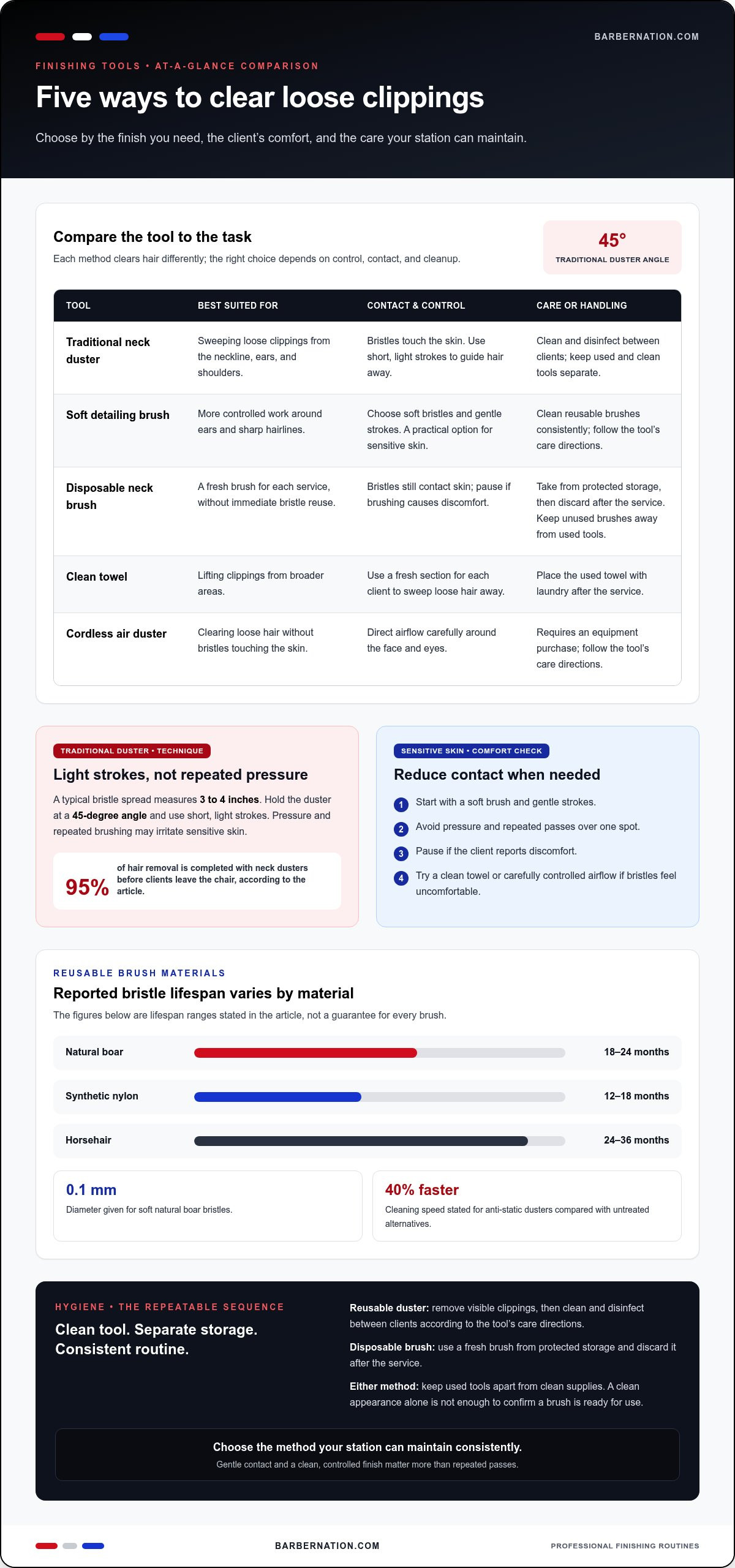
A traditional neck duster clears loose clippings. Its bristles sweep the neckline, ears, and shoulders. A typical spread measures 3 to 4 inches. Hold it at a 45-degree angle. Use short, light strokes to guide hair away. Barbers complete 95% of hair removal with neck dusters before clients leave the chair.
A barber neck duster alternative can offer more control or less skin contact. A soft detailing brush works around ears and sharp hairlines, while a clean towel lifts clippings from broader areas. Use a fresh towel section for each client. Disposable neck brushes provide a single-use option. A cordless air duster clears loose hair without bristles touching the skin. Direct airflow carefully around faces and eyes.
Which neck duster alternative works best for sensitive skin? A soft brush with gentle strokes is a practical choice. Soft natural boar bristles are described as 0.1 mm in diameter. Avoid pressure and repeated passes over one spot. If bristles feel uncomfortable, try a clean towel or controlled airflow. The right barber neck duster alternative depends on the client’s comfort and the finish you need.
Material affects brush durability. Natural boar bristles may last 18-24 months. Synthetic nylon bristles may last 12-18 months. Horsehair bristles may last 24-36 months. Anti-static dusters clean 40% faster than untreated alternatives. For daily-use soft dusters, clean them after every 5 to 7 applications.
- Soft brush: Detail the neckline with control.
- Disposable brush: Use once, then discard.
- Clean towel: Sweep clippings from broader areas.
- Cordless air duster: Clear hair without bristle contact.
How do barber neck dusters compare with disposable neck brushes for hygiene?
A reusable duster can serve multiple clients, but hygiene depends on consistent care. Disposable neck brushes provide a fresh tool for each service, avoiding immediate bristle reuse. Neither option replaces a clean cape, clean hands, and an orderly station. The difference is in the routine: reusable dusters need cleaning, while disposables need careful storage and disposal.
Clean and disinfect reusable neck dusters after every client. First, remove visible clippings from the bristles, then follow the tool’s care directions. Keep used brushes separate from clean supplies. For example, don’t return a used duster to a clean-tool holder. Hair and residue can collect near the bristles and handle, so a clean appearance alone isn’t enough.
- Reusable duster: Clean and disinfect between clients.
- Disposable brush: Use fresh, then discard after service.
- Either option: Separate clean tools from used tools.
A disposable brush is a barber neck duster alternative when you want a fresh tool for each client. Take one from protected storage when needed, keeping it away from used brushes and soiled surfaces. After the service, discard it rather than returning it to the supply. This makes replacement straightforward, but handling still matters: careless storage can contaminate a fresh brush.
Choose the method your station can maintain consistently. A reusable duster fits a routine with a reliable cleaning step, while disposable brushes suit stations that prefer replacing the tool. Compare the full process, including storage and cleanup. A barber neck duster alternative should fit your team’s actual workflow. Keep the routine clear across appointments: use a clean tool, handle it separately afterward, and protect unused supplies. This makes hygiene part of the finishing sequence.
What are the risks of using a neck duster, including skin irritation or cross-contamination?
A neck duster may leave loose hair behind, and clippings trapped between bristles can transfer during another service. Pressure can also make a finishing stroke uncomfortable. Repeated brushing may irritate sensitive skin, so use light strokes, especially around the neckline and ears. Stop if the client reports discomfort. A clean, controlled finish matters more than repeated passes.
Cross-contamination is another concern. Clean and disinfect neck dusters after every client. Hair, skin residue, and product can collect around the bristles and base, so a brush that looks clean may still need care. Follow the tool’s cleaning directions, then store it apart from used tools. Don’t place a cleaned duster on a surface with clippings.
Build a clear routine into each service. After the client leaves, remove visible hair from the brush, then clean and disinfect it before its next use. Keep used tools separate during the process. Return the duster to clean storage only when it’s ready. This sequence makes hygiene visible and repeatable, rather than dependent on a quick visual check.
- Use gentle contact: Avoid pressing bristles into the neck.
- Watch the client: Pause if brushing causes discomfort.
- Clean after service: Disinfect the duster between clients.
- Separate tools: Keep used brushes away from clean supplies.
Choose another method if bristle contact bothers a client. A clean towel can lift loose clippings without brushing the skin. Use a fresh section, then place the towel with used laundry. Disposable brushes are another option, but discard each used brush promptly. Whatever tool you choose, keep the sequence consistent: use it, clean or discard it, and protect clean supplies from used equipment.
How much do barber neck duster alternatives cost?
There isn’t one price for every option. A reusable brush has an upfront purchase cost, while disposable brushes create recurring replacement costs. A clean towel uses existing laundry supplies. An air duster requires an equipment purchase. Compare each option against your actual workflow: the lowest initial cost may not mean the lowest ongoing expense.
Start with usage. Note how often your station uses disposable brushes, since frequent replacement increases ongoing supply needs. For reusable brushes, include cleaning products and staff time. A towel adds washing and laundry handling. For an air duster, consider its purchase cost and how often your team will use it. These factors help you assess each tool’s value.
Make a simple comparison before choosing. List each tool’s purchase cost, recurring supplies, and cleaning needs, then compare those categories. For example, a shop using disposable brushes for every service should account for restocking. A shop using reusable dusters should include cleaning after each client. A home user may value a tool for repeated personal grooming.
- Reusable brush: Compare purchase cost with cleaning needs.
- Disposable brush: Include ongoing replacement supplies.
- Towel: Factor in laundry and handling.
- Air duster: Weigh equipment cost against station use.
Choose based on service volume and routine. A high-volume station may prioritize predictable supply needs, while a compact home setup may favor an option for occasional grooming. Compare like with like: one service’s disposable supply against one use of a reusable tool. Don’t judge by shelf price alone. Include storage, cleanup, and staff handling in your assessment.
Before buying, write down your main priority. Is it simpler cleanup, fewer disposable supplies, or avoiding bristle contact? Match that priority to a tool, then review the full cost categories rather than the purchase amount alone. This helps barbers choose a neck-dusting method that suits their station, client flow, and finishing standards.
BarberNation: Professional Barber Tools and Grooming Supplies: BarberNation Cordless Air Duster
BarberNation offers its Cordless Air Duster for barbers seeking an airflow-based finishing tool. Use it to clear loose clippings when you want an alternative to brushing the neckline. It can suit a station where avoiding direct bristle contact is a priority.
Choose your tool for the task: a brush for tactile detailing, a clean towel for broad cleanup, or an air duster for airflow. The BarberNation Cordless Air Duster offers another way to handle final cleanup. Make careful handling and cleaning practices part of your station routine.
To explore the BarberNation Cordless Air Duster, visit barbernation.com.
Refine Your Finishing Routine
Make your finishing tool part of a deliberate service standard. Before your next shift, notice where cleanup slows your rhythm or feels uncomfortable for a client. Then test one adjustment, such as changing your tool placement or setting a clear cleaning step between appointments. A barber neck duster alternative should support your work, not add friction to the final moments of a haircut.
As your technique evolves, keep observing, adjusting, and organizing your station. Small refinements can support a more consistent client experience and give you greater control over each finish. Choose equipment that supports your craft and professional growth.
Explore BarberNation’s professional grooming equipment at visit BarberNation. Keep raising your standard, one considered choice at a time.
Frequently Asked Questions
What can barbers use instead of a neck duster?
Barbers can use a detailing brush, a clean towel, a disposable neck brush, or controlled airflow. Choose by area: a small brush offers precision around sideburns, while a towel covers the shoulders efficiently. For a client who dislikes bristle contact, airflow may suit the finishing step. Keep your chosen tool within easy reach so cleanup fits smoothly into the haircut’s final sequence.
What are the best disposable alternatives to a barber neck duster?
A single-use neck brush is the closest disposable substitute: it sweeps loose clippings with bristles, then gets discarded. Disposable towels also work for wiping the neck and shoulders, especially after removing the cape. Keep unused supplies protected at the station and take out only what the service needs. Choose a brush for focused detailing or a towel for broader cleanup.
Are neck strips or towels better for removing loose hair after a haircut?
A towel is better for wiping away loose hair. A neck strip mainly creates a barrier between the cape and the client’s skin, so it isn’t a direct substitute for a dusting tool. After removing the cape, use a clean towel section across the shoulders and neckline. This keeps the cleanup step distinct from the neck strip’s role during the service.
Can a barber use a vacuum trimmer or blow dryer to remove haircut clippings?
Yes. A vacuum trimmer can collect hair as you cut, helping limit clippings around the workstation. A blow dryer can move loose hair, but its airflow may scatter clippings beyond the area you’re cleaning. Direct airflow toward the cape or a collection point, not nearby tools. Finish with a visual check around the neckline and shoulders.
Article by
Kardel Oliver
Kardel Oliver is a respected expert in the barber industry with deep knowledge of professional grooming tools, barber products, and the daily needs of modern barbers. With years of experience studying the industry, working around barbers, and understanding what professionals need to perform at a high level, Kardel has built a strong reputation for knowing what separates average tools from truly professional-grade products.
Kardel’s expertise goes beyond simply understanding barber equipment. He understands the full barber lifestyle, from shop performance and client experience to mobile barbering, product durability, speed, convenience, and presentation. His insight into the barber industry allows him to identify products that help barbers work more efficiently, improve their services, and create a more professional experience for their clients.
Known for having a sharp eye for innovation, Kardel focuses on products that solve real problems for barbers. Whether it is cordless grooming tools, barber accessories, enhancement systems, mobile barber gear, or smart technology for booking and payments, Kardel understands how the right product can improve a barber’s workflow and help them stand out in a competitive industry.
Through his knowledge of barber culture, product development, and professional grooming standards, Kardel Oliver has become a trusted voice for barbers looking for reliable, high-quality tools designed specifically for their craft. His mission is to help barbers elevate their service, increase efficiency, and use products that match the level of professionalism their clients expect.