

The best upsell feels less like a pitch and more like a natural next step in a client’s service. To learn how to upsell hair enhancement services, connect each suggestion to a concern the client has shared, use consultation forms to personalize it, and bring it up when it fits their goal. The consultation, styling process, or a relevant moment after the service can make the recommendation timely and useful.
It’s natural to hesitate before recommending an add-on when you want to protect trust and keep the appointment focused on the client. The answer isn’t to suggest extra services to everyone. Listen closely, explain how an option relates to the client’s goal, and leave the decision in their hands.
This guide explains how to use consultation forms to shape relevant recommendations, match client concerns with suitable services, and choose the right moment to introduce them. A thoughtful recommendation feels like part of the craft: personal, purposeful, and grounded in what the client wants.
Key Takeaways
- Use consultation forms to capture a client’s preferences, concerns, and goals, then tailor recommendations to what they’ve shared.
- Match suggestions for dryness, frizz, or scalp concerns to the client’s specific needs instead of offering the same add-on to everyone.
- Ask focused questions about desired results and everyday hair challenges to uncover relevant service opportunities.
- Bring up recommendations during the consultation, while styling, or after the service when the option naturally connects to the conversation.
1. Personalizing recommendations with consultation forms
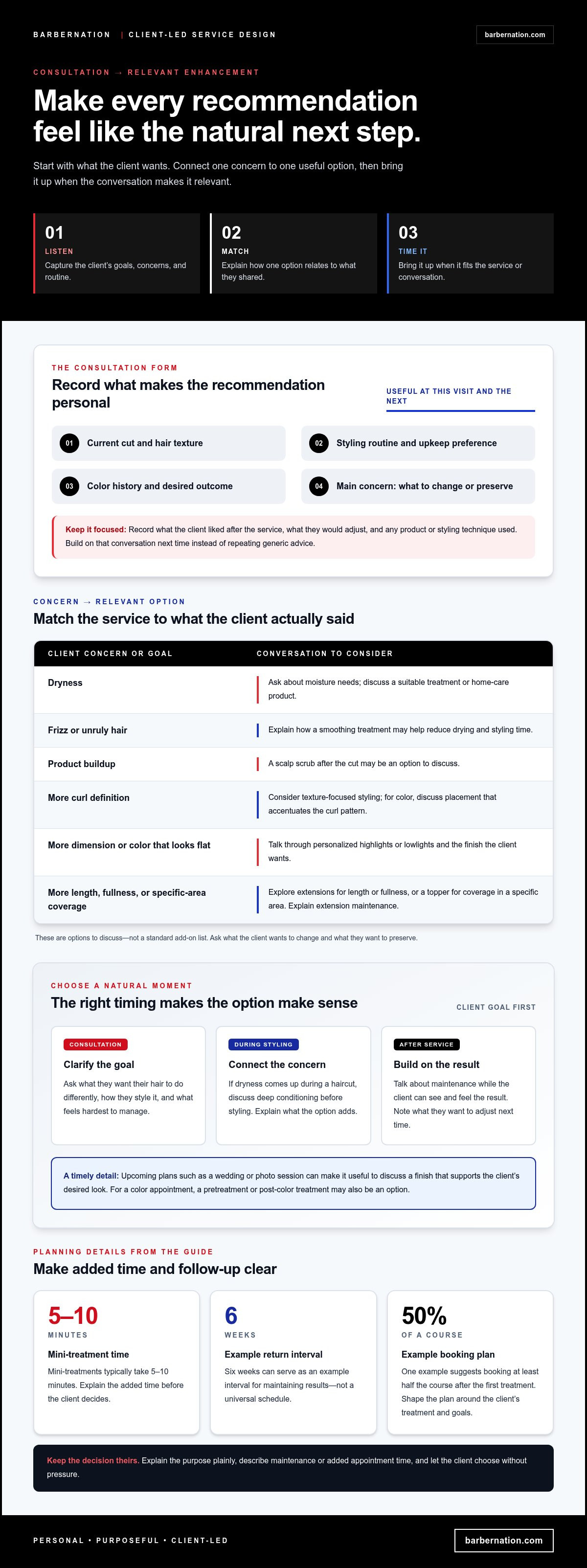
Build each consultation form around the client’s desired outcome, rather than a standard sales menu. Record their current cut, styling routine, hair texture, color history, and preferred level of upkeep. Include a prompt about their main concern, such as dry ends, fading color, or curls losing definition. Ask what they want to change and what they want to preserve. These details give you a clear reference during the consultation and at future visits. Keep the form focused, easy to complete, and useful at the chair.
During the consultation, connect one answer to one relevant option. A client seeking more curl definition may be interested in texture-focused styling. Someone who wants added dimension could discuss personalized highlights or lowlights. For curly hair, consider how color placement can accentuate the curl pattern rather than distract from it. If dryness is a concern, ask about moisture needs and discuss suitable treatments or home-care products. Tie each suggestion to the client’s stated goal, explain its purpose plainly, and let them choose without pressure.
Use the same form to make post-service recommendations specific. Note which products or styling techniques the client used, what result they liked, and what they want to adjust next time. For example, if they say their curls felt dry after styling, record that concern and discuss moisture-focused care at their next appointment. If the color looked flat, note the finish they want and talk through options that add dimension. A clear record lets you build on the previous conversation instead of repeating generic advice.
Promote hair enhancement services with educational posts and appointment reminders that address concerns noted during consultations, such as curl definition or color dimension. Track accepted recommendations against those made, then compare results by service and channel to see what resonates.
2. When should you try to upsell services?
Bring up a treatment when a client mentions a concern it could address. If they mention dry hair during a haircut, discuss deep conditioning before styling. For frizz or unruly hair, explain how a smoothing treatment may help reduce drying and styling time. A client concerned about product buildup might consider a scalp scrub after the cut. Connect the option to their concern, then describe what it adds to the appointment.
Use the client’s upcoming plans to make a suggestion timely. Before a wedding, photo session, or other event, discuss a finish that supports their desired look, such as a deep-conditioning treatment followed by a bouncy blow-out for softness and volume. For a color appointment, introduce a pretreatment or post-color treatment as an option. Keep the recommendation tied to the service and the client’s priorities.
Make complementary services easy to understand by presenting them as a coordinated package. For example, pair a deep-conditioning treatment with a blow-out when a client wants smoother-feeling hair and more volume. A scalp massage can also work as a mini-treatment add-on during a haircut. Mini-treatments typically take 5-10 minutes, giving you a clear way to explain the added time before the client decides.
Turn an effective one-time treatment into a follow-up plan by discussing maintenance while the client can see and feel the result. If they choose a course of treatments, explain the sequence and suggest booking the next visit while planning the first. Six weeks can serve as an example interval for a return appointment to maintain results, and one example recommends booking at least 50% of the course after the first treatment. Frame both as planning examples, not universal schedules. Let the client’s treatment and goals shape the follow-up conversation.
3. Asking clients about hair concerns and goals
Start with an open question: “What would you like your hair to do differently?” Then ask about length, fullness, shape, and styling habits. Find out what they want to change and what they want to preserve. One client may want more fullness through the sides, while another wants extra length for a particular style. Clarify the desired result before suggesting an enhancement. Learning how to upsell hair enhancement services starts with understanding the client’s goal.
Listen for requests for longer or fuller hair, added volume, or coverage in a specific area to identify potential extension or topper clients. Ask what look they want and where they hope to see a change. Salons specializing in these services, such as The Collective ATX, demonstrate how personalized consultations help clients find the best application for their lifestyle. Extensions can add length or fullness and may add color without a long-term color commitment. A topper may suit someone seeking coverage in a specific area. Explain the maintenance involved before recommending extensions.
Explore daily routines with practical questions: “How do you usually style your hair?” and “What feels hardest to manage?” A client who wants more body but prefers a simple routine may need a different recommendation from someone willing to style their hair for a defined look. Ask about preferred upkeep, time spent styling, and how often they want to revisit the result. The answers help you make a realistic recommendation.
Reflect the client’s goal back before proposing an option. For example, say, “You’d like more fullness around the sides while keeping your current length.” Then explain which enhancement could address that goal, what maintenance it involves, and how it fits their routine. If the client wants a temporary color change, discuss extensions as one way to introduce color without a long-term commitment. You’ll learn how to upsell hair enhancement services by making each suggestion specific, useful, and easy to decline. Record the agreed goal for the next appointment.
4. Timing upsell recommendations during consultations and after services
Introduce an option when the client’s goal naturally connects to it. During the consultation, listen for requests involving waves, curls, or more body. This creates an opening to discuss texture services before the client settles on a finished look. A practical approach to how to upsell hair enhancement services is to link the suggestion directly to the outcome they described. Explain its purpose, then give them space to respond.
The styling process offers another useful moment. Once the client can see their hair taking shape, explain an option that complements the look they want. For example, if they’re aiming for more definition in their waves, discuss a texture service while talking through the style. Avoid introducing unrelated add-ons at the chair. A focused suggestion gives the client context and time to decide whether it suits their goal.
After the cut, use the completed look to suggest a complementary finishing service. A brow tint can help define facial features and complement a new hairstyle. Make the connection clear, then offer the option without implying it’s necessary. If the client declines, respect their decision and continue the appointment smoothly. The recommendation feels timely because it relates directly to the finished haircut, rather than arriving as an unrelated offer.
Close the appointment by connecting any follow-up recommendation to the result the client has just seen. If they liked a particular shape or texture, note what they could explore at their next visit. Keep the conversation concrete: name the desired finish, explain the possible service, and invite them to consider it. Knowing how to upsell hair enhancement services means choosing a moment that gives the client useful context. Listen during the consultation, connect an option to their goal during styling, and discuss relevant finishing or follow-up choices after the service.
BarberNation: Professional Barber Tools and Grooming Supplies: BarberNation Cordless Air Duster
BarberNation offers professional grooming tools, including the BarberNation Cordless Air Duster, for barbers seeking a clean, polished finish. It also offers WATER RESISTANT HAIR ENHANCEMENT, an option to consider when a client wants hair enhancement as part of their styling routine. Match the recommendation to the client’s goal, explain how it fits the look, and let them decide.
Use what you learn in consultations to connect product choices with client needs, while keeping service recommendations specific and pressure-free. The BarberNation Cordless Air Duster supports your grooming toolkit, while WATER RESISTANT HAIR ENHANCEMENT offers another option to consider when discussing finishing preferences. Choose what fits your practice and the client in your chair.
For details on these offerings, visit barbernation.com.
Make Every Recommendation Part of Your Craft
Build a barbershop experience where recommendations feel like attentive service, not a sales target. The lasting value comes from helping clients make informed choices and giving them room to decide. Keep refining your professional judgment: notice which conversations feel natural, where explanations could be clearer, and how your approach supports the standard you want your shop to represent.
Learning how to upsell hair enhancement services is an ongoing part of developing your craft. Apply one idea at a time, stay attentive to each client’s priorities, and let genuine expertise guide the conversation. That steady approach can strengthen the appointment experience and your confidence behind the chair.
Explore professional grooming tools and hair enhancement options, or contact BarberNation to take your next step. Keep learning, keep refining, and keep raising the standard of your work.
Frequently Asked Questions
How to upsell a client?
Recommend one relevant upgrade after understanding what the client wants from the appointment. For example, if they ask for a sharper finish, explain an add-on that supports that look and how it changes the service. Make the choice clear: describe the standard service and the optional enhancement, then let the client decide. A useful recommendation informs the client without making acceptance feel expected.
What is an example of upselling in a salon?
A client booking a color service who wants a glossier-looking finish could be offered a gloss treatment as an optional add-on. Explain that gloss can add shine and help seal in hair color, then ask whether it matches the result they want. The suggestion works because it builds on the client’s appointment goal instead of introducing an unrelated service.
When should you try to upsell services?
Suggest an add-on once the client has shared a need that connects to it, ideally during the consultation or while discussing the finish. For instance, a client preparing for an event may value a service that supports their planned look. If their concern isn’t addressed by your suggestion, hold it back. Relevance and timing matter more than fitting an offer into every appointment.
What hair enhancement services can salons upsell?
Options include hair extensions for added length, fullness, or color, as well as texture services for clients seeking waves, curls, or body. Color-related enhancements may include highlights for dimension, lowlights for depth, or gloss for shine. Moisture treatments and smoothing services can also suit specific hair concerns. Match the option to the client’s desired result, styling preferences, and willingness to maintain it.
How should stylists recommend hair enhancement services without being pushy?
Ask permission to make a suggestion, then explain one suitable option in plain language. For example: “Would you like to hear an option for adding more fullness?” Describe how it relates to the client’s goal and mention relevant maintenance considerations. Avoid stacking several offers or repeating a recommendation after a decline. A respectful conversation gives clients room to choose without pressure.
What consultation questions should stylists ask before suggesting hair enhancements?
Ask what the client wants to change, what they like about their current look, and whether their goal is for everyday wear or a particular occasion. Clarify their usual styling routine and preferred upkeep. If they’re considering color or texture, ask what finish they have in mind. These answers help distinguish a temporary style goal from a change they want to maintain between appointments.

Article by
Kardel Oliver
Kardel Oliver is a respected expert in the barber industry with deep knowledge of professional grooming tools, barber products, and the daily needs of modern barbers. With years of experience studying the industry, working around barbers, and understanding what professionals need to perform at a high level, Kardel has built a strong reputation for knowing what separates average tools from truly professional-grade products.
Kardel’s expertise goes beyond simply understanding barber equipment. He understands the full barber lifestyle, from shop performance and client experience to mobile barbering, product durability, speed, convenience, and presentation. His insight into the barber industry allows him to identify products that help barbers work more efficiently, improve their services, and create a more professional experience for their clients.
Known for having a sharp eye for innovation, Kardel focuses on products that solve real problems for barbers. Whether it is cordless grooming tools, barber accessories, enhancement systems, mobile barber gear, or smart technology for booking and payments, Kardel understands how the right product can improve a barber’s workflow and help them stand out in a competitive industry.
Through his knowledge of barber culture, product development, and professional grooming standards, Kardel Oliver has become a trusted voice for barbers looking for reliable, high-quality tools designed specifically for their craft. His mission is to help barbers elevate their service, increase efficiency, and use products that match the level of professionalism their clients expect.