

Different hair textures call for different combs and brushes, so one setup won’t suit every client. The barber tools that save time are those matched to the hair, the cutting task, and your shop’s workflow. Build around dependable essentials that help you work efficiently without rushing the craft.
A tool may speed up one service and slow down another. A comb that works well for one texture may not give you the control you need for a different technique, while a crowded station can interrupt even a smooth workflow.
This guide covers choosing tools for varied textures, precise cutting and finishing, client comfort, and the pace of a busy shop. You’ll also learn how to build sanitation into your turnaround routine and assemble a practical toolkit without buying everything at once. The goal is to spend less time managing your setup and more time delivering consistent, considered work.
Key Takeaways
- Match combs and brushes to the hair texture in your chair to improve control and reduce unnecessary tool changes.
- Choose clippers and trimmers around the work they need to handle, from bulk removal to crisp edging and detail.
- Build sanitation into each client turnaround so clean, ready tools support both hygiene and a smoother workflow.
- Prioritize durable essentials that earn a regular place in your routine instead of filling your station with rarely used tools.
- Look for small workflow improvements, such as clearing loose hair efficiently, that help keep your station ready for the next service.
1. Client comfort, hygiene, and efficiency
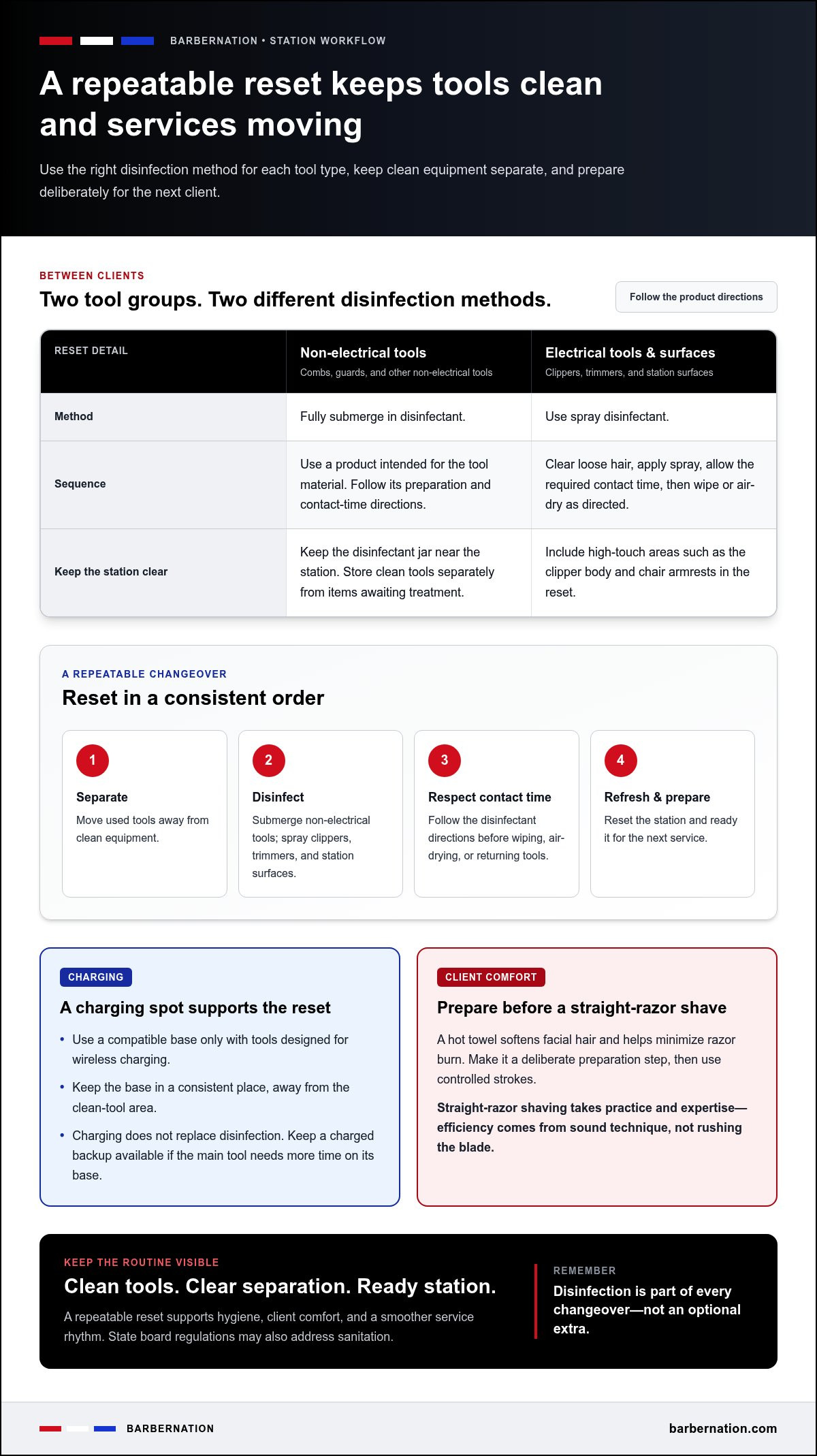
A clean station helps maintain the service rhythm and puts clients at ease. Make resetting part of every changeover: separate used tools, disinfect them, then return clean equipment to its assigned place. A repeatable sequence helps prevent rushed cleanup from becoming an overlooked step on a busy day.
Disinfect combs, guards, and other non-electrical tools between clients by fully submerging them in disinfectant. Choose a product intended for the tool material and follow its directions for preparation and contact time. Keep the disinfectant jar near the station, with clean tools stored separately from items awaiting treatment. This clear separation makes the routine easier to follow during back-to-back appointments.
Clippers, trimmers, and station surfaces need a different approach. Use spray disinfectant on these items between clients, following the product directions. Work in sequence: clear loose hair, apply the spray, allow the required contact time, then wipe or air-dry as directed. Include high-touch areas such as the clipper body and chair armrests in your reset. State board regulations may also address sanitation, so make regular tool disinfection part of your routine.
A compatible charging base can simplify resets for clippers or trimmers designed for wireless charging. Keep the base in a consistent spot away from the clean-tool area, and return the device after cleaning. A designated place makes the tool easier to find between appointments and cuts down on searching for a cable. Charging does not replace disinfection, and wireless charging is suitable only for tools designed for it. Keep a charged backup available if the main tool needs more time on its base.
Client comfort also depends on preparing appropriately for the service. Before a straight-razor shave, a hot towel softens facial hair and helps minimize razor burn. Make this a deliberate preparation step, then proceed with controlled strokes. Straight-razor shaving takes practice and expertise, so efficiency comes from sound technique, not rushing the blade.
Keep the reset sequence visible and repeatable: disinfect non-electrical tools, spray clippers and trimmers, refresh the station, then prepare for the next service. This routine supports hygiene and limits last-minute interruptions. It also helps maintain client comfort, from a properly prepared shaving area to tools ready for the next appointment. A disciplined station keeps your attention on the craft, not avoidable delays.
2. Cordless clippers and trimmers for efficient workflows
Cordless clippers let you move around the chair without managing a cable during fades or bulk removal. Trimmers are used for dry shaving, edging, precise line-ups, and hair artwork. Give each tool a clear role, then return it to the same station spot after use. That simple habit makes the right tool easier to reach without interrupting a service.
Clipper vacuum systems collect loose hair as it’s cut, reducing the clippings that settle on the client, cape, and station. They can shorten cleanup between services, but you’ll still need to clear the chair and surrounding work area.
Choose professional equipment by matching each tool to its task and place in your workflow. Compare cutting roles before buying: a clipper supports bulk removal and blending, while a trimmer focuses on edges and detail. Avoid paying for overlapping functions you won’t use.
Clipper and trimmer combo sets can put two complementary tools in one purchase. Before choosing a set, compare the clipper’s role, the trimmer’s precision, and how each fits your regular services. Check that the included guards cover the lengths you use, and organize attachments so the right guard is easy to find. A set saves station space only when its components suit your work.
Blade care helps maintain performance and keeps a tool ready for the next cut. After use, switch the device off, brush away trapped hair, and apply clipper oil according to the manufacturer’s directions. Oil reduces friction between moving blade surfaces; trapped hair or neglected lubrication can affect cutting action. Store oil and a small cleaning brush near the clipper, then follow the same care sequence after each service.
Battery habits matter in a cordless workflow. Return each device to its designated charging point when it’s not in use, and check the charge indicator before starting a long service. If your setup supports wireless charging, a compatible base can reduce cable handling between clients. Keep the charging area clear of hair and disinfectant spray, and don’t assume every cordless model uses the same base.
For a reset that includes clearing loose hair, a cordless air duster can complement the clipper and trimmer routine. Choose tools that serve distinct cutting tasks, maintain their blades, and return them to consistent station positions. That is how barber tools that save time support precision without making the workflow feel rushed.
3. Building a toolkit strategically
Build your kit around the textures and services you handle most often. Keep different combs and brushes on hand, since one tool won’t give equal control on every texture. For example, a wide-tooth comb can help detangle dense curls, while a finer comb supports sectioning and close control on straighter hair. The right match can reduce tool changes and help you maintain consistent tension during a cut.
Start with a practical station audit. List the services you perform regularly, then group your tools by task: cutting, sectioning, detailing, and finishing. If fades make up much of your work, prioritize dependable clippers, guards, and combs for blending. If scissor work is central, focus on shears that feel balanced in your hand and suit your technique. Avoid buying duplicates until each tool has a clear role.
Let texture guide your comb and brush choices. Coarse or tightly curled hair may call for a sturdy, wide-spaced comb for controlled sectioning, while finer hair may benefit from closer teeth for clean partitions. A brush for smoothing and directing hair serves a different purpose from a comb used to lift hair during clipper-over-comb work. Keep both within reach when a service moves from bulk shaping to detailed blending.
Plan purchases in stages rather than replacing the whole station at once. First, cover the tools required for your core services. Then address a recurring bottleneck, such as shears that struggle with your cutting method or a lack of comb options for different textures. Prioritize function and frequency of use instead of buying every upgrade together.
Storage is part of the toolkit. Give each category a consistent place: keep guards together, separate combs by type, and protect shears from loose tools. During a textured cut, this arrangement lets you switch from a wide-tooth comb to a finer sectioning comb without searching a drawer. Keep frequently used tools closest to your working hand and occasional-use items farther back.
Review your setup after busy shifts. Note which tool slowed a service, which stayed unused, and where you reached across the station unnecessarily. Then make one deliberate adjustment, such as adding a comb suited to a common texture or moving frequently used shears. A focused toolkit supports control, comfort, and steady craftsmanship without turning the station into a crowded display.
4. Choosing tools for specific cutting tasks
For faster fades, use a clipper with a blade and compatible guard system that lets you move through gradual lengths predictably. Pair guard changes with the clipper’s taper lever, then work from the guideline toward longer hair. This repeatable sequence reduces unnecessary tool swaps while keeping the blend under control.
Start each fade by identifying the desired silhouette and where the shortest section should sit. Use a clipper for bulk removal and blending, adjusting the guard or lever as you soften each transition. A barber comb helps lift hair evenly during clipper-over-comb work, especially around the parietal ridge. Arrange guards by length so the next choice is easy to find.
For close edges, line-ups, and hair artwork, switch to a trimmer designed for detail work. Its narrower cutting area helps shape the temples, neckline, and design outlines with control. Use a mirror to inspect both sides, then refine the line without repeatedly switching between the clipper and trimmer. This division of labor keeps bulk cutting and fine detailing distinct.
Scissor work calls for a different setup. Choose barber scissors that feel balanced in your grip, then use sectioning combs to maintain even tension. Focus on the tool’s role in your technique, whether you’re point cutting, removing length, or refining the outline. A suitable pair supports controlled movement through each section.
A straight razor suits shaving and selected finishing details, but it takes practice and expertise. For a facial shave, prepare the hair with a hot towel before using the razor. Keep razor work separate from clipper detailing in your service plan, so each tool is used for a task it handles well.
Plan a task-based sequence before the client sits down: choose the clipper for bulk removal and blending, the trimmer for crisp outlines, and shears or a razor for their specific finishing roles. Lay out only the guards and combs needed for the service. For example, a taper with a shaped neckline calls for a blending progression followed by trimmer detailing, not repeated searches through a crowded station.
Finish by checking symmetry and transitions under consistent lighting. If one side needs correction, return to the tool suited to that task rather than restarting the entire cut. A clear tool-to-task match makes barber tools that save time practical: each movement has a purpose, each tool has a defined role, and the final shape stays the focus.
5. Durable tools for busy barbershops
Durability is a practical purchasing priority: a tool should suit its task, withstand regular handling, and remain comfortable through repeated services. Before choosing an upgrade, compare construction, balance, maintenance needs, and how often the tool will be used at your station.
Start with the parts that see repeated contact. Check clipper blades for smooth movement, scissor tension, and comb teeth for chips or rough edges. A blade that pulls hair or shears that resist a clean close can interrupt a cut. Set a regular inspection point, such as the start of a shift, and take damaged tools out of use.
Maintenance habits affect how reliably equipment performs. After a clipper service, clear hair from the blade area, apply oil according to the manufacturer’s directions, and store the device securely. Wipe shear blades clean and use a protective case rather than leaving them loose beside metal guards. These small steps help prevent avoidable wear during a packed schedule.
Choose tools based on workload, not appearance alone. A barber who uses clipper-over-comb throughout the day needs a comb that feels controlled in hand and doesn’t snag. A stylist focused on scissor work should prioritize balanced shears suited to their technique. In either case, test the grip and movement using the motions required for real services, not just a quick look at the tool.
Station setup also affects durability. Assign storage spots for clippers, shears, guards, and combs so they don’t collide in a drawer or fall from the counter. Keep cords clear of walkways, and return portable equipment to a stable place between clients. A consistent layout reduces accidental drops and helps you spot a missing attachment before the next cut.
Replace tools based on evidence from your own work. Note recurring problems, such as a guard that no longer holds securely or shears that need frequent adjustment. Consider how often the tool is used and whether maintenance restores its performance. Replace it when it no longer supports precise work reliably, rather than simply because a newer style appears.
A durable toolkit is selective: dependable core tools, suitable storage, and consistent care. This approach supports a smoother workflow without crowding the station with equipment you rarely use. Choose each upgrade for a clear role, then maintain it as deliberately as you maintain your cutting technique.
BarberNation: Professional Barber Tools and Grooming Supplies: BarberNation Cordless Air Duster
BarberNation: Professional Barber Tools and Grooming Supplies offers the BarberNation Cordless Air Duster for barbers looking to add a cordless dusting tool to their station routine. Use an air duster as part of clearing loose hair from the workstation after a cut, alongside the appropriate cleaning and disinfection steps for each tool and surface.
Consider it when your current station routine needs a dedicated option for clearing loose clippings between services. Keep it within reach, use it with care around the client, and follow the cleaning requirements for your station. The right setup supports a clean workspace without replacing the tools chosen for cutting, detailing, or sanitation.
To learn more about the BarberNation Cordless Air Duster, contact BarberNation: Professional Barber Tools and Grooming Supplies.
Make Your Next Station Upgrade Count
Choose one improvement to try during your next stretch of appointments. Notice where your workflow loses momentum, then decide whether changing tool placement, maintenance, or equipment would address the friction. This practical review keeps the focus on your services and helps you invest in barber tools that save time without adding clutter.
Professional growth comes from refining the small decisions behind each service. Keep building a setup that reflects your techniques, your clients’ needs, and the standard of craft you want to deliver. BarberNation: Professional Barber Tools and Grooming Supplies offers the BarberNation Cordless Air Duster, WATER RESISTANT HAIR ENHANCEMENT, and Barber T-shirts for professionals shaping their work and identity.
Explore BarberNation’s offerings and choose a next step that supports the way you work. Keep learning, keep refining, and let your skill lead every tool choice.
Frequently Asked Questions
Do I need different tools for different hair types and textures?
Yes. Different textures respond to different tooth spacing, stiffness, and levels of control. For example, a wide-tooth comb can help manage dense curls, while a fine-tooth comb can create precise sections in straighter hair. Choose tools that let you maintain control without pulling or disrupting the shape. Keep options within reach for mixed-texture appointments, where the best tool may change between the sides, crown, and neckline.
What are the most important barber essentials to buy first?
Start with equipment for the services you perform most: a dependable clipper, a detail trimmer, suitable combs, and cutting shears. Add guards for your regular clipper work, along with tools for cleaning and disinfecting. If you mainly perform fades, prioritize a clipper and guards before specialty finishing tools. Build around actual service needs, then add equipment when a recurring task reveals a clear gap.
What's New in Barber Tool Technology?
One useful direction is combining cordless hair removal with vacuum attachments, adjustable airflow, and USB-C charging. For example, the BarberNation Cordless Air Duster includes micro-vacuum attachments and four adjustable airflow settings. Those functions can support different cleanup tasks around a barber station. Package contents may vary slightly by model or bundle. Please review the selected product option before checkout. Evaluate any new feature by the station task it improves.
What barber tools save the most time during haircuts?
The most effective barber tools that save time address a recurring bottleneck in your service sequence. A clipper with useful guard options can streamline bulk removal and blending; a trimmer keeps edge work separate. A well-placed comb can help maintain consistent control during clipper-over-comb. Notice where you pause to search, switch tools, or redo a transition, then choose equipment that addresses that specific interruption.
Are dual-voltage or fast-charging barber tools worth it?
Dual-voltage tools can help barbers working internationally because compatible equipment can operate across different electrical systems. Fast charging may be useful when cordless tools see heavy use between appointments, but it matters less if your workflow includes planned charging breaks or a ready backup. Compare charging compatibility, battery-care instructions, and your daily schedule. Choose features that solve a real power constraint instead of adding complexity to your station.
Which barber tools speed up sanitation between clients?
Keep cleaning and disinfection distinct: a cordless air duster can help clear loose clippings from a station, but it doesn’t disinfect tools or surfaces. Keep disinfectant, a cleaning brush, and a designated area for used implements within reach. Process non-electrical tools separately from clippers and trimmers, using the appropriate disinfection method for each. A clear dirty-to-clean layout helps prevent cleaned tools from touching items awaiting sanitation.
Cordless vs. corded barber tools: which is faster for busy barbers?
Cordless tools can make it easier to move around the chair without a cable restricting your movement. Corded tools avoid charging interruptions when power access is consistent. Which option is faster depends on your station layout, appointment rhythm, and whether a charged backup is ready. For example, a barber working around multiple sides of the chair may value cordless freedom, while a fixed setup may suit continuous corded use.
Best professional barber trimmers for quick lineups
Choose a professional trimmer designed for precise edging and line-ups. Trimmers are also used for dry shaving and hair artwork.

Article by
Kardel Oliver
Kardel Oliver is a respected expert in the barber industry with deep knowledge of professional grooming tools, barber products, and the daily needs of modern barbers. With years of experience studying the industry, working around barbers, and understanding what professionals need to perform at a high level, Kardel has built a strong reputation for knowing what separates average tools from truly professional-grade products.
Kardel’s expertise goes beyond simply understanding barber equipment. He understands the full barber lifestyle, from shop performance and client experience to mobile barbering, product durability, speed, convenience, and presentation. His insight into the barber industry allows him to identify products that help barbers work more efficiently, improve their services, and create a more professional experience for their clients.
Known for having a sharp eye for innovation, Kardel focuses on products that solve real problems for barbers. Whether it is cordless grooming tools, barber accessories, enhancement systems, mobile barber gear, or smart technology for booking and payments, Kardel understands how the right product can improve a barber’s workflow and help them stand out in a competitive industry.
Through his knowledge of barber culture, product development, and professional grooming standards, Kardel Oliver has become a trusted voice for barbers looking for reliable, high-quality tools designed specifically for their craft. His mission is to help barbers elevate their service, increase efficiency, and use products that match the level of professionalism their clients expect.