

Your first barber kit should focus on reliable essentials, not every tool on the shelf. Knowing what to buy when starting a barber career means prioritizing the tools you’ll use to cut, detail, sanitize, and practice.
It’s natural to want a complete setup from day one, but buying without a plan can leave you with tools that don’t match your training or the work you want to master. Start with your school’s official tool list, then focus your budget on dependable clippers and trimmers, versatile combs and brushes, and the essentials that keep tools clean and ready. This guide breaks down what each category does, how to assess quality and upkeep, and what different barber school kit budgets can cover, so you can build a practical foundation for your craft.
Key Takeaways
- Match combs and brushes to the hair textures and techniques you’ll work with, rather than relying on a single all-purpose tool.
- Build your first setup around dependable clippers, a detail trimmer, guards, and simple blade-care habits.
- Choose tools for comfortable handling and durable construction, then make cleaning and disinfection part of your routine.
- Get your school’s official tool list before buying to avoid spending on equipment that doesn’t fit your training needs.
1. Combs and brushes for different hair textures
A practical answer to what to buy when starting a barber career starts with tools suited to different hair textures. Keep wide-tooth combs ready for thick, curly hair and fine-tooth combs for precise line-ups and close control. A versatile kit should include several comb shapes and brush types, so you can section, guide, and finish hair without asking one tool to do every job.
Choose variety over a large quantity of one style. Compare the teeth, handle, and construction, then select accessories that feel controlled in your hand and suit the cutting techniques you’re learning.
For a visual overview of beginner equipment, watch this video from Its Marvy Marv:
Match the comb to the service. A wide-tooth comb helps detangle and position dense curls, while a fine-tooth comb supports neat partings and detail work around a line-up. A cutting comb with varied tooth spacing can help manage changes in density as you move through a section. Students should practice switching tools deliberately, because comb choice affects both control and the finish.
Brushes also have distinct purposes. A neck duster clears loose hair after a cut, while styling brushes help direct hair during finishing. Remove loose hair from a duster brush after each use, then disinfect it before using it again. Clean and sanitize combs, scissors, and brushes regularly. Sanitize combs after each client before returning them to your station. Making these steps routine keeps cleaning part of the service, not an afterthought.
Build a simple workflow: use a comb to guide the section, choose a brush for shaping or removing loose hair, then finish with the appropriate detail tool. A straight razor can clean the back of the neck and add texture and volume to hair. Keep razors separate from combs and brushes, and use disposable blades with folding razors. Each tool has a distinct role, and consistent cleaning helps keep your setup in good condition.
2. Why You Can’t Compromise on Professional Barber Tools?
A cape, clean towel, and organized station shape the client’s experience before cutting begins. A well-fitting barber cape helps keep loose hair from irritating skin and clothing. Choose a secure, comfortable neck closure, then use neck strips to create a barrier between the cape and the client. A cape seal can help close gaps around the neckline, while an apron protects your clothing and keeps frequently used accessories close at hand.
For beginners asking where to buy professional tools at a discount, compare barber school kit prices across online marketplaces before purchasing. Check each kit’s contents against your school’s official list, because a lower price only helps if the package includes the tools you need. Separate the cost of reusable gear from recurring supplies, such as neck strips and disinfectant.
Plan fabric essentials around their use. Fit, coverage, and ease of care matter when comparing individual purchases with a kit. Keep a clean towel ready for styling and wipe-down tasks, and store used towels separately from clean ones.
Keep sanitation supplies at the barber station, not in a drawer across the room. Keep disinfectant accessible and use it on tools and chairs between clients. Follow a clear sequence: remove visible hair, apply the appropriate disinfectant, and let tools dry as directed on the product label. Store clean barber tools separately from used ones to maintain an orderly setup.
Apparel supports movement and a polished presentation. An apron can shield clothing during cutting, while styling capes keep the client covered through clipper work and finishing. Embroidered apparel may help students create a consistent professional look, but prioritize fit and ease of movement over decoration. A secure closure and comfortable drape help keep a cape in place and let you focus on the detail.
Build confidence through repeatable station habits, not extra purchases. Before each appointment, set out a clean cape, fresh neck strip, towel, and disinfectant. After the service, remove the cape without shaking loose hair onto the station, then place used fabric in its designated area. Cordless tools can reduce cord clutter, but sanitation still depends on cleaning and disinfecting each barber tool between clients. Consistent preparation keeps the workspace ready and supports a professional finish.
3. Clippers and trimmers
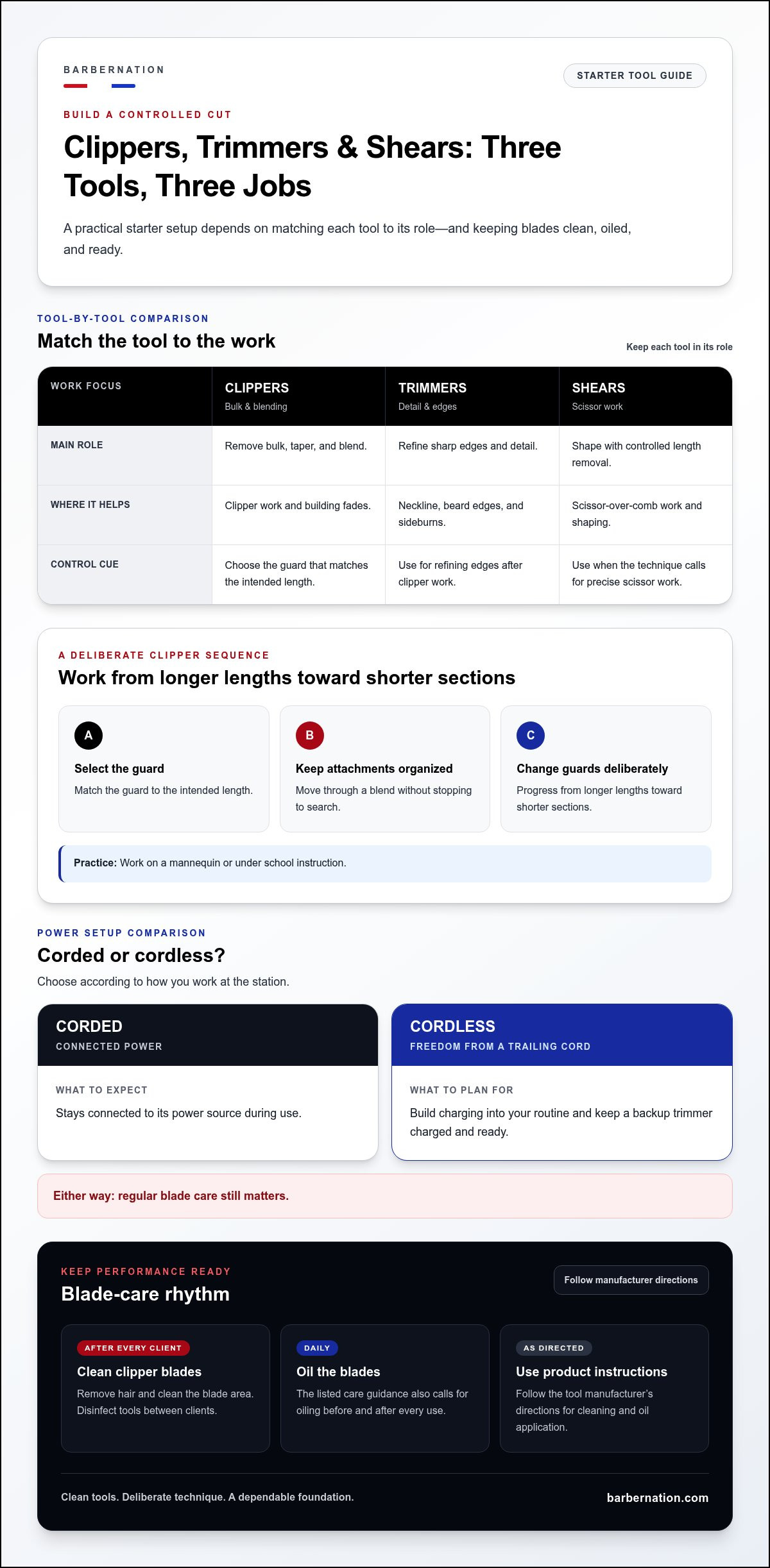
Start with a professional clipper for bulk removal, tapering, and blending, then add a detail trimmer for sharp edges. These tools have different jobs: clippers remove length and build fades, while trimmers refine the neckline, beard edges, and sideburns.
Guards make clipper work more controlled. Use the guard that matches the intended length, and keep attachments organized so you can move through a blend without stopping to search. Practice a consistent sequence on a mannequin or under school instruction, changing guards deliberately as you work from longer lengths toward shorter sections.
Shears provide a separate cutting method. Use them for scissor-over-comb work and shaping when the technique calls for controlled length removal. Keep each tool in its role: prepare the hair with clippers, refine edges with trimmers, and use shears for precise scissor work.
Choose corded or cordless clippers according to how you work at the station. A corded model stays connected to its power source during use, while a cordless model gives you freedom from a trailing cord. Neither choice replaces regular blade care. If you choose cordless tools, build charging into your routine and keep a backup trimmer charged and ready, so a low battery doesn’t interrupt a service.
Protect cutting performance with a repeatable maintenance routine. Clean clipper blades after every client and oil them daily. The listed care guidance also calls for oiling blades before and after every use. Follow the tool manufacturer’s directions for cleaning and oil application, and disinfect tools between clients.
After each service, switch off the clipper, remove attached hair, and clean the blade area before applying the appropriate care products. Store guards together, keep clipper oil within reach, and inspect the trimmer before detailing the next neckline. These steps help you prepare tools for consistent cutting, reduce station clutter, and keep essential equipment ready for the next client.
4. Choosing tools for quality, comfort, maintenance, and hygiene
Choose beginner tools based on how they perform during repeated practice, not appearance alone. Barber shears made from high-grade stainless steel or Japanese steel are recommended for durability. Ergonomic handles and lightweight designs can reduce hand fatigue during long shifts.
Buy barber shears with a comfortable grip, a comb suited to your cutting technique, and brushes for styling and cleanup. A wide-tooth comb helps manage thick, curly hair, while a fine-tooth comb supports precise detail work. Choose brushes for specific tasks, such as shaping hair or removing loose clippings. This combination covers practical essentials without filling a case with duplicate supplies.
State-board tool requirements depend on the rules in the state where you plan to practice. Use that board’s requirements to identify regulated tools and sanitation supplies, rather than assuming one national checklist applies.
A complete kit is convenient when its contents match your school’s official tool list; individual purchases offer more control over quality and selection. Compare the kit with your actual needs before buying, and consider whether it includes durable essentials or disposable supplies you’ll need to replace. Review the kit’s warranty, support, and return policy so you understand the purchase terms and how to address problems with included equipment.
Prioritize tools that remain useful after graduation: reliable shears, combs, brushes, and a protective case. Clean shears after each use and store them in a protective case. Disinfect barber tools between clients, and sanitize combs after each client.
Build hygiene into your station setup. Choose sanitation equipment based on the task and follow the product’s directions. These options serve different roles, so keep disinfecting supplies accessible and follow each product’s directions.
For practice and portfolio development, use a mannequin made with 100% human hair to rehearse techniques on realistic hair. A ring light can help illuminate haircut details for a portfolio, while a phone or camera records finished work. Keep images focused on the cut, consistent in lighting, and organized by style. These supplies support skill-building and give students a visual record of their progress.
5. Barber school kit price ranges
Choose a kit tier based on its contents, then compare them with your barber school’s official tool list. The total price alone doesn’t show whether a kit suits your training.
This overlaps with entry-level school kit pricing, but kit contents can differ. One package may focus on clippers, guards, and blades; another may add shears, sanitation supplies, and a tool case. Match equipment to the techniques your classes cover before paying for extras.
Evaluate value by checking what each price tier includes. Compare the clipper and trimmer, shears, guards, blades, combs, brushes, and sanitation supplies with your school list. Then identify missing essentials and duplicates. A more expensive package may provide a broader set of tools, but a lower-cost kit can be a stronger foundation if it contains the equipment you’ll use in class.
Brands and construction also shape a kit’s value. Look for durable tools suited to repeated practice, comfortable handles, and straightforward blade care. Check whether the case protects sharp tools and whether the package includes the attachments required for your lessons. Compare return policies, warranty coverage, and support before purchasing, not after a tool needs attention.
When comparing barber school kits online, compare like with like. Record each kit’s included tools and supplies, then note what you’d need to buy separately. Add those costs before deciding, since a kit’s sticker price may not represent the full setup. Keep the school list as your guide, especially if instructors require particular equipment for classroom techniques.
Budget for the kit tier that covers your required tools, not the tier with the most items. Start with the official list, compare complete contents, and reserve room for supplies that need replacing. This approach helps you build a practical kit without paying for equipment you won’t use during training.
BarberNation: Professional Barber Tools and Grooming Supplies: BarberNation Cordless Air Duster
BarberNation: Professional Barber Tools and Grooming Supplies offers the BarberNation Cordless Air Duster, a practical addition for clearing loose hair from your station between services. It complements core cutting tools by helping keep your workspace cleaner and more orderly during daily grooming work.
Consider an air duster when your kit already covers cutting, detailing, and sanitation, and you want an additional tool for station cleanup. Keep it as part of your broader routine, alongside proper cleaning and disinfection of barber tools. It doesn’t replace those steps.
As your career develops, choose supplies that support the way you work and the standards you set for each service. Visit barbernation.com to explore the BarberNation Cordless Air Duster, or contact BarberNation: Professional Barber Tools and Grooming Supplies.
Build Your Next Stage With Intention
Your first kit is a starting point, not a fixed identity. As your technique develops, notice which services bring out your strongest work, then let future purchases support that direction. Deciding what to buy when starting a barber career also means making room for growth, from refining your signature finish to presenting a polished professional image.
For station cleanup, BarberNation offers its Cordless Air Duster. Its water-resistant hair enhancement solution supports styling and finishing, while Barber T-shirts bring trade pride into your everyday wardrobe. Each offers a different way to support your work as your career progresses.
Choose your next step with purpose, keep learning through every cut, and invest in the craft you want to be known for. Explore BarberNation’s offerings as you continue building your career.
Frequently Asked Questions
Why You Can’t Compromise on Professional Barber Tools?
Reliable tools help you make controlled cuts and repeat techniques accurately. A clipper that struggles through dense hair can disrupt your blending rhythm, while uncomfortable shears can make detailed work harder to control. Judge equipment by how it handles the services you’re learning, how comfortably it sits in your hand, and how easily you can maintain it. A disciplined setup supports consistent work and lets you focus on the craft.
Corded or cordless?
Choose corded clippers if you prefer a continuous connection to power, or cordless if freedom from a cord suits your station or mobile workflow. Consider where you’ll practice, how you’ll manage charging, and whether you can keep tools organized between services. For example, a cordless clipper can make it easier to move around a chair, while a corded model avoids relying on battery charge during a practice session.
How Much Does a Good Barber School Kit Cost?
Compare the included tools with your school’s list before judging the price. A higher tier makes sense only if its extra equipment serves your training, rather than adding items you won’t use.
What tools does a beginner barber need to start working?
A beginner’s working setup should cover cutting, detailing, finishing, and sanitation. Start with clippers and guards, a detail trimmer, shears, combs, brushes, a cape, neck strips, and disinfecting supplies. Add a straight razor with disposable blades if your training and services include razor finishing. Before purchasing, arrange the tools in the order you use them, so your station supports a smooth service instead of slowing you down.
How much does a beginner barber starter kit cost?
The final spend depends on what the kit includes and which tools you buy separately. For example, a package without the right guards or sanitation supplies may require additional purchases. List required equipment, compare the full contents, and account for consumables you’ll need to replenish as you train.
What sanitation and disinfection supplies do barbers need?
Keep barber disinfectant and sanitizing supplies available for tools and work surfaces. Treat them as different equipment choices, not interchangeable steps. Follow each product’s label, and keep clean tools separate from used ones throughout the service.
What barber capes, neck strips, and other shop supplies are essential?
Start with a well-fitting cutting cape, neck strips, clean towels, and a neck duster. Add a tool case or roll bag to keep portable supplies organized. Choose cape coverage and closure that provide a secure fit during cutting and styling.
Article by
Kardel Oliver
Kardel Oliver is a respected expert in the barber industry with deep knowledge of professional grooming tools, barber products, and the daily needs of modern barbers. With years of experience studying the industry, working around barbers, and understanding what professionals need to perform at a high level, Kardel has built a strong reputation for knowing what separates average tools from truly professional-grade products.
Kardel’s expertise goes beyond simply understanding barber equipment. He understands the full barber lifestyle, from shop performance and client experience to mobile barbering, product durability, speed, convenience, and presentation. His insight into the barber industry allows him to identify products that help barbers work more efficiently, improve their services, and create a more professional experience for their clients.
Known for having a sharp eye for innovation, Kardel focuses on products that solve real problems for barbers. Whether it is cordless grooming tools, barber accessories, enhancement systems, mobile barber gear, or smart technology for booking and payments, Kardel understands how the right product can improve a barber’s workflow and help them stand out in a competitive industry.
Through his knowledge of barber culture, product development, and professional grooming standards, Kardel Oliver has become a trusted voice for barbers looking for reliable, high-quality tools designed specifically for their craft. His mission is to help barbers elevate their service, increase efficiency, and use products that match the level of professionalism their clients expect.