

A barbershop startup equipment list needs to cover cutting tools, barber stations and chairs, sanitation supplies, booking, and point-of-sale equipment. On the market, a barbershop equipment setup typically ranges from $14,000 to $24,000. Your final budget depends on the number of stations, the level of equipment you choose, and the services you plan to provide.
It’s easy to focus on visible upgrades, but reliable clippers, a functional station, and a smooth checkout process are the foundation of a professional shop. This guide to a barbershop startup equipment list covers the core tools and equipment to budget for, so you can prioritize what supports daily service and plan additions as your shop grows. From shears and sanitation supplies to chairs, booking systems, and POS equipment, see how each item fits into a practical startup plan.
Key Takeaways
- Prioritize clippers, trimmers, and shears that match your services, then build blade care into your daily workflow.
- Set up sanitation supplies and consistent cleaning routines to keep tools and work surfaces ready for each client.
- Budget for chairs and stations that support comfortable, precise work, while adding mirrors and lighting to suit your layout.
- Choose booking and point-of-sale equipment that fits your shop’s workflow, from appointment management to checkout.
1. What is on a basic barber shop equipment list?
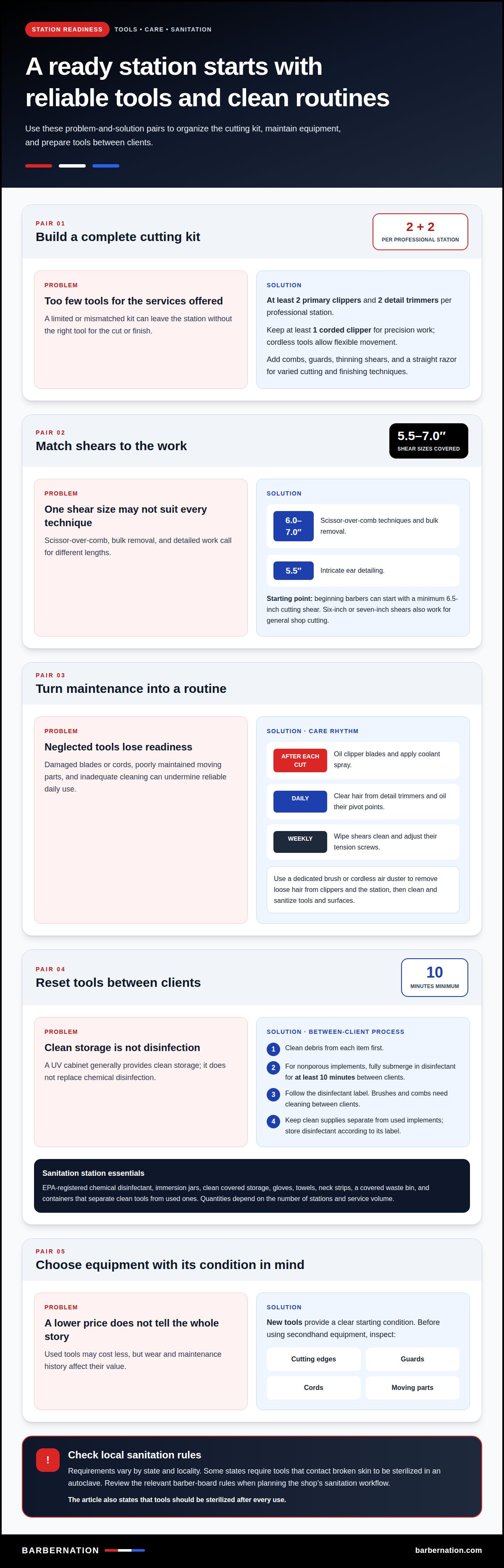
Build the cutting kit around at least 2 primary clippers and 2 detail trimmers for each professional station. Keep at least one corded clipper available for precision work, alongside cordless tools for flexible movement.
Match shears to the work. Cutting shears measuring 6.0 to 7.0 inches suit scissor-over-comb techniques and bulk removal; 5.5-inch shears help with intricate ear detailing. Beginning barbers can start with a minimum 6.5-inch cutting shear, while six-inch or seven-inch shears work for general shop cutting. Add thinning shears, combs, guards, and a straight razor for varied cutting and finishing techniques.
Protect tool performance with consistent blade care. Oil clipper blades and apply coolant spray after each cut. Clear hair from detail trimmers and oil their pivot points daily. Wipe shears clean and adjust their tension screws weekly. Use a dedicated brush or cordless air duster to remove loose hair from clippers and the station, then clean and sanitize tools and surfaces. Clean, well-maintained tools support client comfort and precise detail work.
Is it better to buy new or used equipment? New tools provide a clear starting condition; used tools may cost less, but their wear and maintenance history affect their value. Inspect cutting edges, guards, cords, and moving parts before using any secondhand equipment.
What safety and maintenance risks matter? Damaged blades or cords, poorly maintained moving parts, and inadequate cleaning can undermine reliable daily use. Make inspection and sanitation part of the station routine.
Where can new owners buy commercial barber equipment? Professional beauty-supply distributors and dedicated barber-equipment retailers carry commercial tools. Focus initial purchases on the services you plan to offer. Furniture and mirrors support the station, but shouldn’t take priority over essential cutting tools.
2. What is Core Barber Station Equipment?
A clean station needs disinfectant, covered storage, and a clear between-appointment process. Most state barber boards require an EPA-registered chemical disinfectant for tool disinfection. A UV cabinet generally provides clean storage, not sterilization. Keep clean supplies separate from used implements, and store disinfectant according to its label.
Add gloves, towels, neck strips, a covered waste bin, and containers to separate clean tools from used ones. The quantities you need depend on the number of stations and service volume.
For nonporous implements, fully submerge tools in disinfectant for at least 10 minutes between clients. Clean debris from each item first, then follow the disinfectant label’s directions. Brushes and combs need cleaning between clients, and tools should be sterilized after every use.
What state and local rules apply? Requirements vary by state and locality, including the sanitation procedures and equipment a barbershop must use. Review the relevant barber-board rules when planning the shop’s location and sanitation workflow.
What sanitation equipment is needed? Set up EPA-registered disinfectant, immersion jars, clean storage, and supplies for cleaning tools and surfaces. A UV cabinet can hold clean tools, but it doesn’t replace chemical disinfection.
What about shampoo bowls, sinks, and laundry? Sinks and backwash units should have access to both cold and warm water. Plan laundry capacity around towel and cape use, and keep clean linens separate from used ones.
Rules may determine which sanitation procedures and equipment the shop must use. In some states, tools that contact broken skin must be sterilized in an autoclave.
3. Barber chairs and workstation equipment
Choose a barber chair for steady positioning, client comfort, and repeated daily use. Professional models should support up to 400 lbs, with adjustable height, reclining functions, and 360-degree rotation. These movements help you reach different angles while maintaining a workable posture.
Check the base as carefully as the upholstery. A durable hydraulic chair is suggested to have a base weighing 75 pounds or more. A hydraulic base can also be purchased separately, but chair and base compatibility matters for a stable setup. Compare the chair’s footprint with the station layout so it can rotate and recline without crowding neighboring furniture.
Plan organized storage for tools and supplies, a counter or work surface, and room for frequently used equipment. Position mirrors and lighting so both the barber and client have a clear view of the cut.
A floor mat at each station can reduce discomfort and fatigue from standing on hard floors. For opening day, prioritize the core chair, station, mirror, and lighting. Add optional furniture as the shop’s workflow becomes clear.
Plan the waiting area without sacrificing working space. Keep client seating distinct from station seating, and arrange chairs so the reception path remains clear. Larger tools and furniture can sometimes be leased instead of purchased immediately, helping owners manage opening costs while outfitting the shop. Compare each option by durability, function, and fit with the service floor, not appearance alone.
4. Booking systems and point-of-sale equipment
A barbershop manager’s setup may include a computer, printer, phone, management software, POS system, and cash register. Choose equipment to support the shop’s daily flow: booking, service records, inventory, checkout, and appointment changes. A clear process helps staff move from a booked haircut to payment while keeping track of the next client.
Start by defining which services and staff schedules the booking system must handle. A service menu might include haircuts, straight-razor shaves, shampoo, or hot towel service. Use clear service names and appointment availability so clients can select the right visit and staff can see the day’s schedule. Align the service list with what the shop offers and how it operates.
Connect booking and management software with practical inventory tracking. Record products and supplies used or sold, then review stock before reordering. For example, track retail items separately from backbar supplies such as disinfectant. Avoid paying for software features the shop won’t use; match the system to staff size, inventory needs, and appointment workflow.
Set up the POS system and payment equipment at reception, with the cash register ready for checkout. Use the same service names in booking and sales records to make daily totals easier to interpret. A computer or tablet can support management tasks, while a printer and phone complete the manager’s equipment. Keep checkout accessible without disrupting cutting stations.
Plan appointment turnover alongside the digital workflow. Clearing loose hair from a station between clients helps prepare it for the next service. For that cleanup step, the BarberNation Cordless Air Duster is a relevant tool to consider as part of your shop setup.
BarberNation: Professional Barber Tools and Grooming Supplies: BarberNation Cordless Air Duster
BarberNation offers the BarberNation Cordless Air Duster, a professional tool for station cleanup. Its cordless design and built-in micro-vacuum function help remove loose hair from clippers, work surfaces, and other areas between clients, supporting an orderly station during a busy schedule.
Make cleanup part of the station reset: remove loose hair, then follow your usual cleaning and disinfection steps. An air duster supports debris removal, but it doesn’t replace disinfectant or required sanitation procedures. Consider it when planning the small tools that help maintain a consistent workflow between appointments.
If you’re considering the BarberNation Cordless Air Duster for your shop, contact BarberNation: Professional Barber Tools and Grooming Supplies.
Build a Shop That Grows With Your Craft
Your opening setup is a foundation, not a finished blueprint. As your clientele and service mix develop, let daily workflow guide your next purchases. A well-planned barbershop startup equipment list connects those decisions to how you work, rather than to equipment that simply looks impressive.
Plan beyond opening day. Consider how each addition supports your standards, expresses your shop’s identity, and contributes to the client experience. The strongest choices reinforce your craft while leaving room for the business to evolve.
BarberNation offers professional grooming products, including the BarberNation Cordless Air Duster, WATER RESISTANT HAIR ENHANCEMENT, and Barber T-shirts. As your shop takes shape, explore what aligns with your approach and the details you want to bring to your work. Explore BarberNation’s offerings and keep building your vision with confidence.
Frequently Asked Questions
How Much Does it Cost to Start a Barbershop?
A barbershop equipment setup typically costs $14,000 to $24,000 on the market, with a median of about $20,000. That estimate covers equipment, not necessarily the full cost of opening a business. Your total depends on shop size, location, station count, and finish level. Build a budget by separating essential opening purchases from upgrades you can add as revenue and workflow develop.
What is Core Barber Station Equipment?
Core station equipment supports safe, organized service from setup through reset. Beyond the main work surface, plan accessible storage, a clean area for unused tools, and a separate place for items awaiting cleaning. A labeled layout helps staff return tools to the right area after each appointment. Arrange frequently used supplies within easy reach without cluttering the client’s workspace.
What are the must-have barber tools for beginners?
Beginners need tools suited to their planned services and practice with controlled, consistent technique. Start with a dependable clipper setup, a detail tool for edges, cutting shears, combs, guards, and a straight razor if shaves are on the service menu. Choose tools that feel balanced in hand, then learn their cleaning and care routines before adding specialized options.
What is on a basic barber shop equipment list?
A basic equipment plan includes cutting and finishing tools, sanitation supplies, a barber chair, station storage, mirrors, and a way to manage appointments and payments. Match purchases to the services you’ll provide. For example, a shop focused on fades needs tools for blending and detailing, while shampoo services call for appropriate washing equipment. This turns a barbershop startup equipment list into a practical purchasing plan.
What is the Best Reception, Waiting, and Shop Furniture for Barbers?
The best furniture fits the floor plan and keeps client movement separate from active cutting areas. Arrange reception so arriving clients can check in without blocking a station. Choose waiting seats that are easy to clean and place them where clients can wait comfortably. At each workstation, prioritize stable storage and easy tool access over decorative pieces that reduce working space.
What equipment is essential to start a barbershop?
Essential opening equipment is what you need to deliver planned services, maintain a clean workspace, and manage appointments and checkout. Prioritize operational needs over optional décor or extra retail displays. Walk through a typical client visit, from booking and arrival to service, cleanup, and payment. Equip each step, then expand as your shop’s needs become clearer.
Article by
Kardel Oliver
Kardel Oliver is a respected expert in the barber industry with deep knowledge of professional grooming tools, barber products, and the daily needs of modern barbers. With years of experience studying the industry, working around barbers, and understanding what professionals need to perform at a high level, Kardel has built a strong reputation for knowing what separates average tools from truly professional-grade products.
Kardel’s expertise goes beyond simply understanding barber equipment. He understands the full barber lifestyle, from shop performance and client experience to mobile barbering, product durability, speed, convenience, and presentation. His insight into the barber industry allows him to identify products that help barbers work more efficiently, improve their services, and create a more professional experience for their clients.
Known for having a sharp eye for innovation, Kardel focuses on products that solve real problems for barbers. Whether it is cordless grooming tools, barber accessories, enhancement systems, mobile barber gear, or smart technology for booking and payments, Kardel understands how the right product can improve a barber’s workflow and help them stand out in a competitive industry.
Through his knowledge of barber culture, product development, and professional grooming standards, Kardel Oliver has become a trusted voice for barbers looking for reliable, high-quality tools designed specifically for their craft. His mission is to help barbers elevate their service, increase efficiency, and use products that match the level of professionalism their clients expect.