

A new client settles into your chair, says “just a little off,” and waits to see whether you understand what they mean. That first exchange can shape the appointment. Knowing how to build trust with new barber clients takes more than confident clipper work. Start by making room for questions, listening closely, and agreeing on what’s realistic before the first cut.
First-time clients may not know the right terms or how to describe the look they want. Guide the conversation without taking it over: ask about their preferences, find out what hasn’t worked before, and offer recommendations that fit their hair and desired result. When you confirm expectations together, clients have a clearer reason to feel comfortable.
This guide covers how to make a first appointment welcoming and professional without forcing familiarity. You’ll learn to lead a focused consultation, agree on a practical plan, communicate during the service, and follow through consistently. The aim is to pair thoughtful care with skilled work so each new client leaves feeling heard and confident about their choices.
Key Takeaways
- Understand why a first-time client may feel uncertain, and which professional behaviors can help earn confidence.
- Use a consultation sequence that gives clients room to explain their preferences before you recommend and confirm a plan.
- Learn how to build trust with new barber clients without relying on constant conversation or instant personal chemistry.
- Use a first-appointment checklist to keep each step clear and manageable, even when the shop is busy.
- Build trust across appointments by remembering client-approved preferences and checking whether they still apply.
Why Trust Matters When You Meet a New Barber Client
A first appointment asks a client to put their appearance in someone else’s hands. They may be unsure how to describe the cut they want, whether they can speak up comfortably, or how the finished look will suit them. Technical skill matters, but trust also depends on whether you listen, explain your decisions, and take their preferences seriously.
Trust grows from observable actions, not a polished greeting or a sales pitch. Clients notice whether you give them room to explain, clarify what’s possible, and stick to the agreed plan. These habits make honest conversations easier and can give a client a reason to return, though no single appointment guarantees a repeat visit.
For a helpful perspective on the connection that supports those conversations, watch this video:
What does a new client need to feel confident?
Before recommending a cut, let the client describe the look they have in mind and what matters most. They may want to keep a familiar shape but clean up the neckline, or make a noticeable change without adding much maintenance. Offer a few clear options, explain how they differ, and invite questions. This kind of building rapport supports good communication without requiring instant personal chemistry.
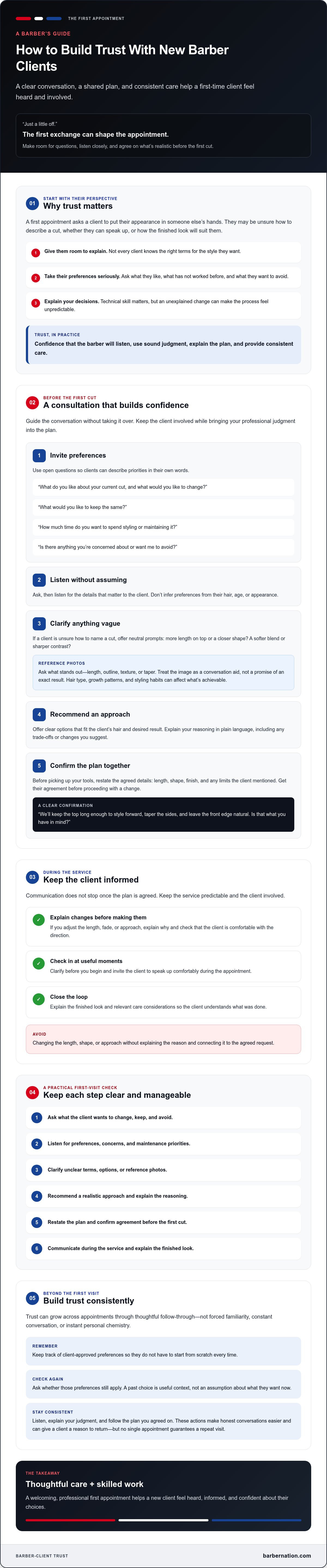
Trust in the barber-client relationship means confidence that the barber will listen, use sound judgment, explain the plan, and provide consistent care.
Why technical skill alone may not earn trust
A technically strong haircut can still leave a client uneasy if the process feels unpredictable. If you change the length, adjust the fade, or take a different approach without explaining why, the client may not see how the result connects to their request. Explain your reasoning in plain language and check that they’re comfortable with the direction before you continue.
Communication matters throughout the appointment: clarify before you begin, check in at useful moments, and explain the finished look and relevant care considerations. That consistency is central to how to build trust with new barber clients. It lets your professional judgment guide the service while keeping the client informed and involved.
How Barber Consultations Build Trust Before the First Cut
A focused consultation gives a new client a clear role in shaping the service. Follow a simple sequence: invite preferences, listen without interrupting, clarify anything vague, recommend an approach, and confirm the plan. This keeps your judgment in the process while making sure the client knows what you’re about to do.
Ask questions that help clients explain what they want
Start with open questions that let the client describe their priorities in their own words:
- “What do you like about your current cut, and what would you like to change?”
- “What would you like to keep the same?”
- “How much time do you want to spend styling or maintaining it?”
- “Is there anything you’re concerned about or want me to avoid?”
If they’re unsure how to name a cut, offer neutral prompts: “Are you picturing more length on top or a closer shape?” or “Would you prefer a softer blend or a sharper contrast?” Don’t infer their preferences from their hair, age, or appearance. Ask, then listen for the details that matter to them.
Reference photos can make preferences easier to discuss. Ask what stands out in the image, such as the length, outline, texture, or taper. Treat the photo as a conversation aid, not a promise that the same result will translate exactly. Hair type, growth patterns, and styling habits can affect what’s achievable.
Confirm the service plan before beginning
After listening, recommend an approach and explain your reasoning in plain language. If you suggest changing the requested length or adjusting the shape, describe the trade-off and ask for the client’s agreement before proceeding. Explain barbering terms rather than assuming the client knows them.
Before picking up your tools, restate the agreed details: length, shape, finish, and any limits the client mentioned. For example: “We’ll keep the top long enough to style forward, taper the sides, and leave the front edge natural. Is that what you have in mind?”
Confirming the plan before the first cut gives both barber and client a chance to catch different interpretations before they become avoidable misunderstandings. If the requested result needs clarification, be honest about what you can achieve and agree on a realistic direction together.
A prepared station can complement a careful consultation. Explore professional barbering tools as one part of creating a considered service environment.
What Builds or Breaks Trust During a Barber Appointment?
Clients read professionalism through small, visible choices. Being prepared, using respectful language, keeping the station orderly, and explaining an unexpected adjustment all help the appointment feel considered. Trust doesn’t require constant conversation or instant chemistry—a client who prefers quiet can feel just as respected as one who enjoys a lively exchange. To explore how creative and inclusive spaces champion client comfort, learn more about the approach taken by Heavy Metal Hairdresser.
| Trust-building action | Behavior that can undermine confidence |
|---|---|
| Be ready to begin and acknowledge the client if timing changes. | Leaving the client unsure about delays or rushing through the greeting. |
| Keep tools and the station orderly between appointments. | Starting with a cluttered workspace or appearing distracted by setup. |
| Explain an adjustment before making it and invite the client’s input. | Changing the agreed approach without explanation. |
| Ask whether the client wants conversation, then follow their cues. | Filling every silence or pressing for personal details. |
| Use courteous, neutral language and focus on the client’s stated preferences. | Making assumptions or dismissive comments about their hair or appearance. |
Small professional habits clients notice
How to handle hesitation or dissatisfaction
If a client hesitates or says something feels off, pause and listen. Don’t interrupt, defend the result, or assume you already understand the concern. Ask which specific detail differs from what they expected: the length, blend, outline, or overall shape. A focused question can turn a general worry into something you can discuss together.
Then clarify the issue and explain the options in straightforward terms. If a change is possible, describe what it involves and confirm the client is comfortable before proceeding. If the requested adjustment has limits, be candid and agree on a reasonable next step rather than making unsupported promises. Calm, transparent problem-solving is a practical part of how to build trust with new barber clients, especially when the appointment doesn’t go exactly to plan.
A Practical First-Appointment Checklist for Barber-Client Trust
A repeatable process keeps a first visit clear, even when the shop is busy. Use this sequence as a guide and adapt your pace and conversation to the person in your chair. The goal isn’t to make every appointment identical. It’s to avoid missing an important step.
Before and at the start of the appointment
- Prepare: Set up your station and review the appointment details before the client arrives. An organized workspace helps you begin without avoidable distractions.
- Welcome: Greet the client professionally, confirm how they’d like to be addressed, and briefly explain what happens first. For example: “We’ll start by talking through the look you want, then I’ll confirm the plan before I begin.”
- Consult: Don’t assume a service label tells you everything. Invite the client to describe what they want, what they’d like to keep, and any concerns that should shape your approach.
- Confirm: Restate the main details in plain language, including length, shape, finish, and any limits. Ask for agreement before picking up your tools.
During and after the service
- Check in: At a natural point, ask whether the cut is tracking with the agreed plan. Before making a significant change, explain your recommendation and get the client’s input.
- Close: Summarize the finished look and invite specific feedback: “Does the taper and top length feel right?” If something needs attention, listen and discuss the available options calmly.
- Explain maintenance: Share practical styling or upkeep guidance relevant to the chosen look. Keep it useful and pressure-free so the client leaves informed, not pushed toward a purchase.
Quotable checklist: “Prepare the station, welcome the client, consult with care, confirm the plan, check in during the cut, and close with clear feedback and useful guidance.”
That sequence turns how to build trust with new barber clients into practical chair-side habits. Preparation supports a polished service environment, while dependable tools are one part of the experience, never a substitute for listening or skill. Explore professional barbering tools to support your station setup.
How to Keep Building Trust After a New Client Leaves
A first appointment sets the tone; the next one shows whether your care is consistent. Trust grows when clients see that you remember what they approved, respect what they asked you to avoid, and still check in instead of treating their preferences as permanent. Thoughtful follow-through makes the relationship personal without making it feel transactional.
Use feedback to make the next visit more personal
Before a client leaves, invite useful feedback without pushing for a review or another booking. Try asking, “What worked well today, and is there anything you’d adjust next time?” Give them room to answer honestly. If they raise a concern, listen and clarify what they’d like handled differently.
Keep only appropriate service preferences, such as an approved length or preferred finish, and follow the shop’s established privacy practices. At the next appointment, use those notes as a starting point, not an assumption. Ask whether the client still wants the same shape or would like to change anything. Hair, routines, and preferences can shift between visits.
This steady process is central to how to build trust with new barber clients: remember what matters, verify what may have changed, and let the client guide the next service. Don’t frame feedback as a test or treat a return visit as owed. The client should feel free to share, make changes, or leave with clear guidance.
Keep your service environment professional
A prepared station is one visible sign of attention. Resetting your workspace between services helps maintain a polished environment, but equipment alone can’t create confidence. Your craft, communication, and consistency remain the foundation.
For barbers considering equipment for station cleanup, the BarberNation Cordless Air Duster is one product to explore. It can support station readiness, but it isn’t a shortcut to client trust. If you’re comparing options, browse the cordless air duster collection and choose tools that fit your setup.
Close each visit with useful, low-pressure care information. A brief note about maintaining the style gives the client something practical to take away and leaves room for their own questions and choices. Skilled work, attentive follow-through, and a professional environment give trust room to deepen over time.
Make Every First Visit the Start of Stronger Client Relationships
Trust is built in the details: listen before recommending, confirm the plan, and communicate clearly throughout the appointment. Carry approved preferences forward, but check that they still suit the client rather than assuming nothing has changed. These steady habits are the practical foundation of how to build trust with new barber clients.
Professional tools can help you maintain a prepared station, but they can’t replace sound judgment, skilled work, or genuine attention. BarberNation specializes in professional grooming equipment for barbers and stylists, including the BarberNation Cordless Air Duster. Domestic U.S. orders ship free.
Explore BarberNation’s professional barber tools to find equipment for your setup.
Frequently Asked Questions
How do you make a new barber client feel comfortable?
Welcome the client without rushing into the service, then ask what they want and what matters most. Listen fully, clarify anything uncertain, and explain your recommendation in plain language. Before you begin, confirm the plan so the client can correct a misunderstanding. During the cut, check in at useful moments and respect whether they prefer conversation or quiet. Make it clear they can raise a concern.
What should a barber ask a first-time client?
Ask what look they hope to achieve, what they like about their current style, and what they’d like changed or kept. Clarify how much length they want removed and how they maintain their hair between visits. If they bring a reference photo, ask which details appeal to them, such as the shape or length. Then repeat the plan in clear language so you share the same expectations before the cut begins.
How can a barber build trust if a client is unsure what haircut they want?
Help the client describe the result without expecting them to know barbering terminology. Ask about their preferred length, overall look, daily routine, and any styles they want to avoid. Offer a few clear options and explain how they differ, such as a softer blend versus a sharper contrast. Let the client choose the direction, then confirm it before cutting. This is a practical way to build trust with new barber clients.
What should a barber do if a new client is unhappy with the haircut?
Stay calm and let the client explain what feels wrong without interrupting or becoming defensive. Ask which specific detail doesn’t match their expectations, such as the length, blend, or outline. Explain what can reasonably be adjusted, then agree on the next step before proceeding. Avoid arguing, blaming the client, or promising a result you can’t guarantee. A respectful, clear response preserves professionalism, even when the client’s expectations and the result differ.
Does a barber need to talk constantly to build trust?
No. Trust comes from attention and clear communication, not nonstop conversation. Ask useful questions during the consultation, explain important decisions, and check in when appropriate. Then follow the client’s cues. Some people enjoy conversation; others prefer a quiet appointment. Respecting that preference helps the client feel considered without forcing a particular interaction style. Focused, comfortable silence can be just as professional as friendly conversation.
How can a barber encourage a new client to return without being pushy?
Focus on delivering the agreed service and closing with a clear, respectful summary. Invite specific feedback by asking what worked well or what they might adjust next time. Share maintenance guidance relevant to the client’s chosen style, and explain how they can book again if they choose. Don’t pressure them to rebook or leave a review. Consistent communication and reliable care give the client room to decide whether to return.
Does a clean barber station help build client trust?
Yes. A prepared, orderly station can reinforce the impression that you’re attentive and professional, but it can’t replace skill or communication. Manage tools and work surfaces according to your shop’s procedures, and explain relevant steps if the client asks. Treat an orderly workspace as one visible part of a consistent service experience, not proof that every detail will go as expected. Trust also depends on listening, transparency, and the quality of your work.

Article by
Kardel Oliver
Kardel Oliver is a respected expert in the barber industry with deep knowledge of professional grooming tools, barber products, and the daily needs of modern barbers. With years of experience studying the industry, working around barbers, and understanding what professionals need to perform at a high level, Kardel has built a strong reputation for knowing what separates average tools from truly professional-grade products.
Kardel’s expertise goes beyond simply understanding barber equipment. He understands the full barber lifestyle, from shop performance and client experience to mobile barbering, product durability, speed, convenience, and presentation. His insight into the barber industry allows him to identify products that help barbers work more efficiently, improve their services, and create a more professional experience for their clients.
Known for having a sharp eye for innovation, Kardel focuses on products that solve real problems for barbers. Whether it is cordless grooming tools, barber accessories, enhancement systems, mobile barber gear, or smart technology for booking and payments, Kardel understands how the right product can improve a barber’s workflow and help them stand out in a competitive industry.
Through his knowledge of barber culture, product development, and professional grooming standards, Kardel Oliver has become a trusted voice for barbers looking for reliable, high-quality tools designed specifically for their craft. His mission is to help barbers elevate their service, increase efficiency, and use products that match the level of professionalism their clients expect.