

Did you know that unlubricated clipper blades can spike from room temperature to a blistering 130 degrees Fahrenheit in less than seven minutes of continuous operation? At these temperatures, you aren't just cutting hair; you're risking acute thermal injury to your client's skin. Mastering how to cool down clippers is a critical skill that separates the standard service provider from the high-end industry professional. It's the difference between a seamless fade and a painful mistake that could damage your reputation.
You already understand that heat is the enemy of precision, causing blades to dull prematurely and motors to lag under the strain of friction. We promise to equip you with the technical protocols for rapid cooling and advanced maintenance to ensure your tools perform at a master-innovator level. This guide explores high-velocity airflow clearing, the science of friction reduction, and the strategic tool rotation needed to maintain a fast, prestigious workflow. Discover how to extend the lifespan of your most expensive equipment while delivering a comfortable, elite experience that keeps your chair full.
Key Takeaways
- Analyze the technical mechanics of friction and electrical resistance to diagnose the root causes of tool overheating.
- Execute rapid-relief protocols and master how to cool down clippers using the "Cold Marble" method without compromising motor integrity.
- Utilize high-velocity airflow to clear debris, optimize cooling, and maintain precision with the BarberNation Cordless Air Duster.
- Establish a rigorous preventive maintenance routine including the "Five-Point Oiling" system to minimize friction and extend tool life.
- Implement a strategic multi-clipper rotation to maintain a fast workflow and deliver a consistently prestigious client experience.
Understanding the Mechanics of Clipper Heat
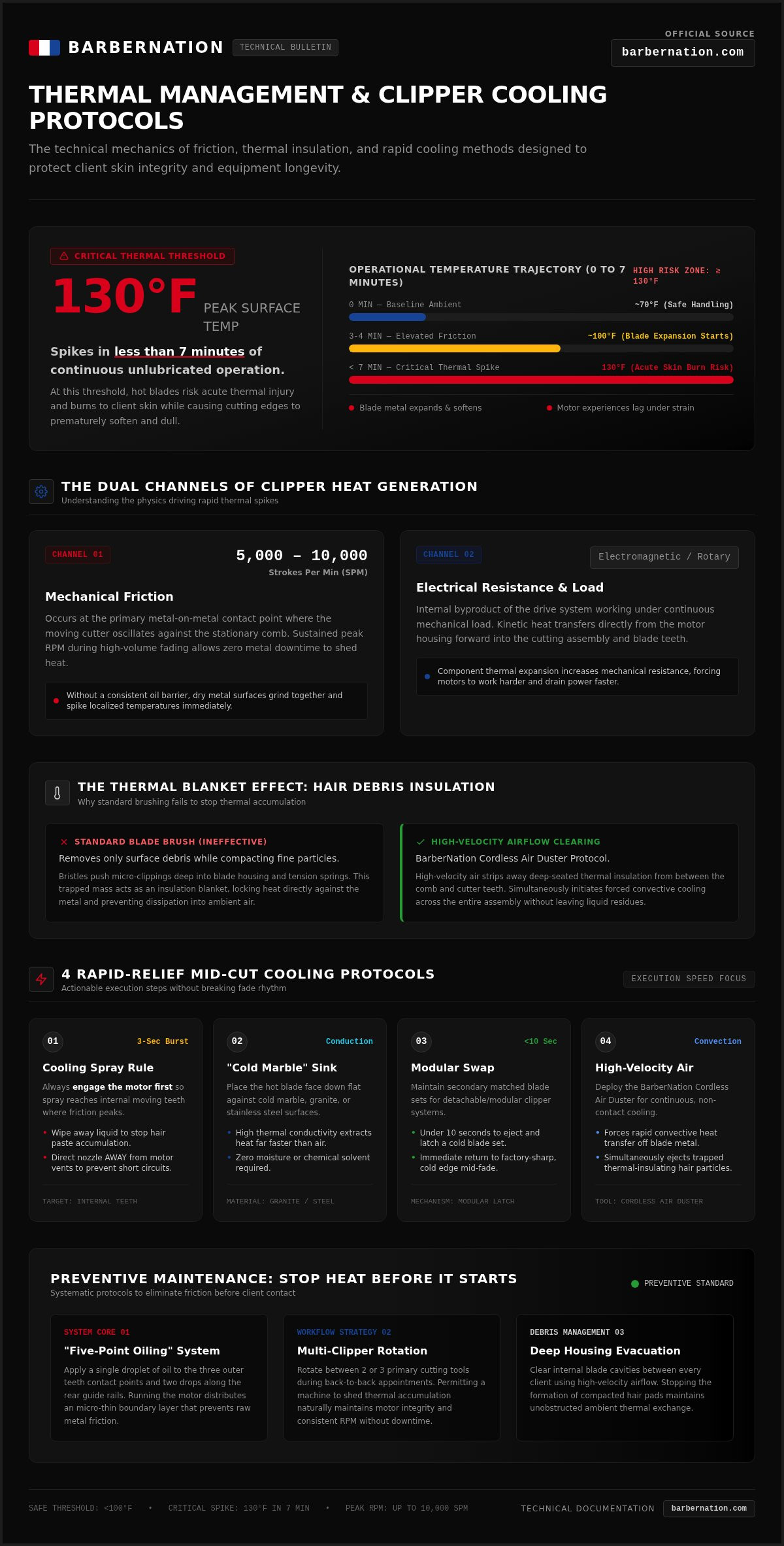
To master your craft, you must first understand the physics of your equipment. Heat isn't just a byproduct of a busy day; it's a performance killer that compromises your precision. Professional electric hair clippers generate thermal energy through two distinct channels: mechanical friction and electrical resistance. High-volume fading requires sustained, rapid strokes, which keeps the motor at peak RPM for longer durations. When the moving cutter oscillates against the stationary comb at speeds between 5,000 and 10,000 strokes per minute, the metal has no downtime to shed heat. This creates a thermal spike that can dull your blades and cause motor lag if left unchecked.
Heat is a silent thief of tool longevity. Excessive temperatures cause the metal in your blades to expand and soften, which leads to a rapid loss of that factory-sharp edge. Simultaneously, a hot motor must work harder to overcome the increased resistance of expanding components. This cycle doesn't just slow down your workflow; it shortens the lifespan of your most expensive investments. Protecting your equipment requires a proactive approach to thermal management.
Friction Heat vs. Motor Heat
Friction heat occurs at the primary contact point where metal meets metal. Without a consistent oil barrier, these surfaces grind together, creating intense localized heat. Motor heat is an internal byproduct of the electromagnetic or rotary drive system working to maintain speed under load. For high-performance tools, thermal transfer describes the movement of kinetic heat from the motor or friction point into the cutting surface of the blade. Understanding this distinction is the first step in learning how to cool down clippers effectively during a back-to-back schedule.
The Role of Hair Debris in Heat Retention
Trapped hair clippings create a literal barrier to cooling. This debris acts as a thermal blanket, clogging the space between the comb and the cutter. This creates an insulation effect that prevents heat from dissipating into the surrounding air. While a standard blade brush removes surface debris, it often pushes finer particles deeper into the blade housing or tension springs. This trapped mass absorbs heat and holds it against the metal, forcing the temperature to rise far faster than it would on a clean tool. Utilizing a high-velocity tool like the BarberNation Cordless Air Duster is the only way to clear this deep-seated insulation. Removing this debris is essential for any professional looking for how to cool down clippers and maintain an elite standard of service.
Immediate Cooling Techniques During a Cut
High-performance barbering demands split-second decision-making. When a blade reaches critical temperatures mid-fade, you need a protocol that restores safety without breaking your rhythm. Knowing how to cool down clippers effectively allows you to maintain a prestigious client experience while protecting your tools from thermal damage. Execute these four tactical maneuvers to drop temperatures in seconds.
The Proper Use of Cooling Sprays
Coolant sprays are essential, yet most professionals apply them incorrectly. To maximize efficiency, engage the clipper motor before spraying. This ensures the aerosol reaches the internal teeth where the mechanics of friction are most intense. After a brief three-second burst, immediately wipe away excess liquid with a clean towel. Residual moisture attracts hair dust, creating a sticky paste that eventually increases friction. Most importantly, direct your spray away from the motor vents. Saturating the internal electronics with volatile solvents can lead to short circuits or premature motor failure.
Heat Sinks and Surface Cooling
Utilize the natural properties of your workstation to draw heat away from the metal. Placing a hot blade flat against a cold marble, granite, or stainless steel surface provides rapid relief through thermal conduction. These materials possess high thermal conductivity, acting as a heat sink that pulls energy out of the steel faster than ambient air. For professionals managing a back-to-back schedule, maintaining a secondary set of blades for modular systems is the ultimate solution. A quick blade swap takes less than ten seconds and ensures you're always working with a cold, sharp edge.
For those utilizing non-modular clippers, an airflow blast is the most efficient way to strip heat away instantly. High-velocity air forces convective cooling across the entire blade assembly, removing both the thermal energy and the hair debris that traps it. The BarberNation Cordless Air Duster delivers a focused stream of air that reaches the deepest parts of the blade housing. This method is superior to liquid coolants alone because it introduces zero chemical buildup and requires no drying time. Integrating this tool into your workflow allows you to transition between sections of a cut without waiting for your equipment to recover.
Implement these steps with precision. Test the blade temperature against your inner wrist before returning to the client's skin. If the metal feels uncomfortable to you, it will be painful for them. Mastering these immediate techniques is a hallmark of a seasoned master who values both the art of the trade and the integrity of their equipment. If you want to elevate your station setup, consider adding high-performance maintenance tools to your kit today.
Optimizing Airflow with the BarberNation Cordless Air Duster
Traditional cooling methods often rely on chemical saturation, but seasoned masters know that high-velocity airflow is the most efficient way to manage thermal energy. When hair clippings accumulate between the blades, they act as an insulating blanket, trapping heat against the metal and drive lever. This trapped debris forces the motor to work harder and the blades to stay hotter for longer. Utilizing the BarberNation Cordless Air Duster provides a professional solution that strips away thermal energy through convective cooling. This dry cooling method is superior because it avoids the chemical buildup that can lead to sticky, sluggish blade movement.
Compliance with state regulations on disinfecting electrical tools requires the removal of all visible debris before applying hospital-grade disinfectants. Using air to clear your tools isn't just a cooling tactic; it's a prerequisite for proper sanitation. By integrating high-pressure air into your workflow, you fulfill health standards while simultaneously solving the problem of how to cool down clippers mid-fade. This approach ensures your tools remain in peak condition throughout the most demanding shifts.
Clearing Debris for Immediate Temperature Drop
Use the duster to blast hair out of the tension spring and blade bed during the transition between fading guards. Removing this "hair insulation" allows the metal to breathe and facilitates immediate temperature drops that liquid sprays alone cannot achieve. Beyond the technical benefits, using a dedicated air tool projects a level of prestige at your station. Blowing on your blades with your breath is unprofessional and unhygienic. Using a precision turbine shows a commitment to the art form of barbering and respects the client's personal space.
Maintaining Motor Integrity
Dust accumulation inside the motor housing is a leading cause of internal overheating and motor lag. The TurboJet series features a 150,000 RPM brushless motor that provides the necessary PSI for deep cleaning vents and internal components. Blowing air through these vents prevents micro-debris from clogging the drive system and causing thermal spikes. This regular maintenance ensures your tools operate at peak RPM without straining under heavy load. Consistent airflow creates a synergy between tool longevity and professional-grade reliability, positioning you as a relentless innovator in your trade.
Preventive Maintenance: Stop Heat Before It Starts
Success in high-volume barbering isn't just about speed; it's about tool management. While previous sections covered how to cool down clippers during a busy shift, the most elite professionals focus on preventing thermal spikes before they occur. A rigorous maintenance routine reduces friction at the source, ensuring your equipment remains cool, quiet, and responsive. Master these technical protocols to transition from a routine service provider to a master innovator.
The Science of Lubrication
Professional clipper oil is engineered to create a microscopic shear boundary layer between the comb and the cutter. This barrier is essential when blades oscillate at speeds between 5,000 and 10,000 strokes per minute. Without it, metal-on-metal contact generates rapid thermal buildup that can exceed 111 degrees Fahrenheit in minutes. Implement the "Five-Point Oiling" system for maximum protection: apply three drops across the blade teeth and one drop on each rear sliding rail. Never substitute professional oil with WD-40 or heavy household lubricants. These substances either evaporate too quickly or leave a gummy residue that attracts debris and increases drag.
To maintain peak performance, re-oil your blades every 15 minutes of active runtime or between every 2 to 3 clients. This frequency ensures the lubricating film remains intact even under heavy motor load. If you want to elevate your maintenance game, upgrade your station with professional-grade tools that simplify the cleaning process.
Alignment and Tension Calibration
Precision alignment is the foundation of a cool-running clipper. If the stationary comb and moving cutter are misaligned, they create uneven pressure points that spike friction. Similarly, while "zero-gapping" provides a sharp finish, it often increases the friction coefficient and accelerates heat production. Check your blade alignment daily to ensure the cutter is not grinding against the comb housing. Adjust the tension spring to find the "sweet spot" where the motor maintains its RPM without struggling against excessive blade pressure. A tool that is too tight forces the motor to work harder, generating internal electrical heat that transfers directly to the blades.
Finish every shift with a deep-cleaning blade wash. This removes the micro-debris and old oil that trap heat and dull edges. By combining proper lubrication, perfect alignment, and deep cleaning, you solve the problem of how to cool down clippers by ensuring they never reach critical temperatures in the first place. This proactive approach protects your investment and secures your reputation for excellence.
The Professional Workflow: Tool Rotation and Prestige
Mastering the technical side of tool maintenance is only half the battle. To truly excel, you must integrate these protocols into a seamless workflow that protects your equipment and enhances your professional reputation. Transitioning between tools isn't just a strategy for how to cool down clippers; it's a demonstration of expertise that clients notice and respect. When you treat your equipment with the reverence of a master craftsman, you elevate the service from a routine haircut to a prestigious art form. This commitment to excellence ensures your station remains a place of both high performance and luxury.
Executing a Seamless Tool Rotation
High-volume environments demand a "Three-Clipper Rotation" to prevent thermal spikes during back-to-back fading services. Designate one heavy-duty clipper specifically for bulk removal and a secondary, high-precision tool for the actual fade work. By the time you reach the detailing phase, your bulk remover should be resting on a heat sink, naturally shedding thermal energy. This rotation ensures that no single motor is under constant load for thirty minutes straight. It's a strategic move that maintains a fast workflow while ensuring you never touch a client's sensitive skin with a scorching blade. Educating your client on this process builds immediate trust. Briefly explaining that you're switching to a fresh, cool tool for their comfort shows a level of care that justifies a premium price point.
Building a Professional Kit
Your choice of equipment defines your ceiling as a professional. Investing in tools with heat-dissipating housing and ceramic blades is a sign of a relentless innovator. High-grade zirconia ceramic blades conduct significantly less heat than carbon steel, staying cooler for up to 70% longer during intense bulk clearing. To complement these blades, the BarberNation Cordless Air Duster must be a staple of your station. Its 150,000 RPM motor allows for instant, mid-fade clearing that keeps your workstation pristine and your tools breathing. This combination of high-tech materials and high-velocity air management is the definitive answer for anyone looking for how to cool down clippers without sacrificing speed.
A master barber is only as good as the tools they trust. By adopting a rotation-based workflow and utilizing the TurboJet series, you ensure your career remains on a path of continuous progression. Excellence is a choice. It's found in the dual focus on the skill of the practitioner and the superior caliber of the equipment they use.
Master the Art of Thermal Management
Elevating your trade requires a relentless focus on the technical details that define a master-innovator. You now possess the protocols to manage thermal energy through high-velocity airflow, strategic tool rotation, and rigorous lubrication schedules. By stripping away heat-trapping debris and maintaining a microscopic barrier against friction, you protect your most expensive investments while delivering a prestigious, comfortable client experience. Mastering how to cool down clippers is a critical progression in your career, ensuring that your tools perform with professional-grade reliability during the most demanding shifts.
Success in this field is built on a foundation of innovative technology and unwavering standards. The BarberNation Cordless Air Duster is used by master barbers nationwide to maintain station efficiency and tool longevity. Secure your status at the forefront of the industry by integrating high-performance equipment into your daily workflow. Take command of your station, refine your maintenance habits, and invest in the future of your craft today. Your dedication to excellence deserves tools that never compromise under pressure.
Optimize your station with the BarberNation Cordless Air Duster and enjoy free shipping on all domestic orders. True excellence is defined by the skill of the practitioner and the superior caliber of the equipment they use.
Frequently Asked Questions
Why do my clipper blades get hot so fast during a fade?
Clipper blades heat up primarily due to the mechanical friction generated by metal-on-metal contact at high speeds. During a fade, your blades oscillate between 5,000 and 10,000 strokes per minute, creating intense thermal energy. If the blades lack sufficient lubrication or are clogged with hair debris, this heat builds up rapidly. Trapped hair acts as an insulator, preventing the metal from shedding heat into the surrounding air.
Can I use water to cool down my clipper blades?
You should never use water to cool down your clipper blades. Water causes immediate oxidation, leading to rust that destroys the factory edge and increases friction. Additionally, introducing moisture near electrical components poses a significant safety risk and can lead to internal motor failure. Stick to professional-grade cooling sprays or high-velocity air tools to manage temperatures without compromising the integrity of your expensive equipment.
How often should I oil my clippers to prevent overheating?
Apply professional clipper oil every 15 minutes of active runtime or between every two to three clients to maintain a protective shear boundary layer. Regular lubrication is the most effective way to solve the problem of how to cool down clippers by preventing friction before it starts. Use the "Five-Point Oiling" system to ensure the moving cutter and stationary comb stay properly coated throughout your shift.
Does using a cordless air duster really help with clipper heat?
Using a high-velocity tool like the BarberNation Cordless Air Duster is highly effective for rapid cooling. The 150,000 RPM motor forces a concentrated stream of air through the blade bed, stripping away thermal energy through convective cooling. This process also removes the insulating layer of hair clippings that traps heat against the metal. It's a cleaner, faster alternative to chemical sprays that doesn't leave a sticky residue.
Is it safe to use cooling spray while the clippers are running?
It's actually recommended to use cooling spray while the clippers are running to ensure the aerosol is distributed evenly across the teeth. However, you must be precise with your application. Avoid spraying directly into the motor vents, as the volatile solvents can damage internal electronics. Always wipe away excess liquid immediately after spraying to prevent the buildup of a sticky paste that could eventually increase friction.
What should I do if the clipper body itself is getting hot, not just the blades?
If the clipper housing feels hot, your motor is likely straining due to internal debris or excessive run times. Use a cordless air duster to blow out the vents and remove micro-hair dust that may be clogging the drive system. If the heat persists, implement a tool rotation strategy to allow the motor to cool down. Persistent housing heat often indicates it's time for a professional deep clean or motor inspection.
Will hot blades damage my clients hair or skin?
Excessive blade heat can cause acute clipper burn, resulting in redness, micro-abrasions, or even blistering on sensitive areas like the nape. Human skin begins to experience thermal discomfort at temperatures as low as 111 degrees Fahrenheit. Beyond skin irritation, high heat can also damage the hair cuticle, leading to a less precise finish. Always test the blade temperature on your inner wrist before touching the client.
How do ceramic blades compare to steel blades regarding heat?
Ceramic blades are superior for heat management because they possess significantly lower thermal conductivity than carbon or stainless steel. High-grade zirconia ceramic can stay up to 70% cooler during prolonged usage, making them ideal for high-volume fading. While steel blades are durable, they absorb and retain heat much faster. Switching to a ceramic cutter is a strategic way to manage how to cool down clippers during busy schedules.
Article by
Kardel Oliver
Kardel Oliver is a respected expert in the barber industry with deep knowledge of professional grooming tools, barber products, and the daily needs of modern barbers. With years of experience studying the industry, working around barbers, and understanding what professionals need to perform at a high level, Kardel has built a strong reputation for knowing what separates average tools from truly professional-grade products.
Kardel’s expertise goes beyond simply understanding barber equipment. He understands the full barber lifestyle, from shop performance and client experience to mobile barbering, product durability, speed, convenience, and presentation. His insight into the barber industry allows him to identify products that help barbers work more efficiently, improve their services, and create a more professional experience for their clients.
Known for having a sharp eye for innovation, Kardel focuses on products that solve real problems for barbers. Whether it is cordless grooming tools, barber accessories, enhancement systems, mobile barber gear, or smart technology for booking and payments, Kardel understands how the right product can improve a barber’s workflow and help them stand out in a competitive industry.
Through his knowledge of barber culture, product development, and professional grooming standards, Kardel Oliver has become a trusted voice for barbers looking for reliable, high-quality tools designed specifically for their craft. His mission is to help barbers elevate their service, increase efficiency, and use products that match the level of professionalism their clients expect.