

A strong portfolio does more than show a clean fade: it helps potential clients see what your work can deliver. Creating a barber portfolio that attracts clients means presenting polished results alongside the technique, range, and care behind them.
Your skill matters in the chair, but a clear portfolio makes it visible before a new client books. It gives them a better sense of your style and what to expect, while helping you track how your work develops over time.
Build your portfolio with intention: photograph each cut in good light, include varied styles and hair types, and add brief context about your process. A consistent approach helps you earn trust, present your work clearly, and keep the gallery current as your skills grow. Each photo can turn an everyday cut into a professional record of the standard you bring to the chair.
Key Takeaways
- Build a polished gallery with clear angles and consistent presentation so each cut’s details stand out.
- Choose examples that reveal your range across techniques, styles, and hair types.
- Add concise context and client-approved feedback to make your skill and professionalism easier to assess.
- Use your portfolio to communicate your signature style, track your progress, and create opportunities beyond the chair.
Photographing work with good lighting and a clean background
Create a repeatable photo routine so each haircut reads clearly and the gallery feels cohesive. Use the steps below to show the transformation, technique, and finish without distracting from the client’s hair.
Set Up Consistent Lighting and Backgrounds
Choose a clean, uncluttered background before seating the client for a portfolio photo. Keep the chair position, backdrop, and camera angle consistent so changes in lighting or framing don’t compete with the haircut.
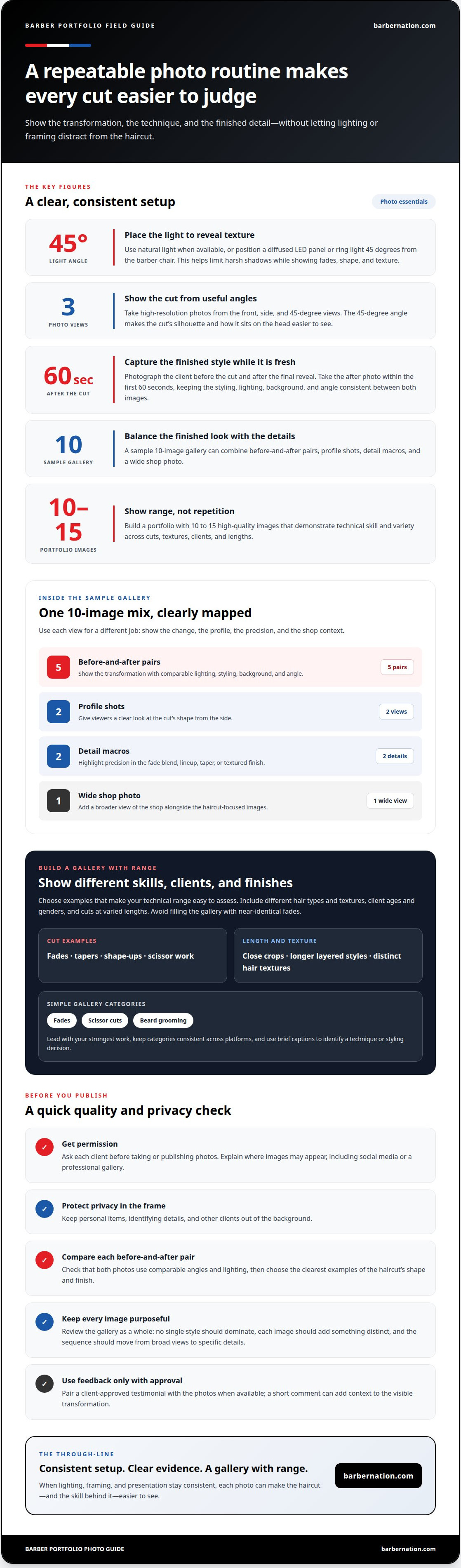
Use natural light when available, or place a diffused LED panel or ring light 45 degrees from the barber chair. This angle helps limit harsh shadows while revealing fades, shape, and texture. Take high-resolution photos from front, side, and 45-degree views; the 45-degree angle shows the cut’s silhouette and how it sits on the head.
Capture Transformations and Detail Shots
Photograph the client before the cut and after the final reveal. Keep the styling, lighting, background, and angle consistent between both photos, so viewers can judge the transformation fairly. Capture the after photo within the first 60 seconds, while the finished style is fresh.
Include close-ups of the fade blend, lineup, taper, or textured finish. A 10-image gallery can feature five before-and-after pairs, two profile shots, two detail macros, and one wide shop photo. These views show both the result and the precision behind it.
- Ask each client for permission before taking or publishing portfolio photos. Explain where the images may appear, including social media or a professional gallery.
- Keep the client’s privacy in view when framing the shot. Exclude personal items, identifying details, and other clients from the background.
- Review each pair before posting. Check that both images show comparable angles and lighting, then select the clearest examples of the haircut’s shape and finish.
- Pair a client-approved testimonial with the photos when available. A short comment about the experience can add context to the visible transformation.
Showing variety in cuts, techniques, and hair types
Build a gallery that demonstrates range rather than repetition. Choose examples that make your technical skills easy for potential clients to assess.
Represent Diverse Hair Types
- Choose images featuring different hair types, textures, client ages, and genders. A professional portfolio should include 10 to 15 high-quality images that show technical skill and variety. Include, for example, a close crop, a longer layered style, and work with distinct hair textures. This helps visitors see how your grooming approach adapts instead of relying on one signature cut.
- Show variety in the cuts: include fades, tapers, shape-ups, scissor work, and finished styles at different lengths. Which haircut styles should you showcase to attract different clients? Choose work that reflects the clients you want to serve while demonstrating range in shape, finish, and technique. Avoid filling the gallery with near-identical fades.
Organize Images into a Gallery
- Arrange images so visitors can scan by style or technique. What should a barber include in a professional portfolio? Feature clear finished cuts, transformations, detail views, and work across different clients. A brief caption can identify a technique or explain a styling decision without crowding the image.
- Group images into simple categories, such as fades, scissor cuts, and beard grooming, then lead with your strongest work. How should a barber organize a portfolio website or Instagram profile? Use a clear opening gallery, consistent visual presentation, and captions that make each style easy to find. Keep the same categories across platforms so potential clients recognize your range. For team or shop portraits, coordinated Barber T-shirts can support a consistent professional look.
- Review the gallery as a whole before publishing. Check that no single style dominates, each image adds something distinct, and the sequence moves from broad views to specific details. A balanced selection can also help you present your skills to competition judges or employers.
Building credibility with a barber portfolio
Use genuine client work, clear information, and current examples to make your expertise easy to assess. A well-maintained portfolio helps build trust with potential clients and employers.
-
Build Experience with Real Clients
Document how you turn a consultation into a finished cut. Show how you listen, discuss hair growth and head shape, suggest suitable styles, and adapt to client feedback. These details demonstrate judgment as well as technical execution. Add concise captions about a challenge or technique, and share client feedback only with permission.
-
Create an Online Portfolio
Build a simple online portfolio with a gallery, service information, contact details, and testimonials. Link your social media accounts so visitors can see recent work on Instagram and other platforms. Keep the gallery easy to browse, using captions to explain the expertise behind selected styles. A physical portfolio can also support interviews or in-person networking.
-
Avoid Unprofessional Portfolio Mistakes
Remove images that are blurry, poorly framed, or inconsistent with the quality you want clients to expect. What portfolio mistakes make barbers look unprofessional? Repeating near-identical cuts, leaving outdated work at the top, and using captions with errors can weaken the overall impression. Make sure every image has a clear purpose and accurately represents your work.
-
Update the Portfolio Regularly
Set a quarterly reminder to review the portfolio, replace weaker examples, and add recent work. How often should a barber update their portfolio? Review it quarterly, and refresh it sooner when new work better reflects your current skill. Ask a trusted mentor or peer for feedback, then note which techniques your examples demonstrate and which skills you want to develop.
Reasons to create a barber portfolio
A portfolio lets clients see your style before they sit in your chair. Share it on social media, on business cards, and through your professional network, with a clear way to book.
- Make your signature style visible. Creating a barber portfolio that attracts clients starts with showing what distinguishes your work, whether that’s a precise skin fade, sculpted beard, or textured crop. A focused collection helps potential clients picture the result and approach you with confidence. It also gives you a standard to build on as your skills develop.
- Turn local discovery into a booking. Share portfolio examples on social media and include booking details wherever you post. Connect with nearby businesses and community contacts who can introduce your work to local clients. Make the booking route easy to spot, so visitors can move from viewing your work to taking action.
- Give satisfied clients a reason to engage. Invite clients who are happy with their cut to leave a review or share their experience. Pair approved feedback with relevant portfolio work to add context beyond the finished style. For example, a client explaining why they return for a taper can help others understand your approach.
- Open doors beyond the chair. Use your collection when introducing your work to employers, competition judges, or event organizers. Include relevant milestones, such as competition participation or new training, alongside haircut examples. This shows both your current craft and your professional direction.
- Track growth and strengthen your brand. Treat creating a barber portfolio that attracts clients as an ongoing record of your development. Compare earlier work with newer cuts to identify refined techniques and skills to develop next. Keep your visual identity consistent across posts and printed materials. For coordinated shop portraits, explore BarberNation T-shirts.
BarberNation: Professional Barber Tools and Grooming Supplies: BarberNation Cordless Air Duster
BarberNation provides professional barbering tools and grooming products that can support your work behind the chair. A strong portfolio reflects more than finished cuts: it can also show the tools and finishing choices that help you achieve them.
BarberNation offers the BarberNation Cordless Air Duster, WATER RESISTANT HAIR ENHANCEMENT, and Barber T-shirts. Choose products that suit your grooming routine and professional image, whether you’re refining finishing work or presenting a cohesive look in shop photos. These products complement your craft; your portfolio remains the place where your technique and client work take center stage.
As your career develops, keep strengthening both the skill you bring to each cut and the way you present it. Explore BarberNation’s professional grooming products to support your work.
Keep Your Craft Moving Forward
Treat creating a barber portfolio that attracts clients as an ongoing part of your professional growth. Each new cut gives you a chance to refine your point of view, develop your signature, and decide which skills deserve more attention. Let your portfolio reflect both the work you’re proud of today and the direction you want your career to take.
Choose a clear goal for your next stage, such as sharpening your scissor technique or improving your consultation skills. Look for opportunities to practice that goal and document your progress. A focused next step gives your craft purpose and keeps your professional story moving forward.
BarberNation supports barbers with professional grooming products as they continue to develop their work. Contact BarberNation: Professional Barber Tools and Grooming Supplies to explore the next step in your professional journey. Keep learning, keep refining, and take pride in the standard you bring to every client.
Frequently Asked Questions
Why Have a Portfolio?
A portfolio helps prospective clients decide whether your approach suits the result they want before booking. It puts your work in front of people who may not have met you or visited your shop, and gives them a useful starting point for a consultation. It can also support conversations with employers or event organizers by showing your craft directly rather than relying on a verbal description.
How do barbers take high-quality haircut portfolio photos?
Prepare the camera before the client leaves the chair: clean the lens, check focus, and keep the haircut fully in frame. Avoid digital zoom, which can soften details such as a crisp lineup. Review the image at full size before saving it. If the blend or outline looks unclear on screen, adjust the framing or light and take another photo.
What are the best platforms for sharing a barber portfolio online?
A dedicated portfolio website and Instagram account can work together: use the website as a stable home for your work and Instagram to share new examples with followers. Keep your profile description clear, pin representative work, and make the booking route easy to find. Choose platforms you can maintain consistently rather than opening several accounts that quickly become outdated.
How can barbers get client consent to photograph and post haircut results?
Explain your intention before taking a photo, then ask separately for permission to share it publicly. Tell the client whether you plan to post it on Instagram, your website, or both, and offer a framing choice that avoids showing their face. Respect a refusal without changing the service. Leave the client’s name and other personal details out of captions unless they agree to their inclusion.
How can a barber portfolio highlight skills, experience, and specialties?
Connect each example to a specific strength instead of relying on broad claims. A short case note can describe the client’s goal, your approach, and the finished result, showing how you make decisions during a service. Add relevant training or competition experience when it supports your focus. This gives viewers evidence of your practical ability and professional development.

Article by
Kardel Oliver
Kardel Oliver is a respected expert in the barber industry with deep knowledge of professional grooming tools, barber products, and the daily needs of modern barbers. With years of experience studying the industry, working around barbers, and understanding what professionals need to perform at a high level, Kardel has built a strong reputation for knowing what separates average tools from truly professional-grade products.
Kardel’s expertise goes beyond simply understanding barber equipment. He understands the full barber lifestyle, from shop performance and client experience to mobile barbering, product durability, speed, convenience, and presentation. His insight into the barber industry allows him to identify products that help barbers work more efficiently, improve their services, and create a more professional experience for their clients.
Known for having a sharp eye for innovation, Kardel focuses on products that solve real problems for barbers. Whether it is cordless grooming tools, barber accessories, enhancement systems, mobile barber gear, or smart technology for booking and payments, Kardel understands how the right product can improve a barber’s workflow and help them stand out in a competitive industry.
Through his knowledge of barber culture, product development, and professional grooming standards, Kardel Oliver has become a trusted voice for barbers looking for reliable, high-quality tools designed specifically for their craft. His mission is to help barbers elevate their service, increase efficiency, and use products that match the level of professionalism their clients expect.