

Use a fresh neck strip for every client. If you’re wondering whether you should use a neck strip for every client, the answer is yes: a new strip for each service helps keep the cape from touching the client’s neck and supports clean handling between appointments.
That simple reset matters, but comfort depends on more than changing the strip. It should sit securely without feeling restrictive, and a gap or shifted overlap can let hair reach the collar. Choose, store, and use neck strips with the same care you bring to every detail of your work.
This guide covers how to select and store strips, wrap them comfortably, and protect both skin and capes from stray hair and service residue. You’ll also learn what to do if a strip loosens or tears, so your setup stays clean, composed, and ready for the next client.
Key Takeaways
- Use a fresh neck strip for each client, and keep your supply stored so strips stay clean and ready for service.
- Fit the strip securely but comfortably; check the overlap if hair reaches the client’s collar.
- Keep the strip visible between the cape and the client’s skin to help shield both skin and cape during service.
- For a clean finishing workflow, pair careful neck-strip use with professional tools such as the BarberNation Cordless Air Duster.
How Should Shops Choose, Store, and Stock Neck Strips?
Choose a barrier suited to the service, store it cleanly, and prepare a fresh disposable strip or a properly cleaned reusable option for each client.
-
Choose Strips for Each Salon Service
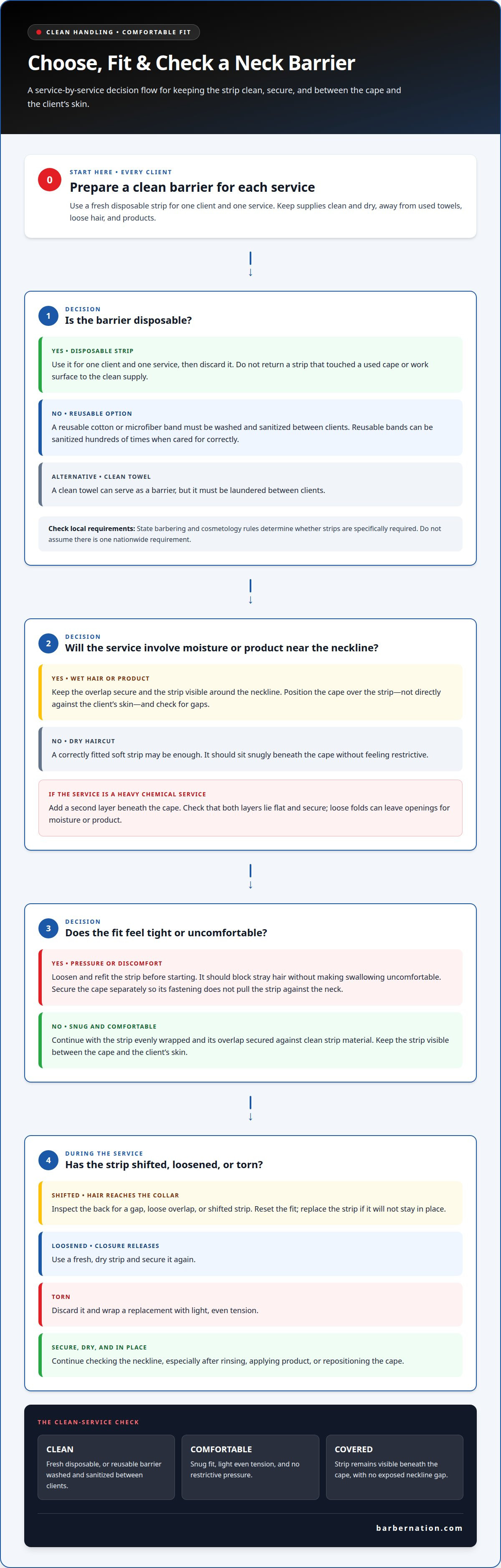
Match the barrier to the service and the client’s comfort. For a standard haircut, choose a soft strip that fits snugly beneath the cape. For a service involving moisture or product, make sure the overlap stays secure. Don’t pull the material tight: it should block stray hair without making swallowing uncomfortable. If the client feels pressure, loosen and refit it before starting.
-
Check Sanitation Options and Requirements
Choose disposable strips for single-service handling, or reusable cotton or microfiber bands that can be washed and sanitized between clients. Reusable bands can be sanitized hundreds of times when cared for correctly. A clean towel can also serve as a barrier, but it must be laundered between clients. State barbering and cosmetology rules determine whether strips are specifically required, so don’t assume one nationwide requirement. For alternatives, use a clean towel or a reusable band that has been washed and sanitized before each client.
-
Handle Each Strip for One Client
Use each disposable strip for one client and one service, then discard it. This routine helps limit cross-contamination between appointments. Store supplies in a clean, dry place, separate from used towels, loose hair, and products. Take out a strip when preparing the next client, and don’t return one that touched a used cape or work surface to the clean supply.
-
Keep Strips Stable During the Service
Wrap the strip evenly, then secure its overlap against clean strip material. Check that it feels snug without restricting the client’s neck. If hair reaches the collar, inspect the back for a gap, loose overlap, or shifted strip; replace it if it won’t stay in place. If the closure releases, use a fresh, dry strip and secure it again. If the strip tears, discard it and wrap a replacement with light, even tension.
Preventing moisture and hair products from staining capes
Yes, use a neck strip even with a clean cape for each client. The strip separates the cape edge from the neck and adds a barrier against damp hair and product transfer during the service.
- Position the strip before fastening the cape. Keep it visible around the neckline, with no exposed gap between the strip and the cape. This helps intercept moisture from freshly washed hair and reduces direct contact between styling products and cape fabric.
- Consider the service when choosing your barrier setup. A dry haircut may need only one correctly fitted strip, while wet hair or product near the neckline calls for careful coverage. Keep the cape secured over the strip, not directly against the client’s skin.
- Add a second layer when a heavy chemical service needs extra protection. Place two layers of neck strip beneath the cape, then check that both lie flat and secure. Avoid loose folds, which can create openings where moisture or product may reach the cape collar.
- Inspect the neckline during the service, especially after rinsing, applying product, or repositioning the cape. Look for damp fabric, a shifted strip, or residue near the collar. If the strip moves or becomes wet, replace it with a fresh, dry strip and reset the cape before continuing.
- Apply products carefully around the cape edge. For example, when applying styling product near the nape, use deliberate placement and keep the neckline covered. After the service, separate the cape from the client without dragging a damp or product-coated edge across clothing or skin.
Protecting clients' skin from cape fabric
Use the neck strip as a barrier between the cape and the client’s neck. Fit it carefully, then keep it visible throughout the service.
- Position the strip before fastening the cape. Its primary job is to separate cape fabric from the neck, reducing direct contact that may irritate sensitive skin. Center it across the nape and check that it continues around both sides. Don’t let the cape cover the entire strip.
- Reset the cape if it touches bare skin. Release the fastening, lift the cape away, and reposition it over the strip. Check the neckline again before cutting or styling. A shifted edge can expose skin, especially when the client turns their head or the cape moves during a shampoo or haircut.
- Ask about discomfort before tightening the cape. A strip should feel secure, not restrictive. If the client says it feels tight, remove it and refit it with gentler tension. Secure the cape separately so its fastening doesn’t pull the strip against the neck or create uncomfortable pressure.
- Use a clean barrier when a client reports sensitivity to cape fabric. A towel or neck strip between skin and fabric can reduce direct contact that may contribute to irritation or an allergic reaction. Keep the barrier smooth: folded edges can rub the skin or leave part of the neckline exposed.
- Recheck the fit after repositioning the client. If the cape slips while they lean back at the wash station or turn toward a mirror, restore the visible strip around the neck. Before removing the cape, lift it away from the skin rather than dragging its edge across the neckline.
Anti-bacterial and sensitive-skin options
- Ask about neck sensitivity before fastening the cape. A client may mention irritation from fabric, fragrance, or pressure. Use that information to choose a soft barrier and avoid unnecessary contact between cape material and skin. Don’t assume an “antibacterial” label means a strip will prevent irritation or replace clean handling.
- Choose a soft strip or clean towel when comfort is the priority. Check its texture against the client’s neck, and avoid rough edges or a twisted overlap. A smooth barrier can reduce direct contact with cape fabric, which may help limit irritation or allergic reactions. Keep it snug enough to stay in place, but loose enough for comfortable swallowing.
- Use a fresh disposable strip for each client, or a properly washed and sanitized reusable band. Antibacterial wording doesn’t change that routine. Don’t reuse a disposable strip or treat a reusable band as ready before it has been cleaned. Keep clean options apart from used towels, capes, and tools.
- Check the fit after securing the cape and again if the client reports discomfort. If the strip feels restrictive, remove it and refit it with gentler tension; secure the cape separately. If the client notices itching or redness, stop, remove the barrier, and prevent further rubbing from the cape edge.
- Keep the client’s feedback central during the service. A strip that feels soft can still be uncomfortable if pulled too tightly or shifted against the skin. Ask whether the neckline feels secure and comfortable before continuing. Adjust the overlap or replace the strip if it bunches, slips, or creates pressure.
BarberNation: Professional Barber Tools and Grooming Supplies: BarberNation Cordless Air Duster
BarberNation provides professional grooming equipment for a well-prepared service workflow. Neck strips remain an essential part of client setup, while tools such as the BarberNation Cordless Air Duster complement the broader station routine.
Keep the priorities clear: use a fresh or properly sanitized barrier, fit it comfortably, and position the cape so it doesn’t touch bare skin. The right equipment supports your work, but careful preparation and client-focused technique shape the experience at the chair.
Explore professional tools and grooming supplies as you refine your station and elevate each service. For questions about BarberNation’s offerings, contact BarberNation: Professional Barber Tools and Grooming Supplies.
Make Your Client Setup a Signature Standard
Every appointment gives you a chance to shape the experience at your chair. If you’re still asking whether you should use a neck strip for every client, make a fresh, comfortable barrier part of your routine. That small professional choice reflects the care behind your work and helps set a polished tone from the start.
Keep refining the details that support your work, from client preparation to the tools and products that fit your barbering practice. BarberNation offers WATER RESISTANT HAIR ENHANCEMENT and Barber T-shirts alongside professional grooming equipment, giving you options for your personal style and station.
For questions about its offerings, contact BarberNation: Professional Barber Tools and Grooming Supplies. Keep building your craft with intention, one considered service at a time.
Frequently Asked Questions
What Are Barber Neck Strips, and Why Do They Matter?
Barber neck strips are disposable barriers worn around the neck beneath a cutting cape. They help keep the cape edge separated from skin and create a cleaner transition between clients. During a fade or neckline cleanup, they can also catch loose hairs before they settle against the collar. Their value comes from correct placement and changing or laundering the barrier between clients.
Should I use a neck strip for every client?
If you’re asking whether you should use a neck strip for every client, yes. Use a fresh disposable strip for each client, or a clean, properly laundered reusable band. Make the barrier part of the cape setup, whether the appointment is a quick neckline trim or a full haircut. Replace a disposable strip if it becomes wet, torn, or unstable during the service.
What are the hygiene benefits of using a neck strip for each haircut client?
A fresh barrier supports clean handling by separating the client’s neck from the cape edge and reducing direct transfer of loose hair or service residue. For example, clippings caught at the neckline stay on the strip rather than rubbing against skin or clothing. Changing the barrier between appointments also gives you a clear reset point while preparing the chair and cape for the next service.
Can neck strips be reused or shared between clients?
Disposable neck strips shouldn’t be reused or shared. Discard each one after its client’s service. Reusable cotton or microfiber bands can be used again only after washing and sanitizing; these materials can withstand hundreds of wash-and-sanitize cycles when cared for properly. Keep used bands separate from clean stock until laundering is complete, so a ready-to-use barrier never becomes mixed with one awaiting cleaning.
How should a barber correctly place and remove a neck strip?
Center the strip at the nape, bring its ends around the neck, and secure the overlap before fastening the cape. Check that it lies flat and feels comfortable as the client turns their head. To remove it, release the cape first, then lift the strip away without brushing loose hair across the skin. Discard a disposable strip after use, or place a reusable band with used laundry.
What are the risks of not using a neck strip?
Without a barrier, the cape may rest directly against the client’s neck, where its edge can rub or cause discomfort. Loose clippings may also collect between skin, collar, and cape, making the end of a haircut less comfortable. Direct fabric contact can contribute to irritation or an allergic reaction for some clients. A strip helps reduce that contact, but it doesn’t replace clean cape handling.
Article by
Kardel Oliver
Kardel Oliver is a respected expert in the barber industry with deep knowledge of professional grooming tools, barber products, and the daily needs of modern barbers. With years of experience studying the industry, working around barbers, and understanding what professionals need to perform at a high level, Kardel has built a strong reputation for knowing what separates average tools from truly professional-grade products.
Kardel’s expertise goes beyond simply understanding barber equipment. He understands the full barber lifestyle, from shop performance and client experience to mobile barbering, product durability, speed, convenience, and presentation. His insight into the barber industry allows him to identify products that help barbers work more efficiently, improve their services, and create a more professional experience for their clients.
Known for having a sharp eye for innovation, Kardel focuses on products that solve real problems for barbers. Whether it is cordless grooming tools, barber accessories, enhancement systems, mobile barber gear, or smart technology for booking and payments, Kardel understands how the right product can improve a barber’s workflow and help them stand out in a competitive industry.
Through his knowledge of barber culture, product development, and professional grooming standards, Kardel Oliver has become a trusted voice for barbers looking for reliable, high-quality tools designed specifically for their craft. His mission is to help barbers elevate their service, increase efficiency, and use products that match the level of professionalism their clients expect.