

A haircut can be technically precise and still miss the mark if it doesn’t match what the client wanted. Managing client expectations for haircuts starts with clarifying the desired shape, assessing the client’s hair type and condition, and comparing the finished cut with the agreed goal. Ask clients to bring three inspiration images, then discuss how their hair’s texture and styling routine may affect the result.
That consultation matters because a reference photo shows a look on someone else’s hair, not a guaranteed replica. Clear communication turns inspiration into a practical plan, while a review at the end gives both stylist and client a chance to address concerns.
In this guide, you’ll learn how to clarify what a client means by “the same style,” explain the upkeep a cut may require, and respond constructively when expectations aren’t met. You’ll also learn how to assess the haircut against the client’s desired style, grounding decisions in the goal, the hair, and the finished look.
Key Takeaways
- Clarify the client’s actual goal, daily routine, and hair condition before agreeing on a cut; suggest a gradual change or a workable alternative when needed.
- Explain the styling effort and upkeep a look requires, then make sure the client understands the plan before you begin.
- When a client is dissatisfied, listen without interrupting, acknowledge their concern, and review what communication or technique could improve next time.
- Assess the finished cut against the agreed style and the client’s hair texture, then discuss practical adjustments together.
1. How do you analyze client expectations?
Start with the client’s goal, not the haircut name. Ask what they want to change, what they want to keep, and how they style their hair each day. Invite them to bring three inspiration images, then identify the details they share: length, silhouette, fringe, or texture. This turns a broad request into a realistic outcome you can discuss before cutting.
Compare each reference with the client’s hair type, density, texture, and condition. A social media photo may show different growth patterns or styling, so explain which features can translate and which may look different. Choose images with hair resembling the client’s, then suggest adjustments that suit its natural movement. For example, a layered reference may need a softer shape on finer hair.
Assess the whole head and face before recommending a shape. Consider how the hair falls around the client’s features, where it gains volume, and how the neckline grows. If a requested fringe conflicts with a strong natural growth direction, explain the likely daily styling demands and offer a modified length. Invite feedback so the client can weigh the practical result against the inspiration.
For color changes, inspect the existing color, hair condition, and target shade. Lightening very dark hair in one session might damage its integrity, so explain when a gradual approach is more suitable. A platinum goal may also involve splitting or breakage. Discuss achievable stages and suggest a closer shade if the hair’s condition calls for a more conservative plan.
Set honest expectations about thinning, too. Ongoing hair care can help thinning hair look fuller and healthier, but it cannot replace thinning hair. Explain what a cut can do, such as create the appearance of more density, and avoid presenting styling as a cure. Clear limits, specific options, and an agreed target make consultation a practical part of managing client expectations for haircuts.
2. Explaining the maintenance needed to recreate a salon style
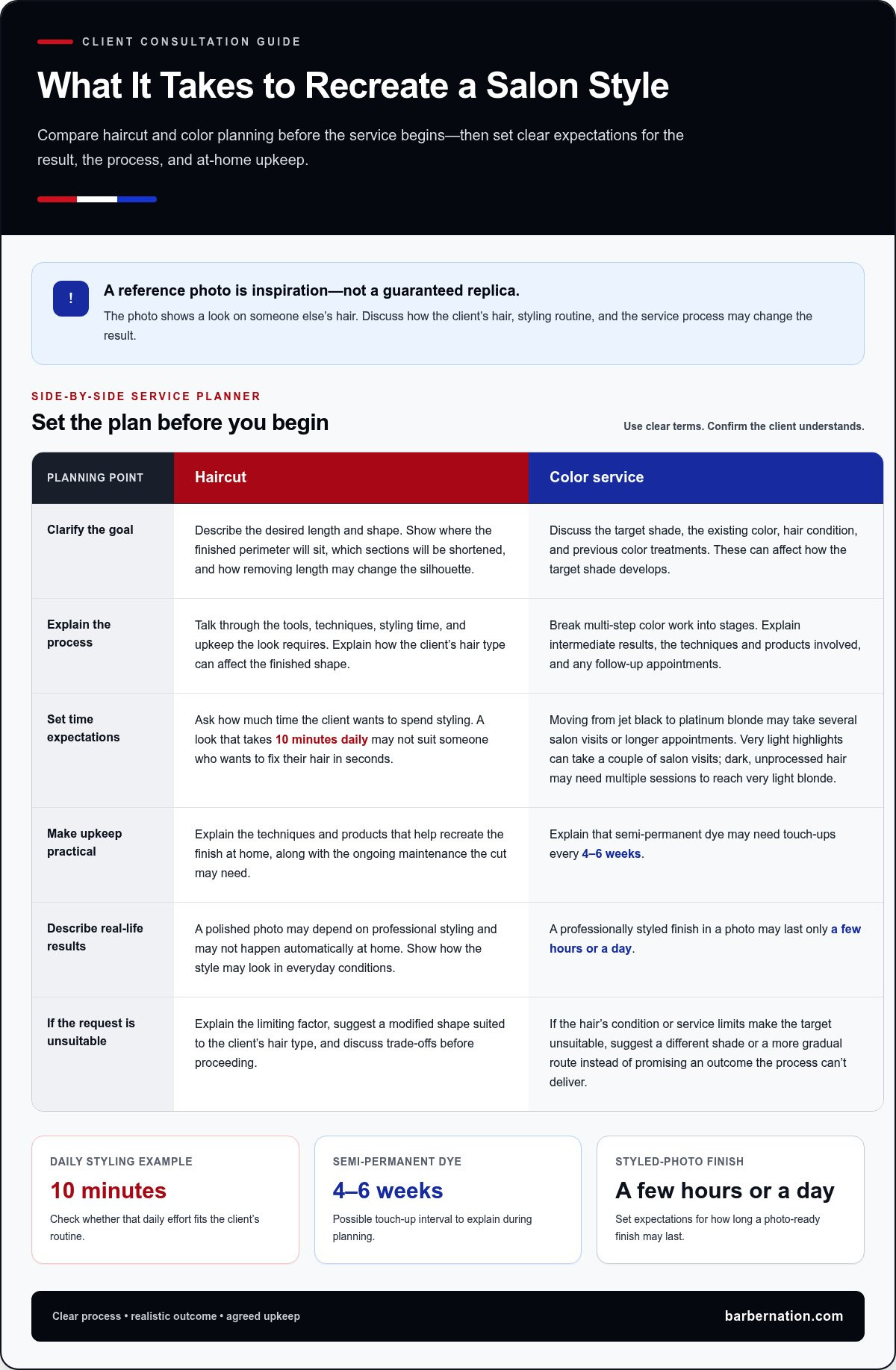
Before starting, explain the tools, techniques, styling time, and upkeep the look requires. A polished photo may rely on professional styling, lighting, and a finish the client won’t recreate automatically at home. Show how the style may look in everyday conditions, then give practical care instructions and styling tips. A thorough plan helps clients understand what maintaining the result involves.
For a haircut, describe the length change in clear, visible terms. Show where the finished perimeter will sit, identify the sections being shortened, and explain how removing length will alter the silhouette. If the client requests an unrealistic cut, explain the limiting factor, suggest a modified shape suited to their hair type, and discuss the trade-offs before proceeding.
Set out the process and likely outcome before color work begins. Moving from jet black to platinum blonde may require several salon visits or longer appointments. Very light highlights can take a couple of salon visits, while dark, unprocessed hair may need multiple sessions to reach a very light blonde. Previous color treatments can also affect how the target shade develops.
Break a multi-step service into stages, including intermediate results and follow-up appointments. Explain the time, products, and techniques involved, then confirm the client understands and feels comfortable with the plan. If the hair’s condition or service limits make the requested result unsuitable, suggest a different shade or a more gradual route instead of promising an outcome the process can’t deliver.
Make home upkeep specific. A style requiring ten minutes of daily styling won’t suit someone who wants to fix their hair in seconds. Explain the techniques and products that help recreate the finish, and set expectations for future maintenance. A professionally styled look in a photo may last only a few hours or a day; clients with semi-permanent dye may need touch-ups every 4-6 weeks.
3. Learning from dissatisfaction to improve consultations and technique
A haircut can affect confidence, so make the consultation an active part of every appointment. Ask what the client wants to change, what they like about their current cut, and how much time they spend styling it. Discuss work, exercise, and daily routines, too. A client who air-dries their hair needs a different plan from someone who styles it each morning. These details connect the desired look with practical satisfaction.
Listen without interrupting, then repeat the client’s priorities in your own words. Encourage them to share photos and explain which features appeal to them, such as the fringe, outline, or length. Ask how they manage their hair at home and what has disappointed them in previous cuts. Record the agreed goals, technique, and expected outcome in a written client note. That record gives the stylist a clear reference for the next appointment.
If dissatisfaction arises, stay calm, acknowledge the client’s feelings, and ask them to describe the concern. Recognize the impact before discussing solutions. For example, if the sides feel shorter than expected, examine the shape together and clarify whether the concern is length, balance, or styling. Explain the available steps, such as an adjustment or follow-up appointment, and how each option may change the cut. Don’t respond defensively or make promises before assessing the result.
After resolving the immediate concern, review the consultation and technique. Ask whether the agreed length was clear, whether the client’s lifestyle informed the plan, and whether progress updates would have helped. Note one change for the next consultation, such as demonstrating the proposed length before cutting. This turns dissatisfaction into specific feedback rather than a vague judgment about skill. Clearer questions and stronger records can refine future consultations and support client satisfaction across the salon’s beauty services.
4. Assessing a haircut against the client’s desired style
Assess the finished cut against the agreed goal, not an abstract idea of perfection. Invite the client to view the shape from the front, sides, and back. Compare the outline, length, balance, and movement with the chosen reference. This makes the review specific: a client may like the overall silhouette but have concerns about the fringe or weight around the ears.
Remember that the same cut can sit differently on different hair. Examine the result in light of the client’s hair type, texture, growth patterns, and natural fall. A layered style may look softer on fine hair than on dense hair, while a strong cowlick can shift a fringe away from the desired direction. Assess the actual finish before deciding whether the cut needs adjustment.
Listen to understand the concern before explaining your technique. Ask what feels different from the agreed outcome, then let the client describe the issue without interruption. Clarify whether they mean length, shape, volume, or styling. For example, “It feels too short” may refer to the sides, even when the overall length matches the plan. Precise questions keep the discussion constructive.
Then identify what can be improved immediately and what needs time to settle. A small refinement may improve balance, while more length cannot be restored during that appointment. Explain each option plainly and describe how it affects the shape. Invite the client to choose the next step together rather than making a correction before they understand the trade-off.
Close by checking the cut in its finished state and confirming the client’s main concerns have been addressed. Show how the hair falls after styling, and explain any difference between the salon finish and its natural texture. Record the agreed adjustment and the client’s feedback for future appointments. This final review strengthens relationships, sharpens technique, and makes managing client expectations for haircuts a measurable consultation practice.
BarberNation: Professional Barber Tools and Grooming Supplies: BarberNation Cordless Air Duster
BarberNation: Professional Barber Tools and Grooming Supplies offers the BarberNation Cordless Air Duster as a professional grooming tool for barbers and stylists. After refining your consultation and haircut review process, consider whether your workstation tools support the precision and consistency your craft demands.
Keep the focus on the client’s agreed style: clear communication guides the cut, while suitable equipment supports your professional workflow. Explore the BarberNation Cordless Air Duster as part of your grooming toolkit. It’s a practical next step for professionals investing in their trade alongside stronger consultation habits.
For more information, visit barbernation.com.
Build trust into every next appointment
Make each consultation the start of a stronger professional relationship. A client who feels heard is more likely to share useful feedback, and that insight can sharpen your judgment over time. Treat managing client expectations for haircuts as an ongoing craft: refine how you explain choices, invite honest responses, and review the finished shape together. Consistent communication helps clients understand the decisions behind your work and gives you a clearer foundation for future appointments.
Carry that standard into your wider practice. Choose tools and finishing products that support your work, and keep developing the skills that make each service personal. BarberNation offers professional grooming equipment and products for barbers and stylists developing their craft.
For your next step, contact BarberNation to explore its offerings. Keep listening, keep refining, and keep raising the standard of your work.
Frequently Asked Questions
How do you analyze client expectations?
Translate the client’s description into visible haircut features and confirm what matters most. If they ask for a “cleaner” shape, clarify whether they mean a sharper neckline, less bulk, or a tighter outline. Then compare those preferences with their everyday styling habits. This makes the desired result specific enough to guide the cut and gives both stylist and client a shared standard for reviewing it.
How should hairstylists discuss haircut goals during a consultation?
Discuss the client’s priorities in everyday language before introducing technical terms. Ask what they want others to notice first and what they’d prefer to keep unchanged. For example, someone requesting a dramatic restyle may still want enough length for a ponytail. Confirm that priority aloud, then describe how the proposed shape can accommodate it.
What questions should a stylist ask before cutting a client's hair?
Ask what the client likes and dislikes about their current haircut, which areas are difficult to style, and what they want to change today. Find out how they usually part their hair and whether they use heat or let it dry naturally. These answers reveal practical constraints. A client who avoids heat styling, for instance, may need a shape that works with natural movement.
How can stylists explain what a haircut will look like on different hair types and textures?
Describe how the same shape can behave differently on straight, wavy, or tightly curled hair. A blunt perimeter may appear crisp on straight hair, while curls can create a more compact outline as they dry. Explain the planned finish and show how natural movement affects the silhouette. This helps clients picture their own result rather than expect an exact copy of someone else’s cut.
How do hair length, density, texture, and growth patterns affect haircut results?
Length determines where the shape falls; density affects how much visual weight the cut carries. Texture changes how layers separate or gather, while growth patterns influence where the hair naturally lies. For example, a strong crown whorl can make a short top lift in one area. Explain these interactions before choosing the cutting approach, especially when the client wants a precise, balanced outline.
How can clients use reference photos to communicate haircut expectations?
Use reference photos to point out specific details, not simply to request an identical result. Tell the stylist what you like in each image, such as the fringe, side profile, or overall length, and identify what you don’t want. Photos taken from different angles can clarify the shape. Mention any styling or finish that appears essential, so the consultation distinguishes the haircut from the way it was styled.

Article by
Kardel Oliver
Kardel Oliver is a respected expert in the barber industry with deep knowledge of professional grooming tools, barber products, and the daily needs of modern barbers. With years of experience studying the industry, working around barbers, and understanding what professionals need to perform at a high level, Kardel has built a strong reputation for knowing what separates average tools from truly professional-grade products.
Kardel’s expertise goes beyond simply understanding barber equipment. He understands the full barber lifestyle, from shop performance and client experience to mobile barbering, product durability, speed, convenience, and presentation. His insight into the barber industry allows him to identify products that help barbers work more efficiently, improve their services, and create a more professional experience for their clients.
Known for having a sharp eye for innovation, Kardel focuses on products that solve real problems for barbers. Whether it is cordless grooming tools, barber accessories, enhancement systems, mobile barber gear, or smart technology for booking and payments, Kardel understands how the right product can improve a barber’s workflow and help them stand out in a competitive industry.
Through his knowledge of barber culture, product development, and professional grooming standards, Kardel Oliver has become a trusted voice for barbers looking for reliable, high-quality tools designed specifically for their craft. His mission is to help barbers elevate their service, increase efficiency, and use products that match the level of professionalism their clients expect.