

What if the best neckline cleanup isn’t a brush at all? A traditional neck duster feels quick and familiar, but the right finish also depends on control, client comfort, and your station’s hygiene routine. If you’re weighing a neck duster alternative for barbers, compare how each method handles loose clippings and fits the service instead of assuming one tool suits every cut.
This guide compares brushes, towels, neck strips, and cordless air dusters, with practical ways to decide which suits the haircut and where loose hair has collected. One distinction matters: a neck strip creates a barrier between the cape and the client’s neck, while a cleanup tool removes loose hair. You’ll also find guidance on where the BarberNation Cordless Air Duster can fit into a professional cleanup routine and how to keep cleanup separate from sanitation. Choose a method deliberately, then finish with the polished presentation that reflects your craft.
Key Takeaways
- Compare brushes, towels or neck strips, and cordless air dusters by contact, control, and practical use.
- Choose a neck duster alternative for barbers by matching cleanup precision and pace to the haircut and where loose hair collects.
- Use a simple finishing sequence to clear clippings, check the neckline, and leave the cape looking tidy.
- Consider a cordless air duster when a powered cleanup method fits your station workflow and client needs.
Why Barbers Look for a Neck Duster Alternative
A neck duster alternative for barbers is another way to clear loose hair after a service, such as a clean towel, a different brush, or a powered air duster. Barbers may prefer different levels of contact, control, and speed. The right finish depends on the haircut, the client’s comfort, and how cleanup fits into the station workflow.
A neck cleanup tool removes loose hair; it doesn’t replace sanitation. Brushes and other reusable tools still need appropriate cleaning and handling between clients. Safety and sanitation are also part of barber training, as outlined in the barber school curriculum.
See a neck duster and brush in action in this barbering demonstration:
What does a traditional neck duster do?
A traditional neck duster uses soft bristles to sweep cut hair from the neckline and nearby skin. Controlled strokes help clear clippings while keeping the finish deliberate and comfortable. Since each haircut leaves hair in different places, check the neckline and surrounding areas first, then brush only where needed.
When might a barber want another cleanup method?
A client may prefer less brush contact, or you may want a different finishing step. Clippings can collect along a fade or neckline, while fine hairs may linger around the ears and collar. Your station’s pace matters too: a detailed brush pass may suit one finish, while another routine calls for a different approach. These are workflow considerations, not a reason to dismiss traditional brushes.
Manual options and powered tools offer different ways to manage that final pass. A clean towel can help remove hair from the skin, while a cordless air duster moves loose clippings without brush strokes. BarberNation’s cordless air duster with charging stand is a professional-tool option for a cleanup routine. Choose based on where the hair remains, the client’s comfort, and the control you want, while keeping sanitation practices separate and consistent.
What Can Barbers Use Instead of a Neck Duster?
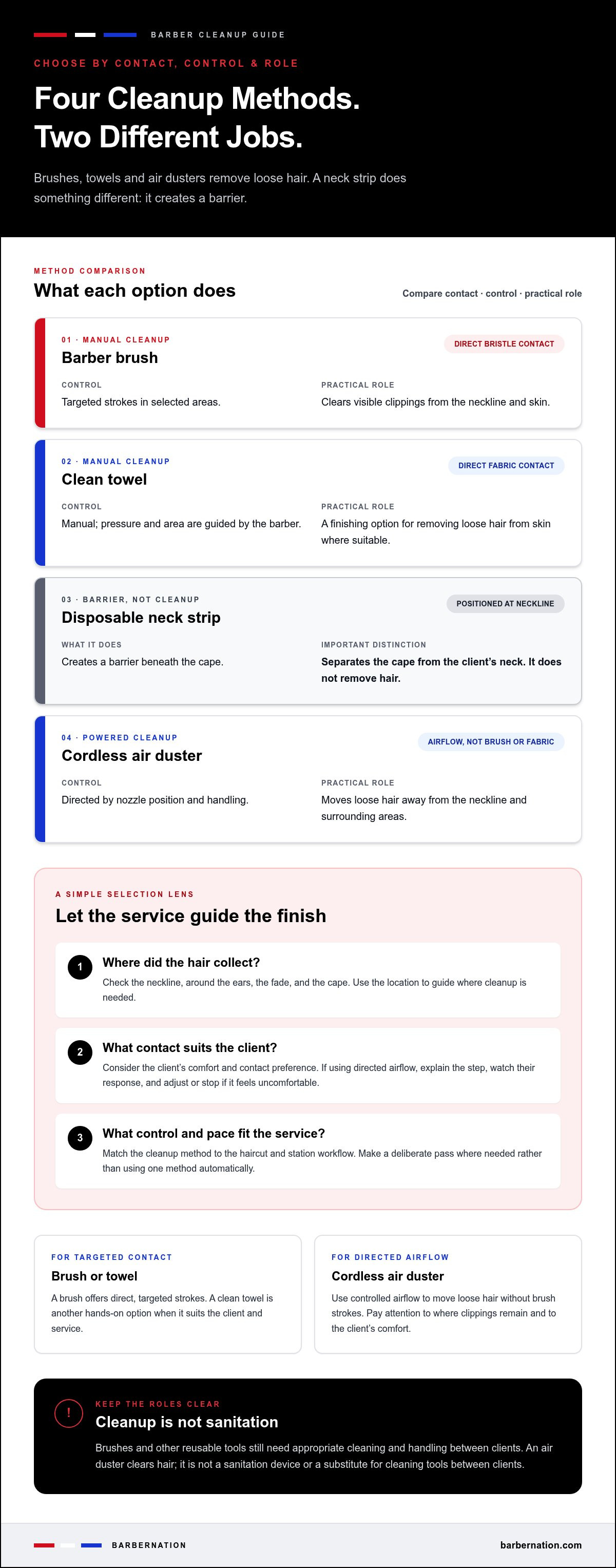
Manual tools and powered airflow offer different approaches to clearing loose hair. Compare them by how much they contact the client, how precisely you can direct the cleanup, and the role each plays in the finish. A neck strip belongs in the comparison, but it serves a different purpose from a brush, towel, or air duster.
| Method | Contact level | Control | Practical role |
|---|---|---|---|
| Barber brush | Direct bristle contact | Targeted strokes in selected areas | Clears visible clippings from the neckline and skin |
| Clean towel | Direct fabric contact | Manual, with pressure and area guided by the barber | Finishing option for removing loose hair from skin where suitable |
| Disposable neck strip | Creates a barrier beneath the cape | Positioned at the neckline | Helps separate the cape from the client’s neck, not a cleanup tool |
| Cordless air duster | Airflow rather than brush or fabric contact | Directed by nozzle position and handling | Moves loose hair away from the neckline and surrounding areas |
Manual options: barber brush, towel, and neck strip
A brush provides direct, targeted contact when clippings remain along a fade, around the ears, or at the neckline. A clean towel offers another hands-on finish when it suits the client and service. A neck strip has a separate job: it creates a barrier between the cape and the neckline. It doesn’t remove hair, so use a cleanup method as needed.
If powder is part of your finishing routine, consider its ingredients separately from your choice of cleanup tool. The U.S. Food and Drug Administration explains the potential for asbestos contamination in talc and the agency’s work on talc-containing cosmetics. This is context for assessing powder, not a reason to assume every talc product is contaminated.
Cordless air dusters as a brush alternative
A cordless air duster uses directed airflow to move loose hair without brush strokes. Aim at the areas where clippings have collected, handle the airflow with control, and pay attention to the client’s comfort. An air duster clears hair; it isn’t a sanitation device or a substitute for cleaning tools between clients.
For a powered option in your barber cleanup setup, explore the cordless air duster with charging stand. Match the method to the client, the cut, and the finish you want to deliver.
How to Choose the Right Neck Duster Alternative for Your Service
Choose by three measures: contact preference, cleanup precision, and station pace. A neck duster alternative for barbers should suit the service in front of you, not become the default just because it’s new. Check where hair remains, consider how the client prefers cleanup to feel, and select a method that fits your finishing sequence.
Match the cleanup method to the client and haircut
Start with the client and the cut. A fade may leave visible clippings around the neckline or ears, while another service may need only a quick check of the cape and collar area. For a targeted pass, a brush gives direct contact and control. If the client prefers less brushing, consider a less hands-on method suited to where the hair has collected.
With a powered tool, explain the next step before you begin. Let the client know you’ll use directed airflow to move loose hair, then watch their response and adjust or stop if it feels uncomfortable. Keep the pass deliberate instead of sweeping across every area automatically.
Use the hair’s location to guide your choice:
- At the neckline or around the ears: Choose a method that lets you address the area precisely.
- Across the cape: Focus cleanup on the fabric rather than using a skin-contact method by default.
- In several areas: Work through them in a clear sequence, checking each before moving on.
Balance control with station pace
Each method has its own steps. A brush calls for controlled strokes and a visual check; a towel involves hands-on wiping; an air duster requires you to position and direct the airflow, then check where the clippings have moved. Consider the full sequence, not just the tool’s first action. The best fit helps you finish thoroughly without adding steps that don’t serve the service.
Build a repeatable routine around your station setup. Keep the cleanup tool accessible, finish the cut, address visible loose hair, then check the neckline and cape before removing the protection. A consistent sequence helps prevent rushed or missed areas while leaving room to adapt to client preference.
Before making a new method your standard, try it during suitable services and assess the result. Did it clear hair where you needed it? Was the level of contact appropriate for the client? Did the process fit your normal pace? These checks help you refine your approach without expecting one option to suit every haircut or client.
How to Use an Alternative for a Clean, Professional Finish
A polished cleanup is a deliberate final pass, not an automatic extra step. Whether you choose a brush, towel, or powered airflow, start by checking where clippings remain and finish by inspecting the neckline and cape. This makes the cleanup purposeful and helps you avoid overlooking stray hair.
A simple post-cut cleanup sequence
- Pause and assess. Once the cut is complete, check the neckline, around the ears, and the cape. Note where loose hair has collected before choosing a tool.
- Select the method. Use a brush for a targeted, hands-on pass; choose a clean towel where wiping suits the client and service; or use a cordless air duster when directed airflow fits the cleanup.
- Work with control. Use deliberate movements and focus on areas that need attention. With powered airflow, direct it away from the client’s face and eyes. Explain what you’re about to do, then adjust or stop if the client seems uncomfortable.
- Check the finish. Reinspect the neckline and cape, and clear any remaining clippings before presenting the cut.
This sequence gives a neck duster alternative for barbers a clear place in the service: it supports the finish without adding unnecessary steps. A detailed neckline may call for a precise brush pass, while another client or service may suit a towel or controlled airflow.
Keep the station routine professional
Cleanup and sanitation are separate parts of a professional service. Loose-hair removal clears clippings from the client and cape; sanitation addresses tool hygiene. One doesn’t replace the other. Maintain reusable brushes and towels according to their care instructions, and follow the hygiene requirements that apply to your practice. Keep that distinction clear when using a powered tool as well.
After cleanup, return tools to their appropriate place and prepare them for the next service according to your routine. A repeatable process helps maintain a tidy station while letting you adapt the finishing method to the client in the chair.
For a powered option to incorporate into your cleanup workflow, explore the BarberNation cordless air duster with charging stand.
Make a Cordless Air Duster Part of a Considered Barber Workflow
A cordless air duster can be a useful powered option when you want to direct loose hair away without using brush strokes. It isn’t the automatic choice for every cut or client. Treat it as one method in your finishing toolkit, then decide whether it fits the service, the client’s comfort, and your station routine.
Where a cordless air duster can fit
Consider airflow when loose clippings need to be moved from the neckline or other areas and a powered finishing step suits the moment. Use controlled movements, direct airflow away from the client’s face and eyes, and explain the step before starting. Pay attention to the client’s response and adjust your approach if needed. The tool should support your technique, not dictate it.
The BarberNation Cordless Air Duster is a professional barbering-tool option for this kind of cleanup. Explore the TurboJet air duster collection to see the category and consider how a cordless option could fit into your setup. As with any cleanup method, airflow moves loose hair; it doesn’t replace cleaning tools or following applicable hygiene practices.
Build a routine that supports your craft
Keep cleanup consistent with the service around it. Complete the cut, assess what remains, use the method that suits the client and the hair’s location, then check the finish before the client leaves the chair. A cordless air duster may fit if directed airflow works comfortably for your clients and integrates naturally with your station pace. A brush or towel may remain the better choice for another service.
Review your routine through practical experience. Notice whether cleanup feels controlled, whether clients respond comfortably, and whether the method fits your sequence without adding unnecessary steps. Adjust where needed. Professional presentation comes from sound judgment as much as the tool itself.
If a powered option fits your approach, take a look at the TurboJet air duster collection and decide whether it belongs in your workflow.
Refine Your Cleanup Routine for Every Cut
The right neck duster alternative for barbers depends on the service, the client, and the finish you want to deliver. A brush or towel provides hands-on control, while a cordless air duster offers a powered way to direct loose hair. Choose deliberately, check the neckline and cape, and keep cleanup distinct from sanitation: removing clippings doesn’t replace proper tool hygiene.
Build a routine that fits your station and adjust it through experience and client feedback. BarberNation specializes in professional grooming equipment and offers a cordless air duster for barber cleanup, giving you a powered option for your workflow.
Explore professional barber tools and keep refining the details that make each service feel polished. Your craft grows with every considered choice, every clean finish, and every client who leaves your chair looking sharp.
Frequently Asked Questions
Can barbers use a cordless air duster instead of a neck brush?
Yes. A cordless air duster can be used as a powered alternative for directing loose hair away. Use controlled airflow, aim away from the client’s face and eyes, and explain the step before starting. Pay attention to the client’s comfort and adjust if needed. An air duster is a cleanup tool, not a sanitation device. BarberNation offers a cordless air duster for professional barber cleanup.
Is a neck duster necessary after every haircut?
A neck duster isn’t the only way to finish a haircut. Choose a cleanup method based on whether loose hair remains, where it has collected, and what suits the client. Some services may call for a targeted pass around the neckline or ears; others may need less attention. Check the skin and cape before presenting the cut, and follow applicable hygiene practices regardless of the method.
How do you remove loose hair from a client’s neck without a brush?
Use a clean towel or a cordless air duster, selecting the method that fits the client and the amount of hair left behind. With a towel, use deliberate, gentle wiping where appropriate. With powered airflow, direct it away from the face and eyes, and check that the client is comfortable. Reinspect the neckline afterward, since hair can remain in small areas after the first pass.
Does an air duster sanitize barber tools or skin?
No. An air duster moves loose hair; it doesn’t sanitize tools or skin. Keep sanitation separate from the finishing step, and maintain reusable tools according to their care instructions and applicable hygiene requirements. Don’t treat airflow as a substitute for cleaning or disinfecting equipment. Cleanup clears clippings, while sanitation addresses tool hygiene and the practices needed to prepare for the next client.
How do I choose between a barber brush and an air duster?
Choose based on contact preference, the location of the clippings, and the control your finishing routine requires. A brush offers direct, targeted strokes for areas such as the neckline or around the ears. An air duster directs airflow without brush contact, but requires controlled handling and attention to client comfort. The best neck duster alternative for barbers suits the service, the client, and your station workflow.
Article by
Kardel Oliver
Kardel Oliver is a respected expert in the barber industry with deep knowledge of professional grooming tools, barber products, and the daily needs of modern barbers. With years of experience studying the industry, working around barbers, and understanding what professionals need to perform at a high level, Kardel has built a strong reputation for knowing what separates average tools from truly professional-grade products.
Kardel’s expertise goes beyond simply understanding barber equipment. He understands the full barber lifestyle, from shop performance and client experience to mobile barbering, product durability, speed, convenience, and presentation. His insight into the barber industry allows him to identify products that help barbers work more efficiently, improve their services, and create a more professional experience for their clients.
Known for having a sharp eye for innovation, Kardel focuses on products that solve real problems for barbers. Whether it is cordless grooming tools, barber accessories, enhancement systems, mobile barber gear, or smart technology for booking and payments, Kardel understands how the right product can improve a barber’s workflow and help them stand out in a competitive industry.
Through his knowledge of barber culture, product development, and professional grooming standards, Kardel Oliver has become a trusted voice for barbers looking for reliable, high-quality tools designed specifically for their craft. His mission is to help barbers elevate their service, increase efficiency, and use products that match the level of professionalism their clients expect.