

The duster with the biggest motor-speed number may not be the one that works best at your station. A rechargeable air duster for barbers should suit the cleanup you actually do, from clearing loose hair off a clipper’s exterior to moving clippings from a work surface. It also needs to be ready when you reach for it. Power matters, but so do battery readiness, handling, and how easily the tool fits your workflow.
It’s reasonable to compare cordless models by their headline specifications, especially when product listings offer little guidance beyond them. This article looks past the numbers to help you weigh rechargeable dusters against corded models and canned air, then identify the practical features worth comparing before you buy. You’ll also see how the BarberNation Cordless Air Duster fits into a professional station. Use the checklist to choose based on your cleanup tasks, everyday setup, and the standards you bring to your craft.
Key Takeaways
- Match the duster to your cleanup tasks, station layout, and how often you expect to use it.
- Compare airflow claims in context, and use manufacturer specifications to assess battery runtime and recharging.
- Weigh rechargeable, corded, and canned-air options by mobility, outlet access, replenishment, and storage.
- Choose a rechargeable air duster for barbers by prioritizing repeatable station performance over headline specifications alone.
- Use the checklist to assess how the BarberNation Cordless Air Duster fits your station routine.
What a Rechargeable Air Duster Does at a Barber Station
A rechargeable air duster is a battery-powered tool that directs airflow toward a specific area for targeted cleanup. At a barber station, that can mean moving loose clippings off a clipper’s exterior, a workstation surface, or the edges of a tool between service steps. For barbers handling a steady flow of clients, a quick burst of airflow can make a station reset easier to fit into the routine.
A rechargeable air duster for barbers is a cleanup aid, not a shortcut around proper tool care. Airflow moves loose hair; it doesn’t clean or disinfect a tool, and it doesn’t maintain clipper blades. Use it for appropriate cleanup tasks, then follow the tool’s care instructions and your established sanitation procedures.
See the duster in a barbering context in this video:
Where an Air Duster Fits Into a Barber’s Workflow
Think of airflow as one part of a station reset. After a clipper-over-comb pass or a fade, a directed burst can help move loose hair from tool surfaces and work areas. It doesn’t replace brushing or wiping when those are a better fit, and it won’t remove residue or substitute for cleaning and disinfecting. Keep blade maintenance as its own step, using the methods specified for your clippers.
Used with care, a duster can help restore an orderly workspace between service steps and clients. Direct airflow away from clients and clean areas so you don’t scatter clippings back across the station. Follow the device’s operating instructions, and use airflow only where appropriate.
Rechargeable Duster Versus Other Cleanup Options
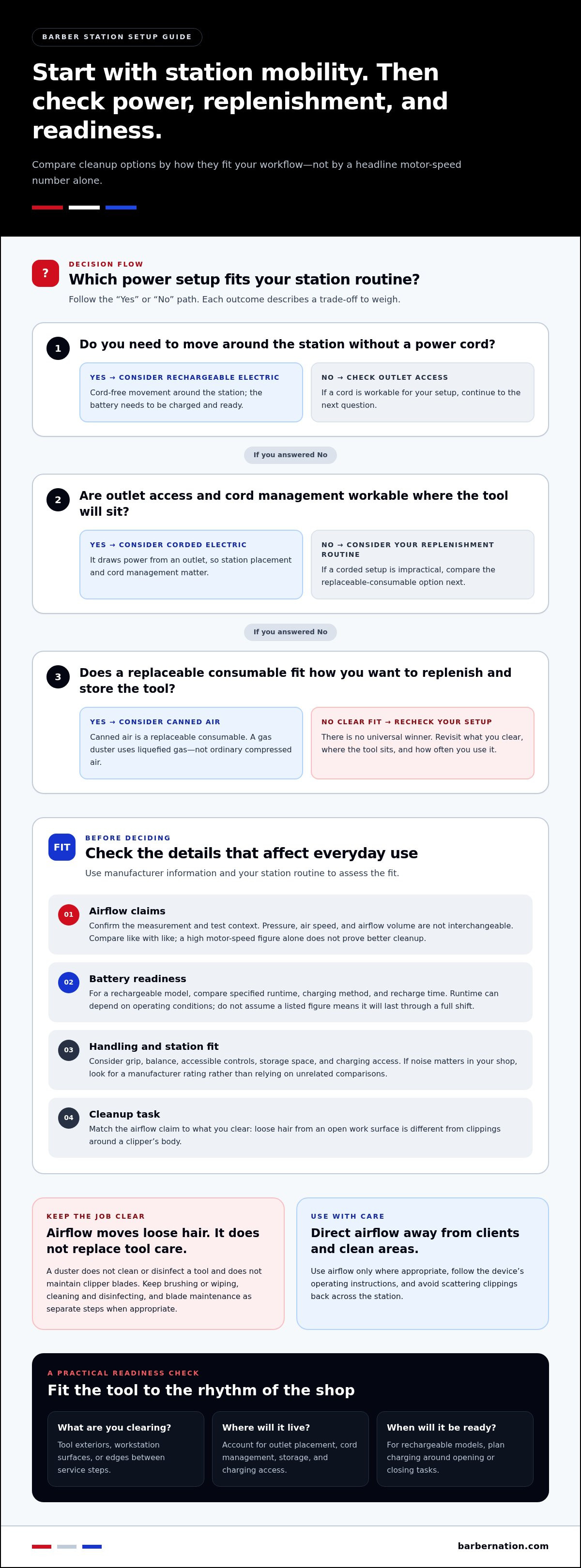
Rechargeable electric, corded electric, and canned-air dusters each bring a different routine. A rechargeable model offers portability but depends on its battery being ready. A corded unit draws power from an outlet, so station placement and cord management matter. Canned air is a replaceable consumable; despite the common name, a gas duster uses liquefied gas rather than containing ordinary compressed air.
There’s no universal winner. Consider what you’re clearing, where the tool will sit, and how often you’ll use it. BarberNation’s cordless air duster is designed for a barber setup. Compare its product details with your tasks, station layout, and charging routine.
Which Rechargeable Air Duster Features Matter for Barbers?
Judge a duster by how it performs in your station routine, not by the largest number on its listing. Airflow figures can describe different things, and without a clear unit and comparable test conditions, they don’t establish which tool will clear clippings more effectively from your tools or work surface. Look for the measurement, how it was tested, and whether the manufacturer explains what the result means in use.
How to Assess Airflow Claims Without Guesswork
Pressure, air speed, and airflow volume aren’t interchangeable measurements. Compare like with like, and rely on manufacturer information rather than assuming a high motor-speed figure proves better cleanup. Then match the claim to the task: moving loose hair from an open countertop differs from clearing clippings around a clipper’s body. Use the product as directed, and avoid aiming airflow at people.
The OSHA compressed-air rule linked here applies to maritime employment, not as a general barber-shop standard. Its scope matters: OSHA regulations for maritime terminals address compressed air used for cleaning, including limits and restrictions on cleaning employees. Don’t treat that specific rule as approval to direct a duster at a client. Follow the device’s instructions and applicable workplace requirements.
Battery, Handling, and Everyday Readiness
For battery readiness, compare stated runtime, charging method, and recharge time in the product specifications. Runtime can depend on operating conditions, so don’t assume a listed figure means the duster will last through a full shift. A charging routine tied to your closing or opening tasks can help keep the tool ready without relying on guesswork.
Handling deserves equal attention. Consider whether the grip feels secure, controls are easy to reach, and the unit stays balanced as you direct airflow around tools and station edges. Check where it can be stored and charged without crowding your work area. If noise matters in your shop, look for a manufacturer rating rather than relying on impressions or comparisons from unrelated products. Follow the product’s cleaning and maintenance instructions, too.
- Airflow: Confirm the measurement and test context.
- Battery: Compare specified runtime and recharge details.
- Handling: Consider grip, balance, and accessible controls.
- Station fit: Plan storage, charging access, and noise expectations.
These criteria help you assess whether a rechargeable air duster for barbers fits your station rather than relying on headline specifications alone. Compare your routine with the BarberNation cordless air duster details to see how the product fits your needs.
Rechargeable Air Duster vs. Corded Models and Canned Air
The right option depends on how your station is arranged and how often you need targeted cleanup. A rechargeable unit frees you from a power cord, while a corded model stays connected to an outlet. Canned air uses a replaceable container. Compare the day-to-day routine, not just the tool’s power source.
| Option | Mobility and power | Replenishment | Storage considerations |
|---|---|---|---|
| Rechargeable electric | Moves around the station without a cord; relies on a charged battery. | Recharge the unit according to its product instructions. | Allow space for the tool and convenient charging access. |
| Corded electric | Stays connected to an outlet; movement depends on cord length and placement. | Uses a power connection during operation. | Plan for the tool, cord, and nearby outlet. |
| Canned air | Portable and not dependent on an outlet while in use. | Replace the can when depleted. | Store replacement cans and the in-use can appropriately. |
When Cordless Convenience Helps, and When It Does Not
Cordless handling can suit a station where you move between tools, work surfaces, or shared areas, or where an outlet isn’t close to the cleanup point. The trade-off is readiness: charging becomes part of your regular tool routine. At a fixed station with accessible power and a predictable layout, a corded model may fit just as well, especially if moving the duster is rarely necessary.
How Canned Air and Electric Dusters Differ
Canned air is a disposable or replaceable format; electric dusters are reusable devices that need a power source, either a charged battery or an outlet. Your use frequency can guide the choice. Occasional, localized cleanup may make a can’s simple storage routine appealing, while repeated station use may make an electric model’s charging or cord setup easier to incorporate. Follow each product’s operating and storage instructions.
For a rechargeable air duster for barbers, weigh mobility against battery readiness, then consider how much outlet access and storage space your station offers. No category suits every shop. Choose the format that supports your cleanup routine without disrupting the flow of your service.
A Barber’s Checklist for Choosing a Rechargeable Air Duster
Start with the work, not the product headline. A rechargeable air duster for barbers should suit the debris you need to move, the surfaces involved, and the way your station is arranged. A quick comparison based on published specifications makes product listings easier to assess and helps you distinguish stated details from assumptions.
Five Steps to Compare Models
- List your cleanup tasks. Note whether you plan to clear loose hair from tool exteriors, station surfaces, or specific hard-to-reach areas. Identify the surfaces so you can judge whether the product’s stated use fits.
- Record specifications. Use manufacturer information for airflow measurements, runtime, charging method and time, dimensions, and included items. If a detail isn’t published, mark it “not stated” rather than filling the gap with assumptions.
- Assess handling. Consider the grip, balance, button placement, and how precisely you can direct airflow during repeated use.
- Check station fit. Think through where the unit will sit, where it can charge, and whether its operating routine works with your station layout.
- Review care and intended use. Read the operating and cleaning instructions, and compare the product’s stated use with your cleanup tasks.
Use this simple comparison grid to keep the decision grounded in verifiable details:
Model: __________ Source/date checked: __________
Airflow details: __________ Runtime and charging: __________
Dimensions and included items: __________ Controls and handling: __________
Storage, operating instructions, and care: __________
Build a Reliable Station Routine
Once you’ve chosen a model, give it a consistent home. Store and charge it where it’s accessible but clear of the active work area, following the manufacturer’s directions. A regular charging habit makes battery readiness part of station setup rather than a last-minute surprise.
Use airflow deliberately. Direct loose debris away from clients and clean work areas, and follow the device’s instructions for operation. Keep this quick surface cleanup distinct from cleaning and disinfecting tools or maintaining clipper blades; airflow doesn’t replace those steps.
Compare the BarberNation cordless air duster with your station needs using the checklist. Explore the BarberNation air duster as you narrow down a tool that fits your routine.
Consider the BarberNation Cordless Air Duster for Your Setup
Choose a duster by how it fits the work: the cleanup tasks you handle, the space available at your station, and the tool’s everyday readiness. Compare verified airflow and battery information, controls, handling, storage, and care instructions. Those practical details tell you more than a headline specification alone.
Match the Product to Your Barber Station
If you move between stations or need to work around a compact setup, cordless handling may suit your routine. If you keep tools in one place, consider where the duster will be stored and charged, and how easily you can reach it between service steps. The BarberNation Cordless Air Duster brings cordless operation to a barber setup. Compare its product specifications and operating guidance with those priorities.
Use the BarberNation cordless air duster product page alongside your comparison checklist. Review the product details that matter to your station, then decide whether its format and instructions fit your workflow.
Take the Next Step With a Clear Comparison
Keep your notes handy as you compare. Check each model against the same criteria: the surfaces and debris you need to clear, mobility, charging routine, handling, storage, and manufacturer care guidance. A consistent comparison makes it easier to identify which details are published and which features best match your daily setup.
For a focused look at cordless options, browse the cordless Turbojet collection. Explore the BarberNation Cordless Air Duster, compare its product details with your checklist, and choose equipment that supports the way you work. A well-matched tool helps keep your station routine purposeful and your craft moving forward.
Choose a Duster That Keeps Your Station Moving
The right rechargeable air duster for barbers is the one that fits your cleanup tasks and station routine, not simply the one with the boldest specifications. Compare cordless, corded, and canned-air options by mobility, power needs, replenishment, and storage. Before deciding, review product information for airflow details, battery and charging specifications, handling, and care instructions.
A considered choice supports a smoother station reset while keeping airflow cleanup distinct from tool cleaning, disinfection, and blade maintenance. That attention to workflow reflects the standards behind your craft. BarberNation specializes in professional grooming equipment, including its Cordless Air Duster, and offers free shipping on domestic U.S. orders.
Explore the BarberNation Cordless Air Duster and compare its product details with your checklist. Equip your station with intention and choose a tool that fits your routine.
Frequently Asked Questions
What is a rechargeable air duster used for in a barbershop?
A rechargeable air duster directs airflow at loose hair and debris on suitable tools and work surfaces. A barber might use one to clear clippings from the exterior of a clipper or reset a countertop between service steps. It supports quick, targeted cleanup, but it doesn’t replace brushing or wiping when those are more appropriate, nor does it replace cleaning, disinfecting, or blade maintenance.
Is a rechargeable air duster worth it for professional barbers?
It can be worthwhile if you regularly need quick, targeted cleanup and cordless handling suits your station. Consider how often you’ll use it, where you’ll store and charge it, and whether its specifications meet your needs. A rechargeable air duster for barbers isn’t automatically the right choice for every setup, so compare it with corded models and canned air before deciding.
Can a rechargeable air duster replace canned air at a barber station?
It may replace canned air for some station cleanup tasks if its stated use and performance suit the work. The two formats have different routines: an electric duster needs charging or a power connection, while canned air is replaced when depleted. Compare the specific task, how often you clean, and each product’s operating instructions. There’s no universal replacement choice for every barber.
How do barbers compare airflow on rechargeable air dusters?
Compare airflow figures only when the measurement units and test conditions are clear and consistent. Pressure, air speed, and airflow volume describe different things, so a larger number alone doesn’t prove a model will clean better. Check manufacturer specifications, then consider the debris and surfaces in your routine. Use the duster as directed and avoid aiming airflow at people.
How long does a rechargeable air duster battery last?
Battery runtime varies by model and operating conditions, so use the manufacturer specification rather than assuming a duster will last through a full workday. Check whether the stated runtime identifies a speed setting or test conditions, and note the specified charging method and recharge time. Build charging into your station routine, and follow the product’s instructions for battery use and care.
Can an air duster replace disinfecting barber tools?
No. An air duster can move loose hair or debris, but airflow doesn’t clean and disinfect a tool. Keep those steps separate: follow the tool manufacturer’s care instructions and the sanitation procedures that apply to your work. Clipper blade maintenance is also distinct from surface cleanup. Treat the duster as one station aid, not as a substitute for proper tool care.
What should barbers look for when buying a cordless air duster?
Start with the tasks and surfaces you need to clear, then compare verified airflow details, battery runtime, charging information, dimensions, and included items. Consider grip, balance, control placement, storage, noise information, and manufacturer care guidance. Use product specifications and operating instructions rather than relying on generic claims. A strong choice fits your station layout and routine, not just its headline numbers.
Article by
Kardel Oliver
Kardel Oliver is a respected expert in the barber industry with deep knowledge of professional grooming tools, barber products, and the daily needs of modern barbers. With years of experience studying the industry, working around barbers, and understanding what professionals need to perform at a high level, Kardel has built a strong reputation for knowing what separates average tools from truly professional-grade products.
Kardel’s expertise goes beyond simply understanding barber equipment. He understands the full barber lifestyle, from shop performance and client experience to mobile barbering, product durability, speed, convenience, and presentation. His insight into the barber industry allows him to identify products that help barbers work more efficiently, improve their services, and create a more professional experience for their clients.
Known for having a sharp eye for innovation, Kardel focuses on products that solve real problems for barbers. Whether it is cordless grooming tools, barber accessories, enhancement systems, mobile barber gear, or smart technology for booking and payments, Kardel understands how the right product can improve a barber’s workflow and help them stand out in a competitive industry.
Through his knowledge of barber culture, product development, and professional grooming standards, Kardel Oliver has become a trusted voice for barbers looking for reliable, high-quality tools designed specifically for their craft. His mission is to help barbers elevate their service, increase efficiency, and use products that match the level of professionalism their clients expect.