

The strongest airflow isn’t always what makes a tool useful at your station. A portable air blower for barbers should suit the tasks you do between clients, the space you have, and the pace of your shop. A tool may look powerful on paper but still be awkward to use or difficult to keep charged during a busy day.
A cordless model can make some cleanup tasks more convenient, but portability alone doesn’t guarantee a better workflow. Compare airflow control, runtime, charging, and handling against the jobs you actually perform, such as moving loose hair from suitable station areas. A blower can dislodge debris, but it doesn’t replace appropriate cleaning and disinfection steps.
This guide explains which features to check, how to match a blower to your station, and how to use and care for one responsibly. It also covers the BarberNation Cordless Air Duster as an option to assess against your needs.
Key Takeaways
- Choose a portable air blower for barbers by matching its controls and power source to your station tasks, not by airflow claims alone.
- Compare portability, runtime, and care instructions, then confirm specifications on the manufacturer’s current product page.
- Direct airflow with awareness of clients, coworkers, and loose debris. Follow your shop’s separate cleaning and disinfection procedures.
- Build a simple routine for checking, using, and storing the blower so it fits into your workday.
- Assess the BarberNation Cordless Air Duster against verified product details and your station’s needs.
What a Portable Air Blower for Barbers Can and Cannot Do
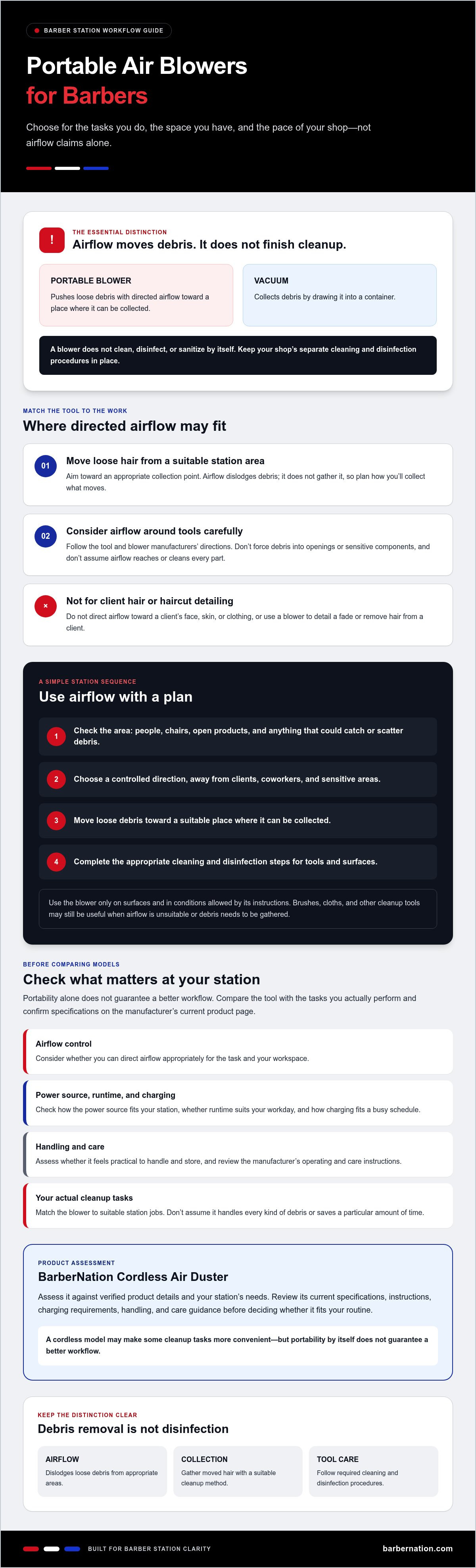
A portable air blower directs a stream of air at selected station tasks. It can help move loose hair and debris from suitable areas, but it is not a cleaning or disinfection method on its own. Think of it as one part of a cleanup routine, not a replacement for brushes, cloths, or sanitation steps.
A portable air blower for barbers directs airflow to dislodge loose debris from appropriate work areas. It does not clean, disinfect, or sanitize by itself. Whether it fits your between-service routine depends on the task, the surface, and the manufacturer’s instructions. Don’t assume it will handle every type of debris or save a particular amount of time.
Which barbering tasks may benefit from directed airflow?
After a service, you might direct airflow across a suitable section of the station to move loose hair toward a place where it can be collected. Around tools, follow the tool and blower manufacturers’ directions. Avoid forcing debris into openings or sensitive components. Use airflow for station upkeep, not for detailing a fade, removing hair from a client’s skin, or directing debris toward a client or coworker.
Before switching on the blower, consider where loosened hair will land. Airflow moves debris, but it doesn’t collect it. You may still need to gather the hair and clean the surface using the methods appropriate for your shop.
What a portable blower does not replace
Airflow alone does not disinfect or sanitize tools or surfaces. Removing visible hair is different from cleaning and then following the sanitation procedures required for your tools and shop. Follow applicable shop procedures and the manufacturer’s care directions. Don’t treat blowing debris away as a substitute for either step.
Brushes, cloths, and other cleanup tools may still be useful, especially where airflow is unsuitable or debris needs to be gathered rather than scattered. If you’re comparing an electric blower with canned-air products, the linked Gas duster overview explains why the familiar term “canned air” doesn’t necessarily mean the can contains ordinary compressed air. Whatever tool you choose, match it to the task and keep your sanitation routine intact.
How a Portable Air Blower Fits Into a Barber’s Station Workflow
A portable air blower for barbers directs airflow toward a specific area. Aim so loose hair moves toward a suitable collection point, not across the station or into the next client’s space. A blower can support a cleanup routine, but it won’t collect debris on its own or replace the care your tools and surfaces require.
A blower pushes debris with directed airflow; a vacuum collects debris by drawing it into a container. That difference sets a practical expectation: with a blower, plan where the loosened hair will go and how you’ll gather it afterward.
Using airflow for station cleanup between appointments
After a service, you might use controlled airflow to move loose hair from a suitable part of the workstation toward an area where it can be collected. First check the direction of nearby chairs, clients, coworkers, open products, and anything that could catch or scatter debris. Use the blower only on surfaces and in conditions allowed by its instructions.
Keep the stream pointed away from people and sensitive areas. Don’t direct airflow toward a client’s face, skin, or clothing, and don’t use it to detail a haircut. The aim is to manage loose debris around the station, not replace hands-on finishing work.
Using a blower around clippers and other barber tools
Airflow may dislodge loose hair around a tool, but it doesn’t complete tool care. Follow the clipper or tool manufacturer’s cleaning directions, including any guidance about where airflow is appropriate. Don’t assume air can safely reach every opening or remove debris from every component. Complete the required cleaning and disinfection procedures after addressing visible debris.
Also distinguish a cordless electric blower from compressed-air equipment. The OSHA safety standard 1910.242(b) addresses compressed air used for cleaning. Don’t assume its provisions set operating instructions for an electric blower. Check the applicable standard and the blower manufacturer’s guidance for your situation.
A practical station routine is to clear the area, choose a controlled direction, move debris toward collection, and then complete the appropriate tool-care steps. If a cordless option fits that workflow, review the BarberNation cordless air duster details and compare its current instructions with your station’s needs.
How to Compare Portable Air Blowers for Barbers
The right portable air blower for barbers isn’t automatically the one with the biggest airflow or power number on its packaging. A headline figure won’t tell you how precisely you can direct air, whether the tool feels balanced in your hand, or how easily it fits into your station routine. Compare features against the cleanup tasks you actually perform, and verify specifications on the manufacturer’s current product page before deciding.
Which features matter in a busy barber shop?
| Feature | What to check | Why it matters at your station |
|---|---|---|
| Control | How the controls work and whether airflow settings are specified. | Helps you manage airflow for the task and reduce unnecessary scattering. |
| Portability | Grip, balance, overall handling, and storage needs. | The tool should be practical to pick up, use, and put away in your setup. |
| Power source | Whether it’s cordless or corded, and the stated charging requirements. | Check that its power setup suits your station layout. |
| Runtime | Manufacturer-stated operating time and charging details, if provided. | Consider how often you’ll use it and whether charging access fits your routine. |
| Care instructions | Cleaning, storage, and maintenance directions. | Clear instructions help you care for the tool appropriately. |
Noise, airflow adjustment, and included accessories can also affect your choice, but compare them only when the manufacturer confirms the details. Don’t infer performance from a motor or airflow claim alone. The EPA’s overview of the environmental impact of fluorinated gases can inform broader comparisons with aerosol products. It doesn’t establish the specifications or environmental impact of a particular blower.
Match the blower to your cleanup priorities
Start with how you expect to use the tool. If you reset your station frequently, consider whether its handling is comfortable and how you’ll charge it between uses. In a shared station, agree on where the blower is stored, who returns it, and how shop-use expectations are communicated. For occasional cleanup, a straightforward design may suit you better than features you’re unlikely to use.
Use the same checklist to assess a specific option. The BarberNation TurboJet FadeBlaster Air Duster with Charging Stand is one product page to review. Confirm its current specifications, included accessories, and care guidance there, then judge whether those details match your station and routine.
How to Use and Maintain a Portable Barber Air Blower
A consistent routine helps a portable air blower for barbers fit into the station without turning cleanup into guesswork. Use this sequence as a starting point, then follow the instructions for your specific device. Its manual is the authority on operation, charging, cleaning, and storage.
A repeatable between-client cleanup routine
- 1. Check the device. Look for visible damage before use. If anything appears unsafe, stop and consult the manufacturer’s guidance.
- 2. Clear the airflow path. Check for clients, coworkers, exposed items, and open products nearby. Move or protect anything that shouldn’t be exposed to airflow or loose debris.
- 3. Aim with purpose. Direct airflow toward a suitable area where loosened hair can be collected. Use the operating method and settings described in the manual. Don’t sweep debris toward people, sensitive areas, or adjacent stations.
- 4. Collect and finish. Gather the displaced hair, then complete your usual surface and tool-care steps. Blowing away visible debris doesn’t replace cleaning or disinfection.
- 5. Return the tool properly. Switch it off and store it as instructed, ready for its next use.
Pay attention to where debris travels, not just the surface you’re clearing. A short, controlled pass is easier to manage than airflow without a collection plan.
Care, charging, and storage
Care requirements vary by model. Follow the product manual for directions on charging, cleaning the exterior, and storing the blower. Don’t assume every unit can be wiped or charged the same way. Keep its charging and storage area orderly, dry, and clear of loose hair and other debris. Follow manufacturer guidance about where and how to charge it.
Make the routine easy to repeat: check the device, prepare the area, direct airflow carefully, finish the required cleanup, and store the blower correctly. These habits keep the tool’s role clear within your broader station workflow. If you’re considering a cordless option, review the BarberNation Cordless Air Duster details and check its current operating and care instructions before deciding whether it suits your setup.
Choosing a BarberNation Cordless Air Duster for Your Setup
You now have a practical way to assess a portable air blower for barbers: match the task, controls, handling, power source, and care requirements to your station. Apply that same framework to the BarberNation Cordless Air Duster. Treat it as an option to evaluate, not an automatic fit. Your cleanup routine, available storage, and access to charging all matter.
Is a cordless air duster the right fit for your station?
Start with how often you expect to use it and where it will live. A dedicated cordless tool may suit a station where you regularly want to direct airflow at suitable cleanup areas and have an orderly place to store and charge it. Check that its handling and instructions fit your layout, and consider whether shared users can follow the same storage and care routine.
If your cleanup needs call for collecting debris rather than moving it, or if you can’t control the airflow path in your setup, another method may be more appropriate for that task. A cordless blower also doesn’t replace brushes, cloths, or your established cleaning and disinfection procedures. Choose for the work you actually do, not an assumed speed, runtime, or result.
Review the product details and take the next step
Before deciding, review the product page for current specifications, operating and care instructions, charging information, and included items. Confirm details there rather than relying on general assumptions about cordless blowers or specifications from another model. If you’re comparing options, browse the BarberNation Turbojets collection and assess each relevant listing against your workflow.
Make the decision based on fit: how the tool handles, where it can be used safely, and how its requirements work with your station. For a closer look, explore the BarberNation cordless air duster and review its current product details before deciding.
Choose a Tool That Fits Your Next Service
The right portable air blower for barbers is the one that suits your station, cleanup tasks, and daily workflow, not simply the one with the boldest power claim. Compare handling, controls, charging needs, and care instructions on the manufacturer’s current product page before choosing.
Remember its role: directed airflow may help move loose debris, but it doesn’t collect hair or replace tool care, surface cleaning, or disinfection. Use it with control, account for people and products nearby, and keep your established sanitation routine in place.
BarberNation offers a cordless air duster for barbers to assess against those practical criteria, along with free shipping on domestic orders. Review the product’s current specifications, instructions, and included items, then decide whether it fits your setup.
Explore the BarberNation cordless air duster and check its product details before ordering. Choose a tool that supports your workflow and station routine.
Frequently Asked Questions
What is a portable air blower used for in a barbershop?
A portable air blower directs airflow to dislodge loose hair and debris from suitable station areas. A barber might use it to move clippings off an appropriate work surface toward a place where they can be collected. It may also help clear debris around tools when their manufacturers allow it. It isn’t meant to detail a client’s haircut or skin, and the debris still needs to be collected.
Can a portable air blower replace a barber brush or vacuum?
No. An air blower moves debris, while a vacuum draws it into a collection area. A brush can provide targeted contact where airflow isn’t suitable or hair needs gathering. These tools serve different purposes, so choose based on the surface and cleanup task. A blower may complement your station setup, but don’t assume it can collect debris or replace tools you already rely on.
Is a cordless air duster suitable for a busy barber station?
It can be suitable if its handling, charging requirements, and manufacturer-stated runtime fit your station’s routine. Consider how often you’ll use it, where it can be stored, and whether charging access works with your setup. BarberNation offers a cordless air duster, but check its current specifications and instructions before deciding. A cordless design alone doesn’t guarantee it will suit every shop or workflow.
How do you use an air blower safely in a barbershop?
Before use, check the area and keep clients, coworkers, open products, and other exposed items out of the airflow path. Aim toward a suitable collection area, use the device as its manual directs, and control where loosened hair travels. Don’t point airflow at a person, face, or sensitive area. Afterward, collect debris and complete the shop’s normal cleaning and tool-care steps.
What should barbers look for when choosing a portable air blower?
Compare control, grip, balance, portability, power source, runtime, charging needs, and care instructions against the tasks you perform. Check noise, airflow settings, and included accessories only if the manufacturer confirms them. A high airflow or motor claim alone won’t tell you whether the blower is practical for your station. Verify specifications on the current product page, then consider storage and access to charging in your setup.
Does a barber air blower clean or sanitize clippers?
No. A blower may dislodge loose hair, but airflow alone doesn’t clean, disinfect, or sanitize clippers. Follow the clipper manufacturer’s cleaning and maintenance directions, then complete the sanitation procedures that apply to your shop. Don’t use an air blower as a substitute for those steps, and check the blower manual before directing airflow around a tool. Visible debris removal is only one part of responsible tool care.
Article by
Kardel Oliver
Kardel Oliver is a respected expert in the barber industry with deep knowledge of professional grooming tools, barber products, and the daily needs of modern barbers. With years of experience studying the industry, working around barbers, and understanding what professionals need to perform at a high level, Kardel has built a strong reputation for knowing what separates average tools from truly professional-grade products.
Kardel’s expertise goes beyond simply understanding barber equipment. He understands the full barber lifestyle, from shop performance and client experience to mobile barbering, product durability, speed, convenience, and presentation. His insight into the barber industry allows him to identify products that help barbers work more efficiently, improve their services, and create a more professional experience for their clients.
Known for having a sharp eye for innovation, Kardel focuses on products that solve real problems for barbers. Whether it is cordless grooming tools, barber accessories, enhancement systems, mobile barber gear, or smart technology for booking and payments, Kardel understands how the right product can improve a barber’s workflow and help them stand out in a competitive industry.
Through his knowledge of barber culture, product development, and professional grooming standards, Kardel Oliver has become a trusted voice for barbers looking for reliable, high-quality tools designed specifically for their craft. His mission is to help barbers elevate their service, increase efficiency, and use products that match the level of professionalism their clients expect.