

What if a client leaves your chair without rebooking not because they disliked the cut, but because the next step was unclear? Effective client retention strategies for barbers turn a good appointment into a consistent experience clients trust, from the consultation and finish to a simple invitation to return.
It’s frustrating when clients disappear, follow-up slips through the cracks, or you can’t tell why someone stopped booking. A quality cut matters, but so do clear communication, a personal touch, and an easy way to secure the next appointment. These details help clients feel remembered, not pressured.
This guide shows you how to build a repeatable client experience that encourages rebooking and useful follow-up without adding unnecessary complexity. You’ll learn how to create consistency in the chair, make reminders respectful, and spot patterns in who returns. The goal is simple: give every client a clear, personal reason to come back.
Key Takeaways
- Map each appointment from preparation to follow-up and identify moments that could make the visit feel more considered.
- Choose client retention strategies for barbers that fit your workflow, balancing personal follow-up, reminders, and rebooking without pressure.
- Set clear expectations before the cut so clients understand the plan and feel involved in the result.
- Build a lightweight routine for recording preferences, discussing the next visit, and reviewing what’s working.
- Use reliable tools and station habits to support a composed, consistent service, while keeping genuine rapport at the center.
Client Retention Strategies for Barbers Start with a Consistent Experience
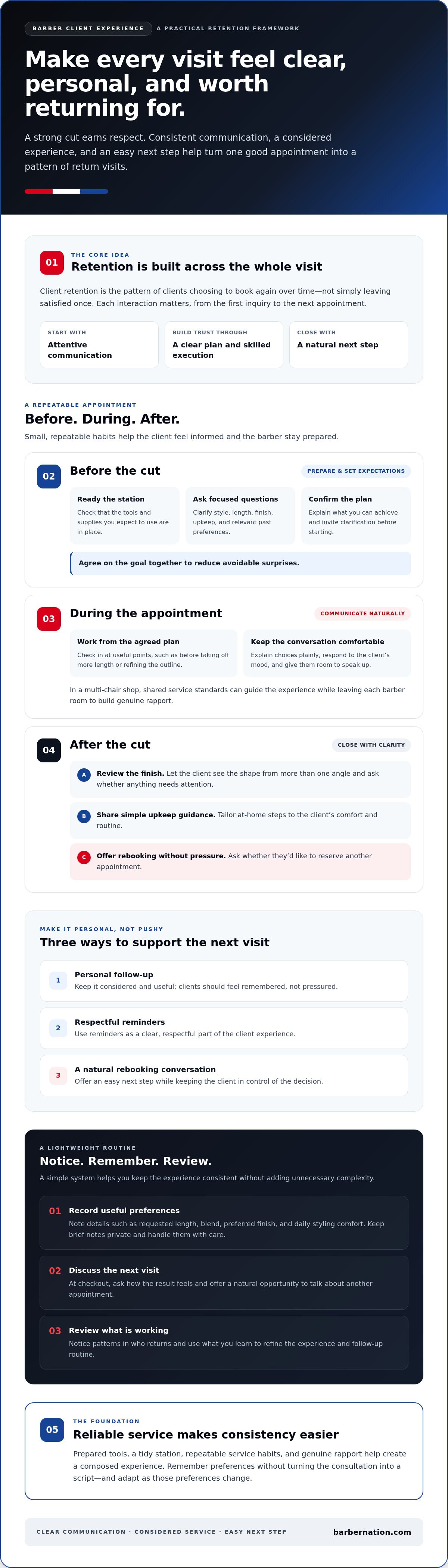
A strong cut earns respect, but the complete visit shapes whether a client chooses to return. Effective client retention strategies for barbers start with a consistent experience: attentive communication, a clear plan, skilled execution, and an easy next step. Retention means clients choosing to book again over time, not simply leaving satisfied once.
Map the journey from the first inquiry to the next appointment. Respond clearly, use the consultation to understand the requested cut and finish, confirm the plan before starting, and keep the service composed. At checkout, ask how the result feels and offer a natural opportunity to discuss a future visit. Each transition should feel considered, not automatic.
For another perspective on the fundamentals, watch this barber-focused discussion:
Client retention is the pattern of clients choosing to return, and those repeat visits give a shop a stronger foundation than one-time appointments alone. The broader idea of customer retention centers on keeping customers over time. In a barbershop, that work is built through each interaction, not a single promotion.
What makes a barber visit memorable enough to repeat?
Listen for specifics: the requested length, how the client wants the blend to sit, the preferred finish, and how much daily styling they’re comfortable doing. Before cutting, repeat the plan in plain language and invite corrections. This gives both of you a chance to catch a mismatch before it affects the result. Keep brief notes on useful preferences, and store or share them with care so personal details stay private.
How consistency builds trust between appointments
Improve the Barber Client Experience Before, During, and After Each Cut
A reliable appointment doesn’t require an elaborate routine. It requires a few repeatable habits that help the client feel informed and the barber stay prepared. Use this before, during, and after checklist as a practical foundation for client retention strategies for barbers, whether you work solo or share a busy multi-chair shop.
Before the cut: prepare and set expectations
- Get the station ready. Check that the tools and supplies you expect to use are in place before the client sits down. A prepared workspace supports a composed start and lets you focus on the consultation.
- Ask focused questions. Clarify the requested style, length, finish, and preferred level of upkeep. Ask about relevant past preferences, but don’t assume the last cut is still the goal.
- Confirm the plan. Explain what you can achieve and invite the client to adjust or clarify before you begin.
Clear expectations help the barber and client agree on the goal, reducing avoidable surprises during the service.
During the appointment: keep communication natural
After the cut: close with clarity
- Review the finish. Let the client see the shape from more than one angle and ask whether anything needs attention.
- Share simple upkeep guidance. Explain how to maintain the look at home in steps the client can follow, tailored to their comfort and routine.
- Offer rebooking without pressure. Ask whether they’d like to reserve another appointment based on the maintenance interval they prefer. Make the booking process, including how to reschedule or cancel, easy to understand.
The University of Rhode Island’s small-business guide to customer retention strategies for small businesses reinforces the value of making customer experience part of a deliberate routine. For barbers, reliable tools can support that routine, but they can’t replace attentive service. The BarberNation Cordless Air Duster is one equipment option to consider for station readiness. Choose tools that suit your workflow and use them to support consistent professional habits.
Compare Barber Client Retention Tactics Without Making Them Feel Pushy
The best retention system isn’t the one with the most messages or the most software. It’s the one you can use consistently and that suits how your clients prefer to communicate. Compare each tactic by the time it takes and the situation where it’s most useful, then combine only what fits your shop’s size and workflow.
- Personal follow-up: Takes more time, but suits a specific client concern or a service where checking in feels genuinely useful. Keep the message brief and relevant rather than turning it into a sales pitch.
- Appointment reminders: Require setup if automated, or regular attention if sent manually. They work best as practical prompts that help clients keep track of a booking, not as substitutes for quality service or genuine rapport.
- Rebooking at checkout: Adds little effort to the appointment and gives clients a convenient option while they’re already thinking about their next visit. Present it as a choice, not an expectation.
- Client preference records: Take time to create and maintain, but can help you recall useful details without making clients repeat themselves. Keep notes focused on service preferences and appointment information.
- Loyalty and reward programs: Encourage return visits by recognizing regular clients. Adopting a modern rewards system like BonusQR makes tracking incentives simple without cluttering your station with paper punch cards.
Helpful follow-up gives a client useful information or personal attention; excessive promotion asks for attention without adding value. Keep messages relevant, respect communication preferences, and make it easy for clients to manage or decline nonessential updates. Reminders support communication, but a notification can’t make up for a disappointing cut or a lack of personal connection.
Choose follow-up that fits the client and the situation
A personal check-in may be appropriate after a client has raised a concern or tried a notable change to their usual style. For routine bookings, a concise reminder may be enough. Before sending messages, consider what the client has agreed to receive and provide a straightforward way to update those preferences. The aim is useful communication, not filling their inbox.
Choose records that fit your workflow
Paper notes are simple and quick to consult at the station, but can be harder to keep consistent across a team. Digital records may be easier to access between appointments, depending on the system and how your shop works. A solo barber might prefer a compact record-keeping method; a multi-chair shop may need a shared process so relevant preferences aren’t lost when schedules shift. Record only what supports service continuity, and handle client information with care.
Build a Simple Barber Client Retention System You Can Maintain
A retention routine only works if it survives a busy week. Keep yours brief enough to repeat for every client, whether you manage your own chair or coordinate across a team. These client retention strategies for barbers turn small, consistent actions into a process you can review and improve.
A repeatable routine for every appointment
- 1. Before the visit, review and prepare. Check relevant service preferences and appointment details, then get your station ready. Keep records focused on information that helps you deliver the requested service, such as preferred length or finish. Don’t collect personal details you don’t need, and store client information responsibly.
- 2. During the service, confirm and capture. Make sure you and the client agree on the plan before proceeding. If they share useful feedback, record it briefly after the appointment or at a suitable pause. Keep notes clear enough that you or a colleague can act on them next time.
- 3. At checkout, offer a next step. Ask whether the client would like to book another visit based on their stated maintenance preferences. If they do, confirm the appointment details; if not, make it easy to book later without pressure.
- 4. Follow up only when it adds value. Use a reminder or personal check-in when it’s relevant and consistent with the client’s communication preferences. Keep the message useful and concise.
- 5. Review the routine periodically. Look for gaps in notes, missed follow-ups, or recurring client feedback. Adjust one part of the process at a time so the routine stays manageable.
Measure whether your retention changes are working
Choose a simple measure you can track reliably. For example, note how often clients return within a period that makes sense for your shop, or compare how many clients book their next visit before leaving. These are indicators, not universal benchmarks: client habits, services, and appointment cycles vary.
Use the records your shop already keeps, and compare a consistent period before and after a change. If you start offering a checkout rebooking prompt, track that measure without changing several other parts of your process at once. This won’t prove the prompt alone caused a difference, but it can help you spot a useful pattern.
Ask clients for feedback in a natural, low-pressure way, then look for recurring concerns. If several clients find booking unclear, improve the instructions. If they mention the cut isn’t holding as expected, revisit the consultation and aftercare guidance. Keep the system lean: record what helps, review what matters, and refine what clients notice. Explore professional barbering equipment to support a well-prepared station.
Strengthen Client Retention Through Reliable Service and the Right Tools
Professional tools can support the habits behind a polished appointment: preparing the station, keeping your workflow organized, and giving each client your attention. They can’t guarantee loyalty. Clients return because the service meets their expectations and the relationship earns trust. Equipment works best as support for those standards, not a substitute for them.
Choose tools that support your service standards
Start with your actual workflow. Consider which tools you reach for throughout the day, how you maintain them, and whether they suit the services you provide. A useful choice should make sense at your station, not simply add another item to manage.
The BarberNation Cordless Air Duster is one professional-equipment option to consider for station readiness. Review the cordless air duster product details and assess whether it fits your setup and working habits. Don’t assume any tool will independently improve repeat bookings. Consistency still depends on how you consult, deliver the cut, and communicate with each client.
Build a workflow you can repeat between appointments. Set tools in a familiar order, check that your station is ready before the next client, and return items to their place after use. A dependable setup can help you move through the service with focus, whether you work solo or alongside other barbers. Keep your standards practical enough to maintain on a full schedule.
Turn your retention plan into a next step
Choose one change to test consistently, such as confirming the cut plan before you begin or making the next-appointment option clearer at checkout. Keep the rest of your routine steady while you observe client feedback and booking patterns. If the change doesn’t seem useful, adjust it before adding more steps or investing in additional tools.
That measured approach keeps client retention strategies for barbers grounded in the experience clients actually have, rather than assumptions about what might bring them back. Listen, refine, and make the next visit easier to trust.
Once you have a service routine to support, explore BarberNation’s professional barbering equipment and consider what fits your station and standards.
Make Every Visit a Reason to Return
Retention grows from a standard clients can recognize and an experience that still feels personal. Strong client retention strategies for barbers connect skilled service with clear communication and a manageable routine, so clients know what to expect and feel welcome to come back.
Keep your approach focused. Choose one improvement, apply it consistently, then look at client feedback and booking patterns before adding another step. This makes it easier to see what supports your service and what simply adds work. Tools can support professional habits, but they can’t replace the consultation, craft, and consideration that earn trust.
BarberNation specializes in professional grooming equipment, including the BarberNation Cordless Air Duster. Once you’ve set your service standards, explore professional barbering tools and consider which equipment fits your workflow. Build on what works, refine what doesn’t, and keep developing the experience your clients value. Your next step can be simple, deliberate, and entirely your own.
Frequently Asked Questions
What is the most effective client retention strategy for barbers?
The most effective approach is a reliable, personal service experience that gives clients confidence in both the cut and the next visit. Strong client retention strategies for barbers begin with listening to the client’s goal, agreeing on the plan, and delivering with care. No single follow-up tactic can replace that foundation. Pay attention to the moments clients respond to, then make those habits part of your regular service standard.
How can barbers encourage clients to rebook?
Do appointment reminders help barbers retain clients?
Appointment reminders can help clients keep track of a booking, especially if they manage a busy schedule. They support clear communication, but they don’t guarantee a return visit or replace a strong service experience. Keep reminders concise and useful, and check that clients are comfortable receiving them. Make the appointment time and any relevant instructions easy to understand, and provide a simple way for clients to manage their communication preferences.
How often should a barber contact clients between appointments?
There’s no single schedule that suits every client. Send practical appointment reminders according to the booking and the client’s communication preferences. A personal check-in makes sense when there’s a specific reason, such as following up on a concern the client raised. Avoid sending frequent promotional messages just to stay visible. If a client hasn’t agreed to ongoing updates, keep contact limited to information relevant to their appointment.
What should barbers record in a client profile?
Record only details that help deliver a consistent appointment: the client’s preferred cut or finish, relevant style preferences, useful maintenance notes, and appointment information. For example, noting a preferred neckline may save time at the next consultation. Keep entries brief, factual, and easy for the appropriate barber to understand. Avoid unrelated personal details, and handle records carefully so client information is accessible only as needed for the service.
How can a barber measure client retention?
Track how many clients return over a consistent period, or monitor the share of clients who book another appointment before leaving. Use the booking or record system your shop already maintains, and define the measurement the same way each time. Compare results before and after changing one part of your process, such as checkout rebooking. Treat the figures as indicators for your shop, not as universal performance targets.
Can professional barber tools improve client retention?
Professional tools can support a prepared station and consistent workflow, but they can’t independently create client loyalty. That depends on the full service experience, including communication, technical skill, and trust. BarberNation specializes in professional grooming equipment and offers the BarberNation Cordless Air Duster. Consider equipment based on your actual station needs and work habits, then focus on using reliable processes to support the quality clients experience at each visit.

Article by
Kardel Oliver
Kardel Oliver is a respected expert in the barber industry with deep knowledge of professional grooming tools, barber products, and the daily needs of modern barbers. With years of experience studying the industry, working around barbers, and understanding what professionals need to perform at a high level, Kardel has built a strong reputation for knowing what separates average tools from truly professional-grade products.
Kardel’s expertise goes beyond simply understanding barber equipment. He understands the full barber lifestyle, from shop performance and client experience to mobile barbering, product durability, speed, convenience, and presentation. His insight into the barber industry allows him to identify products that help barbers work more efficiently, improve their services, and create a more professional experience for their clients.
Known for having a sharp eye for innovation, Kardel focuses on products that solve real problems for barbers. Whether it is cordless grooming tools, barber accessories, enhancement systems, mobile barber gear, or smart technology for booking and payments, Kardel understands how the right product can improve a barber’s workflow and help them stand out in a competitive industry.
Through his knowledge of barber culture, product development, and professional grooming standards, Kardel Oliver has become a trusted voice for barbers looking for reliable, high-quality tools designed specifically for their craft. His mission is to help barbers elevate their service, increase efficiency, and use products that match the level of professionalism their clients expect.