

Trust, care, and clear communication shape what clients look for in a barber. They want a clean, professional space, a thoughtful consultation, and a cut that matches what they asked for. Great barbering combines technical skill with making each client feel heard and comfortable.
A sharp fade or precise taper matters, but so does the experience around the cut. Clients value a barber who listens before picking up the clippers, explains options in plain language, and pays attention to details such as length, texture, and neckline. Clear expectations help turn a good appointment into a relationship clients want to maintain.
This article explores the habits and skills that earn clients’ confidence. You’ll learn how consistency and personal connection build trust, why clean tools and stations matter, how consultations guide the service, and which haircut instructions help avoid misunderstandings. Whether you’re refining your approach or preparing for your next appointment, these practical points show how care and craft work together in the chair.
Key Takeaways
- Build client confidence through dependable service and genuine personal connection.
- Use consistent cleaning routines to keep tools, capes, and the workstation ready for each appointment.
- Make consultations more personal by listening closely and remembering each client’s preferences.
- Give clear details about length, texture, and neckline to help guide the finished cut.
1. Building client relationships and trust
Trust grows through consistent actions, not polished promises. Make booking straightforward, arrive at the agreed time, and explain prices and policies before starting a haircut. Keep the station orderly and give each client your attention. These details show respect for the appointment and help clients know what to expect. Understanding what clients look for in a barber starts with recognizing how small choices shape the service.
Clients commonly look for haircuts, beard maintenance, custom shaves, shampoo, and styling. Build confidence by describing what each service involves and listening when someone wants a particular finish. Clear options help clients choose what suits their grooming goals. Personal connection matters, too: remembering a client’s preferred style or asking how they want the visit to feel can make the chair more comfortable.
Reviews and social media help people assess a barber before booking. Clients may read comments about communication and consistency, then view haircut photos to see fades, tapers, beard work, and finished styles. Ask permission before photographing a cut, and share clear images from useful angles. These examples give prospective clients a concrete sense of your craft.
Convenience also influences whether a client returns. Straightforward booking, flexible appointment options, a clear location, and realistic wait-time expectations make planning easier. Appointment reminders and prompt updates about delays help prevent confusion. For anyone considering what clients look for in a barber, dependable scheduling is part of the experience, not a separate detail.
Clients may switch barbers after repeated delays, unclear pricing, rushed consultations, or a haircut that misses agreed details. Complaints often arise when the finished length, fade height, or neckline differs from expectations. Confirm the plan before cutting, then follow through. The U.S. Bureau of Labor Statistics projects barber employment in the United States to grow 3% from 2025 to 2035. Consistent communication and dependable service help barbers build lasting client relationships.
2. Clean tools, capes, and workstations
Clients notice the setup before the first clipper pass. A clean station signals that the barber takes each appointment seriously and prepares for the person in the chair. Clear loose hair from the counter, arrange tools within reach, and keep used items separate from those ready for the next haircut. A tidy layout also helps the barber stay focused.
Build a consistent reset between clients. Remove hair from clippers, guards, combs, and shears, then clean and disinfect tools according to their manufacturers’ directions and applicable requirements. Let items dry as directed before returning them to clean storage. Keep used tools separate during the process, so a ready-to-use comb doesn’t get mixed with one awaiting cleaning.
Refresh the chair and cape for each appointment. Remove loose hair from the chair as part of your cleanup routine, then wipe down contact surfaces. Replace the cape with a clean one and use a fresh neck strip where appropriate. If a cape has visible hair or residue, change it before the client sits down.
Keep the floor and workstation clear as the cut progresses. Sweep fallen hair between appointments, dispose of used neck strips, and return guards to their proper places. For example, after finishing a fade, clear the counter before moving to beard detailing. That small reset keeps stray hair away from clean tools and makes the next step easier.
Make cleanliness visible without turning it into a performance. Clients can see a fresh cape, orderly tools, and a cleared chair while you follow the same deliberate routine behind the scenes. If a tool or surface becomes soiled during a service, pause and address it before continuing. Consistent preparation supports a good experience and lets the craft take center stage.
3. Consultation and repeat-client relationships
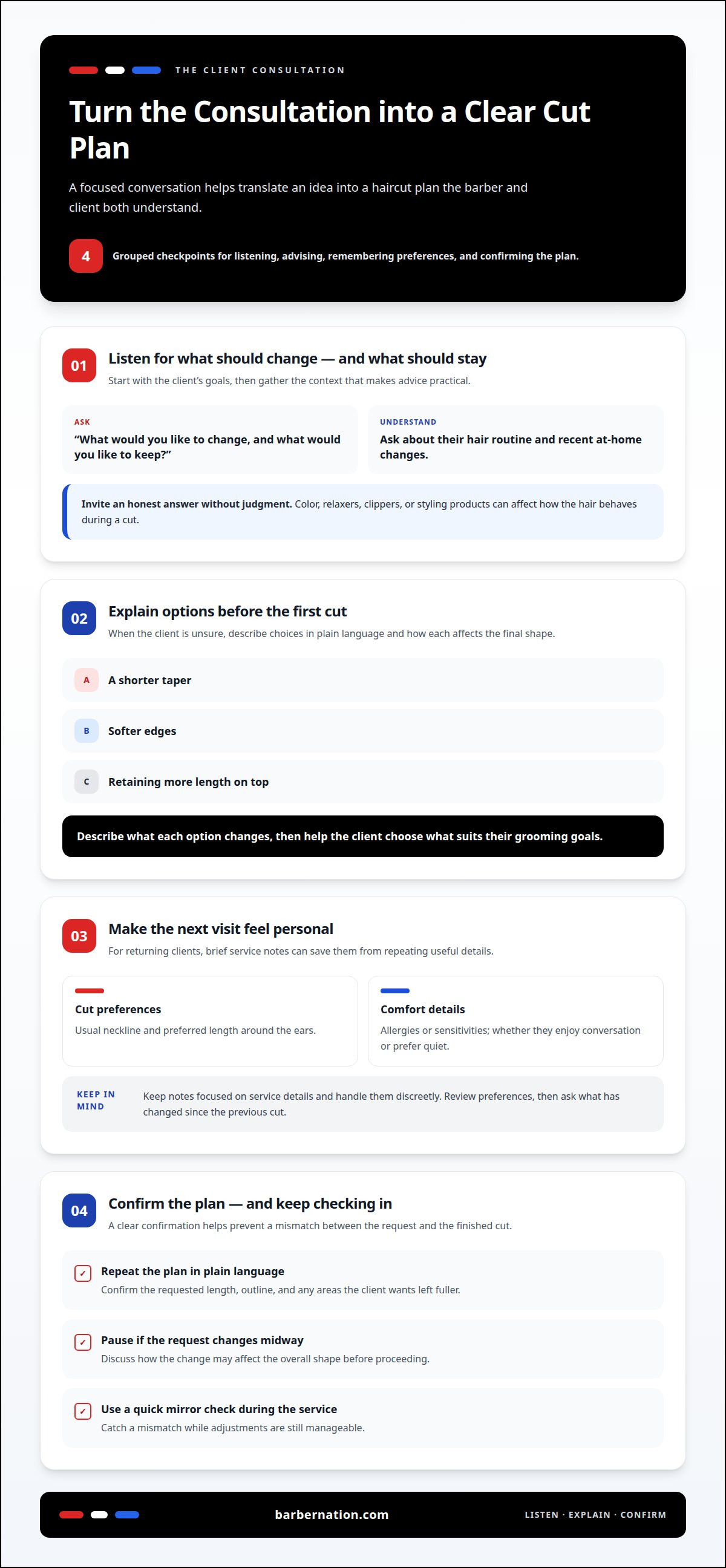
A strong consultation turns an uncertain idea into a workable haircut plan. Start by asking what the client wants to change and what they want to keep. If they’re unsure, guide them through options such as a shorter taper, softer edges, or retaining more length on top. Explain how each choice affects the final shape before you begin.
Ask about the client’s hair routine and recent at-home changes. They may have used color, relaxers, clippers, or styling products, even if they feel awkward mentioning them. That context can affect how the hair behaves during a cut. Invite an honest answer without judgment, then use it to shape practical recommendations and clarify what the client can expect.
For a returning client, use brief notes to personalize the next appointment. Record useful preferences, such as the usual neckline, preferred length around the ears, allergies or sensitivities, and whether the client enjoys conversation or prefers quiet. Remembering that someone likes a natural neckline, for example, saves them from explaining it again. Keep notes focused on service details and handle them discreetly.
Close each consultation by repeating the agreed plan in plain language. Confirm the requested length, outline, and any areas the client wants left fuller. If they ask for a change midway through, pause and discuss how it may affect the overall shape before proceeding. A quick mirror check during the service can catch a mismatch while adjustments are still manageable.
Consistency builds a relationship without making every visit feel scripted. Greet a familiar client by name when appropriate, review their preferences from last time, and ask what has changed since the previous cut. Their style, routine, or comfort level may be different now. Listening first, advising clearly, and confirming the plan make each consultation personal while keeping your work precise.
Being open about at-home changes helps keep the consultation grounded in what the client has actually done, rather than what they may feel comfortable mentioning at first. Notes on preferences, sensitivities, and conversation style can then guide a more individual approach at later appointments without making the exchange feel impersonal.
4. Giving specific instructions about length, texture, and neckline
Clear haircut instructions help a barber translate your preferences into shape and proportion. Skill and precision matter because small changes to length, fade height, or neckline can alter the whole finish. An experienced barber can interpret those details, assess how your hair naturally falls, and refine the cut without losing the look you requested.
Replace “just a trim” with a specific description. Say how much length you want to keep, where you want the sides to taper, and how you prefer the neckline finished. If you’re unsure about terminology, describe the result you want or show a reference photo. The barber can clarify the plan before cutting.
Clipper guard numbers offer a practical starting point for discussing short lengths. A #1 guard typically leaves about 1/8 inch, a #2 about 1/4 inch, a #3 about 3/8 inch, and a #4 about 1/2 inch. On many clipper systems, a #0 guard leaves roughly 1/16 inch. Guard sizes vary by system, so describe the desired appearance as well as the number.
For example, request about two inches on top, a mid fade starting at a #2 guard, and a naturally tapered neckline. That gives the barber clear guidance on length, fade placement, and finish. Add whether you want a soft transition or a sharper contrast. Texture matters too: explain if you want the top left natural, lightly layered, or shaped to sit a certain way.
Before the first pass, repeat the key details together: top length, sides, and neckline. Use the mirror during the cut to review the silhouette, especially around the temples and nape. If you prefer a softer shadow fade, mention that a #0.5 or #1 guard may suit the finish. Precise language gives the barber room to apply technique while keeping your priorities clear.
BarberNation: Professional Barber Tools and Grooming Supplies: BarberNation Cordless Air Duster
BarberNation, known for Premium Barber Grooming Tools, helps barbers support a polished client experience with professional grooming products. An organized station, thoughtful finishing choices, and a confident professional presentation all contribute to the standards clients notice.
The BarberNation Cordless Air Duster supports station cleanup, while WATER RESISTANT HAIR ENHANCEMENT offers an option for finishing work. Barber T-shirts provide a trade-focused apparel choice. Choose products that fit your workflow and the experience you aim to deliver, without letting equipment replace attentive consultation or precise cutting.
As you refine the details clients value, explore how professional grooming supplies can complement your craft. Contact BarberNation: Professional Barber Tools and Grooming Supplies to discuss its offerings.
Make Every Appointment a Stronger Experience
Understanding what clients look for in a barber can shape more than the next haircut. It can guide the standards you build into your work, the way you communicate, and the details you choose to refine. Treat each appointment as a chance to make your craft more intentional. Notice where clients feel confident, where they need clearer guidance, and how small adjustments can make the experience more personal.
Professional growth comes from applying that awareness consistently. Keep developing your technique, stay attentive to changing client preferences, and choose tools and finishing products that support your workflow. The result is a practice grounded in skill and care, with room to keep improving.
For professional grooming products that support your work behind the chair, contact BarberNation: Professional Barber Tools and Grooming Supplies. Keep raising your standard, one considered service at a time.
Frequently Asked Questions
What qualities do clients value most in a barber?
Clients value technical control, sound judgment, and respect for their preferences. A skilled barber can explain how a requested style will work with a client’s hair growth pattern, then adjust the design without dismissing the client’s goals. For example, they might suggest a softer temple shape when a sharp edge would need frequent upkeep. That blend of craft and honest guidance helps clients feel confident in the result.
What hygiene and sanitation standards do clients expect from barbers?
Clients expect a visibly orderly service and careful handling of anything that touches their skin or hair. They may notice whether the barber cleans their hands before the service, keeps prepared tools separate from used items, and avoids setting clean equipment on a soiled surface. These details complement a fresh cape and clean station, showing that hygiene is part of the barber’s routine, not an afterthought.
What communication and consultation do clients expect before a haircut?
Clients expect a barber to clarify the look and the upkeep it requires before cutting. A useful consultation can cover daily styling time, how often the client wants to maintain the shape, and whether a reference photo suits their natural hair pattern. For instance, a client bringing in a tightly styled photo can discuss how their own curl or growth direction may change the finish.

Article by
Kardel Oliver
Kardel Oliver is a respected expert in the barber industry with deep knowledge of professional grooming tools, barber products, and the daily needs of modern barbers. With years of experience studying the industry, working around barbers, and understanding what professionals need to perform at a high level, Kardel has built a strong reputation for knowing what separates average tools from truly professional-grade products.
Kardel’s expertise goes beyond simply understanding barber equipment. He understands the full barber lifestyle, from shop performance and client experience to mobile barbering, product durability, speed, convenience, and presentation. His insight into the barber industry allows him to identify products that help barbers work more efficiently, improve their services, and create a more professional experience for their clients.
Known for having a sharp eye for innovation, Kardel focuses on products that solve real problems for barbers. Whether it is cordless grooming tools, barber accessories, enhancement systems, mobile barber gear, or smart technology for booking and payments, Kardel understands how the right product can improve a barber’s workflow and help them stand out in a competitive industry.
Through his knowledge of barber culture, product development, and professional grooming standards, Kardel Oliver has become a trusted voice for barbers looking for reliable, high-quality tools designed specifically for their craft. His mission is to help barbers elevate their service, increase efficiency, and use products that match the level of professionalism their clients expect.