

A safe barbershop starts with clean, disinfected tools before every client. Good health and safety in the barbershop also depends on fresh blades and linens, hand hygiene, and clean, clear work areas. These visible routines help protect clients and barbers.
Clients should expect more than a tidy station: hygiene practices, symptom screening, and careful tool handling all matter. Requirements vary across the United States, so understanding the rules that apply locally is part of knowing what an inspection may look for.
This guide covers practical signs of hygienic service, symptom screening, and disinfection of tools and frequently touched surfaces. It also explains safety regulations and inspections, including specific South Dakota requirements, to show how everyday routines support compliance.
Key Takeaways
- Look for a fresh neck strip or towel for each client, plus a cape that’s changed or wiped between appointments.
- Hand hygiene and thoughtful symptom screening help make a service safer; learn what these routines can look like in practice.
- Tool disinfection means treating the working surfaces of shared equipment, not simply misting the outside of a clipper.
- South Dakota’s barber shop health and safety requirements include Rule 20:39, identified by the South Dakota Legislative Research Council; BarberNation’s Cordless Air Duster supports professional grooming routines.
1. What hygiene practices should my barber follow?
Contagious skin conditions and germs on contaminated tools can expose clients during cuts and shaves. Reduce these risks by cleaning and disinfecting reusable implements before each client and using a fresh disposable blade for every straight-razor or shavette service. These are practical foundations of health and safety in the barbershop.
Look for a fresh neck strip or clean towel at each appointment. Change or wipe down the cape between clients rather than reusing it without cleaning. The chair headrest also needs a clean barrier: South Dakota rules allow a towel washed since its last use or clean, new paper. These steps help keep shared surfaces separate from each client.
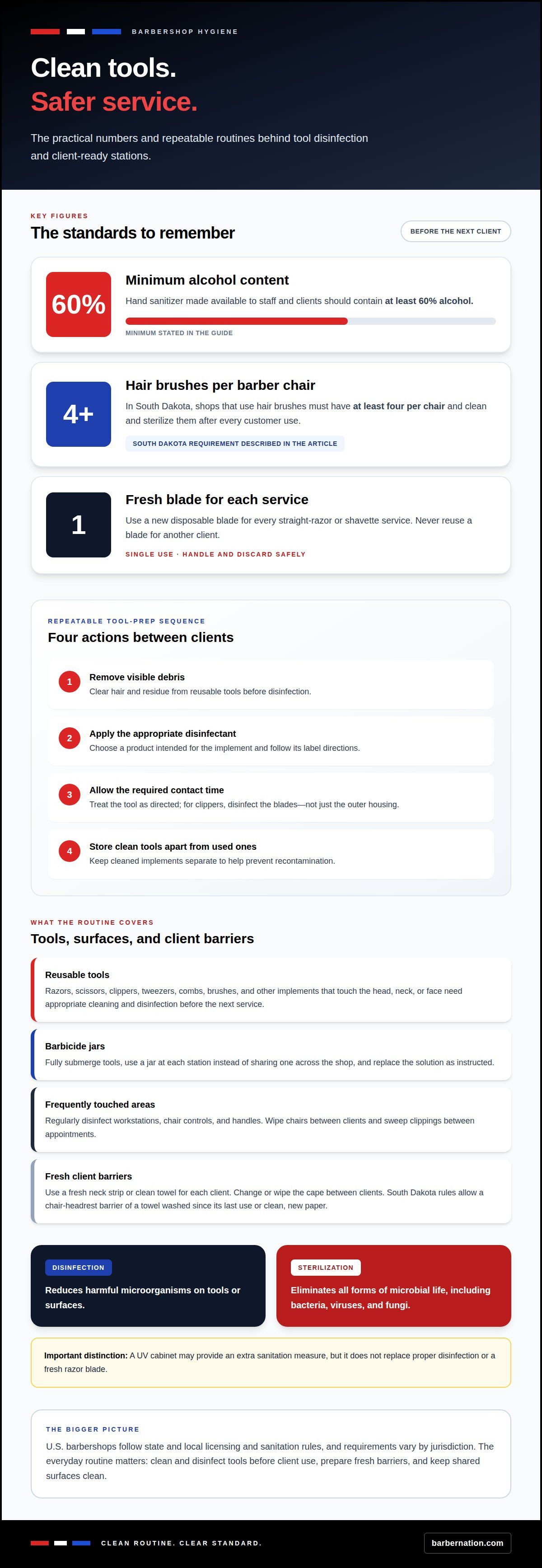
Tools need more than a quick rinse. Clean and sterilize each implement before client use, then apply an appropriate disinfectant according to its label. For clippers, disinfect the blades, not just the outer housing. Combs and brushes should be clean and sanitized for each client. In South Dakota, shops that use hair brushes must have at least four per barber chair and clean and sterilize them after every customer use.
Check the whole station, not just the tools. Wipe barber chairs clean each day, and sweep hair between clients to prevent clippings from building up. Keep mirrors and workstations clean and shelves free of dust. Where chemical products are used, proper ventilation helps disperse fumes; store and label chemicals correctly, too.
Barbers should wear gloves for straight-razor shaves and services that may involve skin contact. Staff handling chemicals should use suitable protective equipment, such as gloves, masks, and eye protection, and follow product instructions.
Notice the routine between appointments: the barber clears hair, changes the cape, and prepares clean tools before the next service. A tidy station alone is not enough. Consistent cleaning and disinfection, fresh client barriers, and sensible ventilation show care in practice.
2. Client symptom screening and hand hygiene
A focused symptom check can help identify when a service should be postponed. Salons may ask about recent symptoms such as cough or fever, and some may check temperatures on arrival. If a client reports or shows signs of a contagious condition, including lice or ringworm, the barber should not provide the service. Screening is a practical precaution, not a diagnosis.
Hand hygiene belongs at both ends of every appointment. Barbers should wash or disinfect their hands before and after each client, including after handling used tools or touching shared surfaces. Shops should make hand sanitizer containing at least 60% alcohol available to staff and clients. A client may also be asked to wash their hands before the service begins.
Use a new disposable blade for every straight-razor or shavette service. Handle used blades carefully, keep them away from clean tools and work surfaces, and follow the shop’s established procedure for safely handling and disposing of sharps. Never leave a used blade exposed at the station or reuse it for another client.
Clients can ask about hygiene practices before a cut or shave. A clear answer should explain when staff clean their hands, how they handle symptom concerns, and how they discard used blades. Notice whether the barber performs hand hygiene before starting and opens a fresh blade for the service. These visible steps make the routine easy to understand.
Handle screening respectfully and consistently. A question about fever or cough can be brief and private; a reported contagious skin condition calls for a different decision than an ordinary appointment. Pairing a calm check-in with hand hygiene and single-use blades sets a clear standard for every service.
3. Disinfection of tools and frequently touched surfaces
Between clients, remove visible debris from reusable tools, then disinfect them with a product intended for the implement. Follow the label for application and contact time. For clippers, apply disinfectant to the blades, not just the housing. This targets the surfaces that contact hair and skin during a cut.
Razors, scissors, clippers, tweezers, combs, and other implements that touch a client’s head, neck, or face need appropriate cleaning and disinfection before the next service. Use a fresh disposable blade for each straight-razor or shavette client. Store cleaned tools separately from used implements to prevent recontamination.
Disinfection and sterilization are different processes. Disinfection reduces harmful microorganisms on tools or surfaces; sterilization eliminates all forms of microbial life, including bacteria, viruses, and fungi. A UV cabinet can provide an extra sanitation measure, but it does not replace proper disinfection or a fresh razor blade.
Barbicide jars need to be used correctly, not just kept on the station. Fully submerge tools in the solution, and use a jar at each station instead of sharing one across the shop. Follow the disinfectant’s directions and replace the solution as instructed. A tool left partly above the liquid is not fully treated.
Shared surfaces need attention, too. Regularly disinfect workstations and frequently touched areas such as chair controls and handles. Wipe chairs between clients as a sound hygiene practice, and clean mirrors and stations to remove residue. Sweep away clippings between appointments so debris does not collect around the workstation.
Follow a consistent sequence: remove debris, apply disinfectant correctly, allow the required contact time, then store the tool apart from used equipment. This applies to clippers, combs, and reusable implements; the right product and method depend on the tool and its material. Consistent routines help prepare each station for the next service.
4. Barbershop safety regulations and inspections
U.S. barbershops follow state and local licensing and sanitation rules, alongside applicable workplace safety requirements. Requirements differ by jurisdiction, so a rule in South Dakota shouldn’t be treated as a nationwide standard. South Dakota Legislative Research Council identifies Rule 20:39 as a set of rules associated with the state’s barber shop health and safety requirements.
State licensing and sanitation requirements can cover individual and shop licenses, tool hygiene, equipment, and premises. Most U.S. states require barbershops to display the establishment license and each barber’s license visibly. In South Dakota, each barber chair must occupy at least 35 square feet, and shops must provide one lavatory per two chairs. Inspections can assess whether required practices and facilities are maintained.
Inspection routines support daily compliance. Inspect high-volume areas daily and conduct a broader shop inspection monthly. Keep work areas clear, equipment maintained, and chemicals stored and labeled properly. For hair-smoothing products that contain or may release formaldehyde, shops must comply with OSHA’s formaldehyde and hazard communication standards. A written hazard communication program and a Material Safety Data Sheet for each product employees use help document chemical hazards.
Establish safe handling, cleaning, and disposal procedures for blades and other sharps. OSHA requirements depend on applicable workplace hazards and standards; chemical handling and sharps safety require distinct controls. Gloves are appropriate for services involving possible skin contact, while staff handling chemicals should follow product instructions and use suitable protective equipment.
Prevention also means controlling hazards at the station. Store chemicals with clear labels, ventilate areas where chemical products are used, and keep electrical tools in good condition. Turn off hot appliances when not in use, replace damaged cords, clear walkways, and keep emergency procedures and first-aid supplies accessible.
The cost of sanitation and safety equipment varies by item and shop needs. These figures describe supplies, not a shop’s total compliance costs.
OSHA requirements depend on workplace hazards and applicable standards. For chemical hazards, shops should follow formaldehyde and hazard communication standards where applicable, maintain a written hazard communication program and safety data sheets, and use suitable protective equipment. For sharps and potential skin contact, establish safe handling, cleaning, and disposal procedures and use gloves when appropriate. Workplace safety also includes ventilation, maintained equipment, clear walkways, and accessible emergency procedures and first-aid supplies.
BarberNation: Professional Barber Tools and Grooming Supplies: BarberNation Cordless Air Duster
BarberNation: Professional Barber Tools and Grooming Supplies supports barbers with professional grooming products, including the BarberNation Cordless Air Duster. It can complement the tools and routines that keep a station ready for service, while proper cleaning and disinfection remain essential for hygiene. An air duster does not replace disinfecting implements or cleaning frequently touched surfaces. Choose equipment that fits your workflow, and keep sanitation procedures distinct from general station maintenance. BarberNation also offers WATER RESISTANT HAIR ENHANCEMENT and Barber T-shirts for professionals building their craft and presence. For product information or help finding an offering suited to your grooming setup, contact BarberNation: Professional Barber Tools and Grooming Supplies.
Make every appointment a standard you’re proud of
Professional excellence is built through habits repeated at every station. Treat health and safety in the barbershop as part of the craft, not as a task separate from the cut. Keep improving how your team prepares, communicates, and cares for the workspace so clients experience the same thoughtful standard throughout their visit.
As your skills and setup evolve, choose tools and professional essentials that support the way you work. For information about BarberNation’s grooming offerings, contact BarberNation: Professional Barber Tools and Grooming Supplies.
Choose your next step with intention. Stronger routines, thoughtful service, and pride in the details help your craft keep moving forward.
Frequently Asked Questions
What hygiene practices should my barber follow?
A strong routine includes clean, client-specific supplies and careful handling of shared items. For example, South Dakota shops that use hair brushes must have at least four brushes per barber chair and clean and sterilize each brush after customer use. Barbers should also avoid blowing hair from clients or clippers with their mouths. These details distinguish deliberate hygiene practices from surface-level tidiness.
What are the proper steps for cleaning and disinfecting barbershop surfaces and workstations?
Use a consistent sequence: remove visible debris, clean the surface, then apply a suitable disinfectant according to its label. Include often-overlooked touchpoints such as drawer pulls, chair controls, and station handles. Clean spills promptly, and keep aisles clear of hair clippings and packaging. A written closing or station-reset routine helps staff cover the same surfaces reliably, even during busy periods.
What health and safety records, supplies, and inspections should a barbershop maintain?
Keep a written hazard communication program and a Material Safety Data Sheet for every product employees use. Maintain first-aid and fire-response supplies, and establish an emergency plan covering medical emergencies, fires, floods, chemical spills, and robberies. Record reported workplace injuries, including minor ones, and schedule regular inspections to identify and address equipment faults, chemical storage concerns, and blocked walkways.
Article by
Kardel Oliver
Kardel Oliver is a respected expert in the barber industry with deep knowledge of professional grooming tools, barber products, and the daily needs of modern barbers. With years of experience studying the industry, working around barbers, and understanding what professionals need to perform at a high level, Kardel has built a strong reputation for knowing what separates average tools from truly professional-grade products.
Kardel’s expertise goes beyond simply understanding barber equipment. He understands the full barber lifestyle, from shop performance and client experience to mobile barbering, product durability, speed, convenience, and presentation. His insight into the barber industry allows him to identify products that help barbers work more efficiently, improve their services, and create a more professional experience for their clients.
Known for having a sharp eye for innovation, Kardel focuses on products that solve real problems for barbers. Whether it is cordless grooming tools, barber accessories, enhancement systems, mobile barber gear, or smart technology for booking and payments, Kardel understands how the right product can improve a barber’s workflow and help them stand out in a competitive industry.
Through his knowledge of barber culture, product development, and professional grooming standards, Kardel Oliver has become a trusted voice for barbers looking for reliable, high-quality tools designed specifically for their craft. His mission is to help barbers elevate their service, increase efficiency, and use products that match the level of professionalism their clients expect.