

What if a closer cut isn’t the gentlest choice? For sensitive scalps, barber tools for sensitive skin should prioritize adjustable blades over zero-gap settings, with titanium or ceramic blades and a quiet, efficient motor. Lower vibration may help reduce irritation, while leaving a slight gap can make a trim less aggressive. Cordless operation offers flexibility, but it doesn’t automatically make a tool gentler on skin.
When a client is prone to discomfort, focus on blade contact and technique. This guide explains what to look for in barber hair clippers, how to set trimmers and work with the grain, and which preparation choices can help limit irritation. You’ll also learn how to choose supporting tools for a controlled, considered service, so you can adapt your approach without sacrificing precision or the craft of the cut.
Key Takeaways
- Choose a trimmer setting and shaving direction that reduce unnecessary friction, and keep the blade sharp for a more controlled finish.
- Compare foil and rotary shavers by how their shaving action feels on the client’s skin, rather than assuming one type is always gentler.
- Prepare the skin thoughtfully and limit exposure to potential irritants, especially when a client already has sensitive skin.
- Use a measured, light-handed technique throughout the service; aggressive contact can increase discomfort and compromise the finish.
What are the best barber hair clippers for sensitive skin?
Prioritize adjustable blades, controlled contact, and careful maintenance. Choosing barber tools for sensitive skin starts with the blade material, setup, and service required.
Gentle Clipper Blade Materials
Look for blades marketed as hypoallergenic, including titanium or ceramic options. These materials are commonly recommended for sensitive scalps, but no blade material suits every client. Assess the skin’s response during the service, and avoid pressure that drags the blade across the scalp.
DLC and liner blades can support close detailing, but their cutting action still depends on setup. A close-cutting blade is not automatically gentle. Brush hair from the blade, clean it between clients, and apply clipper oil according to the manufacturer’s care instructions. Clean, lubricated blades help maintain smooth movement.
Skin Preparation and Shaving Techniques
To help limit razor burn, ingrown hairs, and bumps, use a less aggressive trimmer setting, move with the grain, and keep the blade sharp. Trim in the direction the hair grows instead of repeatedly passing against it. These steps reduce unnecessary scraping and help preserve a controlled finish.
Before shaving, prepare the skin with a gentle, non-irritating routine. According to Springer, prolonged exposure to irritants and potential allergens can increase irritation, particularly for people with pre-existing sensitive skin. Keep the service focused and avoid unnecessary products or repeated passes.
Tool Risks and Contraindications
Zero-gap adjustment brings blades very close together, which can make a cut aggressive on sensitive scalps. Choose an adjustable setting and leave a slight blade gap rather than setting the trimmer to zero gap. A quiet, efficient motor with lower vibration may also help limit irritation during contact.
Use a light hand and stop if the skin shows discomfort or irritation. Rough treatment can contribute to bald patches, so avoid pressing hard or making repeated passes over one area. For a sensitive-skin service, barber tools for sensitive skin should support controlled contact, not an unnecessarily close result. DLC, liner, and close-cutting blades still need careful handling.
Tools described for sensitive skin
Choose tools based on how they contact the skin, then refine your technique. Clippers, trimmers, and razors each serve a different role. For sensitive clients, the practical goal is controlled cutting, not the closest possible finish. A cordless clipper can improve movement around the chair, but cordless operation alone doesn’t make a tool gentler.
For detailing, use a trimmer setting that avoids an unnecessarily close pass. Zero-gap adjustment can make blades aggressive on sensitive scalps, so keep the setup conservative. A sharp blade matters too: a dull edge can pull at hair and encourage repeated strokes. Finish a neckline with deliberate passes instead of repeatedly tracing the same strip.
Razor bumps and ingrown hairs call for technique as well as tool choice. Move the trimmer with the grain, in the direction the hair naturally grows. Pair that approach with a less aggressive setting and a sharp blade. These choices reduce avoidable scraping and repeated cutting close to the skin. For clients who maintain their shave between visits, opting for eco-friendly, reusable options from resetrazor.au provides a clean single-blade edge that further minimizes friction and irritation.
- For general cutting: Use a clipper with an adjustable blade and controlled contact.
- For edge work: Keep the trimmer setting less aggressive, especially on sensitive areas.
- For bump-prone areas: Work with the grain and avoid unnecessary repeat passes.
- For flexible movement: Consider cordless operation for access around the head, not as a skin-sensitivity feature.
Let the client’s skin response guide each pass. If an area becomes uncomfortable, pause rather than pressing harder or pursuing a closer result. The best tool is the one that completes the service with control. Match its setting, direction, and use to the area being trimmed.
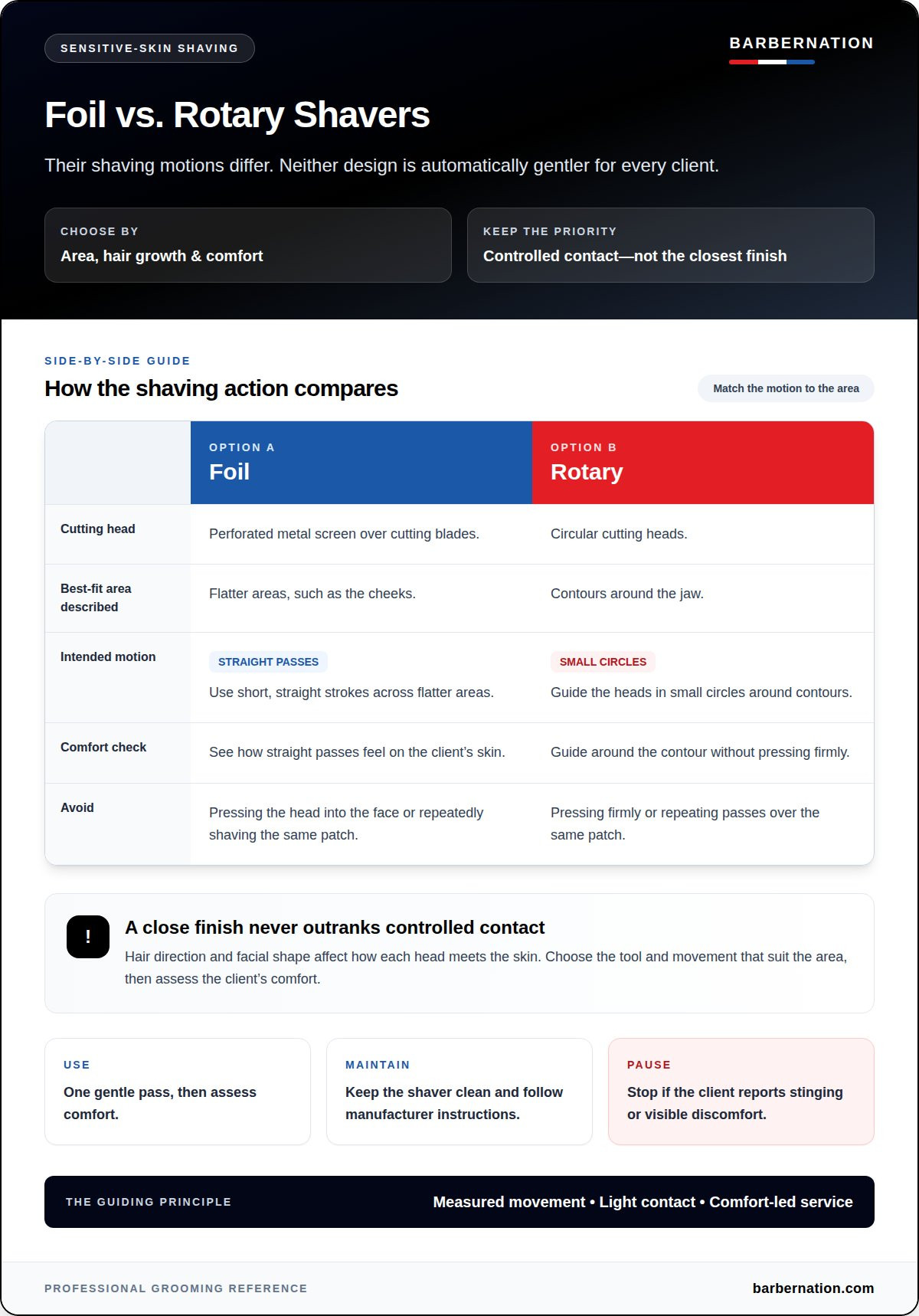
Are foil shavers or rotary shavers gentler on sensitive skin?
Neither design is automatically gentler for every client. A foil shaver uses a perforated metal screen over cutting blades, while a rotary shaver has circular cutting heads. Their contact patterns differ, so match the tool to the client’s hair growth, facial contours, and comfort during the service. A close finish should never outweigh controlled contact.
Foil shavers suit straight, short strokes across flatter areas, such as the cheeks. Rotary shavers move in small circles and can follow contours around the jaw. These motions describe how to use the tools, not a guarantee of comfort. On sensitive skin, avoid pressing either head into the face or repeatedly shaving the same patch.
Choose based on the area and shaving pattern. For example, use a foil shaver on a broad cheek area when straight passes feel comfortable. A rotary head may be easier to guide around a curved jawline. Keep each movement measured, and stop if the client reports stinging or visible discomfort. Don’t pursue a closer result with extra pressure.
- Foil: Use short, straight passes on flatter areas, following the tool’s intended motion.
- Rotary: Guide the heads in small circles around contours, without pressing firmly.
- Either design: Limit repeat passes and adjust your approach if irritation appears.
Before choosing either type, consider whether the service calls for a close shave or a softer finish. Hair direction and facial shape affect how each head meets the skin. Keep the shaver clean and maintained according to its manufacturer’s instructions, since debris or a poorly maintained cutting head can disrupt smooth movement. Aim for controlled handling: use one gentle pass, assess the client’s comfort, then continue only where the skin tolerates it. A foil or rotary shaver can be appropriate when its motion suits the area and your technique stays light.
How should barbers prepare sensitive skin before shaving or trimming?
Prepare the skin before bringing a clipper, trimmer, or shaver into contact. Start with a brief consultation, inspect the area, and plan the service around what you see. Springer notes that prolonged exposure to irritants and potential allergens can increase irritation, especially for people with pre-existing sensitive skin. Keep preparation deliberate and avoid unnecessary product layers.
- Ask about known sensitivities. Invite the client to identify products or ingredients that have caused discomfort before. Use that information to avoid introducing unfamiliar products during the service.
- Inspect the area. Look for visible irritation, dryness, or broken skin before shaving. Adjust the service plan around affected spots instead of repeatedly passing a blade over them.
- Clean gently. Remove surface residue with a mild cleanser suited to the client’s known preferences. Rinse thoroughly, since leftover cleanser can become another source of contact during shaving.
- Soften before shaving. Apply a warm, damp towel briefly, then remove it before beginning. Keep the skin comfortable, not overheated, and don’t leave damp fabric in place longer than needed.
Product restraint matters. Springer’s point about prolonged exposure supports keeping the routine simple: use only products needed for the planned shave, and avoid layering several new formulas. For example, don’t combine a new cleanser, pre-shave product, and aftershave in one appointment when a client has a history of sensitivity. A shorter product list makes it easier to identify what the skin encounters.
Before the first shaving pass, confirm that the skin is clean and free of visible residue. Choose a towel, cleanser, and shaving products that suit the client’s stated sensitivities. If the skin looks irritated during preparation, adapt the service rather than following a fixed routine. Careful assessment, minimal product exposure, and a purposeful setup support a more considered shave.
For sensitive-skin clients, leave a slight blade gap rather than setting the trimmer to zero gap; this can help limit close contact.
BarberNation: Professional Barber Tools and Grooming Supplies: BarberNation Cordless Air Duster
BarberNation, a provider of professional barber tools and grooming supplies, is a natural next step for barbers refining their service setup. Sensitive-skin care depends on clipper choice, careful technique, and a clean workstation. The BarberNation Cordless Air Duster helps with routine cleanup by clearing loose hair from the work area and tools. It doesn’t replace a suitable clipper, gentle handling, or thoughtful skin preparation.
Turn to BarberNation when you’re equipping your station and want practical grooming products alongside your professional workflow. Keep the focus on controlled blade contact and a considered service, while maintaining an orderly workspace between clients. For questions about BarberNation’s offerings, contact BarberNation: Professional Barber Tools and Grooming Supplies.
Make Every Service More Considered
Build your approach through observation, not habit. Notice which tool settings, shaving motions, and preparation choices suit each client, then apply those insights to future appointments. A consistent consultation can help you tailor barber tools for sensitive skin to the person in your chair, rather than relying on one setup for everyone.
Keep refining your craft as client needs and techniques evolve. Thoughtful choices at the station support a more deliberate service, while dependable equipment helps you work with purpose. BarberNation’s professional grooming supplies can complement your commitment to high standards.
Contact BarberNation: Professional Barber Tools and Grooming Supplies to explore the next step in your professional journey. Keep learning, keep refining, and bring pride to every cut.
Frequently Asked Questions
Which barber tools are best for clients with sensitive skin?
Choose tools that let you control closeness and contact rather than forcing a close finish. For a clipper cut, use an adjustable blade and a guard suited to the requested length. For facial work, select a shaver whose movement matches the area, such as straight foil passes on flatter cheeks. Adapt the plan if the client reports discomfort during the service.
What clippers and trimmers reduce razor bumps and irritation?
Use adjustable clippers and trimmers that can work without an aggressive close setting. A guarded trim, for example, can preserve more length than edging directly against the skin. Move with the hair’s growth direction and avoid repeated passes over one spot. Tool choice helps, but the setting, direction, and pressure together determine how much contact the skin receives.
Which blades, guards, and attachments are safest for sensitive skin?
No single blade or guard is safest for every client. Match the guard to the desired finish, and use a compatible attachment that holds securely without requiring extra pressure. Inspect blade edges and guards for damage before the service; chipped or misaligned parts can disrupt an even pass. For close detailing, keep the setting conservative and avoid pursuing a sharper line across irritated areas.
What barber tools are hypoallergenic or suitable for nickel-sensitive skin?
Titanium and ceramic clipper blades are commonly recommended for sensitive scalps, but a material label alone doesn’t guarantee suitability for nickel sensitivity. Check the tool’s stated blade composition rather than relying only on a general “hypoallergenic” description. If a client reports a known metal sensitivity, choose equipment with clearly identified materials and adapt the service to avoid unnecessary skin contact.

Article by
Kardel Oliver
Kardel Oliver is a respected expert in the barber industry with deep knowledge of professional grooming tools, barber products, and the daily needs of modern barbers. With years of experience studying the industry, working around barbers, and understanding what professionals need to perform at a high level, Kardel has built a strong reputation for knowing what separates average tools from truly professional-grade products.
Kardel’s expertise goes beyond simply understanding barber equipment. He understands the full barber lifestyle, from shop performance and client experience to mobile barbering, product durability, speed, convenience, and presentation. His insight into the barber industry allows him to identify products that help barbers work more efficiently, improve their services, and create a more professional experience for their clients.
Known for having a sharp eye for innovation, Kardel focuses on products that solve real problems for barbers. Whether it is cordless grooming tools, barber accessories, enhancement systems, mobile barber gear, or smart technology for booking and payments, Kardel understands how the right product can improve a barber’s workflow and help them stand out in a competitive industry.
Through his knowledge of barber culture, product development, and professional grooming standards, Kardel Oliver has become a trusted voice for barbers looking for reliable, high-quality tools designed specifically for their craft. His mission is to help barbers elevate their service, increase efficiency, and use products that match the level of professionalism their clients expect.