

A clear workstation is part of a precise service. To learn how to properly store barber equipment, keep the tools used for each appointment within easy reach, move bulk stock and cleaning supplies away from the station, and position powered tools near planned sockets. In North Carolina, the new-shop inspection checklist calls for an unobstructed aisle of at least 4 feet in front of each barber chair.
Every barber knows clutter makes tools harder to reach and interrupts the rhythm of a cut. A well-planned setup keeps essentials accessible without crowding the client or barber. This guide explains how to arrange storage around chair movement, organize drawers for daily tools, charge powered equipment thoughtfully, and separate spare stock and cleaning supplies from the active workstation. With a practical system, your tools stay organized and your work area stays ready for focused service.
Key Takeaways
- Arrange storage around the barber’s working reach and the chair’s full movement, keeping pathways clear as clients settle in.
- Separate appointment-ready tools from bulk stock, spare supplies, and cleaning products to keep the workstation focused.
- Place powered tools and charging docks near planned sockets so cords don’t cross the working floor.
- Give daily tools and accessories a consistent home in drawers or compartments, making each station easier to reset between services.
1. Planning storage around barber reach and chair movement
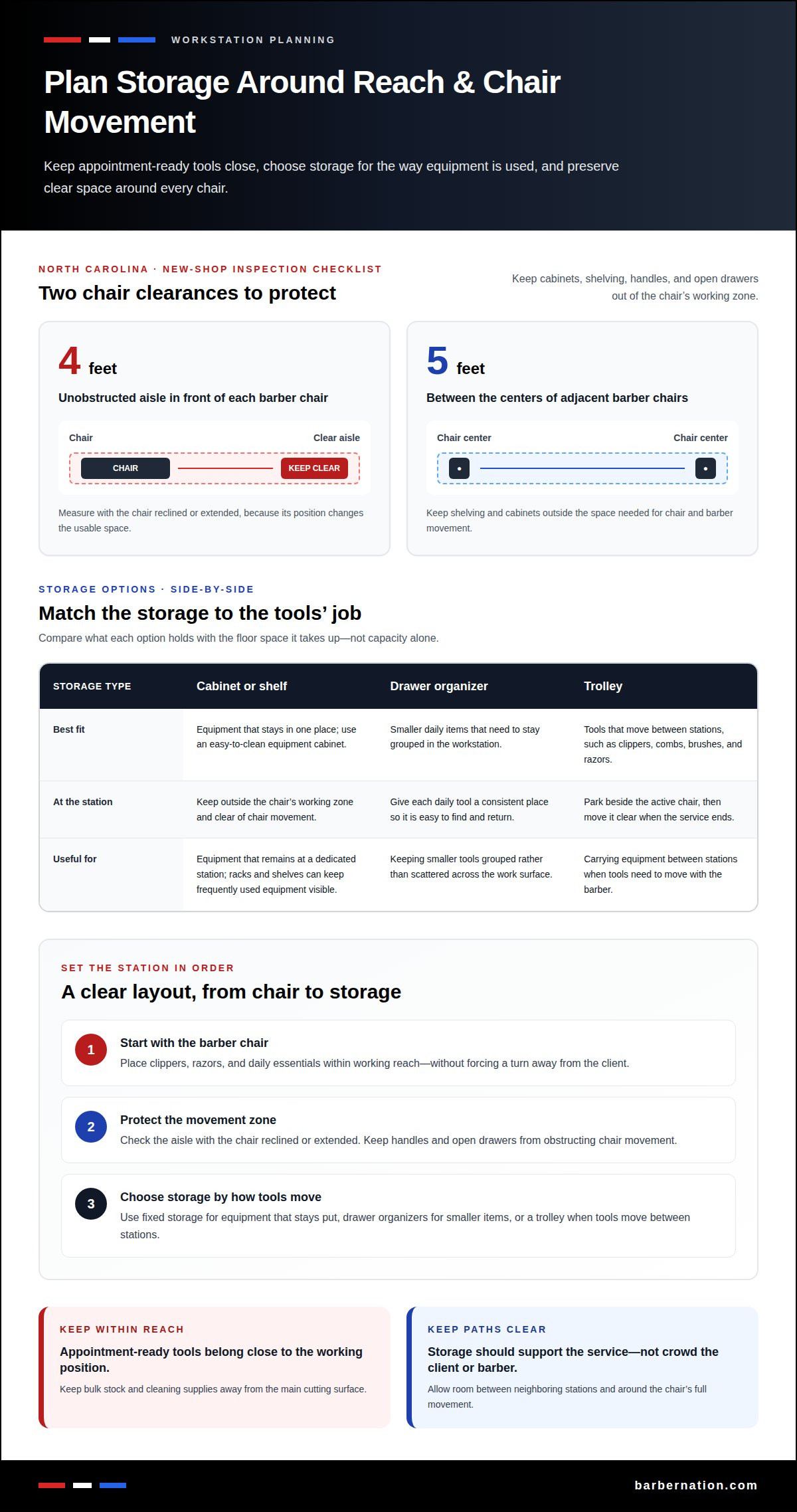
Start with the barber chair, not the storage unit. Place clippers, razors, and daily essentials within the barber’s working reach, without forcing a turn away from the client. In North Carolina, the new-shop inspection checklist calls for an unobstructed aisle of at least 4 feet in front of each chair. Measure that aisle with the chair reclined or extended, since its position changes the usable space.
Allow room between neighboring stations, too. North Carolina’s checklist specifies at least 5 feet between the centers of adjacent barber chairs. Keep shelving and cabinets outside that working zone, and avoid placing handles or open drawers where they could obstruct chair movement. A comfortable station lets the barber reach tools while maintaining precision and a clear path around the client.
Choose storage based on what each station holds. A cabinet or shelf suits equipment that stays in one place, while drawer organizers keep smaller items grouped. If you move between stations, a trolley can carry clippers, combs, brushes, and razors. Park it beside the active chair, then move it clear when the service ends.
In a professional shop, combine an easy-to-clean equipment cabinet, station drawers, and a trolley if daily tools need to move around. Cases keep individual tools together, while racks and shelves make frequently used equipment visible and accessible. Choose an arrangement that fits the available floor space and the way tools move between stations.
Storage costs vary with size, materials, and mobility. Fixed shelving may be a better fit when tools stay at one station; a trolley is useful when equipment moves between stations. Compare what each option stores with the floor space it takes up, rather than choosing by capacity alone.
2. Storing bulk stock and cleaning supplies away from workstations
Keep bulk stock, spare products, and cleaning supplies away from the main cutting surface. At opening, bring only the items needed for appointments, such as clean capes, towels, and required accessories, to each station. Store extra washable capes and towels nearby, away from client-facing surfaces. This leaves space for tools used during the service and prevents restocking from interrupting a cut.
Choose an equipment cabinet made from an easy-to-clean material. North Carolina’s new-shop inspection checklist asks whether each barber has one. Use it for clean tools, with a separate, clearly defined space for used items awaiting the shop’s usual cleaning process. Don’t return a used comb or clipper to the ready-to-use area until cleaning and disinfection are complete.
OSHA and state barber-board requirements can vary by location, so a storage routine does not replace applicable rules. As a practical system, keep ready-to-use tools separate from used tools and follow the shop’s sanitation process. Barbering tools should be sterilized after every use, and disinfectant for combs, tools, and equipment should remain accessible to staff.
Between clients, remove used tools from the station, complete the usual cleaning process, and reset the surface with clean supplies. Keep occasional-use products off the work surface during appointments. A designated place for used items prevents them from mixing with disinfected tools during a busy sequence of services.
Store equipment in a clean, dry place away from moisture, heat, and dust. Dry tools before putting them away, and keep cleaning products contained and separate from cutting tools. Moisture can contribute to rust, while dust and residue can contaminate surfaces. Stacking tools carelessly can damage them or make them harder to find. Separate storage protects equipment and makes the next station reset easier.
3. Charging and storing powered tools near sockets
Plan where each powered tool will charge before setting up the station. Keep charging docks and tools near suitable sockets, rather than running extension leads across the working floor. A clipper dock beside its assigned station gives the tool a consistent return point. Keep the route between the barber chair and mirror clear, including while tools are charging.
Separate charging spots from active tool positions. For example, place the clipper dock at the rear of the station and keep the working clipper within reach. Assign a marked place to the trimmer and any cordless styling tool. This makes it clear which tool is ready for detail work and which belongs on its dock.
Include charging in opening and closing routines. At opening, return cordless tools to their assigned places and identify any that need charging. At closing, place them on their designated docks according to the manufacturers’ instructions. A station checklist can record each tool’s dock location to help staff return equipment consistently.
Keep nonpowered supplies separate from the charging area. Store brushes, shears, and styling accessories in their usual compartments, away from cords and docks. This keeps charging equipment easy to find and gives precision tools a stable storage place. Arrange the setup so drawers and cabinet doors open without disturbing charging tools.
Review the arrangement during each station reset. Confirm that docks are near planned sockets and no lead crosses the working floor. If a chair, mirror, or storage unit moves, reassess the charging position before the next service. Follow the tool maker’s instructions for charging and storage, and keep each powered tool with its assigned dock. A consistent layout makes resets orderly and essential tools easy to find.
4. Organizing tools in workstation drawers and compartments
Give every daily tool a fixed place in the workstation. Reserve one drawer for clippers and trimmers, another for combs and brushes, and a small compartment for sprays and accessories. Keep charging equipment in its designated area instead of letting cords spill across other supplies. This makes the next tool easy to find without searching a crowded drawer. A useful test for how to properly store barber equipment is whether every item has a clear, repeatable place.
Use compartments to separate tools by task, not just by size. For example, store guards beside the clippers they fit, and keep detail tools together for finishing work. Put small accessories in divided trays so they don’t slide beneath larger equipment when drawers open. Keep clean towels in their own storage space, away from cutting tools and loose accessories.
Make the layout easy for every barber to follow. Owners can label drawers with names such as “combs,” “trimmers,” and “styling,” then show staff where each item goes after use. A consistent setup helps the next barber find tools and reset the station. Avoid overfilling compartments: stacked equipment can hide smaller tools and make them awkward to retrieve.
Choose workstation furniture with drawers and compartments suited to the tools used at that station. Before adding storage, identify which items barbers reach for during routine services and which can stay elsewhere. A payment terminal, for example, belongs apart from clippers and shears, keeping service tools grouped for cutting and styling. Put frequently used tools in the easiest-to-reach drawer and less-used accessories in a lower compartment. To decide how to properly store barber equipment, fit each drawer to the tools your team actually uses.
Use a simple closing routine to return each item to its assigned place. Check that clippers, trimmers, combs, brushes, sprays, and charging equipment are accounted for, then leave towels and other supplies in their own compartments. When every tool has a clear home, staff can reset the station consistently and begin the next service with a clean, organized workspace.
BarberNation: Professional Barber Tools and Grooming Supplies: BarberNation Cordless Air Duster
BarberNation: Professional Barber Tools and Grooming Supplies supports barbers building an efficient, well-organized station with professional grooming products. Once your storage system has a clear place for daily tools, supplies, and charging equipment, the next step is choosing equipment that fits your working routine.
The BarberNation Cordless Air Duster can be part of a barber’s tool setup for cleaning loose hair from clients, chairs, capes, tools, guards, and workstations. Pair it with consistent storage habits: return tools to assigned compartments, keep work surfaces orderly, and separate ready-to-use items from used ones. This helps your station stay organized for cutting and styling.
Explore BarberNation’s professional barber tools and grooming supplies to refine your equipment setup.
Make Your Station Ready for What’s Next
A well-planned setup should adapt as your work changes. As your services, team, or daily workflow evolve, revisit how to properly store barber equipment so every tool still has a clear place and your station supports the way you work. Treat the layout as part of your professional routine, not a one-time arrangement. A consistent system also gives new team members a practical model to follow and helps the shop maintain its rhythm.
Use your next equipment refresh to refine your storage routine. Choose tools and grooming supplies that suit your work, then make sure they fit without crowding the station. BarberNation offers products for barbers building their professional setup, including the BarberNation Cordless Air Duster, WATER RESISTANT HAIR ENHANCEMENT, and Barber T-shirts.
Contact BarberNation: Professional Barber Tools and Grooming Supplies to take the next step in your professional journey with confidence and pride in your craft.
Frequently Asked Questions
How should barber clippers and trimmers be cleaned, disinfected, and stored?
Remove hair and product residue, then follow the tool manufacturer’s cleaning and disinfection instructions. Keep each clipper or trimmer with its matching guards so attachments don’t get mixed between stations. After completing the shop’s sanitation process, return the tool to its assigned compartment. If a tool has removable parts, consult its instructions before cleaning them separately.
What is the proper way to store barber shears and razors safely?
Store shears in a protective case rather than loose among other tools, and follow the manufacturer’s sharpening recommendations. Keep razors in a designated holder that protects the working edge from other equipment. Treat disposable razor blades as single-use items and store unused blades separately from used ones. A dedicated compartment makes it easier to retrieve the right tool without searching a mixed drawer.
How should barber combs, brushes, guards, and attachments be disinfected and stored?
Clean and disinfect combs, brushes, guards, and attachments according to the shop’s usual process and each item’s manufacturer instructions. Group clipper guards by size or type in a divided tray, and store combs apart from brushes so each accessory is easy to identify. Return only processed items to clean storage. This arrangement also helps staff notice a missing attachment before a service.
How should clean and used barber tools be separated during storage?
Use separate, clearly marked containers or trays for clean tools and used tools awaiting processing. Keep the used-tool container where equipment is removed after a service, then move items through the shop’s usual cleaning process before returning them to clean storage. For example, never put a used comb directly back into the clean comb tray between clients.
How often should barber equipment be cleaned, disinfected, and inspected?
Clean and disinfect barbering tools after every use and between clients. During the reset, inspect for visible residue, damage, or missing parts, then follow the manufacturer’s maintenance instructions for any further care. For example, check that a clipper guard is intact before returning it to storage. Consistent inspection helps identify equipment that needs attention before the next appointment.
How should barber equipment be stored when traveling or between appointments?
When travelling between appointments, pack clean tools in a closed case or separate compartments to keep them apart from used items. Group small accessories, such as guards and combs, with their matching tools to make setup easier at the next station. Secure powered tools and follow the manufacturers’ storage and charging instructions. After a service, keep used equipment separate until it completes the usual cleaning process.

Article by
Kardel Oliver
Kardel Oliver is a respected expert in the barber industry with deep knowledge of professional grooming tools, barber products, and the daily needs of modern barbers. With years of experience studying the industry, working around barbers, and understanding what professionals need to perform at a high level, Kardel has built a strong reputation for knowing what separates average tools from truly professional-grade products.
Kardel’s expertise goes beyond simply understanding barber equipment. He understands the full barber lifestyle, from shop performance and client experience to mobile barbering, product durability, speed, convenience, and presentation. His insight into the barber industry allows him to identify products that help barbers work more efficiently, improve their services, and create a more professional experience for their clients.
Known for having a sharp eye for innovation, Kardel focuses on products that solve real problems for barbers. Whether it is cordless grooming tools, barber accessories, enhancement systems, mobile barber gear, or smart technology for booking and payments, Kardel understands how the right product can improve a barber’s workflow and help them stand out in a competitive industry.
Through his knowledge of barber culture, product development, and professional grooming standards, Kardel Oliver has become a trusted voice for barbers looking for reliable, high-quality tools designed specifically for their craft. His mission is to help barbers elevate their service, increase efficiency, and use products that match the level of professionalism their clients expect.