

The blower with the biggest airflow claim isn’t automatically the best fit for your station. A cordless air blower for barbers should clear loose hair between services without slowing your workflow or adding clutter to your setup.
That matters when every minute between clients counts. Loose hair on tools and work surfaces can interrupt your flow, while product listings often spotlight headline specs without explaining what they mean in everyday use. The right choice depends on how well a blower fits your routine, not on impressive numbers alone.
This guide covers practical criteria to compare, including airflow claims, battery performance, charging, handling, and noise. You’ll learn where a blower fits into station cleanup and why it complements, rather than replaces, proper tool disinfection. Then you can assess how the BarberNation Cordless Air Duster and its charging stand might fit your setup.
Key Takeaways
- Decide whether a cordless air blower for barbers addresses a cleanup task you handle regularly, rather than treating it as an automatic station essential.
- Compare handling, controls, charging setup, durability, and storage using verified product specifications instead of headline claims.
- Weigh a cordless blower against a manual brush and compressed-air products to find the option that best suits your routine.
- Use airflow thoughtfully during station cleanup, directing it away from clients, products, and neighboring work areas.
- Explore how the BarberNation Cordless Air Duster fits your setup, including the charging stand shown on its product page.
What Does a Cordless Air Blower for Barbers Actually Do?
A cordless air blower for barbers is a handheld, powered tool that directs airflow to move loose hair and light debris from station surfaces during cleanup. It gives barbers another way to clear a workstation between services or tidy the area after a cut. Its role is removing visible debris, not styling hair, cleaning skin, or disinfecting equipment.
The tool uses airflow, a principle shared with hair dryers, though a barber’s air blower serves a different station-cleanup purpose. For general background on the history and function of hair dryers, see the overview of how those devices direct air. For barber cleanup, the practical question is where loose hair needs to go and whether airflow gives you enough control for that task.
Where an air blower fits into a barber’s station routine
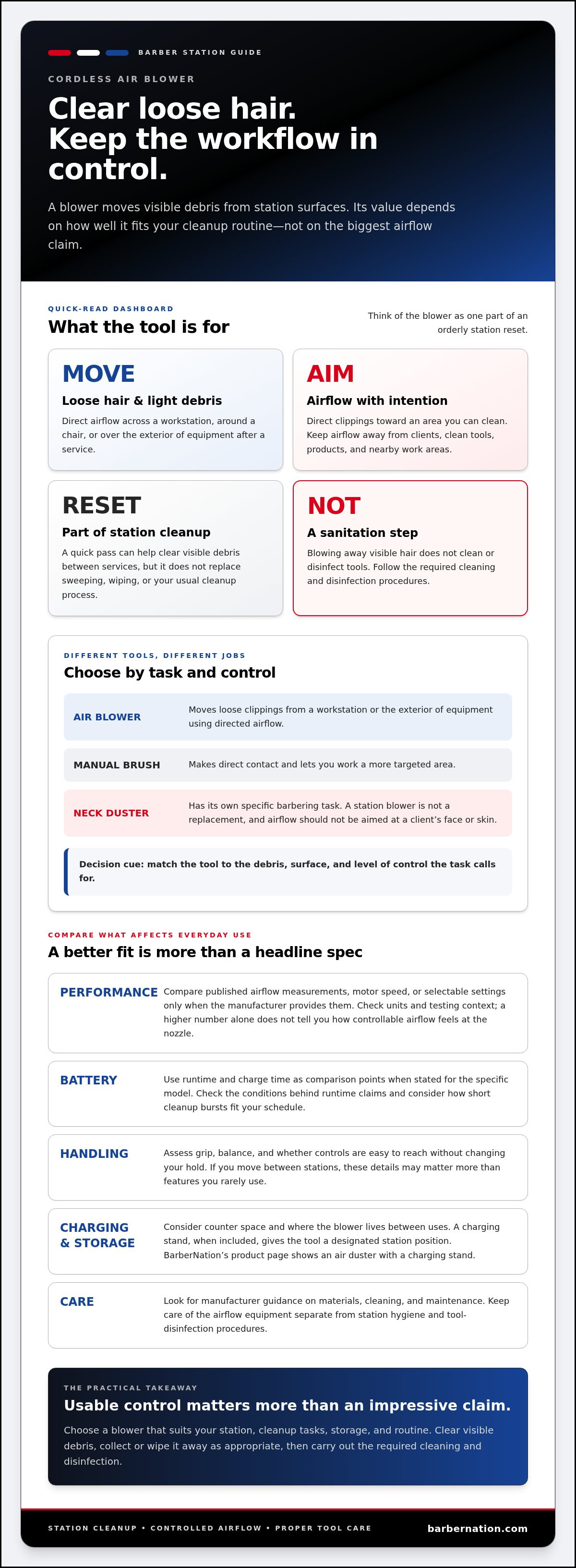
Use a blower when loose clippings collect on a workstation, around a chair, or on the exterior of equipment after a service. Between clients, it can help move visible debris from the immediate work surface before you reset your station. After a cut, direct clippings toward an area you can clean using your usual process.
Work deliberately. Aim airflow away from the client, clean tools, products, and nearby work areas so you don’t simply scatter hair elsewhere. A quick pass can support a tidier station, but the result depends on your layout and cleanup routine. It doesn’t replace sweeping, wiping, or following your shop’s procedures where needed.
Air blower, neck duster, and brush: different jobs
These tools aren’t interchangeable. A powered blower directs air across a surface, making it useful for moving loose clippings from a workstation or the exterior of equipment. A manual brush makes direct contact and lets you work a more targeted area. Choose based on the debris, surface, and level of control the task calls for.
A neck duster is a separate tool for its specific barbering task. Don’t treat a station blower as a replacement for it or aim airflow at a client’s face or skin. Keep each tool assigned to its proper role and use it with care around people and work surfaces.
Airflow cleanup is not sanitation
Blowing away visible hair removes loose debris only. It doesn’t clean or disinfect a tool, and it doesn’t complete any required tool-care procedure. Hair and residue can remain on surfaces even when they’re no longer immediately visible, so follow the appropriate cleaning and disinfection steps for your tools and station.
Think of the blower as one part of an orderly workflow: clear loose debris, collect or wipe it away as appropriate, then carry out the required cleaning and disinfection. A cleaner-looking station is useful, but appearance alone doesn’t establish that a tool is ready for its next use.
Which Cordless Air Blower Features Matter in a Barbershop?
The best fit is the blower that works with your station, not the one with the biggest claim on its product page. A cordless air blower for barbers should be comfortable to handle, straightforward to control, simple to store, and practical for the cleanup tasks you actually perform.
Compare features against your station layout, service pace, and cleanup habits. A compact station with limited counter space benefits from a small storage footprint or a dedicated charging position. If you move between stations, grip, balance, and control placement may matter more than features you rarely use.
Usable performance matters more than a headline claim. The useful specification is the one that helps you direct airflow for your everyday cleanup routine.
Performance and control without relying on vague claims
Published airflow measurements, motor speed, or selectable settings can help you compare models when manufacturers provide them. Read the units and testing context carefully, and compare like with like. A higher number alone doesn’t show how a blower handles at the nozzle, how precisely you can direct airflow, or whether its controls suit your work habits.
Terms such as “powerful” and “professional-grade” are descriptions, not measured results. Treat them as marketing unless they’re supported by specific, reliable product information. Don’t assume there’s one industry-standard performance level. Use each manufacturer’s verified specifications and judge them against the surfaces and cleanup tasks at your station.
Battery, charging, handling, and storage
Battery runtime and charge time are useful comparison points when the manufacturer states them for the specific model. Check whether runtime conditions are explained, and consider how your own short cleanup bursts fit your schedule. Don’t transfer figures from one model or version to another.
Then assess the physical details you can verify: whether the grip feels secure, whether the blower balances comfortably in your hand, and whether you can reach its controls without changing your hold. Consider where it will live between uses. A charging stand, when included, gives the tool a designated place on the station and makes charging part of your routine. BarberNation’s product page shows an air duster with a charging stand; its cordless air duster with charging stand is one option to consider for your station.
Durability and care belong on your checklist, too. Look for clear manufacturer guidance on materials, cleaning, and maintenance rather than inferring toughness from appearance. Keep airflow equipment clean according to its instructions, and keep station hygiene procedures distinct from debris removal. For an example of formal sanitation expectations, consult barbershop sanitation regulations and follow the requirements that apply to your location.
- Handling: Check grip, balance, and control access.
- Performance: Compare stated measurements on a like-for-like basis.
- Power: Review model-specific runtime and charging details.
- Station fit: Consider storage space and whether a charging stand suits your layout.
- Care: Read the manufacturer’s maintenance instructions.
How to Compare Cordless Air Blowers, and Address the Gimmick Concern
Is a cordless blower a useful station tool or just another gadget? It depends on whether it solves a cleanup task that comes up repeatedly in your work. If loose hair regularly collects on surfaces you can clear with controlled airflow, it may earn a place. If you rarely face that task, a manual brush and your existing cleanup routine may be enough.
Compare tools by the job they’re meant to do, the control they give you, and what your setup requires. A cordless blower needs charging access; compressed-air products have their own supply format; a brush requires no power. None is automatically right for every station, and none replaces the cleaning and disinfection procedures required for tools.
Cordless blower versus manual brush or compressed air
Powered airflow can move loose debris across an area, while a brush makes direct contact for targeted cleanup. Compressed-air products also use airflow, but their format and supply needs differ from those of a rechargeable cordless tool. Before choosing a method, consider the surface, your desired control, and where the debris will go.
| Option | Portability and setup | Control and intended use |
|---|---|---|
| Cordless blower | Handheld and not tethered during use; requires charging access. | Directs powered airflow for moving loose hair and debris from suitable station areas. |
| Manual brush | Handheld, with no charging setup. | Uses direct contact for localized brushing and deliberate cleanup. |
| Compressed-air product | Portable, but depends on its particular container or supply format. | Directs airflow for appropriate debris-removal tasks; follow the product’s instructions. |
This comparison is about workflow, not a claim that one option is faster, safer, or more effective in every situation. Airflow can shift debris beyond the immediate work surface, so direction matters. Whichever method you use, keep visible-debris removal separate from cleaning and disinfecting tools according to your established procedures.
When a cordless blower earns a place at the station
A cordless air blower for barbers makes the most sense when airflow solves a recurring cleanup need, fits the available workspace, and can be kept charged as part of your routine. A charging point or stand can give the tool a predictable place between uses if it suits your station. If you need close, localized contact or don’t want another item to charge and store, a manual brush may be more practical.
Use this decision rule: identify the debris, the surface, and your preferred cleanup method. If a blower’s handling and charging demands fit your work better than your current approach, it may be a worthwhile addition. If it doesn’t solve a regular problem, skip the extra tool. The goal is an organized station and a routine that supports consistent professional work, not a station crowded with equipment you seldom use.
How to Use and Maintain a Cordless Air Blower in Your Workflow
A consistent routine keeps airflow cleanup purposeful. Use the blower for suitable loose debris, direct that debris toward an area you can clean, then continue with your shop’s established hygiene procedures. Don’t use airflow as a shortcut for cleaning clippers, disinfecting tools, or maintaining equipment.
A practical between-service cleanup sequence
Use this sequence to bring the blower into a station reset without scattering hair into a client’s space or onto clean tools.
- Identify the debris. Check the workstation and surrounding area for loose hair, then decide whether airflow is appropriate for the surface and situation.
- Prepare the area. Keep the client, clean tools, products, and nearby work areas out of the airflow path. Position yourself so debris moves toward a place you can collect or clean.
- Direct airflow with control. Use the blower as instructed by its manufacturer, aiming at loose debris on suitable station surfaces. Avoid directing airflow toward people or across areas that are already clean.
- Complete the reset. Collect or remove the displaced debris as appropriate, then carry out the shop’s usual cleaning and disinfection steps before preparing tools or surfaces for the next service.
Surface cleanup removes visible debris; it does not sanitize or disinfect barbering tools. Keep that distinction clear in your routine. A blower can support an orderly station reset, but clipper cleaning, tool care, and required disinfection remain separate tasks that must follow the applicable instructions and shop procedures.
Charging, storage, and routine care
Build charging and storage into the station setup rather than leaving the tool wherever there’s room. Choose a designated spot that keeps the blower accessible without placing it in the airflow path, on a cluttered surface, or where it could disturb products and equipment. If your model includes a charging stand, use it according to the product instructions to give the tool a consistent home between uses.
For charging, operation, and care, follow the instructions supplied with the specific blower. Avoid relying on generic advice about charging cycles, cleaning methods, or maintenance schedules, since product designs and manufacturer guidance can differ. If the instructions describe how to care for the exterior or charging components, follow that guidance rather than applying liquids or methods the manufacturer hasn’t recommended.
Keep the blower’s role distinct from the care of your clippers and other tools. Airflow may help with loose hair on appropriate surfaces, but it doesn’t remove the need to clean equipment as directed or use the required disinfection process. This separation prevents a tidy appearance from being mistaken for completed sanitation.
To make a cordless tool part of your station reset, explore the BarberNation cordless air duster and consider how its charging setup fits your workflow.
Choosing a BarberNation Cordless Air Duster for Your Station
After comparing airflow tools and setting a clear cleanup routine, ask whether the product fits the way you work. Assess the BarberNation Cordless Air Duster against the same practical standards as any cordless air blower for barbers: workflow fit, handling, charging setup, and a place to store it.
Match the product to your station requirements
Start with your recurring cleanup tasks. Consider whether a handheld blower belongs in your between-service reset, where you would direct airflow, and whether you have a suitable spot to keep the tool accessible without crowding your station. A blower should complement your established tools and care procedures, not replace equipment or steps that serve a different purpose.
The product page identifies the TurboJet FadeBlaster air duster with a charging stand. That detail matters if a dedicated place to set and charge a tool would help keep your station organized. Review the product page’s specifications and details, then compare them with the handling and storage considerations that matter in your setup. Don’t infer battery life, airflow, noise, weight, or other performance details from a product name or appearance.
Your workspace can guide the decision. If counter space is limited, consider where the blower and stand would fit. If you move between work areas, think about where the tool will be stored and charged when it’s not in use. If your current brush-based routine already handles your cleanup needs, a blower may not add enough value to justify another station item.
Take the next step with a clearer buying checklist
Before choosing, make three checks:
- Workflow fit: Identify the recurring cleanup task the blower would handle and how it would fit into your station reset.
- Verified specifications: Use the product page’s stated details rather than assuming performance from broad marketing language.
- Charging setup: Decide whether the charging stand shown on the product page fits your available space and routine.
These checks keep the decision grounded. A cordless tool earns its place when it addresses a real station need and its setup works with your habits. It doesn’t need to replace a manual brush or other equipment that serves a different task. Keep debris removal, tool care, and disinfection distinct as you consider how the product fits your professional routine.
BarberNation offers free shipping on domestic orders. For a closer look at the product details and charging-stand setup, explore the BarberNation Cordless Air Duster and decide whether it belongs in your station.
Build a Station That Works for Your Craft
Look at your station as a working system. Notice where loose hair tends to collect, which cleanup tasks interrupt your rhythm, and what tools you reach for without thinking. That picture can help you decide whether a cordless air blower for barbers will solve a regular need or simply take up valuable space.
Choose with intention. A well-selected tool should have a clear role in your routine, a sensible place between services, and specifications you can assess with confidence. The goal isn’t to add equipment for its own sake. It’s to shape a station that supports your technique, keeps your work organized, and leaves room for the next stage of your craft.
Explore BarberNation’s professional grooming equipment and find tools that align with the way you work. Explore professional barber tools, then keep building a station that reflects the standard you bring to every service.
Frequently Asked Questions
Can a cordless air blower replace a barber neck duster?
No. A cordless blower directs airflow at suitable work areas, while a neck duster is a separate manual tool for its intended barbering task. Clearing loose hair from a station surface and using a neck duster are different jobs, so choose the tool that matches the task. Neither tool replaces the cleaning and disinfection steps required for equipment. Keep tools clean and use them according to their care instructions.
Is a cordless air blower the same as a canned-air duster?
No. Both direct airflow, but a cordless blower is a rechargeable powered device, while a canned-air product uses a pressurized container. Their handling, operation, and product guidance can differ. Before using either around your station, read its instructions, including any guidance about where and how to direct airflow. Don’t assume the products have the same performance, safety considerations, or suitability for every cleanup task.
Can a barber use an air blower around a client?
Only use one when it’s appropriate for the service and surroundings, and keep airflow away from the client’s face, eyes, and breathing zone. For example, wait until the client has moved away before clearing loose hair from the chair area if airflow could disturb them. Direct debris away from clean tools and products, too. Follow the blower’s instructions and shop procedures, and don’t use it to clean hair from a person.
How often should a cordless air blower be charged?
Charge it according to the manufacturer’s instructions, since frequency depends on the model, its stated runtime, and how often you use it. A barber who uses a blower in brief cleanup bursts may have a different charging pattern from someone who uses it more frequently. Don’t assume one full charge covers a particular number of services. If the product includes charging guidance or an indicator, use that information to plan your routine.
Does a cordless air blower clean clipper blades?
It may move loose debris, but airflow alone shouldn’t be treated as complete clipper cleaning or disinfection. If hair remains around a blade after a cut, follow the clipper manufacturer’s blade-care instructions rather than relying on a quick air pass. Use the cleaning products and disinfection steps required by your shop’s procedures. Keeping blade maintenance separate from general station cleanup helps ensure each task gets the right care.
What should barbers compare before buying a cordless air blower?
Start with the cleanup task you want it to handle, then compare verified details about handling, controls, runtime, charging, and storage. Check whether the device’s charging setup fits your station, especially if counter space is limited. Treat broad claims such as “powerful” as descriptions unless clear specifications support them. The right cordless air blower for barbers should suit your routine and complement the tools you already use, not create a new task without a clear purpose.
Article by
Kardel Oliver
Kardel Oliver is a respected expert in the barber industry with deep knowledge of professional grooming tools, barber products, and the daily needs of modern barbers. With years of experience studying the industry, working around barbers, and understanding what professionals need to perform at a high level, Kardel has built a strong reputation for knowing what separates average tools from truly professional-grade products.
Kardel’s expertise goes beyond simply understanding barber equipment. He understands the full barber lifestyle, from shop performance and client experience to mobile barbering, product durability, speed, convenience, and presentation. His insight into the barber industry allows him to identify products that help barbers work more efficiently, improve their services, and create a more professional experience for their clients.
Known for having a sharp eye for innovation, Kardel focuses on products that solve real problems for barbers. Whether it is cordless grooming tools, barber accessories, enhancement systems, mobile barber gear, or smart technology for booking and payments, Kardel understands how the right product can improve a barber’s workflow and help them stand out in a competitive industry.
Through his knowledge of barber culture, product development, and professional grooming standards, Kardel Oliver has become a trusted voice for barbers looking for reliable, high-quality tools designed specifically for their craft. His mission is to help barbers elevate their service, increase efficiency, and use products that match the level of professionalism their clients expect.