

A quick blast of air can make a barbershop look cleaner for a moment while sending loose hair onto the next surface. Creating a dust-free barbershop environment isn’t about chasing every particle; it’s about directing debris and removing it consistently. Between appointments, hair can collect on chairs, capes, tools, and work surfaces. A rushed wipe may scatter it instead of clearing it. You need a routine that fits the pace of a full book, not a deep-cleaning checklist after every cut.
This guide covers practical between-client and end-of-day habits to keep the shop visibly orderly without interrupting the craft or promising a literally dust-free space. You’ll learn which cleanup tools suit different tasks, how to collect debris rather than just move it around, and why removing visible hair is separate from disinfecting tools and surfaces.
You’ll also see how a purpose-designed barbering tool, such as the BarberNation TurboJet 3.0 FadeBlaster with cordless airflow and micro-vacuum functionality, can fit into a consistent cleanup routine. Keep your station sharp, your tools cared for, and your attention where it belongs: on the art of the cut.
Key Takeaways
- Think of creating a dust-free barbershop environment as consistently controlling visible debris, not eliminating every particle.
- Track where hair and fine dust collect during fades, tapers, beard trims, and line-ups so your cleanup covers more than the chair.
- Choose airflow, micro-vacuum attachments, or surface and floor cleaning based on the task, and collect debris after directing it.
- Build a repeatable routine for between-client touch-ups, periodic station resets, and end-of-day cleanup.
- Learn how the TurboJet 3.0 FadeBlaster’s four airflow settings and micro-vacuum functionality can support barbering cleanup tasks.
What Does a Dust-Free Barbershop Environment Really Mean?
A dust-free barbershop environment is a workspace where visible hair and settled surface dust are removed regularly, so the chair, tools, and station are ready for the next service. It doesn’t mean eliminating every airborne particle. In an active shop, the practical standard is consistent debris control: clear what each service leaves behind, clean surfaces on a reliable schedule, and reset the station before the next client sits down.
That distinction matters. Hair will fall during a fade or taper, but you can keep clippings from lingering on a cape, around clipper guards, or along the counter. A clean, prepared station supports a polished client experience and reflects care in the craft.
Loose cut hair and fine dust are different cleanup problems
Visible cut hair is the strand or clipping you can spot on a cape, chair, guard, or counter. It needs to be gathered and removed, not simply pushed to another part of the station. Fine dust is less noticeable. It can settle on drawer fronts, ledges, equipment, and other surfaces, where it calls for appropriate surface cleaning.
Treating both as the same kind of debris can leave the job half done. Airflow may dislodge hair or dust, but it can also move particles elsewhere if you don’t direct them toward a collection point and follow up. A dust collector uses airflow to draw particulate matter into a collection system; the general mechanism is described in Dust collector systems. The principle is useful in a barbershop: move debris with a plan for where it will go.
Set a realistic cleanliness standard for a working shop
A busy station won’t stay untouched between clients, and one quick pass isn’t a substitute for a full reset. Set a clear standard that fits the day’s pace: remove obvious clippings after each service, keep the client area and tools orderly for the next appointment, and give surfaces and floors a more thorough clean at the end of the day.
Make the standard easy to repeat. Define what “ready” looks like at your station, then use the same check each time: no visible hair on the chair or cape, no loose clippings around tools, and no obvious dust on work surfaces. This gives barbers and shop owners a shared target without suggesting the space can remain completely particle-free.
Creating a dust-free barbershop environment is ultimately about routine, not a one-time deep clean. Between-client touch-ups manage fresh debris; end-of-day cleaning addresses what accumulates through repeated services. Keep those tasks distinct, and the shop stays visibly controlled without asking the craft to wait for cleanup.
Where Barbershop Dust and Loose Hair Build Up
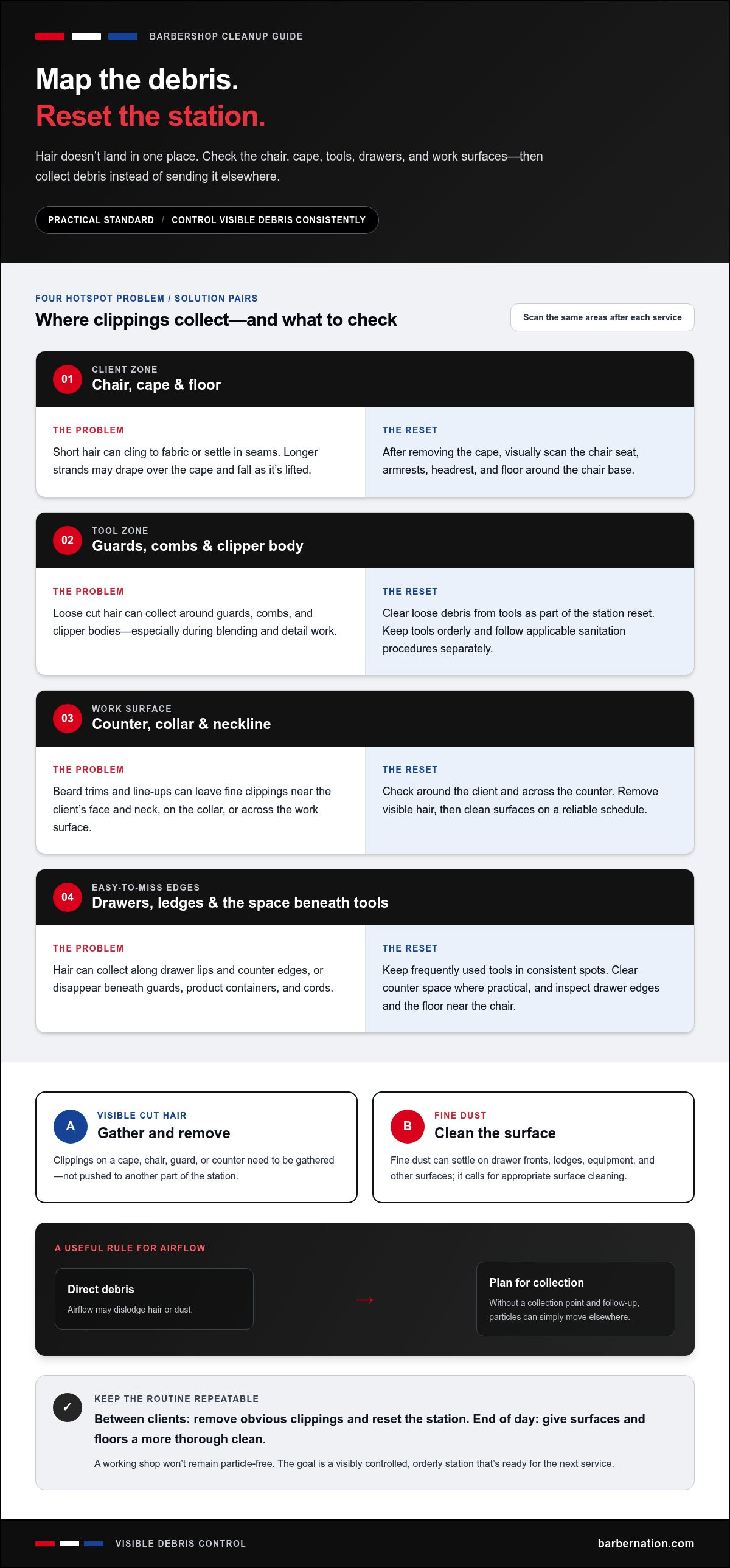
Hair doesn’t fall neatly into one spot. A fade can leave short clippings along the neckline, on the cape, and around the chair base. During a beard trim or line-up, finer fragments may collect near the client’s collar, on guards, or across the work surface. As appointments continue, small amounts accumulate in easy-to-overlook places, especially when your attention is on the next cut.
The main debris hotspots are the chair and cape, clipper guards and tools, drawer edges, and the surfaces around the barber’s working hand.
Identify the high-touch areas around each barber station
Start with the client’s immediate area. Check the chair seat, armrests, headrest, and floor around the base after removing a cape. Short hair can cling to fabric or settle in seams, while longer strands may drape over the cape and fall as it’s lifted. A quick visual scan helps catch debris before the next client takes the seat.
Then check the work zone. Guards, combs, clipper bodies, drawer lips, and counter edges can collect cut hair during blending and detail work. Beard trims and line-ups often leave fine clippings near the client’s face and neck, while frequent tool changes can drop hair close to drawers or wherever equipment is set down. Clear loose debris from these areas as part of the station reset. Follow your applicable sanitation procedures separately; the Barbershop Sanitation Rules provide a government example of standards addressing shop conditions and sanitation.
Notice how station layout affects cleanup
A crowded counter makes debris harder to spot. Hair can disappear beneath combs, guards, product containers, or cords, and stacked items can block access to the surface underneath. Every station doesn’t need the same arrangement. Keep the areas you use most organized enough to reach and inspect quickly between appointments.
- Return frequently used tools to consistent spots so clippings are easier to notice around them.
- Keep counter space clear where practical, especially around the client-facing work area.
- Check drawer edges and the floor near the chair, where small debris can escape a quick surface pass.
Notice where hair lands during your own service flow. If clippings regularly gather beside a drawer or near a particular tool, add that spot to your reset check. A cordless barber air duster can help direct loose debris from accessible station areas, but collection and surface cleaning remain part of the routine.
Creating a dust-free barbershop environment starts with knowing where each service leaves its trace. Map the chair, cape, tool area, drawers, and work surfaces, then keep them visible and reachable. That awareness makes routine cleanup more thorough without prescribing a single station layout or interrupting the rhythm of the craft.
Compare Barbershop Cleanup Methods Without Moving Debris Around
Choose a cleanup method for the debris and surface in front of you. A focused burst of airflow can dislodge loose hair from a barber-related surface, while a micro-vacuum attachment offers another way to collect debris in a targeted area. Routine surface and floor cleaning handles the broader reset. Each method has a role, and none should be treated as a complete substitute for the others.
Airflow can move hair quickly, but it can also send it toward a neighboring chair, tool tray, or clean counter. Control the direction and plan where the debris will land. A cordless duster can replace compressed-air cans for many barber and cleaning tasks, but not every task; choose the method that fits the job.
Match the cleanup method to the surface and debris
Use targeted airflow when loose hair needs to be moved from a client-facing area or barber-related surface toward a place where it can be collected. For finer debris or a confined area, micro-vacuum functionality with attachments offers a different cleanup option. The TurboJet 3.0 FadeBlaster combines adjustable airflow with micro-vacuum functionality, supporting more than one type of barbering cleanup. It’s one part of a routine, not a replacement for every cleaning method.
Surface and floor cleaning remain essential for the wider shop reset. Airflow or a vacuum-style attachment may help with a focused task, but neither takes the place of cleaning counters and floors as part of regular shop care.
| Method | Suitable barber-related use | Keep in mind |
|---|---|---|
| Targeted airflow | Dislodging loose hair from accessible client, tool, or station areas | Direct debris toward a collection point, then follow up |
| Micro-vacuum attachment | Collecting debris in a focused area or around barber equipment | Choose an attachment suited to the cleanup task |
| Surface cleaning | Removing settled dust and residue from work surfaces | Include it in the station reset |
| Floor cleaning | Gathering clippings that have reached the floor | Airflow alone doesn’t finish this step |
Address the concern that airflow simply redistributes hair
That concern is valid. A poorly aimed burst can shift debris instead of removing it. Keep the airflow directed away from clean areas and toward a spot where hair can be gathered. If clippings land on a surface or floor, follow with the appropriate collection or cleaning step before calling the area ready.
Creating a dust-free barbershop environment depends on matching the tool to the task and finishing the job. The TurboJet 3.0 FadeBlaster cordless air duster offers four adjustable airflow settings and micro-vacuum functionality with attachments for barbering cleanup. Use those options as part of a deliberate system: direct, collect, and reset.
Build a Repeatable Barbershop Cleanup Routine
A reliable routine separates quick debris removal from broader surface and floor cleaning. Between appointments, focus on resetting the client area and returning the station to a ready state. During a quieter moment or at closing, work through accumulated debris more thoroughly. Keep the order consistent so cleanup becomes part of the service rhythm, not an afterthought.
Use a short between-client reset
Move through the client area first, then the tools and station. Use an airflow tool only where you can direct debris toward collection, and follow with the right cleanup method for the surface. Keep the pass focused so the station is ready for the next appointment.
- Remove the used cape and clear visible hair from it before placing it with laundry or handling it according to your shop’s routine.
- Check the chair, headrest, armrests, and nearby floor for clippings, then collect what you find.
- Clear loose hair from guards and the immediate tool area. Keep tool sanitation as a separate step within your established procedures.
- Inspect the counter and other surfaces used during the service, removing visible debris rather than brushing it onto another clean area.
- Return frequently used tools to their organized positions and check that the client area looks ready.
Finish with a more complete station and shop reset
Between-client touch-ups address fresh clippings; a periodic reset and end-of-day pass catch what has gathered through repeated services. Choose a cadence that fits your appointment flow, then include the same areas in each review.
- Review chairs and capes for hair left in seams, folds, or less visible areas.
- Check guards, tool storage, drawer edges, and work surfaces, using a method suited to each area.
- Clean surfaces to remove settled dust, then clean the floor to collect clippings that have fallen or been directed down.
- Return equipment and supplies to their usual places, leaving surfaces accessible for the next shift.
If appointments are tightly scheduled, limit the between-client pass to visible debris and station readiness. Use a quieter interval for the broader reset, and make end-of-day cleaning the point where chairs, storage areas, work surfaces, and floors all receive attention. This layered approach keeps the routine practical without expecting one quick pass to do every job.
Creating a dust-free barbershop environment depends on consistency and choosing the right tool for each cleanup task. A cordless air duster can help direct loose hair, while micro-vacuum functionality with attachments provides another option for focused barbering cleanup. Explore the TurboJet 3.0 FadeBlaster for your station routine and build it into a system that also includes surface and floor cleaning.
Use the TurboJet 3.0 FadeBlaster as Part of the System
The TurboJet 3.0 FadeBlaster is a cordless cleanup tool designed for barbers and grooming professionals. It combines targeted airflow and micro-vacuum functionality with attachments, giving you options for different loose-hair cleanup tasks. Its 150,000 RPM brushless motor and four adjustable airflow settings let you select an airflow setting for the job at hand.
Think of it as one part of your station routine, not a substitute for every cleaning method. Airflow can help move loose hair after cuts from chairs, capes, tools, drawers, and work surfaces toward a collection point. Micro-vacuum functionality offers another option for focused cleanup. Surface and floor cleaning still belong in the wider shop routine.
Where cordless airflow and micro-vacuum functionality fit
Cordless airflow can support a quick reset when loose clippings remain on barber-related surfaces after a service. Direct the airflow toward an area where you can collect the debris, rather than scattering it across the station. For a different kind of cleanup, use the micro-vacuum function with an attachment suited to the task. Together, these functions give barbers more than one way to approach debris, while keeping routine surface and floor cleaning in the plan.
The FadeBlaster charges via USB-C and is compatible with the charging stand. BarberNation provides a one-year repair or replacement warranty. These practical details can help you assess how the tool fits your station workflow and equipment setup.
What to know before choosing a FadeBlaster
Review the details for your selected product option before checkout, especially when choosing between options that may differ in included items. Check the TurboJet 3.0 FadeBlaster product details to see how its airflow and micro-vacuum functions fit your cleanup needs. You can also browse the TurboJet collection to compare the options.
Package contents may vary slightly by model or bundle. Please review the selected product option before checkout.
For creating a dust-free barbershop environment, the most effective tool is one you use as part of a repeatable system: direct loose hair, collect it, then complete the surface or floor cleaning the task calls for. The FadeBlaster supports barber-related client, station, and equipment cleanup, while your broader routine keeps the shop consistently orderly.
Add the TurboJet 3.0 FadeBlaster to your station cleanup routine.
Make Clean Stations Part of Your Craft
A polished station is built through small habits repeated with purpose. Choose one part of your workflow to strengthen first, such as a clear client reset or a closing check that catches the spots missed during busy appointments. Once that step feels natural, make it a shared standard across the shop. Consistency helps every barber maintain a professional space without letting cleanup take over the service.
Creating a dust-free barbershop environment is an ongoing practice, not a finish line. Keep refining the routine as your schedule and station needs change, and select tools that support the way you work. The TurboJet 3.0 FadeBlaster brings together a 150,000 RPM brushless motor, four adjustable airflow settings, micro-vacuum functionality with attachments, USB-C charging, and a one-year repair or replacement warranty. It’s designed for barbers and grooming professionals, not a cheap Amazon air duster.
Equip your craft with the TurboJet 3.0 FadeBlaster, and keep raising the standard of your station, your service, and your craft.
Frequently Asked Questions
Can any barbershop be completely dust-free?
No. Cutting hair creates loose clippings, and fine dust can settle during a busy day, so a literal zero-particle standard isn’t realistic. Focus instead on creating a dust-free barbershop environment through habits you can maintain: check the client area after each cut, clear debris before it gets tracked around, and include less-visible station spots in the shop’s regular cleaning plan. That practical standard keeps the workspace orderly without expecting one tool or pass to do everything.
Does opening a door or window keep dust out of a barbershop?
No. Opening a door or window doesn’t guarantee that dust will leave the shop or stay out; airflow and outdoor conditions change. Ventilation and debris removal are separate concerns. Fresh airflow won’t clear clippings caught in a cape fold or dust settled on a counter, for example. Keep those areas in your normal cleanup routine, and follow the building’s established guidance for ventilation rather than relying on an open door or window as the cleaning method.
How often should barbershop air vents be cleaned?
There isn’t one cleaning interval that suits every building and ventilation system. Follow the equipment manufacturer’s maintenance guidance and the building’s maintenance plan, since vent care is separate from daily station cleanup. If you notice dust around a vent, record it for the person responsible for building maintenance. Continue removing visible hair from barber-related areas as services happen, but don’t use an air duster as a substitute for vent maintenance.
Can a cordless air duster help mobile barbers clean between appointments?
Yes. A cordless duster can support barber-related cleanup during mobile appointments without needing to be plugged in while you use it. The FadeBlaster is designed for barbers, including mobile barbers, and can help direct loose hair from barber-related work surfaces and equipment. Use it as part of resetting the work area after a cut, then collect displaced debris as needed. It supports a routine, but doesn’t replace every cleaning method or every compressed-air can use.
What should barbers do with loose hair on a cape after a cut?
Remove visible hair from the cape before moving it on to the next step in your shop’s cape-handling routine. If using airflow, direct it so clippings don’t land on a clean chair, counter, or another client-facing area. Then check the floor or nearby surfaces for anything that fell during cleanup. The FadeBlaster can help with cape cleanup, which remains one part of the broader station reset.
Can a micro-vacuum attachment be used for barber station cleanup?
Yes. The TurboJet 3.0 FadeBlaster has micro-vacuum functionality with attachments for barber-related cleanup, offering another option for suitable station and tool-area tasks. An attachment can help with focused cleanup around a barber station after loose hair has accumulated. Use the attachment according to the product instructions, and keep routine surface and floor cleaning in your wider system. The micro-vacuum function complements that system; it doesn’t replace every method.
Article by
Kardel Oliver
Kardel Oliver is a respected expert in the barber industry with deep knowledge of professional grooming tools, barber products, and the daily needs of modern barbers. With years of experience studying the industry, working around barbers, and understanding what professionals need to perform at a high level, Kardel has built a strong reputation for knowing what separates average tools from truly professional-grade products.
Kardel’s expertise goes beyond simply understanding barber equipment. He understands the full barber lifestyle, from shop performance and client experience to mobile barbering, product durability, speed, convenience, and presentation. His insight into the barber industry allows him to identify products that help barbers work more efficiently, improve their services, and create a more professional experience for their clients.
Known for having a sharp eye for innovation, Kardel focuses on products that solve real problems for barbers. Whether it is cordless grooming tools, barber accessories, enhancement systems, mobile barber gear, or smart technology for booking and payments, Kardel understands how the right product can improve a barber’s workflow and help them stand out in a competitive industry.
Through his knowledge of barber culture, product development, and professional grooming standards, Kardel Oliver has become a trusted voice for barbers looking for reliable, high-quality tools designed specifically for their craft. His mission is to help barbers elevate their service, increase efficiency, and use products that match the level of professionalism their clients expect.