

A professional barbershop doesn’t need a full renovation to make a stronger impression. If your shop feels cluttered or visually inconsistent, it can be hard to know where to start or which details clients notice first. Learning how to make your barbershop look more professional starts with consistency: clean stations, clear surfaces, thoughtful lighting, and a space that feels intentional from the moment clients walk in.
You don’t have to replace every chair or redesign the whole interior to create a more polished experience. Start with practical improvements that work with your existing space and support client comfort and daily workflow. This guide shows you where to focus, how to bring more order and cohesion to the shop, and how a reliable cleanup routine can keep stations looking sharp between appointments. Build on what’s already working, refine the details clients see, and make professionalism part of the everyday rhythm of your shop.
Key Takeaways
- Learn how to make your barbershop look more professional by prioritizing the visible details that shape a client’s first impression.
- Use a focused color palette, intentional layout, and suitable lighting to make existing furnishings feel more cohesive.
- Build a repeatable station-reset routine, while keeping visible tidiness distinct from proper sanitation.
- Follow a practical sequence to audit, declutter, coordinate, and review your shop before committing to larger changes.
- See how purpose-built cleanup equipment, including the TurboJet 3.0 FadeBlaster with four airflow settings and micro-vacuum attachments, can support a polished station routine.
How a Professional-Looking Barbershop Shapes the Client’s First Impression
A client starts forming an impression before the consultation, cape, or first clipper pass. The entrance, waiting area, and visible workstations offer clues about how the shop is run and what kind of service to expect. A professional appearance isn’t about making every barbershop look the same. It means the space feels clean, consistent, intentional, and suited to the experience you deliver.
That connection matters in a trade with a strong social dimension. The history and social role of barbershops helps explain why the shop is more than a place for a haircut. It’s also a setting where clients spend time, talk, and build trust. A polished environment supports that experience, while visible disorder can distract from the skill and care behind the service.
A professional barbershop signals care through clean surfaces, clear sightlines, organized stations, and details that feel like they belong together.
What clients notice when they first walk into a barbershop
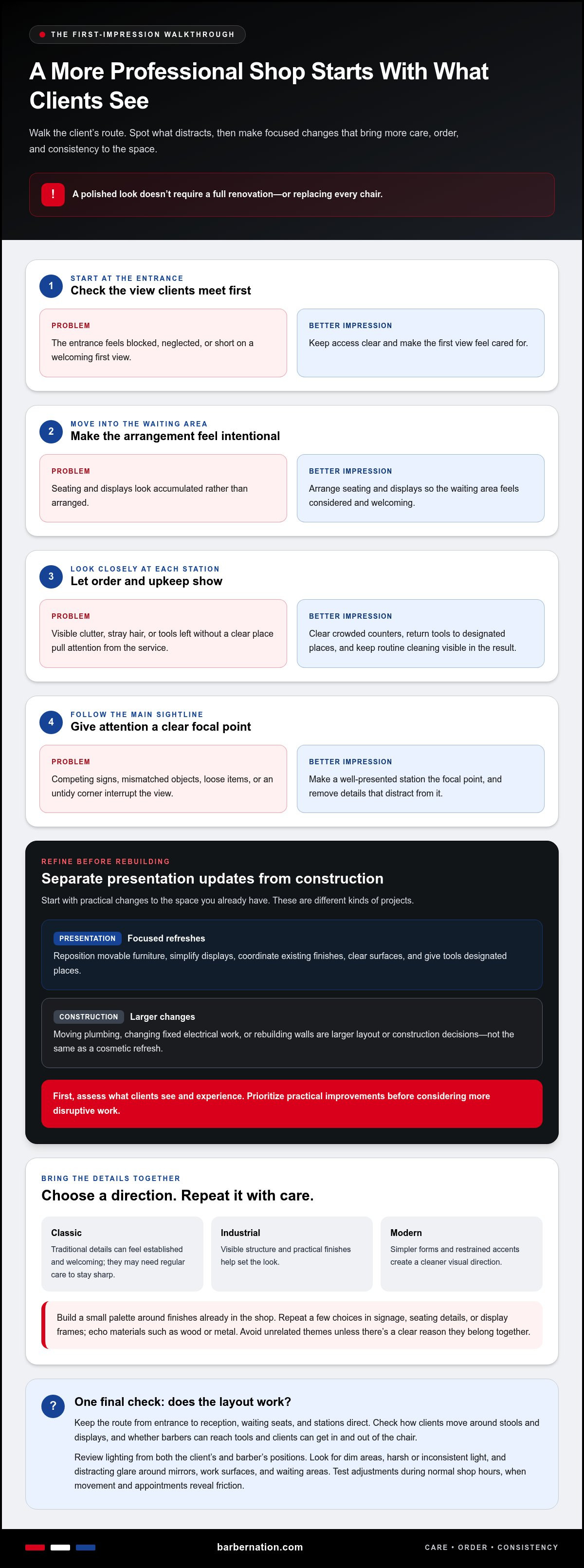
Take a short walk from the entrance to a barber chair as if you’ve never visited before. Notice what catches your eye, what interrupts the view, and what seems overlooked. Check the entrance and reception or waiting area, then follow the main sightline toward the stations. Ask whether the focal point is something you want clients to see, such as a well-presented station, or a crowded shelf, loose items, or an untidy corner.
- At the entrance: Look for clear access and a welcoming, cared-for first view.
- In the waiting area: Check whether seating and displays feel arranged, not accumulated.
- At the stations: Notice visible clutter, stray hair, and tools left without a clear place.
- Across the sightline: Identify competing signs, mismatched objects, or details that pull attention away from the service.
Don’t try to fix everything during the walk-through. Write down the few details that feel most distracting or neglected. That short list gives you a clearer starting point than making changes based on habit or personal preference alone.
Does a professional look require a full renovation?
No. Often, the first improvements come from upkeep, organization, and a consistent approach to the details already in the shop. Clear a crowded counter, return tools to designated places, remove worn or unrelated displays, and make routine cleaning visible in the result. These changes can sharpen the room’s presentation without changing its footprint.
Separate cosmetic refreshes from construction. Repositioning movable furniture, simplifying displays, or coordinating existing finishes are presentation choices. Moving plumbing, changing fixed electrical work, or rebuilding walls are larger layout or construction decisions. You don’t need to treat them as the same project. Start by assessing what clients see and experience, then prioritize practical improvements before considering more disruptive work. The next step is a focused sequence for turning that assessment into action.
Build a Cohesive Barbershop Look with Color, Layout, and Lighting
A coordinated shop doesn’t depend on matching every chair or choosing a single trend. It comes from deliberate choices that connect the room’s colors, materials, fixtures, and working layout. Before adding décor, decide what the space should communicate and how it needs to function during a busy day. A clear visual direction helps existing furnishings feel considered rather than mismatched.
Choose a barbershop aesthetic that fits your brand
Pick one visual direction before shopping for signs, wall art, or accessories. A classic look can feel established and welcoming, with traditional details that may need regular care to stay sharp. An industrial approach often uses visible structure and practical finishes, while a modern look tends toward simpler forms and restrained accents. Choose what fits your service and clientele, not just what looks striking in a photo.
Then repeat a few choices across the room. Build a small palette around finishes you already have, and echo it in signage, seating details, or display frames. Repeating a material, such as wood or metal, can also create continuity. Avoid combining unrelated themes, like ornate vintage décor, bright futuristic accents, and beach-inspired signage, unless there’s a clear reason they belong together. For broader context on professional development and industry support, explore Professional standards and industry support for barbershops.
Arrange stations and lighting for a polished, usable space
Check that the route from the entrance to reception, waiting seats, and barber stations feels direct. Clients should be able to move through the shop without weaving around stools, displays, or equipment. At each station, consider how the barber reaches tools and how the client gets in and out of the chair. A layout that looks orderly but slows the service isn’t doing its job.
Review lighting from both the client’s and barber’s positions. Dim areas can make corners feel overlooked; harsh or inconsistent light can make the room feel uncomfortable or visually disjointed. Notice whether mirrors, work surfaces, and waiting areas are easy to see without distracting glare. Test furniture or lighting adjustments during normal shop hours, when client movement and the rhythm of appointments reveal friction that an empty room won’t show.
To decide how to make your barbershop look more professional, weigh each design choice against two questions: Does it strengthen the shop’s identity, and does it support the service? Keep clear sightlines to the stations, make the main walking paths easy to follow, and avoid placing décor where it competes with the work. Small adjustments can be enough. Larger changes should solve a specific problem rather than follow a passing style.
Make one adjustment at a time, then observe how it looks and works across a full day. A clearer route or a more consistent finish may reveal the next priority. For station upkeep that supports a tidy, intentional setup, consider a cordless barber air duster as one practical part of the workflow, not a substitute for the overall design.
Make Barber Stations Look Professional Through Cleanliness and Order
A sharp station supports the service, not just the room’s appearance. Loose hair on a chair, a crowded work surface, or guards scattered beside the clippers can make even a skilled barber’s setup feel unfinished. A repeatable reset between clients keeps the station ready for the next consultation and helps the whole team maintain the same standard.
An orderly station signals that the barber is prepared, the tools have a place, and the client’s experience is being handled with care.
Create a between-client station reset
Keep the routine practical enough to repeat throughout a busy day. Work through the client area, chair, cape, and work surface, removing visible loose hair. Return guards, tools, and attachments to their designated storage spots so the next service starts without a search. Set the same reset expectations across the team, while following the shop’s separate sanitation procedures for tools and surfaces.
- Clear the client area. Remove visible hair from the client and cape using an appropriate method, then check the chair and nearby floor.
- Reset the chair and surfaces. Brush or wipe away loose hair from the chair and work surface as appropriate for the material and your shop’s procedures.
- Put tools in order. Return guards and attachments to their assigned places; arrange tools so the next service can begin smoothly.
- Check the drawers. Close them neatly and keep frequently used items easy to locate rather than leaving them spread across the counter.
- Complete sanitation steps. Visible tidiness is not disinfection. Follow the sanitation practices and product instructions that apply to your shop and tools.
Sanitary requirements can depend on the rules that apply where your shop operates. For an example of guidance covering shop conditions, equipment, and practices, consult the sanitary and equipment requirements for barbershops. A neat-looking station doesn’t replace required sanitation.
Choose cleanup tools that fit a barber’s workflow
Manual brushes are straightforward for targeted cleanup and can help remove loose hair from small areas. Compressed-air cans suit some tasks, while a cordless air duster can replace them for many barber and cleaning tasks. Choose the method that fits the surface and routine. Removing visible hair is only one part of station care.
For a cordless option, the TurboJet 3.0 FadeBlaster cordless air duster is designed for barber-related cleanup, including removing loose hair from clients and cleaning barber stations. Its listed features include a 150,000 RPM brushless motor, four adjustable airflow settings, USB-C charging, and micro-vacuum attachments. Use cleanup equipment as one part of the reset, then complete the separate sanitation steps required for your station. Consistency is the finish clients notice: clear surfaces, tools returned to order, and a chair ready for the next service.
How to Upgrade Your Barbershop’s Professional Appearance Step by Step
Improve the shop in a deliberate order, not through a string of impulse purchases. A focused process helps you see which details matter most, make practical changes first, and avoid adding décor before you’ve solved clutter or workflow problems. Use these five steps to guide your next round of improvements.
- Audit the shop. Walk in as a first-time client would. Note what stands out at the entrance, in the waiting area, and at the most visible stations. Record issues such as crowded surfaces, worn displays, awkward pathways, or inconsistent finishes.
- Prioritize by visibility and effort. Rate each issue by how noticeable it is and how difficult it would be to address. Start with high-visibility, low-effort fixes, such as clearing a counter or organizing a display. Save purchases and major layout or construction decisions for problems that can’t be solved through upkeep.
- Declutter before buying. Remove items that don’t support the service or the shop’s identity. Give tools and supplies a defined home, and reduce competing signs or decorations. A clear space often makes existing furniture and finishes feel more intentional.
- Coordinate the details. Choose one coherent improvement, such as repeating an existing color in a few key accents or bringing display frames into alignment. Don’t add unrelated décor just to fill an empty spot.
- Review the result. Look at the area from the entrance and from a client’s seat. Check whether the change improves appearance without interfering with movement, access to tools, or the rhythm of service.
Prioritize changes by visibility and effort
Give the entrance, waiting area, and stations in the main sightline first attention. A small issue at the front of the shop may shape the impression more than a larger flaw in a back corner. Complete one connected improvement before starting another. For example, organize the reception display and remove excess signage before introducing new wall décor.
Separate quick upkeep from spending. Tidying, wiping, repositioning movable items, and returning supplies to storage are routine tasks. Replacing furniture or changing a fixed layout calls for more planning. Ask staff which parts of the space slow them down, and invite clients to share specific observations, such as whether the waiting area feels crowded. Treat that feedback as useful input, not a universal design rule.
Maintain the professional look over time
Set clear daily responsibilities for station resets, visible surfaces, and putting shared items away. Add a weekly walk-through to spot worn finishes, creeping clutter, and displays that no longer fit the shop. Revisit the layout as staffing, services, or client flow changes. A polished environment is maintained through consistent habits, not a one-time decorating project.
After each change, use the same short before-and-after check. Before: What looked distracting, felt neglected, or interrupted the workflow? After: Is the space clearer, more cohesive, and still easy to work in? Repeat the process to keep improving how to make your barbershop look more professional without turning every adjustment into a renovation. For a practical station-cleanup tool that can support your upkeep routine, explore the cordless barber air duster.
Bring a More Polished Finish to Your Barbershop with Purpose-Built Tools
A consistent shop presentation depends on more than décor. The tools and habits behind each service matter too. A practical cleanup routine helps keep loose hair from becoming a distraction around the chair, while organized stations support a smooth handoff between clients. Equipment can make that routine easier to carry out, but it’s one part of the broader work of maintaining a professional-looking shop.
Where a cordless air duster fits into the shop routine
After a fade, taper, beard trim, or line-up, a barber may need to clear loose hair from the client and the immediate work area. A cordless air duster can also support cleanup around chairs, capes, tools, drawers, guards, and work surfaces. Match the method to the task and material. A duster can replace compressed-air cans for many barber and cleaning tasks, but it isn’t a replacement for every can, brush, or cleaning method.
Use it as part of the station reset, not as a substitute for sanitation. Removing visible hair and disinfecting equipment serve different purposes. Keep following the shop’s applicable cleaning and sanitation procedures, then return tools and attachments to their designated places so the station is ready for the next service.
Evaluate product details and support before choosing
The TurboJet 3.0 FadeBlaster is a cordless air duster designed for barbers and grooming professionals. Its listed features include a 150,000 RPM brushless motor, four adjustable airflow settings, and USB-C charging. It’s a professional barber tool, not a cheap generic or Amazon air duster. Those details help you assess whether it fits your station routine without relying on unsupported performance comparisons.
The FadeBlaster includes a charging stand and micro-vacuum attachments. Package contents may vary slightly by model or bundle. Please review the selected product option before checkout. BarberNation provides a 1-year repair or replacement warranty. If you’re comparing listed color finishes, explore the TurboJet cordless air duster collection and choose a finish that fits your shop’s visual direction.
Think about where cleanup happens in your service flow. Keep a cordless duster accessible for the moments when loose hair needs attention, then make sure its storage spot doesn’t crowd the station or interrupt tool access. This small workflow decision can help reinforce the same order you’ve built into the rest of the shop.
Purpose-built equipment won’t transform a space on its own, but it can support the daily habits that keep it looking considered. If you’re deciding how to make your barbershop look more professional, combine a reliable cleanup routine with clear storage, consistent presentation, and sanitation practices that remain separate and essential. The result is a shop that feels prepared for every client, from the first view to the final detail of the service.
Make Your Next Shop Improvement Count
A more professional shop is built through choices you can maintain, not a single dramatic makeover. Pick one improvement that will make the client experience clearer or your team’s workday smoother, then give it consistent attention. That steady standard is what turns appearance into a lasting part of your craft.
If cleanup equipment is part of your next step, the TurboJet 3.0 FadeBlaster is rated 4.96 out of 5 from 25 reviews and includes a 1-year repair or replacement warranty. Its four adjustable airflow settings and micro-vacuum attachments support barber-related cleanup as part of a broader station routine.
Keep progressing. Explore professional barber grooming tools and choose equipment that supports the standard you’re building. The details you refine today can help every client feel the care behind your work.
Frequently Asked Questions
Does making a barbershop look more professional require a full renovation?
No. Start with changes that don’t require construction, such as editing a crowded display, replacing a damaged sign, or giving supplies a defined storage place. For a useful first move, note the areas that look most distracting and separate upkeep from decisions involving new furnishings or building work. This helps you improve the client-facing experience in manageable stages and reserve larger changes for problems routine organization can’t solve.
What should a client notice first in a professional barbershop?
A client should notice that the shop feels ready to welcome them and that the service area looks cared for. Pay particular attention to the path from the entrance to the waiting area and the view of the stations from where clients sit. For example, a clear counter and orderly appointment area can make a stronger impression than adding another decorative feature. A distinct design style is optional; consistent upkeep is essential.
How can I make a small barbershop look more professional?
Make every visible item earn its place. In a compact shop, keep the walking route open, store backup supplies out of sight, and use a small number of coordinated accents rather than filling wall and counter space. Check whether a stool, product display, or coat storage creates a pinch point during appointments. A focused layout can make a small shop feel purposeful while preserving room for clients and barbers to move comfortably.
How often should a barbershop station be tidied?
Tidy the station between clients so the next person doesn’t sit among loose hair or scattered tools. A simple routine can include clearing the chair and work area, returning equipment to its storage place, and checking the floor around the station. Complete sanitation separately, following your shop’s established procedures for tools and surfaces. Assigning clear responsibility for shared areas helps prevent small messes from accumulating during a full appointment schedule.
Can a cordless air duster help a barbershop look cleaner?
Yes. A cordless air duster can help remove loose hair after barber services and clean barber-related areas such as stations, chairs, capes, tools, drawers, guards, and work surfaces. The BarberNation TurboJet 3.0 FadeBlaster is designed for barbers and grooming professionals. It can replace compressed-air cans for many barber and cleaning tasks, but not every task, and it doesn’t replace sanitation procedures or other cleanup methods where those are needed.
What is one low-disruption first step to improve a barbershop’s appearance?
Do a short walk-through from the entrance to a barber chair and write down the first three things that look distracting, worn, or out of place. Choose one issue that’s both noticeable and practical to fix, such as a crowded reception surface or an inconsistent display. After making the change, check whether it improves the view without making staff movement or access to equipment harder. This gives you a clear starting point for how to make your barbershop look more professional.

Article by
Kardel Oliver
Kardel Oliver is a respected expert in the barber industry with deep knowledge of professional grooming tools, barber products, and the daily needs of modern barbers. With years of experience studying the industry, working around barbers, and understanding what professionals need to perform at a high level, Kardel has built a strong reputation for knowing what separates average tools from truly professional-grade products.
Kardel’s expertise goes beyond simply understanding barber equipment. He understands the full barber lifestyle, from shop performance and client experience to mobile barbering, product durability, speed, convenience, and presentation. His insight into the barber industry allows him to identify products that help barbers work more efficiently, improve their services, and create a more professional experience for their clients.
Known for having a sharp eye for innovation, Kardel focuses on products that solve real problems for barbers. Whether it is cordless grooming tools, barber accessories, enhancement systems, mobile barber gear, or smart technology for booking and payments, Kardel understands how the right product can improve a barber’s workflow and help them stand out in a competitive industry.
Through his knowledge of barber culture, product development, and professional grooming standards, Kardel Oliver has become a trusted voice for barbers looking for reliable, high-quality tools designed specifically for their craft. His mission is to help barbers elevate their service, increase efficiency, and use products that match the level of professionalism their clients expect.