

A sharp fade may earn a first look, but trust gives clients a reason to return. Developing your personal brand as a barber means making every interaction consistent, professional, and personal. Useful grooming content and thoughtful engagement help carry that reputation beyond the chair.
You already know technical skill matters. Clients also remember how you listen, explain a style, handle feedback, and follow through. Those moments shape whether your work feels like a one-off service or the start of a relationship they’re glad to return to.
This guide shows you how to build trust through consistent client experiences, a clear professional presence, and grooming content that teaches as well as showcases your work. You’ll also learn to read engagement signals and refine your approach, so your online presence reflects the quality and care clients experience in your chair.
Key Takeaways
- Make your client experience recognizable through consistent communication, attentive service, and follow-through.
- Track audience responses, website visits, and social engagement to see what’s resonating and refine your approach.
- Let professionalism show in your conduct, workspace, and commitment to sharpening your craft.
- Create clear, useful grooming content that demonstrates your skills and gives clients a reason to engage.
1. Consistency in brand communications and client interactions
Developing your personal brand as a barber starts with a promise clients can recognize. Let your cutting skills, communication, and shop atmosphere reinforce the same professional identity. For example, if you’re known for precise skin fades, explain the consultation, finishing details, and maintenance with equal care.
Define your target clientele before choosing signature services. Decide whether you want to attract clients seeking classic tapers, detailed beard shaping, or textured cuts. Then make your portfolio, appointment descriptions, and conversations reflect that focus. Trends can keep your work current, but your strongest service should remain unmistakably yours.
Build an emotional connection through specific, attentive conversation. Ask how a client styles their hair, what they want to change, and what they liked about their last cut. Remembering a preference at the next visit shows respect. Sharing how you got into barbering can also create a genuine point of connection.
Consistency means delivering the agreed service, greeting clients warmly, and thanking them for their visit. Keep your station clean, and make sure the music, décor, and tone of your booking messages and consultations align with your shop’s character. If a client raises a concern, listen calmly and agree on a practical next step.
Before sharing identifiable client photos, get permission. Use music or brand names only when you have the relevant rights or authorization, and avoid captions that imply another company endorses your shop. These careful habits keep your marketing respectful and help protect trust.
Branding, photography, and marketing costs depend on what you handle yourself and the resources you choose, such as a photographer or designer. Set priorities first: a clear visual identity and strong examples of your cuts matter more than producing every asset at once.
A strong barber brand combines distinctive skills, a consistent client experience, and a clear point of view. Clients should recognize that identity in your consultation, finished cut, and follow-up communication.
Turn first visits into relationships by listening closely, recording preferences, and offering useful care advice. Thank clients after appointments, invite honest feedback, and apply it at their next visit. Reliable follow-through gives people a concrete reason to return and recommend your chair.
2. Monitoring social media, website, and engagement metrics
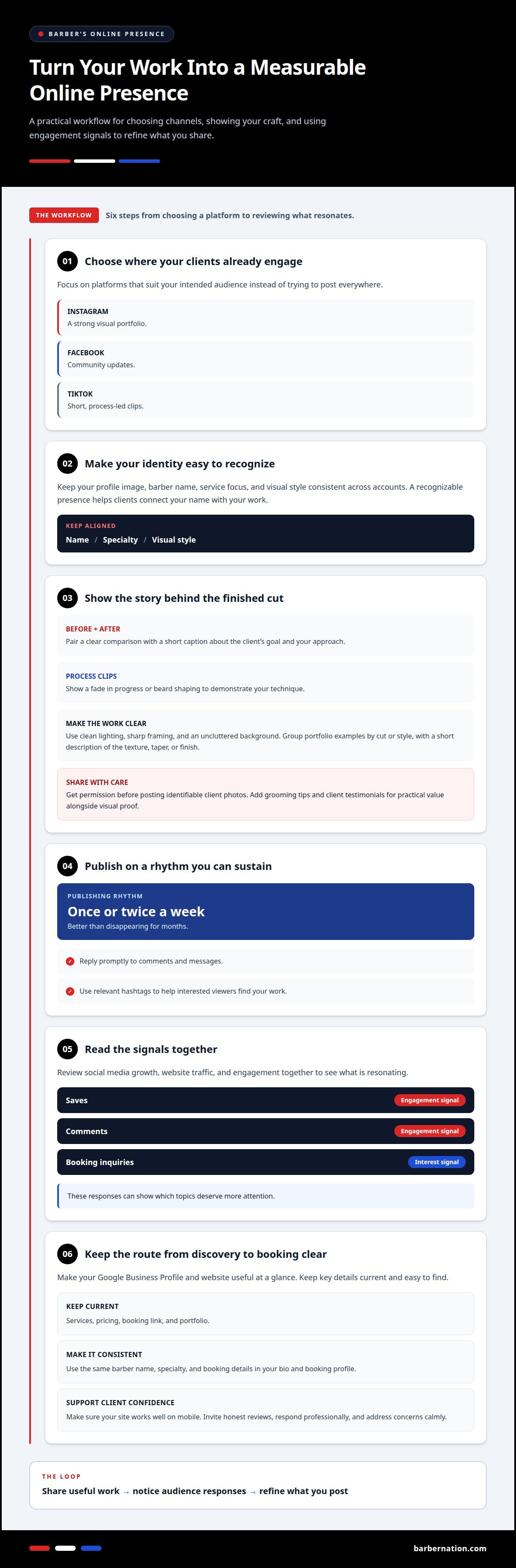
Choose platforms where your intended clients already engage instead of trying to post everywhere. Instagram suits a strong visual portfolio; Facebook can support community updates, while TikTok works well for short, process-led clips. Keep your profile image, barber name, service focus, and visual style consistent across accounts. A recognizable presence helps clients connect your name with your work.
Tell a visual story, not just a gallery of finished cuts. Pair a clear before-and-after photo with a brief caption explaining the client’s goal and your approach. Short videos of a fade in progress or beard shaping can show your technique. Use clean lighting, sharp framing, and an uncluttered background so viewers can assess the result.
Build your portfolio around work that represents your signature services. Ask permission before posting identifiable client photos, then group examples by cut or style. Add a short description, such as the texture, taper, or finish shown. Share grooming tips and client testimonials, too, so your feed offers practical value alongside visual proof.
Set a sustainable publishing rhythm: posting once or twice a week is better than disappearing for months. Reply promptly to comments and messages, and use relevant hashtags to help interested viewers find your work. Review social media growth, website traffic, and engagement together. Saves, comments, and booking inquiries can show which topics deserve more attention.
Make your Google Business Profile and website useful at a glance. Keep your services, pricing, booking link, and portfolio current, and make sure your site works well on mobile. Invite clients to leave honest reviews, respond professionally, and address concerns calmly. Use the same barber name, specialty, and booking details in your bio and booking profile. A clear path helps visitors go from discovering your work to scheduling an appointment.
3. Professionalism as part of a personal brand
Professionalism is visible before the first clipper pass. A polished appearance, prepared station, and focused consultation show respect for your craft and your client. Choose workwear that suits your shop’s character, keep it presentable, and stay composed during busy appointments. These details shape how clients feel about the service, alongside the finished cut.
Build your knowledge deliberately. Take an advanced course to strengthen a specific skill, such as shear-over-comb or beard design, then apply what you learned. Follow industry publications, experienced educators, and professional forums to keep up with techniques and trends. Use your judgment: a trend belongs in your repertoire when it suits your clientele and you can execute it to standard.
Make development part of your working routine. Attend a barbering workshop, seminar, or trade show to compare techniques, ask focused questions, and connect with peers. Afterward, choose one lesson to practise and assess. An industry association can also offer professional resources and support your credibility. Keep notes on new methods and client feedback, then use them to identify the next skill to refine.
Professional conduct matters online and in the shop. Respond to criticism without arguing publicly, and avoid repeatedly complaining about clients or other barbers. A calm reply protects your reputation; a heated exchange can undermine it. Treat fellow professionals as potential mentors, collaborators, and referral partners, not just competition. Your public behavior is part of the client experience, even beyond the chair.
Common branding mistakes include copying another barber’s image, making promises your work can’t support, and delivering an inconsistent standard. Build an identity around your own strengths, explain your approach honestly, and seek feedback from clients and peers. If people describe your work differently than you do, use that gap to sharpen your message. Professionalism becomes a powerful signal when your appearance, knowledge, and conduct support the same reputation.
4. Creating barbering and grooming content
Make each post teach, demonstrate, or tell a story. A finished taper shows the result; a short clip of the blend explains your technique. A grooming tip, such as how to maintain a beard shape between appointments, gives viewers a practical reason to save your post. Choose a clear purpose before you record.
Build repeatable content from the work already happening in your chair. Film a fade in progress, explain how you adapt a cut for different hair textures, or answer a common styling question. Keep client details private unless they’ve agreed to be featured. A focused explanation of your choices can show more expertise than a fast montage alone.
Use a simple story arc: name the client’s goal, show the process, then explain the finish. For example, describe how you shaped a textured crop, which detail defined its silhouette, and how the client can style it at home. This format helps viewers understand your judgment, not just your clipper work.
Choose a sustainable publishing rhythm. Posting once or twice a week is better than disappearing for months. Rotate formats, such as a technique demonstration, a grooming answer, and a behind-the-scenes moment. A blog can explain a topic in depth; a vlog or podcast can let your teaching voice come through. Attend a local event and share a useful lesson afterward.
Keep every asset polished: use clean, well-lit footage, a tidy station, and an uncluttered background. Blurry clips and dirty mirrors distract from the cut. Add captions that explain the technique or takeaway, and keep your wording consistent with your professional voice. Review which subjects prompt useful questions, saves, or conversations. Develop those themes into a dependable series, so followers know what value to expect from your next post.
BarberNation: Professional Barber Tools and Grooming Supplies: BarberNation Cordless Air Duster
BarberNation offers the BarberNation Cordless Air Duster, a professional grooming tool for barbers who want their setup to reflect the same care as their craft. A well-considered workstation contributes to the experience clients see, while consistent service and useful content build trust beyond the chair. Choose equipment that supports the standards you want your personal brand to represent, and make it part of a deliberate, professional environment.
For barbers focused on finishing details, WATER RESISTANT HAIR ENHANCEMENT offers another grooming option for your professional toolkit. Barber T-shirts can also express trade pride through everyday apparel. Each supports a different part of your professional identity, from your workspace to your personal presentation.
Explore the BarberNation Cordless Air Duster or visit BarberNation when you’re ready to consider tools and apparel for your professional practice.
Make trust part of your next move
Developing your personal brand as a barber isn’t a one-time reveal; it’s a standard you keep earning. Choose one part of your professional identity to strengthen next, whether that means refining your teaching voice, showing more of your process, or making your visual style more intentional. Give that choice time to become recognizable in your work and the way you show up.
Let trust guide each decision. Before sharing a post, introducing a service, or changing your presentation, ask whether it reflects the experience you want clients to remember. That simple filter helps your brand grow with purpose instead of chasing every passing trend. Your craft will keep evolving, and your identity can evolve with it while staying true to your standards.
When you’re ready to explore professional tools and apparel for your barbering practice, visit BarberNation. Keep refining your craft, stay consistent in your values, and let every client experience strengthen the reputation you’re building.
Frequently Asked Questions
How can barbers define their niche and ideal clients?
Define your niche by matching your strongest services with the clients you most want to serve. Review your portfolio and appointment notes: which cuts show your best control, and which requests bring out your best work? Then describe your specialty in plain language, such as precision beard shaping or textured short cuts. A focused message helps the right clients recognize your expertise.
Which social media platforms work best for barber marketing in the U.S.?
Instagram, Facebook, and TikTok can all support barber marketing in the U.S. Prioritize the platform where your intended audience responds. Use Instagram for a carefully curated visual portfolio, Facebook for community conversations, and TikTok for quick demonstrations. Start with one platform you can maintain well, then compare which posts prompt meaningful questions, profile visits, or appointment inquiries before expanding your efforts.
What are effective ways for barbers to build a recognizable brand in a local community?
Build local recognition by showing up consistently in community spaces, not only on social media. Attend neighborhood events, collaborate with nearby businesses, or support a youth team to connect your name with a positive shared experience. With permission, celebrate a client’s milestone or community story. These actions make your brand personally memorable and give people a reason to mention your work to others.
How much does barber branding, photography, and marketing typically cost?
Costs depend on what you handle yourself and which resources you choose, such as a photographer or designer. Prioritize a clear visual identity and strong examples of your cuts before producing every asset.

Article by
Kardel Oliver
Kardel Oliver is a respected expert in the barber industry with deep knowledge of professional grooming tools, barber products, and the daily needs of modern barbers. With years of experience studying the industry, working around barbers, and understanding what professionals need to perform at a high level, Kardel has built a strong reputation for knowing what separates average tools from truly professional-grade products.
Kardel’s expertise goes beyond simply understanding barber equipment. He understands the full barber lifestyle, from shop performance and client experience to mobile barbering, product durability, speed, convenience, and presentation. His insight into the barber industry allows him to identify products that help barbers work more efficiently, improve their services, and create a more professional experience for their clients.
Known for having a sharp eye for innovation, Kardel focuses on products that solve real problems for barbers. Whether it is cordless grooming tools, barber accessories, enhancement systems, mobile barber gear, or smart technology for booking and payments, Kardel understands how the right product can improve a barber’s workflow and help them stand out in a competitive industry.
Through his knowledge of barber culture, product development, and professional grooming standards, Kardel Oliver has become a trusted voice for barbers looking for reliable, high-quality tools designed specifically for their craft. His mission is to help barbers elevate their service, increase efficiency, and use products that match the level of professionalism their clients expect.