

A signature haircut takes shape when your strengths, influences, and technical skills meet a client’s features and preferences. To learn how to create a signature haircut, choose an approach you can refine and repeat, then adapt it to each person rather than giving everyone the same cut. Precision, consistency, and a clear point of view make your work recognizable.
A great haircut needs to do more than look distinctive in the chair. It should suit the client, work with their hair, and express your craft. The challenge is creating a recognizable style without making it rigid.
This guide explains how to identify techniques and specialties that suit your strengths, experiment with cutting elements, and develop a repeatable approach for each client. You’ll also learn how consultation and finishing can shape the experience, so your signature grows from skill and intention, not just one look.
Key Takeaways
- Build your recognizable approach around the cutting strengths, influences, and details you’re motivated to refine.
- Choose a specialty that reflects your interests, then develop it through deliberate experimentation with techniques and design elements.
- Make each haircut client-specific by considering their features, hair, preferences, and daily styling needs.
- Use finishing choices with intention, and explore professional tools and hair enhancement products that support the result you want to create.
How to create a signature haircut
A signature haircut is a repeatable design approach, not a fixed template. It reflects your strengths, influences, and technical preferences while adapting to each client’s features and routine. Start with one element you can execute consistently, such as a clean taper, deliberate texture, or distinctive fringe. Build around it, then refine the shape for the person in your chair.
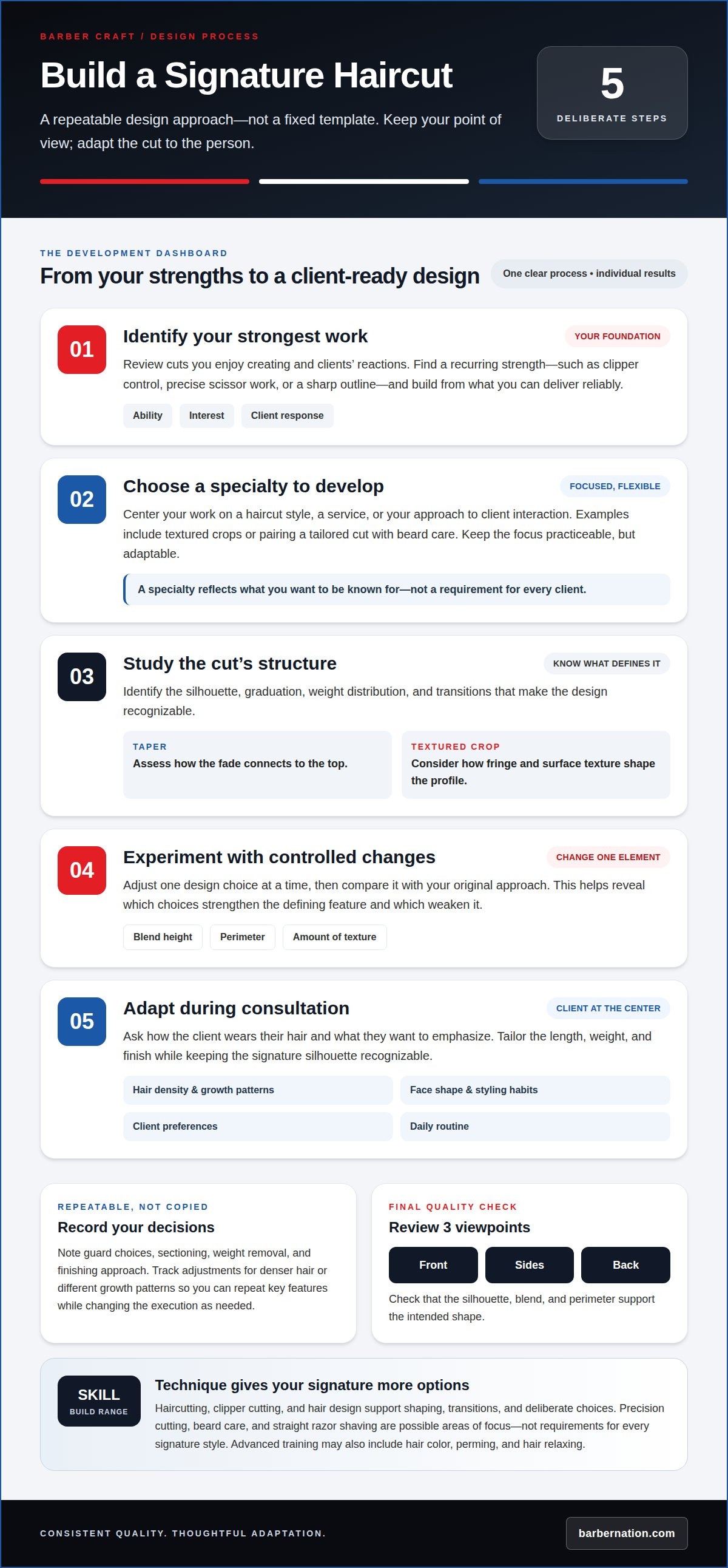
A practical answer to how to create a signature haircut starts with a clear process. Use these steps to develop an approach that feels personal while keeping the client at the center:
- Identify your strongest work. Review cuts you enjoy executing and clients’ reactions to them. Look for a recurring strength, such as clipper control, precise scissor work, or a sharp outline. Choose one foundation that matches your abilities and interests, rather than chasing every trend.
- Choose a specialty to develop. A specialty can center on a haircut style, a service, or your approach to client interaction. For example, you might focus on textured crops or pair a tailored cut with beard care. Keep the focus narrow enough to practice, but flexible enough to suit different clients.
- Study the structure of the cut. Identify what makes the design recognizable: the silhouette, graduation, weight distribution, or transition between lengths. For a taper, assess how the fade connects to the top. For a textured crop, consider how the fringe and surface texture shape the overall profile.
- Experiment with controlled changes. Change one design element at a time, such as the blend height, perimeter, or amount of texture. Compare the result with your original approach. This makes it easier to see which choices improve the cut and which weaken its defining feature.
- Adapt the design during consultation. Ask how the client wears their hair and what they want to emphasize. Consider hair density, growth patterns, face shape, and styling habits. A signature silhouette can remain recognizable while its length, weight, and finish change for the individual.
Technical range gives that process more options. The State College of Beauty Culture barber course covers haircutting, clipper cutting, and hair design. Those areas help build a foundation for shaping a cut, controlling transitions, and making deliberate design choices. Advanced training there also includes hair color, perming, and hair relaxing, which can broaden how a barber thinks about form and finish.
Ground your signature in skills you can deliver reliably. Precision cutting can define a crisp outline or balanced shape. Beard care can connect the haircut with facial hair. Straight razor shaving can add a clean finishing detail when it suits the client’s requested service. These are possible areas of focus, not requirements for every signature style.
Consistency comes from recording your decisions, not copying a photograph. After each cut, note your guard choices, sectioning, weight removal, and finishing approach. Track what you adjusted for a client with denser hair or a different growth pattern. These observations help you repeat the design’s key features while adapting how you execute them.
Before finishing, assess the haircut from several angles. Check the silhouette from the front, sides, and back, then confirm that the blend and perimeter support the intended shape. A signature style becomes recognizable through consistent quality and thoughtful adaptation. Refine your technique as you gain experience, and let each client’s needs guide the final design.
Deliver a result that feels true to you. Your signature style should reflect your personality, abilities, passions, influences, and strengths, rather than simply imitate a look. Let those qualities guide your choices as you refine your work. A specialty can suit your interests and strengths, focusing on a particular haircut, service, or approach to client interaction. Connect those choices to the work you want to be known for, while leaving room to make each design your own.
Experiment with techniques and combine elements to develop a distinctive style. Notice which combinations suit your abilities and passions, then keep refining your approach. Over time, a recognizable style can give clients quality and a distinctive experience, encouraging loyalty. The goal isn’t to make every cut identical, but to give your work a clear point of view clients can recognize and return for. When your approach reflects who you are and what you do well, it can become a meaningful part of the experience you provide.
BarberNation: Professional Barber Tools and Grooming Supplies: BarberNation Cordless Air Duster
BarberNation offers the BarberNation Cordless Air Duster for barbers building a considered toolkit alongside their cutting skills. Consider it when choosing tools to support your workflow and finishing routine. The right equipment complements your technique; it doesn’t replace the consultation, shape, or precision that define your signature haircut.
BarberNation also offers WATER RESISTANT HAIR ENHANCEMENT and Barber T-shirts. Explore these products and choose what fits your professional practice and style. Visit barbernation.com to browse BarberNation’s grooming tools and products.
Keep Refining Your Craft
The next step in learning how to create a signature haircut is to treat each appointment as a chance to sharpen your judgment. Notice which design decisions feel distinctly yours, and pay attention to how clients respond to the finished shape. A signature isn’t fixed; it can evolve with your technique, perspective, and clients’ needs.
Choose one detail to refine in your next cut. It might be the transition, the balance between the sides and top, or the way you tailor the finish. Make the choice intentional, then assess whether it supports your artistic direction and the client’s preferences. Small, considered adjustments help your craft progress without losing its point of view.
Keep developing your professional practice with tools and resources that suit the way you work. Contact BarberNation: Professional Barber Tools and Grooming Supplies to take a look at what’s available. Keep learning, keep refining, and let your skill lead the next evolution of your work.

Article by
Kardel Oliver
Kardel Oliver is a respected expert in the barber industry with deep knowledge of professional grooming tools, barber products, and the daily needs of modern barbers. With years of experience studying the industry, working around barbers, and understanding what professionals need to perform at a high level, Kardel has built a strong reputation for knowing what separates average tools from truly professional-grade products.
Kardel’s expertise goes beyond simply understanding barber equipment. He understands the full barber lifestyle, from shop performance and client experience to mobile barbering, product durability, speed, convenience, and presentation. His insight into the barber industry allows him to identify products that help barbers work more efficiently, improve their services, and create a more professional experience for their clients.
Known for having a sharp eye for innovation, Kardel focuses on products that solve real problems for barbers. Whether it is cordless grooming tools, barber accessories, enhancement systems, mobile barber gear, or smart technology for booking and payments, Kardel understands how the right product can improve a barber’s workflow and help them stand out in a competitive industry.
Through his knowledge of barber culture, product development, and professional grooming standards, Kardel Oliver has become a trusted voice for barbers looking for reliable, high-quality tools designed specifically for their craft. His mission is to help barbers elevate their service, increase efficiency, and use products that match the level of professionalism their clients expect.