

The strongest electric hair duster for barbers is the one that fits your station’s cleanup routine, not simply the one with the most features. Compare duster styles, brush materials, and prices alongside compact blower and vacuum options to find the right match for your work.
A reliable finishing routine matters: loose hair can cling around the neckline, settle on the cape, and detract from a clean finish. It’s also sensible to weigh price against practicality when choosing a tool for a busy station. This guide explains what to compare so you can make a considered choice and stay focused on your craft.
You’ll see how electric dusters differ from manual brushes, which design details shape everyday use, and how mini blowers and vacuums fit into barber cleanup. We’ll also look at availability and the factors that influence price, so you can assess options by function, feel, and value. Whether you’re refining a personal setup or equipping a professional station, the goal is a clear comparison that helps you choose with confidence.
Key Takeaways
- Use the market’s typical $53-$87 USD range as a broad comparison point, then weigh price against the tool’s features and intended use.
- Match brush material and shape to the finish you want: comfort, control, and how easily it clears loose hair all matter.
- Plan around availability and shipping stages, since order preparation and transit affect when a tool reaches your station.
- Choose between a mini blower and a vacuum by considering whether your priority is moving loose hair or collecting debris.
- Compare electric dusters by practical details such as speed, battery capacity, and included attachments, not by headline specifications alone.
Barber duster product prices
A useful price comparison starts by separating manual brushes, cordless dusters, and compressed-air tools. Each serves a different purpose: a brush sweeps hair from skin and capes, an electric duster moves loose clippings with airflow, and a vacuum collects debris rather than dispersing it. Compare tools in the same category before judging value.
Next, compare the details behind each listing. A compressed-air duster listing advertises 300000 RPM, but speed alone doesn’t describe the complete tool. Check the stated attachments, power source, and intended use. A listing with two nozzles offers a different setup from one without interchangeable attachments. Compare those features against your station’s cleanup routine.
To see how compact blowers are tested, watch Project Farm’s comparison:
Then evaluate the listing’s total value. Review the displayed price, included components, and delivery terms together. An advertised price tells only part of the purchase story. Shipping speed and order preparation are separate stages. Expedited shipping doesn’t shorten preparation time. Packages typically take 2-5 days after carrier handoff. Use that distinction when planning a replacement tool.
Build a simple comparison before choosing. Note each tool type, stated specifications, included attachments, and shipping details, then match the option to your intended task. For example, directed airflow can help a barber clear loose neck hair, while a vacuum can collect debris from a station surface. This makes it easier to distinguish headline features from those useful in your work.
- Tool type: Compare brush, blower, or vacuum.
- Specifications: Note listed speed and battery details.
- Included parts: Record nozzles or other attachments.
- Purchase terms: Separate displayed price from delivery timing.
How should barbers clean and maintain an electric hair duster? Switch it off, disconnect its power source, and remove loose hair from the body and attachments. Follow the maker’s care instructions before cleaning vents or removable parts.
What are common complaints or drawbacks of electric hair dusters for barbers? Noise, charging interruptions, awkward handling, and airflow that scatters hair can frustrate users. Weigh these trade-offs against your station’s tasks before choosing a blower over a brush or vacuum.
For a professional station, an electric hair duster for barbers should offer useful performance, manageable upkeep, and clear product details. Assess the whole setup rather than relying on a single specification. That keeps the price comparison grounded in the work the tool needs to do.
Duster brush materials and styles
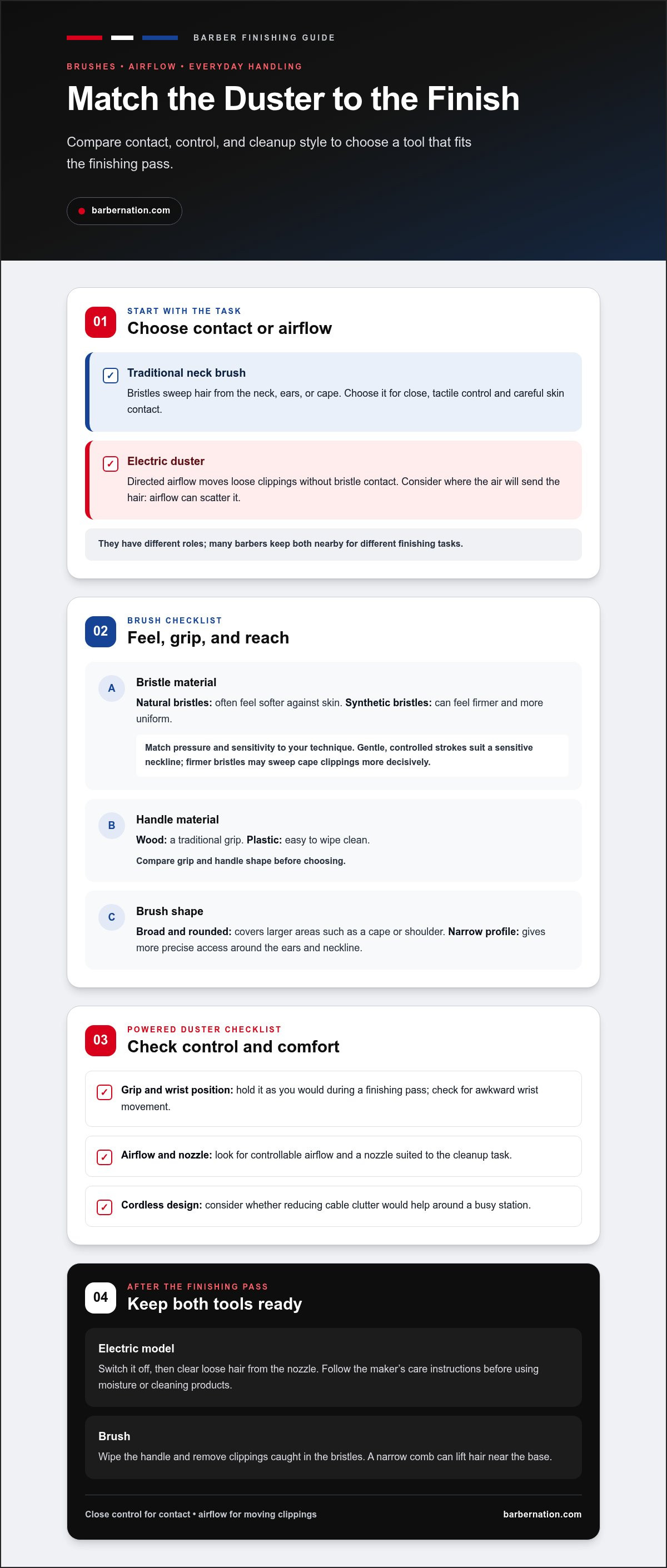
Brush material affects how a neck duster feels. Natural bristles often feel softer against skin, while synthetic bristles can feel firmer and more uniform. The right choice depends on pressure, sensitivity, and technique. Use gentle, controlled strokes around a sensitive neckline; firmer bristles may sweep clippings from a cape more decisively. Handle material matters, too: wood offers a traditional grip, while plastic is easy to wipe clean. Compare the bristle tips and handle shape before choosing.
Traditional neck dusters work through direct contact: a barber guides bristles across the neck, ears, or cape to lift loose hair. An electric duster uses airflow to move clippings from skin or around a station. Each has a distinct role. A brush offers close, tactile control; airflow avoids bristle contact but can scatter hair. Many barbers keep both nearby for different finishing tasks.
How do electric hair dusters compare with traditional barber neck dusters? A neck duster sweeps hair away through bristle contact, while an electric model directs airflow. Choose a brush for close, controlled cleanup, or airflow when you want to move loose clippings quickly.
For a visual comparison of cordless duster designs, explore this cordless air-duster range and consider which format suits your station.
Shape affects reach and control. A broad, rounded brush covers larger areas, such as a cape or shoulder, while a narrow profile gives more precise access around the ears and neckline. A compact handle can be easier to maneuver near a fade’s clean edge. Before buying, hold the duster as you would during a finishing pass. Check that the grip allows a light touch without awkward wrist movement.
What features should barbers look for in an electric hair duster? Prioritize comfortable handling, controllable airflow, and a nozzle suited to the cleanup task. A cordless design can also reduce cable clutter around a busy station.
Use these checks to compare brushes and powered styles:
- Bristles: Compare softness, firmness, and tip feel.
- Handle: Test grip and wrist position.
- Shape: Match broad coverage or neckline precision.
- Airflow: Consider where loose hair will move.
- Cleaning: Remove trapped clippings after use.
Keep maintenance simple. After each client, switch off an electric model and clear loose hair from its nozzle. Wipe a brush handle and remove clippings caught in its bristles. A narrow comb, for example, can lift hair near the base. Follow the maker’s care instructions before using moisture or cleaning products. This routine helps keep both tools ready for the next finishing pass.
Treat brushes and blowers as complementary tools, not identical substitutes. A soft neck brush suits careful skin contact; a focused air stream moves loose hair without bristle contact. Match the material, shape, and tool style to the finish you want.
Duster product availability
Availability and delivery timing affect when a barber can use a tool. Order preparation and carrier transit are separate stages, and inventory, seller location, and shipping method can affect the process. If a shop is replacing a failed duster, timing matters; for a planned station upgrade, it may be less urgent. Plan the purchase around the tool’s role, not just its product page.
Read delivery estimates as stages, not promises. Packages typically take 2-5 days after being handed to a carrier. That period describes transit after handoff, not the time spent preparing an order. A barber planning around a busy schedule should account for both stages. For example, ordering before a planned equipment refresh leaves more room than waiting until the current tool stops working.
Expedited shipping affects the carrier’s transit time, not the time needed to prepare an order for shipment. Keep those stages distinct when planning. A faster shipping option may shorten transit after dispatch, but order preparation still comes first. If your station has no backup duster, account for both stages rather than relying on the shipping label alone.
Availability can differ by product format. A cordless blower, plug-in unit, and manual neck brush are distinct categories, and listings can change as inventory changes. Attachments matter, too: if you rely on a narrow nozzle, compare the listed configuration and included parts rather than assuming a similar-looking device will do the same job.
Use a practical sequence before buying:
- Identify the need: Replacement, backup, or first station setup.
- Choose the format: Cordless, plug-in, or manual brush.
- Review dispatch timing: Separate preparation from carrier transit.
- Plan the handoff: Allow 2-5 days for typical carrier transit.
- Match the setup: Account for the nozzle or accessory needed.
For multiple stations, plan purchases around each tool’s role. A shared backup can cover a temporary gap, while a dedicated unit keeps a station ready for daily finishing. Don’t assume every order follows the same schedule. Listings and shipping methods can differ, so include preparation and transit in your equipment plan.
Before scheduling a tool change, note when the existing duster will leave service. Compare that date with the order’s stated preparation and transit stages. If you need a unit for a specific appointment block, plan for those stages before the work begins. This helps align tool availability with the shop’s routine.
Availability is ultimately a decision about timing and configuration. The model needs to suit the task and fit your working plan. Distinguish transit from order preparation, and match attachments to the job. These steps help you assess whether a listing suits an immediate replacement, a backup, or a future station upgrade.
Electric mini blower and vacuum for barber use
A mini blower moves loose hair with directed airflow; a vacuum collects debris. They suit different station tasks: use a blower to move clippings from a cape and a vacuum to collect hair around a workstation. A combined tool may offer both functions. Compare each mode with your cleanup routine.
Motor speed is one comparison point. A barber air-duster listing describes a 110000 RPM motor. Another handheld listing advertises 170,000 RPM and four speeds. A separate multifunction listing advertises 130,000 RPM and a 4000mAh battery. These figures describe different listings, not a direct performance ranking.
RPM alone doesn’t indicate airflow volume or direction. Nozzle shape and speed settings also affect where the air goes. A focused nozzle, for example, can direct a stream toward clippings on a cape, while a wider outlet spreads airflow over a larger area. Compare practical details, not just motor speed.
How powerful should a barber hair duster be, and what airflow or battery life is typical? Listings include motors rated at 110000 RPM, 130,000 RPM, and 170,000 RPM. Battery life depends on battery capacity, selected speed, and operating pattern, so RPM alone cannot establish runtime.
Battery capacity offers another comparison point. The multifunction listing pairs 130,000 RPM with a 4000mAh battery. Capacity doesn’t by itself determine working time. Speed selection and how often the motor runs also matter. A barber clearing one cape between clients uses the tool differently from someone cleaning a station repeatedly. Compare capacity with the intended use.
Vacuums collect debris, while blowers move it. A blower can direct clippings toward a cleanup area, but careless aiming may scatter hair. A vacuum draws debris inward instead. For station surfaces, consider whether controlled collection will make cleanup easier. Around a client’s neckline, choose a method that offers precise control.
Are electric hair dusters safe to use on clients’ skin and around the face? Use controlled airflow, and don’t aim a nozzle at the eyes, ears, or nose. Direct the stream at loose hair, and use a brush for close, delicate finishing.
Before choosing, compare these practical points:
- Air settings: Look for control suited to detail work.
- Nozzle design: Match the outlet to the cleanup area.
- Battery capacity: Compare it with your operating pattern.
- Vacuum function: Decide whether collecting debris matters.
- Handling: Consider grip and access around the station.
When choosing a mini blower, prioritize controllable airflow and a useful nozzle. For a vacuum, focus on debris collection and convenient handling. Match the listed motor and power details to the task, then choose the format that supports a clean, deliberate finishing routine.
What are the best electric hair dusters for barbers in 2026?
The best choice depends on the station task. Compare nozzle options, battery capacity, and control. A high RPM figure alone won’t identify the right tool. For neckline cleanup, prioritize controlled handling. For station cleanup, consider the area and direction of airflow. These criteria make 2026 listings easier to compare.
Start with attachments. One barber air-duster listing includes 2 nozzles. That gives the barber two outlet options for directing airflow. Compare the nozzle shapes and intended uses in each listing. For example, a narrow opening may suit focused cleanup, while a broader outlet may cover more surface. The included number matters, but the shape determines how useful each nozzle is.
Battery capacity helps compare cordless options. A rechargeable compressed-air duster listing specifies an 8000mAh battery. A cordless electric duster listing specifies a 6000mAh battery. These figures describe capacity, not guaranteed runtime. Use them to shortlist models, then consider how often you’ll run the tool and which settings you’ll use.
Match each configuration to a real task:
- Neckline finishing: Choose precise handling and directed airflow.
- Cape cleanup: Compare nozzle shape and reach.
- Station maintenance: Consider the area needing cleanup.
- Cordless setup: Compare listed battery capacities.
Don’t assume the largest battery figure makes a tool the best choice. A barber working between clients may prefer a compact setup, while a station that needs longer cordless operation may place more weight on capacity. Match the listed configuration to your actual workflow.
Next, inspect listing details as a complete package. Count the included nozzles, note the stated battery capacity, and check whether the tool is cordless. For example, a listing with 2 nozzles may suit a barber who wants different airflow directions. A 6000mAh cordless option may fit another setup. Neither detail alone proves overall performance.
Avoid choosing by a headline specification alone. RPM, battery capacity, and attachments describe different aspects of a tool, but they don’t replace comfortable handling or a nozzle suited to your work. Compare each listing against the same checklist, then rank what matters most for your station.
For a focused comparison, use this order:
- Identify the cleanup task.
- Compare nozzle count and design.
- Compare battery capacity for cordless models.
- Check the stated configuration and included parts.
- Choose the closest fit for your workflow.
That method makes the “best” choice specific rather than universal. A barber prioritizing attachments may favor a different setup than one prioritizing battery capacity. In 2026, compare actual listings by task, included components, and stated specifications. The strongest option is the one that supports your finishing routine without relying on one impressive number.
BarberNation: Professional Barber Tools and Grooming Supplies: BarberNation Cordless Air Duster
BarberNation: Professional Barber Tools and Grooming Supplies offers the BarberNation Cordless Air Duster for barbers considering cordless airflow as part of their finishing routine. It’s a practical next step if your comparison has narrowed to an electric duster rather than a traditional neck brush. Review the BarberNation Cordless Air Duster alongside your station’s cleanup needs and preferred tool style. The right choice depends on the task, handling, and how you want to clear loose hair. BarberNation also offers WATER RESISTANT HAIR ENHANCEMENT and Barber T-shirts for professionals building their grooming setup and trade identity.
Visit BarberNation online to explore the cordless duster.
Choose the Tool That Fits Your Next Move
Your station’s finishing routine determines what belongs in your kit. Before choosing an electric hair duster for barbers, consider how you handle loose clippings, where you need precise control, and how the tool fits your daily workflow. Clear priorities are more useful than chasing a specification that doesn’t match your work.
Think of each tool as part of your professional craft. The right setup should support deliberate finishing, a composed station, and the standard of service you want clients to remember. As your technique develops, your equipment choices can develop with it. Choose with purpose, maintain your tools, and keep refining the details that distinguish your work.
BarberNation offers tools and grooming products for professionals shaping their station and style. Explore the available offerings or contact BarberNation to take your next step with confidence. Keep building your craft, one considered choice at a time.
Frequently Asked Questions
What is an electric hair duster for barbers, and how does it work?
An electric hair duster is a powered tool that directs airflow to move loose hair. Its motor drives air through an outlet, letting a barber clear clippings from areas such as clipper guards, drawers, or a workstation. BarberNation’s cordless model has a 150,000 RPM brushless motor and four adjustable airflow settings. That control helps barbers choose a suitable stream for different grooming cleanup tasks.
How much do professional electric hair dusters cost in the United States?
Price depends on configuration and included accessories. Compare the motor, speed settings, charging setup, and whether the package includes nozzles or micro-vacuum attachments. A basic blower and a kit with vacuum attachments are different purchases, so check the selected product option and its components when comparing value. Package contents may vary slightly by model or bundle. Please review the selected product option before checkout.
Where can barbers buy electric hair dusters in the United States?
Barbers in the United States can buy a cordless air duster directly from BarberNation through its online store. The BarberNation Cordless Air Duster is designed for barbers and grooming professionals, including mobile barbers and shop owners. Review the product option’s details before ordering to understand its configuration and included accessories. BarberNation also offers domestic shipping, making its grooming equipment available to customers across the country.
Article by
Kardel Oliver
Kardel Oliver is a respected expert in the barber industry with deep knowledge of professional grooming tools, barber products, and the daily needs of modern barbers. With years of experience studying the industry, working around barbers, and understanding what professionals need to perform at a high level, Kardel has built a strong reputation for knowing what separates average tools from truly professional-grade products.
Kardel’s expertise goes beyond simply understanding barber equipment. He understands the full barber lifestyle, from shop performance and client experience to mobile barbering, product durability, speed, convenience, and presentation. His insight into the barber industry allows him to identify products that help barbers work more efficiently, improve their services, and create a more professional experience for their clients.
Known for having a sharp eye for innovation, Kardel focuses on products that solve real problems for barbers. Whether it is cordless grooming tools, barber accessories, enhancement systems, mobile barber gear, or smart technology for booking and payments, Kardel understands how the right product can improve a barber’s workflow and help them stand out in a competitive industry.
Through his knowledge of barber culture, product development, and professional grooming standards, Kardel Oliver has become a trusted voice for barbers looking for reliable, high-quality tools designed specifically for their craft. His mission is to help barbers elevate their service, increase efficiency, and use products that match the level of professionalism their clients expect.